
Dave Slates Oral History

Dave Slates is an Indianapolis-area musician, music preservationist, and longtime volunteer with the Indiana Music History Project whose life has been shaped by music from an early age. Born in Nashville, Tennessee, into a musical family, Dave moved to Indianapolis as a child after his father accepted a position at Butler University. He grew up singing in church choirs, studied violin and saxophone, and eventually took up bass, beginning a lifelong journey through rock, blues, folk, bluegrass, Celtic, and traditional music.
Over the years, Dave has performed with groups ranging from his early Indianapolis bands to mandolin ensembles, The Golden Aces, and the Slates Family Band. His love of the mandolin led to extensive involvement in Central Indiana’s folk and traditional music community, including Mandolindy, the Midwest Mandolin Festival, the Metamora Mandolin Gathering, and the Central Indiana Folk Music and Mountain Dulcimer Society. That interest in traditional music developed alongside a growing commitment to preserving the stories and history surrounding the music itself.
As a longtime volunteer with the Indiana Music History Project, Dave has helped preserve and share the musical heritage of the state he has called home since childhood. His oral history offers the perspective of a lifelong musician, listener, participant, organizer, and preservationist whose story reflects the countless people who have sustained Indiana’s music communities by playing, promoting, volunteering, and passing music from one generation to the next.
Interview Highlight
In this Interview Highlight, Dave Slates reflects on his lifelong involvement in music and his passion for preserving the songs, traditions, and stories that connect generations. He discusses performing with the Slates Family Band and his involvement with the Central Indiana Folk Music and Mountain Dulcimer Society, where preserving and sharing traditional music became an important part of his musical life.
Dave also recalls his involvement with Mandolindy and the Midwest Mandolin Festival, as well as helping promote and produce mandolin events and establish the Metamora Mandolin Gathering. Through performing, organizing, and volunteering, Dave has spent years bringing musicians together and helping preserve Indiana’s folk and traditional music heritage.
Complete Interview
In this Complete Interview, Dave Slates traces a lifetime of music from his childhood in a musical family to his continuing involvement in Indiana’s folk and traditional music communities. He recalls growing up around classical and church music, learning violin and saxophone before taking up bass, playing in Indianapolis bands while still in school, and discovering artists ranging from The Beatles and Jimi Hendrix to Crosby, Stills & Nash, Emerson, Lake & Palmer, The Who, and Frank Zappa.
Dave also discusses his eventual discovery of the mandolin and the musical community that grew around it. He reflects on performing with the Slates Family Band, participating in Mandolindy and the Central Indiana Folk Music and Mountain Dulcimer Society, promoting and producing the Midwest Mandolin Festival, and helping establish the Metamora Mandolin Gathering.
Throughout the conversation, Dave returns to the importance of music as something shared among families, friends, communities, and generations. He also discusses his work as a volunteer with the Indiana Music History Project and why preserving the stories behind Indiana’s musicians and music is essential to understanding the state’s cultural history.
Biography
Dave Slates was born in Nashville, Tennessee, into a family in which music was already an important part of everyday life. Around the time of his birth, his mother was second oboist with the Nashville Symphony, while his father was pursuing a Ph.D. in music theory and composition. When his father later accepted a position at Butler University, the family moved to Indianapolis in the mid-1960s, where Dave grew up in the area around the university.
Music surrounded Dave from childhood. His mother served as a church organist and his father as a choir director, and Dave began singing in church choirs at an early age. He started playing violin around age six and later played saxophone in junior high school before finding the instrument that would become central to his early experiences in bands: the bass.
While still in seventh grade, Dave formed his first band, Section Eight. Made up of Dave and friends he knew through church, the group became something of a house band for events at Indianapolis School 80, giving him some of his earliest experiences playing music for an audience.
His musical interests were broad from the beginning. The Beatles were among the first recording artists whose records he remembers buying, while his brother introduced him to Crosby, Stills & Nash and Emerson, Lake & Palmer. Dave also became interested in artists such as Jimi Hendrix, The Who, and Frank Zappa. These influences existed alongside the classical and church music that had surrounded him throughout childhood.
By high school, Dave was playing bass in The Dextrous Method, an Indianapolis-area group described in a contemporary newspaper article as an “experimental blues” band. The group included Dave’s brother Phil Slates on rhythm guitar, along with Jake O’Sullivan, Richie Marsh, and David Bradshaw. The musicians performed a mixture of blues and other material at churches and local events, reflecting the variety of musical experiences Dave encountered while still young.
Live music also made a lasting impression on him. Dave recalls attending a memorable concert in Crawfordsville around 1970 featuring Humble Pie, Emerson, Lake & Palmer, and headliner Johnny Winter with Rick Derringer. The concert stretched until roughly 3:30 in the morning, when the school hosting the event finally brought it to an end. Dave particularly remembers it as the first time he heard a stereo concert sound system, making the experience an important musical milestone.
Music remained important to Dave as he entered adulthood, although his professional career in field service made regular participation in a band difficult. The work required a schedule that did not easily accommodate the commitments of rehearsing and performing with a working group.
Eventually, another instrument opened a new chapter in his musical life: the mandolin.
Dave fell in love with the instrument and became increasingly involved with the community of musicians surrounding folk, bluegrass, Celtic, and traditional music in Central Indiana. Unlike the demands of maintaining a conventional working band, informal gatherings and acoustic music sessions offered opportunities to play whenever his schedule allowed.
His interest in traditional music led him to the Central Indiana Folk Music and Mountain Dulcimer Society. Through the organization, Dave became involved not only in performing music but also in preserving older musical traditions. The group explored historic repertoire, including songs dating to the Civil War era, connecting Dave’s interest in playing music with an increasingly strong interest in its history.
Dave also became involved in Central Indiana’s mandolin community, performing with Mandolindy and participating in a mandolin orchestra. He became involved with the Midwest Mandolin Festival, an event that brought musicians together to perform, learn, and celebrate the instrument and its repertoire.
When the earlier mandolin festival eventually came to an end, Dave missed having an event that brought the community together. Through connections in Metamora, Indiana, he helped establish the Metamora Mandolin Gathering. The gathering became an annual opportunity for mandolin players, teachers, and other musicians to meet, perform, and share music.
Dave’s musical life has included numerous ensembles and collaborations. Among them were The Golden Aces, where he performed alongside musicians including Mark Proctor, Larry Wayt, Dan Bent, Pat McNulty, and Holly Garrett.
Some of his most meaningful musical experiences, however, have taken place within his own family.
The Slates Family Band brought Dave together with his brother Phil, Ruth Slates, and Carla Slates for performances at community events and venues including Carmel PorchFest, Indy Folk Fest, and Bent Rail. Dave’s daughter also joined the family’s music-making on violin at times, extending a musical tradition that had begun with Dave’s own parents into another generation.
One of Dave’s favorite family stories illustrates how naturally music became part of that tradition. His daughter continued playing violin with the family band while pregnant with Dave’s first granddaughter. Not long after the baby was born, Dave remembers her sitting at a band practice with a small plastic egg and tapping it in time with the music at only about six months old.
For Dave, the moment suggested that another generation had already been surrounded by the family’s music before she was even born.
The story reflects something that runs throughout Dave’s musical life: music has rarely been separated from family, friendship, and community.
Even after decades of playing, Dave continued exploring different kinds of music. He eventually returned to bass and joined a band performing material from the 1960s, 1970s, and 1980s while continuing to participate in Celtic, folk, bluegrass, and other informal musical gatherings.
For Dave, this stage of his musical life has been less about pursuing a conventional professional career and more about the freedom and enjoyment of simply playing. One week might bring a Celtic jam, another a folk or bluegrass gathering. The variety allows him to move between instruments, styles, and groups while remaining connected to the simple enjoyment of making music with other people.
His interest in music history eventually led to another important role.
Through friends Frank Watson and Tom Bosco, Dave became acquainted with the Indiana Music History Project. After Bosco contacted project founder Rick Wilkerson, they visited the project and began volunteering. Dave liked what the organization was doing and became a regular presence, helping with the work of preserving Indiana’s musical heritage and the artifacts donated to the project.
His involvement with the Indiana Music History Project brought together several threads that had existed throughout his life: playing music, listening to music, learning about its history, preserving older traditions, collecting stories, and sharing those stories with others.
Dave sees preservation as essential because music is more than a recording or a collection of notes. The circumstances surrounding a song—who created it, why it was written, where it came from, and what it meant to the people involved—are part of its history as well.
During his oral history interview, Dave reflected on the enormous amount of musical talent that has emerged from Indiana and continues to exist throughout the state. He wants younger generations, including his own children and grandchildren, to be able to discover that history and understand the musical communities that came before them.
That belief helps explain why oral history has become so meaningful to him.
Without recording the memories of musicians and the people who participated in Indiana’s music communities, the stories behind the music can disappear. A song may survive, but without its history, listeners can lose an important part of understanding why it was created and what it represented.
Dave Slates’ story represents an important part of Indiana music history that can easily be overlooked. It is the story of the lifelong musician who plays because music is part of his life; the family member who passes music from one generation to another; the participant who helps sustain festivals and organizations; and the volunteer who understands that preserving history requires people willing to do the work.
From childhood choirs and school bands to bass, mandolin, folk gatherings, family performances, festivals, and his work with the Indiana Music History Project, music has remained a constant thread throughout Dave’s life.
His story demonstrates that Indiana’s musical heritage is built not only by the artists whose names appear on marquees and record covers, but also by the musicians, listeners, organizers, family members, and volunteers who keep the music alive and make sure its stories are remembered.
Image Gallery
Explore photographs, newspaper clippings, performance images, and other materials documenting Dave Slates’ lifelong involvement in Indiana music, from his early years playing bass in Indianapolis bands to his work with mandolin ensembles, folk and traditional music organizations, The Golden Aces, the Slates Family Band, and his continuing commitment to preserving Indiana’s musical heritage through the Indiana Music History Project.
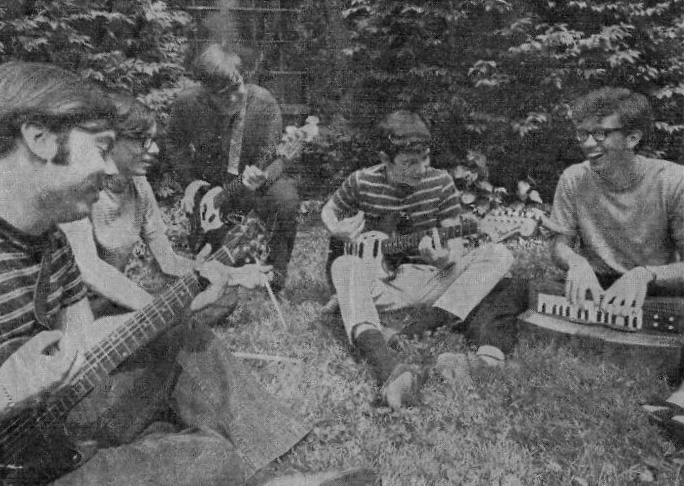
The Dextrous Method during a rehearsal session. Left to right: Phil Slates, Jake O’Sullivan, Dave Slates on bass, Richie Marsh, and David Bradshaw. The Indianapolis-area group performed what a contemporary newspaper described as “experimental blues” while its members were still in high school.
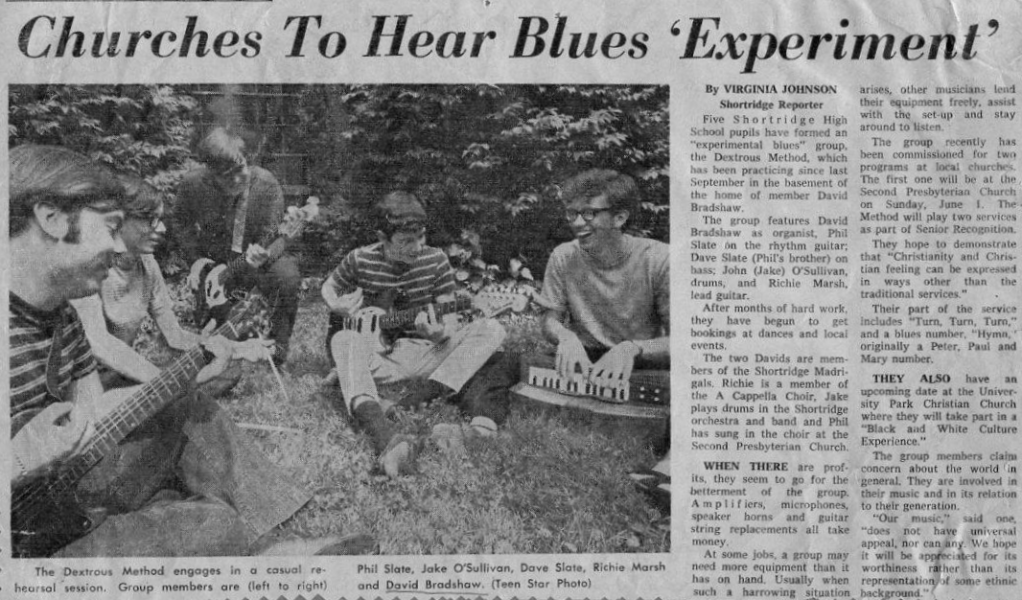
Newspaper article featuring The Dextrous Method, an Indianapolis-area “experimental blues” group featuring Dave Slates on bass and his brother Phil Slates on rhythm guitar. Pictured left to right are Phil Slates, Jake O’Sullivan, Dave Slates, Richie Marsh, and David Bradshaw. The group formed while the musicians were still in high school and performed a mixture of blues, hymns, and other music at churches and local events.
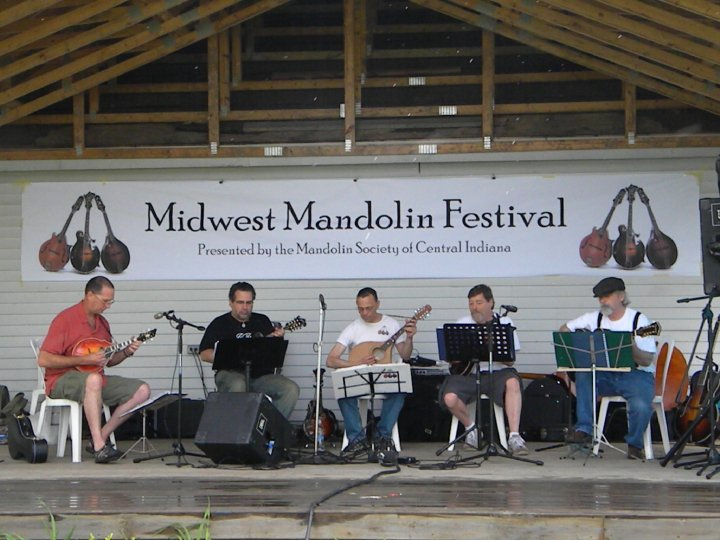
Musicians performing at the Midwest Mandolin Festival, presented by the Mandolin Society of Central Indiana. Dave Slates participated in the festival and its mandolin orchestra, part of his longtime involvement in Indiana’s mandolin, folk, and traditional music communities.
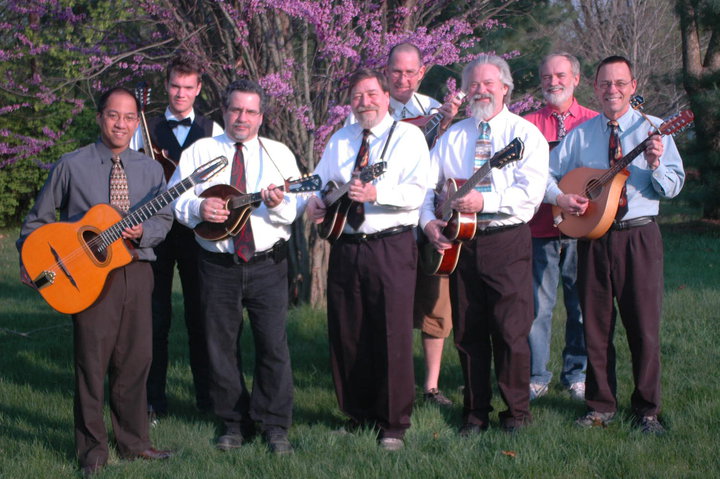
Mandolindy, a Central Indiana mandolin ensemble in which Dave Slates performed. The group reflects Dave’s longtime involvement with mandolin music and Indiana’s folk and traditional music community.
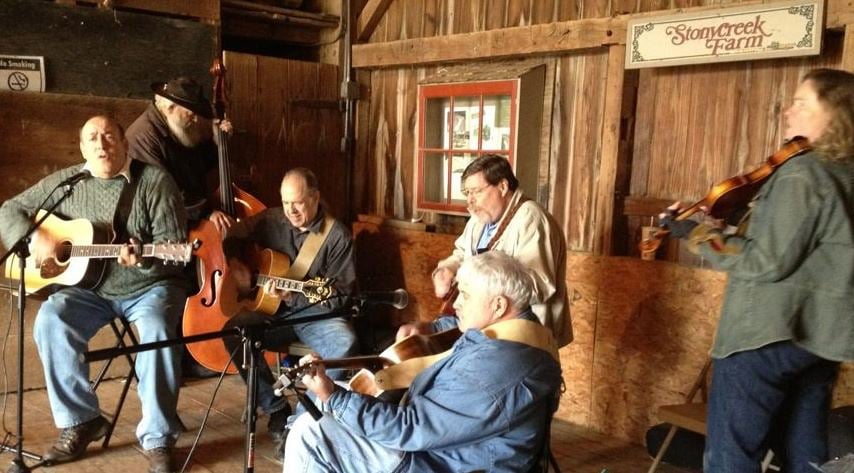
The Golden Aces performing at Stonycreek Farm, circa 2010. Left to right: Mark Proctor, Larry Wayt, Dan Bent, Dave Slates, Pat McNulty, and Holly Garrett. The group was part of Dave’s involvement in Indiana’s folk and traditional music community.
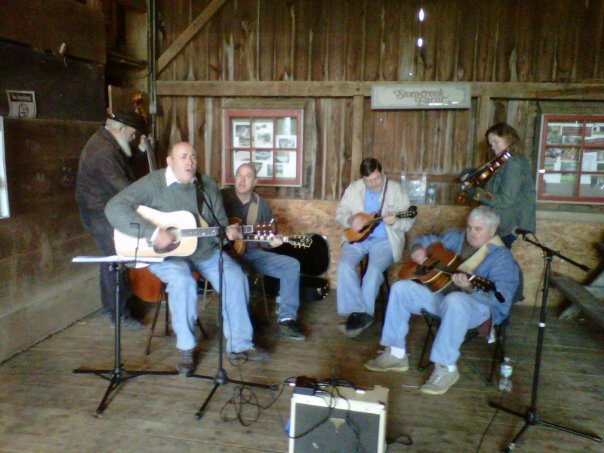
The Golden Aces performing at Stonycreek Farm, circa 2010. Left to right: Mark Proctor, Larry Wayt, Dan Bent, Dave Slates, Pat McNulty, and Holly Garrett. Dave is pictured playing mandolin as part of the group’s performance of folk and traditional music.
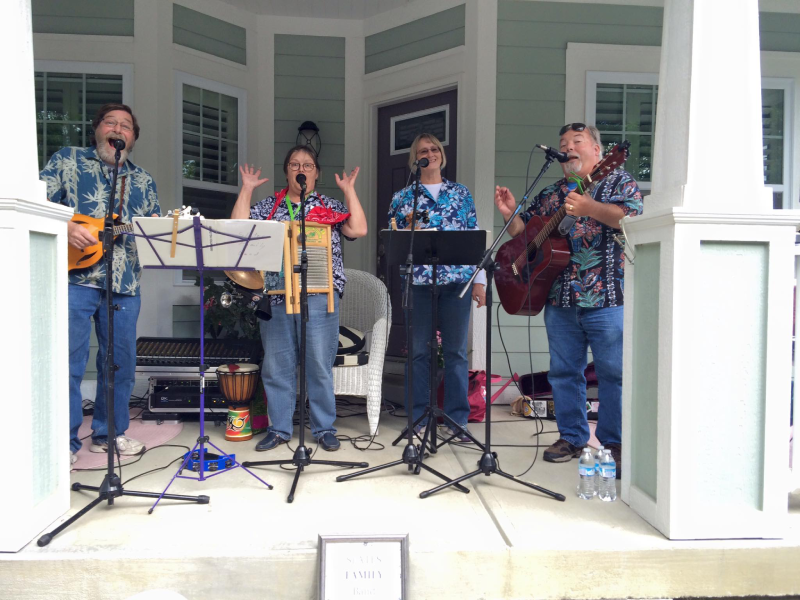
The Slates Family Band performing at Carmel PorchFest in 2015. Left to right: Dave Slates, Ruth Slates, Carla Slates, and Dave’s brother, Phil Slates, sharing a lighthearted moment during the performance.
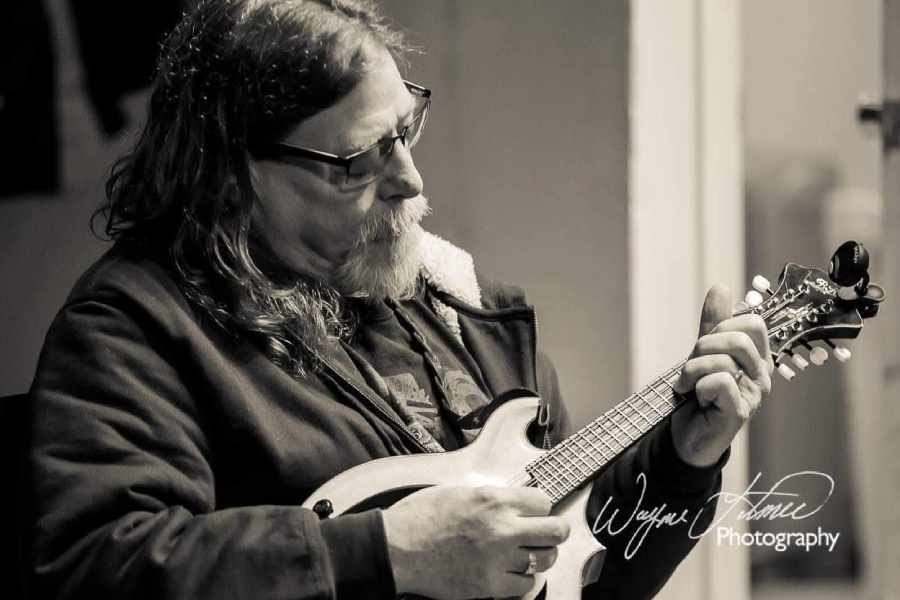
Dave Slates is an Indianapolis-area musician, music preservationist, and longtime volunteer with the Indiana Music History Project. Raised in a musical family, Slates has played bass, mandolin, and other instruments throughout his life and has been active in Indiana’s folk and traditional music communities, helping preserve and share the state’s musical heritage. He is pictured here playing mandolin.
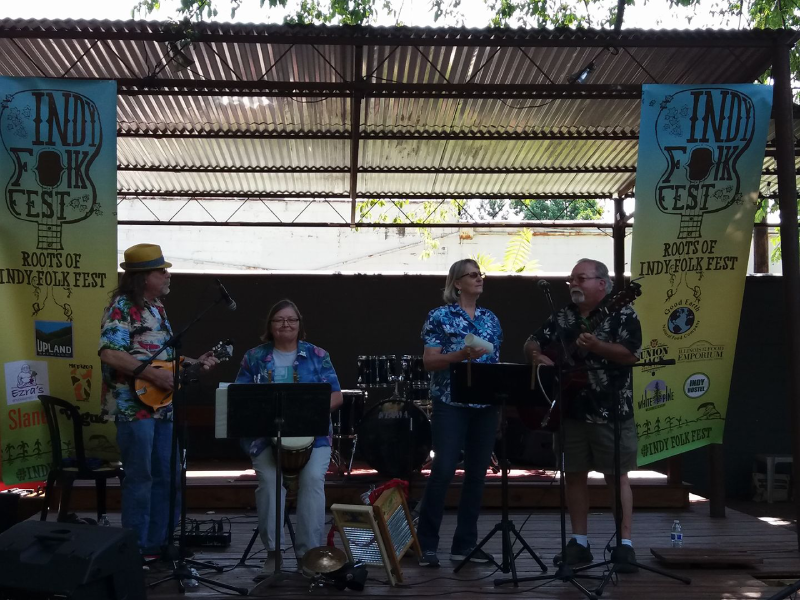
The Slates Family Band performing at Indy Folk Fest. Left to right: Dave Slates, Ruth Slates, Carla Slates, and Dave’s brother, Phil Slates. The group reflects the important role family music-making has played throughout Dave’s life.
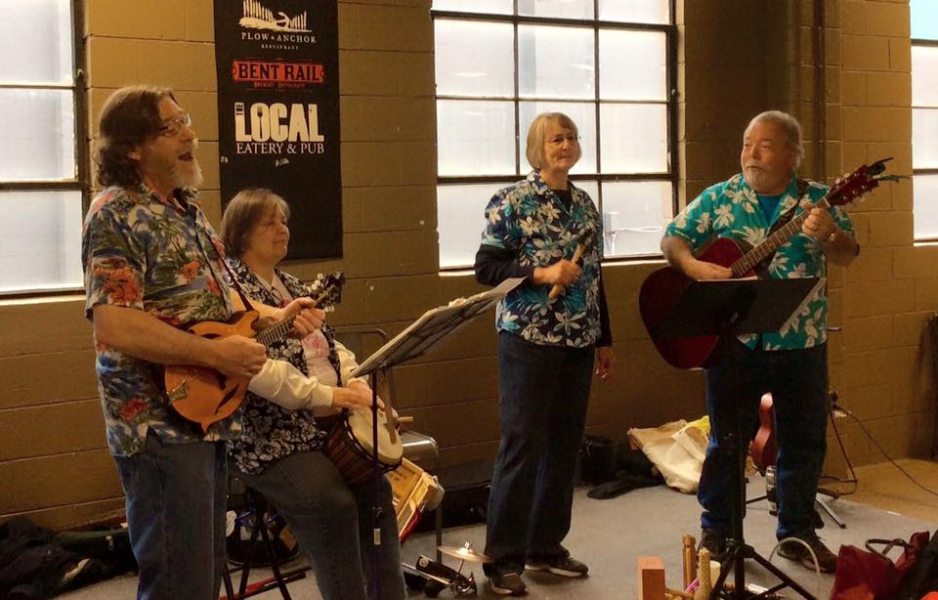
The Slates Family Band performing at Bent Rail. Left to right: Dave Slates, Ruth Slates, Carla Slates, and Dave’s brother, Phil Slates. The family band gave Dave an opportunity to share his lifelong love of making music with those closest to him.
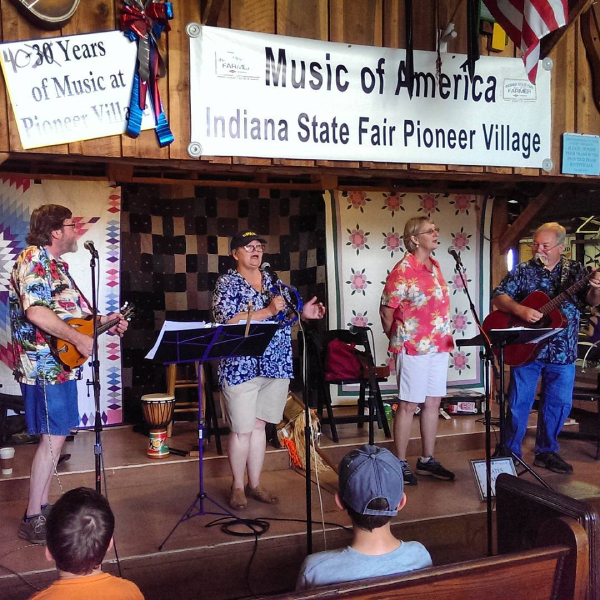
The Slates Family Band. Left to right: Dave Slates, Ruth Slates, Carla Slates, and Dave’s brother, Phil Slates. The family performed together as part of Dave’s lifelong involvement in making music with family and friends.
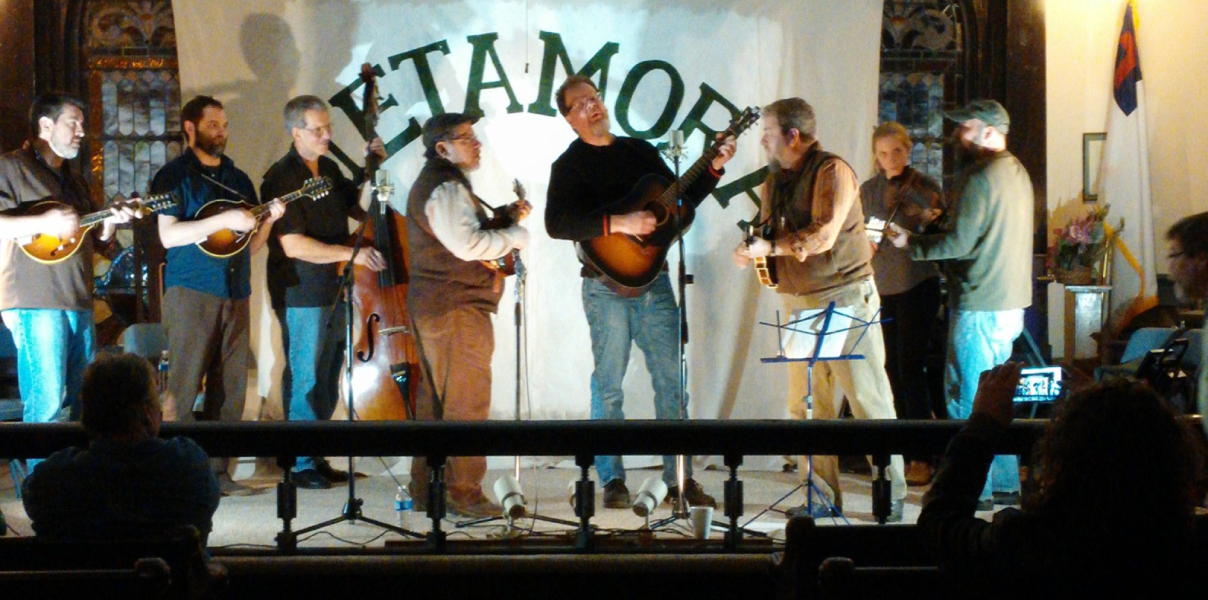
Musicians performing together at the Metamora Mandolin Gathering, an annual event Dave Slates helped establish after the Midwest Mandolin Festival ended. John Bowyer is pictured at far right. The gathering brought mandolin players and other musicians together in Metamora, Indiana, to perform and share traditional music.
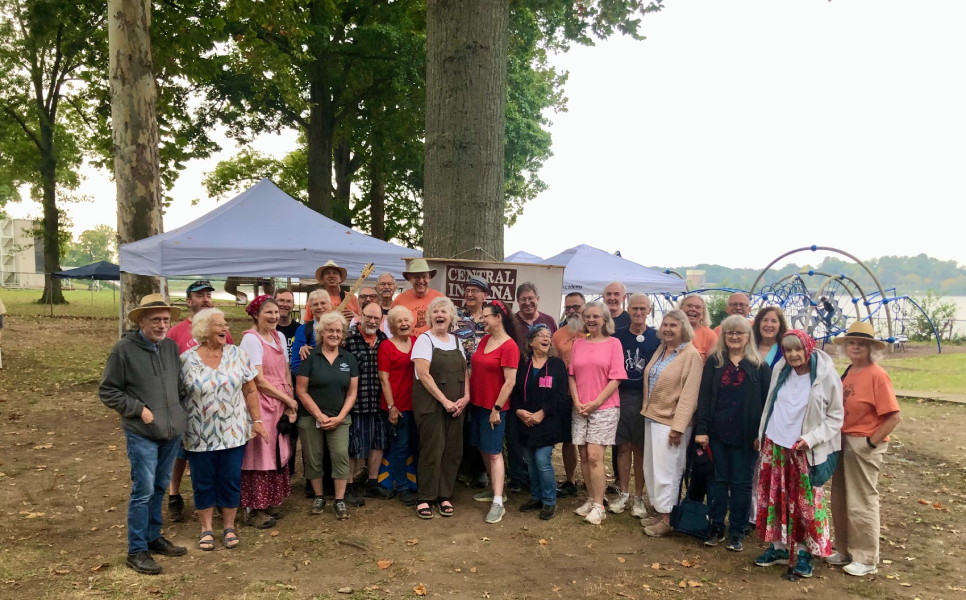
Members of the Central Indiana Folk Music and Mountain Dulcimer Society, an organization in which Dave Slates has been an active participant. Through the group, Dave became involved in preserving and performing folk and traditional music, including historic songs dating to the Civil War era.
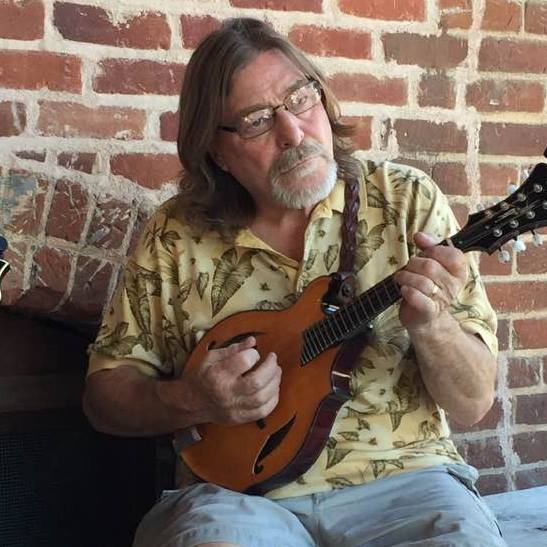
Dave Slates playing mandolin, an instrument that became an important part of his musical life and connected him with Indiana’s folk and traditional music community. His involvement has included mandolin ensembles, festivals, family performances, and informal music gatherings.
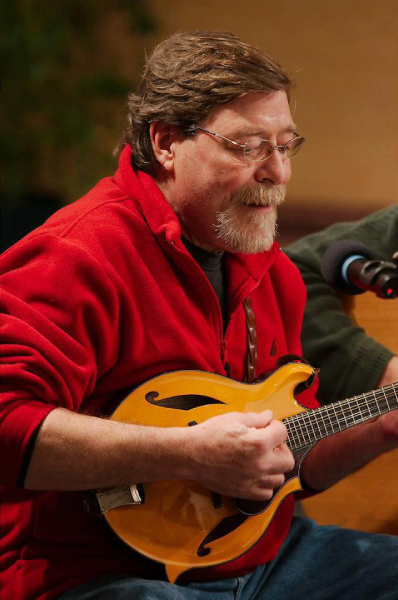
Dave Slates performing on mandolin. The instrument became a central part of Dave’s musical life, leading to his involvement with mandolin ensembles and festivals as well as folk, bluegrass, Celtic, and traditional music gatherings throughout Central Indiana.
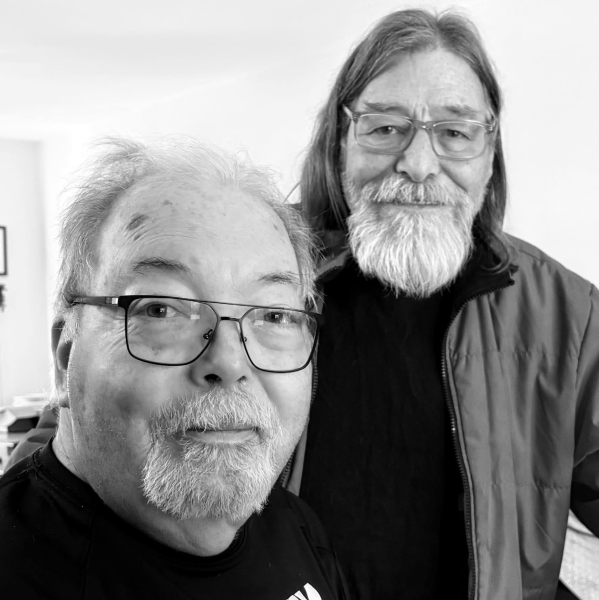
Brothers Phil Slates, left, and Dave Slates. Music has been a lifelong family connection for Dave, who has performed with Phil as part of the Slates Family Band.
Preserving Indiana’s Music History
The Indiana Music History Project is made possible through the generous support of the Allen Whitehill Clowes Charitable Foundation. Their commitment to preserving Indiana’s rich musical heritage helps ensure these oral histories remain accessible for future generations.

Help Improve This Archive
Have additional information about this artist, story, or any of the photographs? If you can identify people, dates, locations, or have memories you’d like to share, we’d love to hear from you. Please use the button below and select “Submit Historical Information or Corrections” as the reason for your message.

