
Michael Read Oral History

Michael Read is an Indianapolis-born keyboardist, songwriter, arranger, producer, and bandleader whose musical life is inseparable from the story of Roadmaster, one of Indiana’s best-known rock bands of the 1970s and early 1980s. He began playing piano at age four, wrote his first song in elementary school, and developed his ear for improvisation with the encouragement of piano teacher Evelyn Chenoweth.
Read’s path to Roadmaster began at Shortridge High School, where he and Asher “Adam Smasher” Benrubi played R&B and Motown covers in Frenchie & the Oui-Ouis. After high school, they formed Pure Funk while attending Indiana University. The group became a popular college and club act before evolving into Roadmaster, combining strong songwriting, Rick Benick’s guitar work, Toby Myers’ bass, Michael Read’s keyboards, and the powerful voices of Benrubi and later Steve “Mac” McNally.
Roadmaster released four studio albums between 1976 and 1980 and became a major concert attraction throughout Indiana and the Midwest. The band recorded with Todd Rundgren, shared bills with many of the era’s leading rock acts, and developed enduring songs including “Sweet Music,” “Higher, Higher,” “Say You Wanna Be With Me,” and “Hey World.” Through lineup changes, later projects, reunion concerts, and decades of continued music-making, Read remained a creative center of the Roadmaster story.
Interview Highlight
In this Interview Highlight, Michael Read recalls Roadmaster’s encounters with Todd Rundgren at Reflections in Cincinnati and at a fraternity performance in Bloomington. In Read’s account, Rundgren offered to record the band for free after hearing them at Reflections, then heard them again in Bloomington performing “That Magic Feeling.” Roadmaster ultimately recorded three songs with Rundgren at Bearsville, New York. Read remembers watching Rundgren work, studying his production methods, and bringing those lessons home as Roadmaster completed its first album.
Read also reflects on the collaborative spirit that shaped Roadmaster’s music. He describes how the members developed songs together in rehearsal, each contributing riffs, melodies, arrangements, and ideas until the material became unmistakably their own. For Read, that collective chemistry—and the audiences who still remember the songs decades later—remains at the heart of Roadmaster’s legacy.
Complete Interview
In this Complete Interview, Michael Read traces his musical journey from childhood piano lessons and his first Shortridge High School band to Pure Funk, Roadmaster, and a lifetime of performing, writing, arranging, and producing music. He remembers the thriving Indiana music scene that surrounded him as a young musician, the development of original material with Asher Benrubi and Toby Myers, and the first time he heard Steve “Mac” McNally sing.
Read tells the story of Roadmaster’s four studio albums, the transition from Benrubi to McNally as lead singer, the arrival of drummer Bobby Johns, and the group’s work with producers Greg Riker, Todd Rundgren, and Flo & Eddie. He discusses large concerts and tours with national acts, the collaborative creation of songs such as “Ride the Wind Away,” and the unforgettable experience of hearing thousands of people sing “Hey World” with the band at CircleFest in Indianapolis.
The conversation also follows Read beyond Roadmaster through work with Mitch Ryder and the Detroit Wheels, the Turtles’ Happy Together tours, Henry Lee Summer, the Alligator Brothers, reunion concerts, solo recordings, community performances, and Kids Dance Outreach. Throughout the interview, he reflects on friendship, loss, the changing music industry, and the lasting meaning Roadmaster’s music continues to hold for its listeners.
Biography
Michael Read was born and raised in Indianapolis, Indiana, and began playing piano when he was four years old. The instrument was already in the family home—his father enjoyed playing at it even though, as Read remembered with humor, he was not an accomplished pianist. Read quickly became fascinated by the keyboard and wrote his first song, “It’s Too Late,” while still in elementary school.
His early piano teacher, Evelyn Chenoweth, helped him develop both discipline and imagination. Read would work quickly through the assigned lesson so they could spend the rest of the session exploring chord symbols and improvising. That freedom to experiment became central to the way he approached music throughout his life.
At Shortridge High School, Read played piano for school musicals and vaudeville performances. He also joined classmates in an R&B cover band called Frenchie & the Oui-Ouis, organized with future Roadmaster singer Asher “Adam Smasher” Benrubi. The young musicians began with little equipment—an upright piano, a drum kit that had to be steadied with a stack of books, a saxophone, and a pawnshop bass—and earned $25 for their first performance.
Shortridge’s diverse student body and Indianapolis radio helped shape the band’s repertoire. Read remembers playing early Motown and other R&B records that crossed the era’s often-segregated radio formats. Frenchie & the Oui-Ouis gave Read and Benrubi their first sustained experience building a band, entertaining a crowd, and discovering how different musical backgrounds could come together onstage.
After high school, Read and Benrubi attended Indiana University and began assembling Pure Funk. The group became a popular college and club band, playing dances, fraternity parties, festivals, and venues across Indiana. Pure Funk mixed R&B, funk, rock, and pop covers while gradually introducing original songs.
Read remembers Bloomington as a place filled with musicians and new ideas. At a small venue near Third Street and Jordan Avenue, he first heard Steve “Mac” McNally perform an original song called “Indecision.” Struck by McNally’s voice and songwriting, Read imagined that he would someday sing alongside McNally. That prediction would eventually come true in Roadmaster.
As Pure Funk developed, bassist Toby Myers became one of Read’s closest musical collaborators. The two built a basement studio and spent long hours writing and recording. Read recalls an era when audiences were open to hearing original music alongside familiar songs, giving the band room to experiment and find its own identity.
By the mid-1970s, Pure Funk had evolved into Roadmaster. The early lineup centered on Benrubi’s theatrical lead vocals, Rick Benick’s guitar, Toby Myers’ bass, Michael Read’s keyboards, and Steve Riley’s drums. The name change accompanied a shift toward original, guitar-and-keyboard-driven rock built for larger stages.
A turning point came when Todd Rundgren heard Roadmaster at Reflections in Cincinnati. The band performed its own material along with a rewritten version of Rundgren’s song “Slut.” Read remembers Rundgren’s offer afterward: “You guys get to Bearsville, I’ll record it for free.” He also recalls Rundgren hearing the band again at a fraternity performance in Bloomington, where “That Magic Feeling” caught Rundgren’s attention. The invitation led to sessions at Bearsville in which Roadmaster recorded three songs with him.
The Bearsville sessions became one of Read’s most important musical educations. Among the songs Roadmaster recorded with Rundgren was “That Magic Feeling.” Read watched closely as Rundgren worked, studying his approach to recording and vocal arrangements. When the band returned to Indiana to complete its first album, Read applied what he had learned, including doubling and tripling background vocals.
The experience also placed the young Indiana musicians among artists they admired. Read remembers Peter Gabriel in the studio offering a compliment: “I like your tune, mate.” Members of Utopia were there, too. Read also recalls John Sebastian playing pinball with Rick Benick while discussing a television-theme commission and an early idea for “Welcome Back,” the song that became the theme for Welcome Back, Kotter. In another memory of the visit, Rundgren invited the band to his home after recording to watch Saturday Night Live, then in its first season.
Roadmaster’s self-titled debut, Roadmaster, was released by the Indianapolis label Village Records in 1976. It captured a group still balancing the funk, humor, and showmanship of its earlier identity with the melodic arena-rock sound it was beginning to pursue. Songs included “That Magic Feeling,” “Who Can Sing Like Fat Boy Do,” “Sunala Jones,” and “I Still Wanna Love You.”
After the first album, Roadmaster faced a choice about its musical direction. Benrubi’s larger-than-life stage personality had made the group feel at times like two bands in one: his backing band and an ensemble developing increasingly melodic, tightly arranged rock. Songs such as “Who Can Sing Like Fat Boy Do?” also reflected Benrubi’s humor and showmanship. Watch a 1993 reunion performance at the Vogue of the song. The separation was difficult and sudden, but Benrubi went on to build a successful career in radio and television. Known as “The Smash,” he brought his humor and exuberant personality to MTV, where he hosted morning programming and Headbangers Ball in 1987.
Steve “Mac” McNally, formerly of the Kokomo-area band Nebula Spoon, became Roadmaster’s new lead singer. The transition also brought some of McNally’s earlier songs into the group, including “I Must Be Dreaming” and “You Come See Me.” Steve Riley departed, and former Exile drummer Bobby Johns joined Benick, Myers, Read, and McNally in what became Roadmaster’s best-known lineup.
That lineup recorded Sweet Music, released by Village Records in 1978. Produced and mixed by Greg Riker and Roadmaster at TRC’s Music Mothers studio in Indianapolis, the album brought the band’s songwriting, arrangements, vocal harmonies, keyboards, and guitar work into sharper focus. It included “It Doesn’t Mean a Thing,” “Higher, Higher,” “Circle of Love,” and the title track, “Sweet Music.”
Roadmaster followed with Hey World in 1979. Recorded in Lake Geneva, Wisconsin, with Greg Riker, the album included the title song, “Say You Wanna Be With Me,” “I’m on My Way,” and “My Eyes Have Been Opened.”
Fortress arrived in 1980, produced by Flo & Eddie—Mark Volman and Howard Kaylan of the Turtles, who had also performed and recorded with Frank Zappa’s Mothers of Invention. Although Read later expressed reservations about the album’s sound and production process, it included “Ride the Wind Away,” a song he remembers as an example of Roadmaster’s collective writing process. A rehearsal-room idea from Benick grew through melodies from McNally, a chorus developed together, and a closing chord change from Read until it became a complete band composition.
Onstage, Roadmaster became a familiar presence on the Midwest concert circuit. Read recalls touring and sharing bills with artists including Rush, Blue Öyster Cult, Cheap Trick, the Cars, Eddie Money, and Todd Rundgren and Utopia. Surviving ticket stubs, concert advertisements, and backstage passes also document Roadmaster on bills with AC/DC, Aerosmith, Molly Hatchet, 38 Special, Peter Frampton, Foreigner, the Steve Miller Band, REO Speedwagon, Thin Lizzy, Pat Travers, Mother’s Finest, Black Oak Arkansas, and Wet Willie.
The band played arenas, theaters, clubs, college campuses, and major outdoor festivals. Read recalls performing before an estimated 80,000 people at Legend Valley and remembers CircleFest in Indianapolis as a particular high point. From a stage facing Monument Circle, Roadmaster looked out on a crowd Read estimated at 55,000 people, many singing along to “Hey World.” To him, the song’s positive message and the connection with that audience represented what the band had been trying to achieve.
Roadmaster’s membership continued to change in the early 1980s, with musicians including drummer Tim Berry, bassist Peter Bailey, and vocalist Craig Watson joining the band. A 1982 single on Rave-On Records paired “Back in My Arms Again” with “Here I Am.”
As Roadmaster wound down, its members moved into other important chapters of Indiana and American music. Myers joined John Mellencamp’s band. Read and Benick toured with Mitch Ryder and the Detroit Wheels, traveling through Europe, Canada, and the United States. Read then spent two years performing with the Turtles during the 1984 and 1985 Happy Together tours.
Read later worked with Henry Lee Summer, including tours supporting Chicago and Richard Marx. He also became part of the Alligator Brothers, an Indianapolis group whose musicians included Summer, former Faith Band lead singer Carl Storie, Roadmaster guitarist Rick Benick, Read, and Matt Thompson. The group also featured the Fabulous Starlettes—sisters Mary, Julie, and Zanna Mitchell. Read continued performing in a wide range of bands, duos, concerts, and studio projects.
Roadmaster reunited several times beginning in the late 1980s. Read remembers the musicians returning to the songs as though they had taken only a short break. The group recorded Live + 5, combining live performances with five newer studio songs, and appeared at Farm Aid IV in Indianapolis in 1990.
The reunions also became a way for the musicians and their audience to support one another. Roadmaster played a benefit for McNally after he was diagnosed with pancreatic cancer, filling the Vogue for an emotional celebration. Decades later, surviving members reunited for a 2018 benefit honoring Rick Benick during his battle with leukemia. Read remembers the final moments of that concert—Benick alone onstage, waving to the crowd and hoping they could do it again—as one of the band’s most moving memories. Watch Roadmaster LIVE: A Benefit Concert – One Last Show for Rick Benick, filmed by JB Media.
Read continued creating and preserving music with his longtime bandmates. He helped Toby Myers assemble a collection of Myers’ recordings before Myers’s death on January 16, 2025, following a long battle with lung cancer. Read also revisited Roadmaster material in later projects and has spoken of enough unreleased Roadmaster recordings remaining to form another collection, including songs developed during reunion sessions.
His work outside conventional touring has remained varied. Read has performed his own concerts, played secular music in a church setting, substituted with numerous bands, and worked with Kids Dance Outreach, an Indianapolis program that brings dance and live music into schools and provides continuing opportunities for children through eighth grade.
Across every stage of his career, Read has remained a songwriter and musical organizer—someone who, in his words, often leads from behind by bringing musicians and ideas together. His keyboard arrangements, harmony sense, production instincts, and openness to collaboration helped define Roadmaster’s sound.
Read’s oral history also preserves a broader portrait of Indiana music during an unusually fertile period. It recalls high school bands learning Motown songs, Bloomington clubs and fraternity parties, basement studios, independent record labels, regional promoters, long drives between concerts, and audiences willing to embrace original music from local artists.
Looking back, Read is struck by the people who still approach him to explain what Roadmaster’s music meant to them. The band did not achieve the national breakthrough its members once hoped for, but its songs became part of the lives of listeners across Indiana and the Midwest.
For young musicians, Read’s advice is realistic but encouraging. The music business has changed, and sustaining a career may require teaching, performing covers, building an audience independently, releasing music through many channels, and finding more than one way to earn a living. Yet his central message remains simple: if making music is something a person truly has to do, there will always be a way to keep doing it.
Michael Read’s story is both a personal musical journey and a history of Roadmaster from the inside. From a childhood piano in Indianapolis to Shortridge High School, Pure Funk, Bearsville, arena stages, reunion concerts, and community music programs, his life demonstrates how songs, friendships, and creative partnerships can carry a musical legacy across generations.
Image Gallery
Explore photographs, album covers, concert posters, ticket stubs, backstage passes, newspaper clippings, and other materials documenting Michael Read and Roadmaster. The gallery traces the story from Frenchie & the Oui-Ouis and Pure Funk through Roadmaster’s Village and Mercury Records years, major concerts across Indiana and the Midwest, changing band lineups, later projects, and reunion performances.
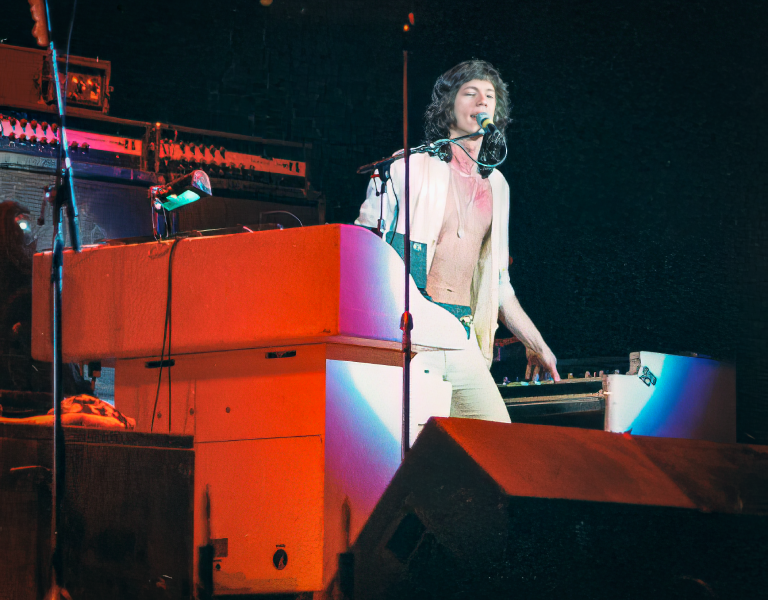
Roadmaster keyboardist Michael Read performs as the band opens for Blue Öyster Cult at Denver’s McNichols “Big Mac” Arena on August 1, 1979. Photo by Steve Caudle.
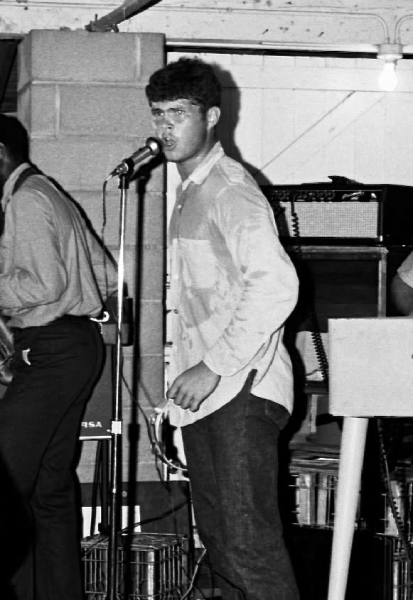
Asher Benrubi, later known as Adam Smasher, performing with Frenchie & the Oui Ouis at German Park in 1967. Photo courtesy of Tim Cox.
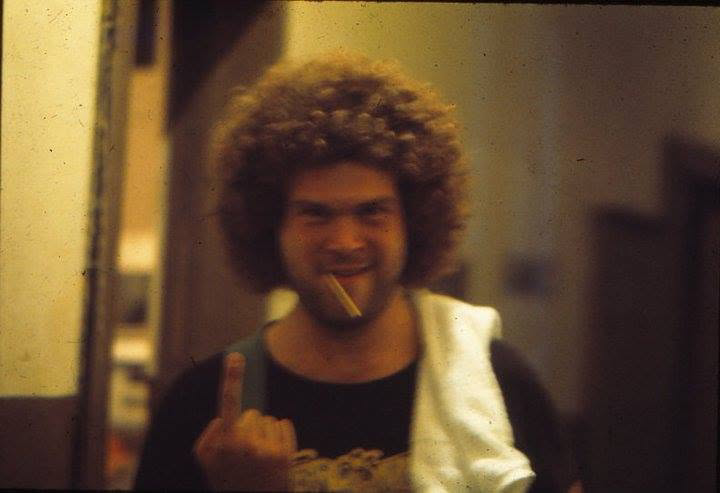
Roadmaster vocalist Asher Benrubi, circa the 1970s. Photo courtesy of Jim Drew.
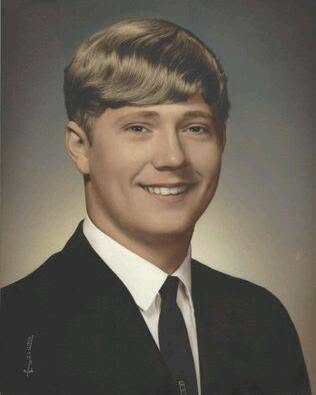
An early portrait of future Roadmaster lead singer Steve “Mac” McNally.
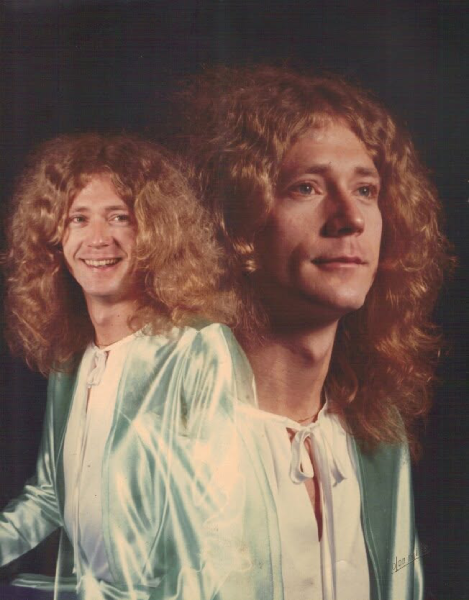
A studio portrait of Roadmaster vocalist Steve McNally, circa 1977, displayed for years in the front room of his mother Jessie’s home.
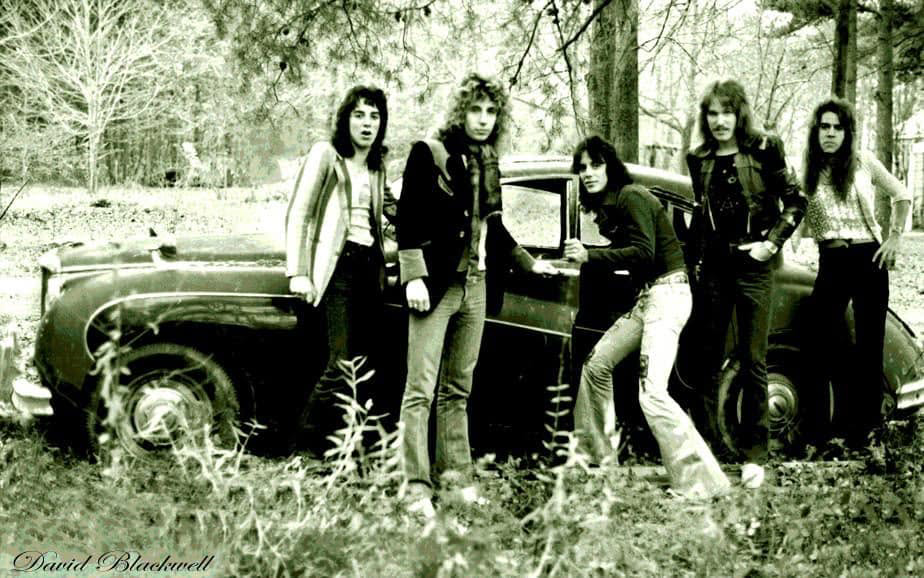
The Cherry People, featuring Rick Benick and Steve Riley, who later became members of Roadmaster. Photo by David Blackwell, courtesy of Brad Bishop.
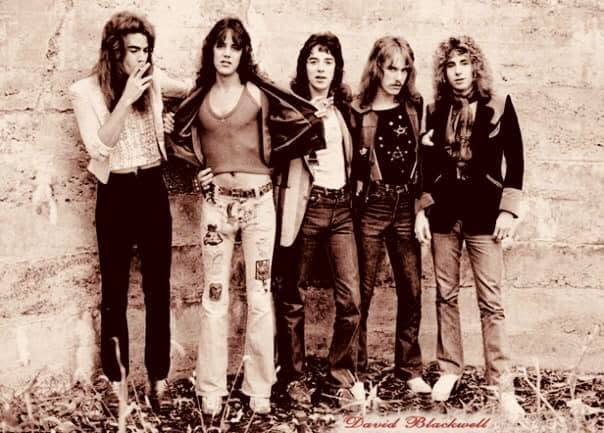
Before joining Roadmaster, Rick Benick and Steve Riley performed together in The Cherry People. Photo by David Blackwell, courtesy of Brad Bishop.
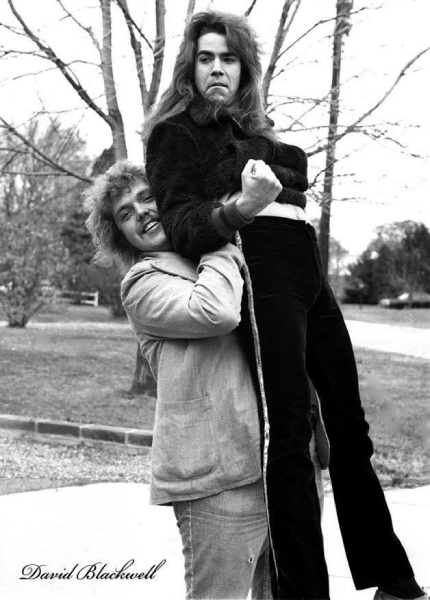
Rick Benick shares a playful moment with Steve Brooks, a roadie for the Cherry People, in Oxon Hill, Maryland. Photo by David Blackwell.
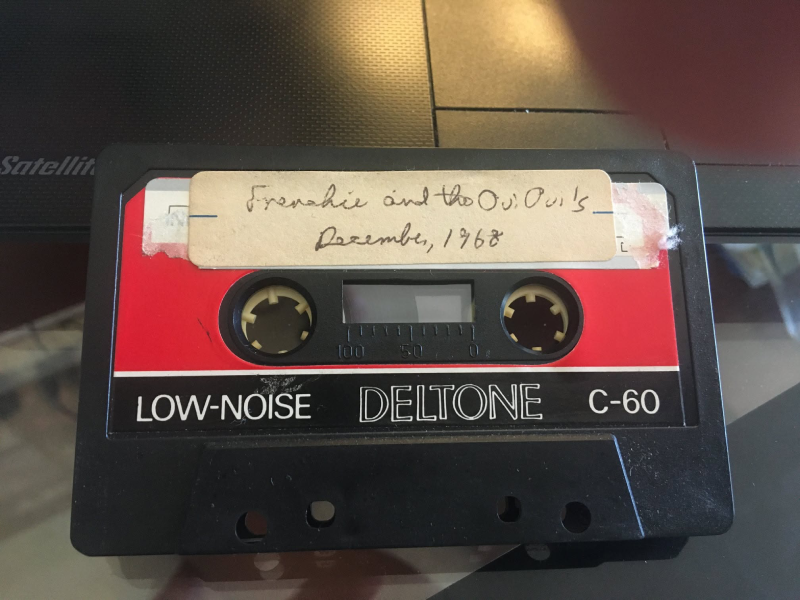
The early origins of Roadmaster: a 1968 cassette recording of Asher Benrubi and Michael Read’s first band, the Shortridge High School R&B cover band Frenchie and the Oui Oui’s.
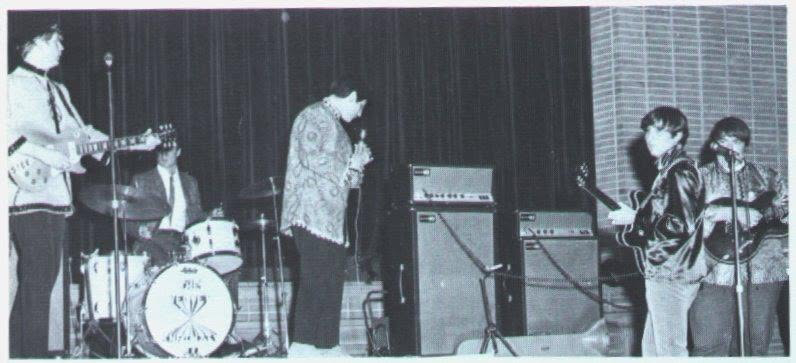
The Velvet Infinity, an early band featuring Steve “Mac” McNally, who later performed with Nebula Spoon before becoming Roadmaster’s lead singer. Photo courtesy of Michael Yoho.
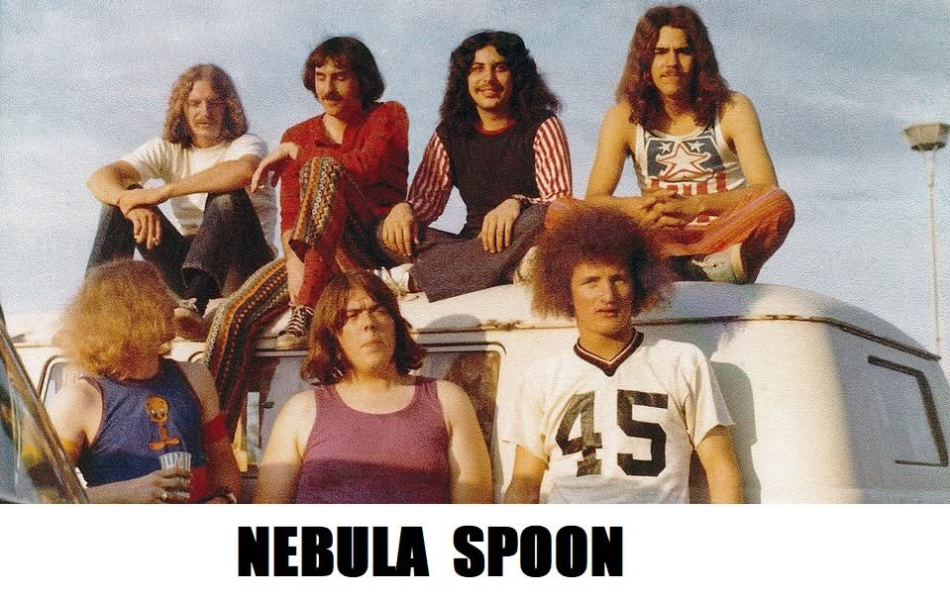
Nebula Spoon, a Kokomo, Indiana, rock band whose members included guitarist Rick Benick and vocalist Steve “Mac” McNally, both future bandmates of Michael Read in Roadmaster. Photo courtesy of Alan Kaye.
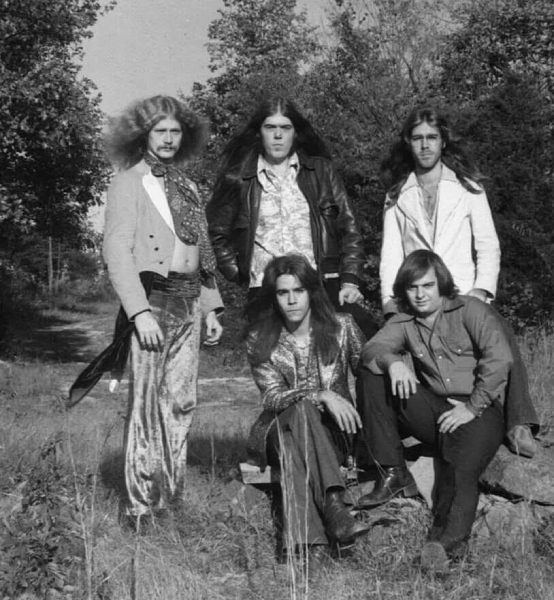
Nebula Spoon, circa 1973, featuring Steve “Mac” McNally, Ricky Benick, and Rex Cruea. McNally and Benick later joined Michael Read in Roadmaster.
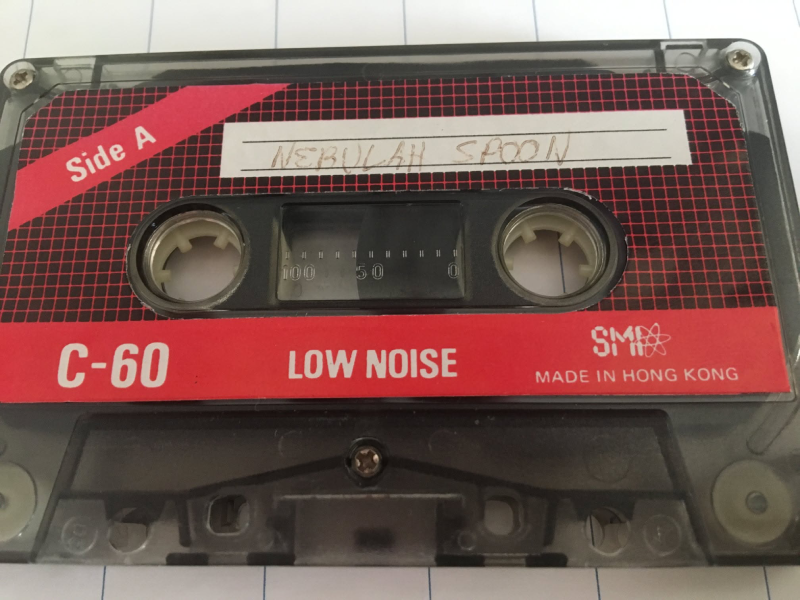
A vintage cassette recording of Nebula Spoon preserves music from the band that preceded Roadmaster.
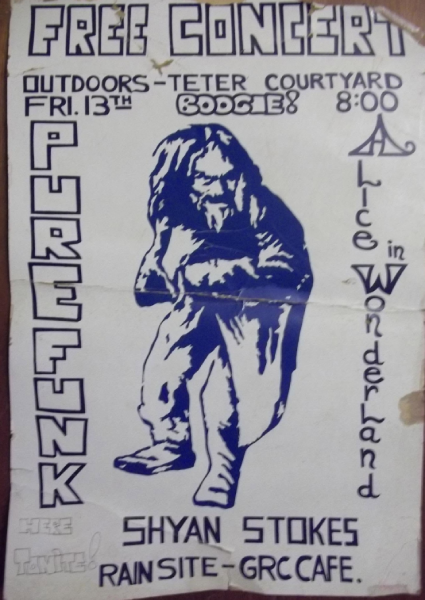
An early-1970s poster advertises a free Pure Funk concert at Indiana University, with the GRC Cafeteria at Ashton Dorm listed as the rain site. Michael Read played a Mini Moog at the performance.
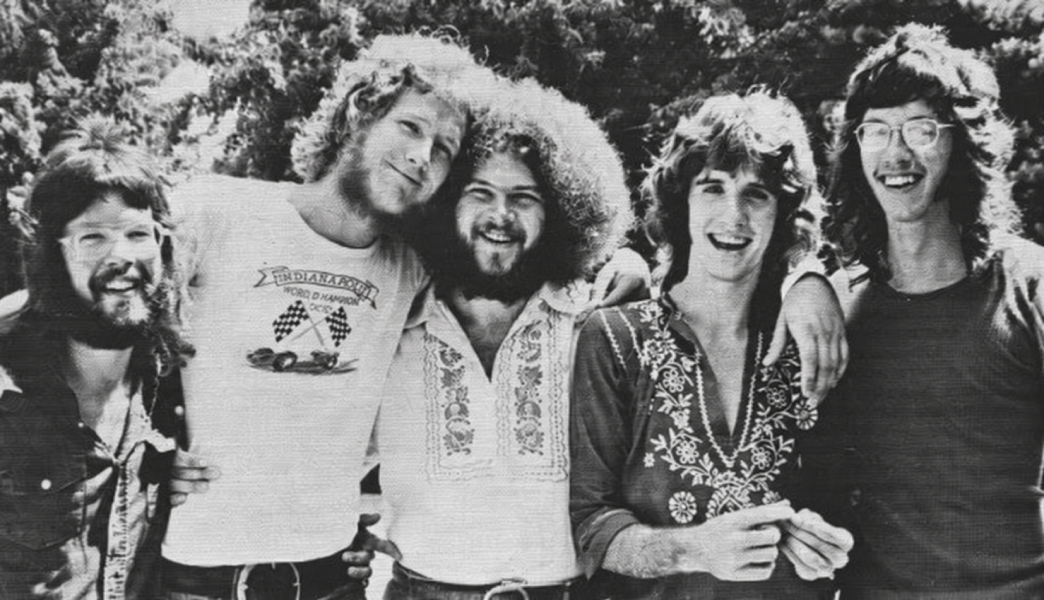
Pure Funk outside the band’s headquarters on Woodlawn in Bloomington, 1972.
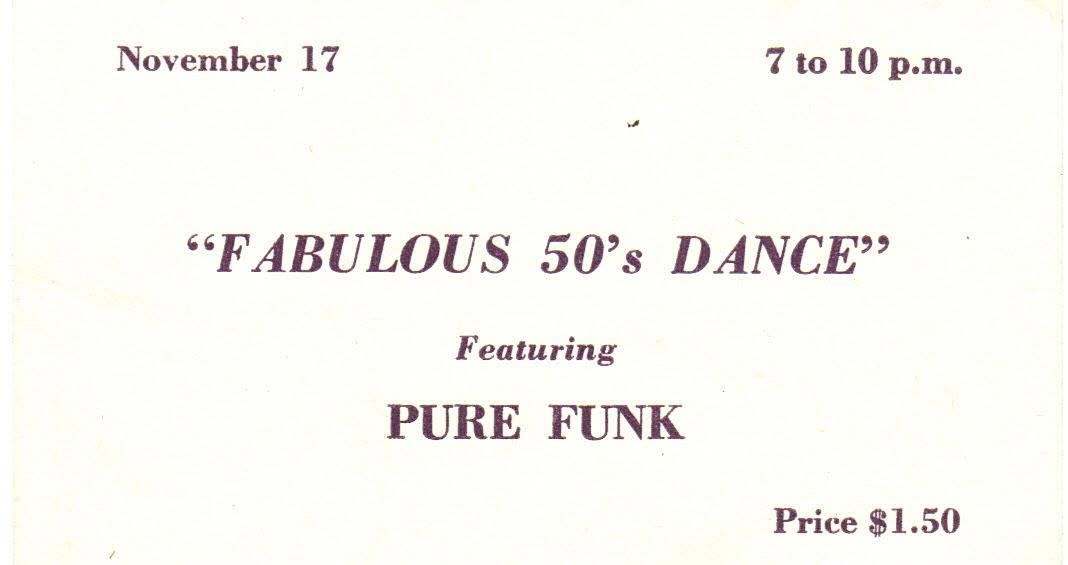
Ticket for Pure Funk at Ben Davis High School’s Fabulous 50’s Dance on November 17, circa 1972–73. Photo courtesy of Howard Phillips.
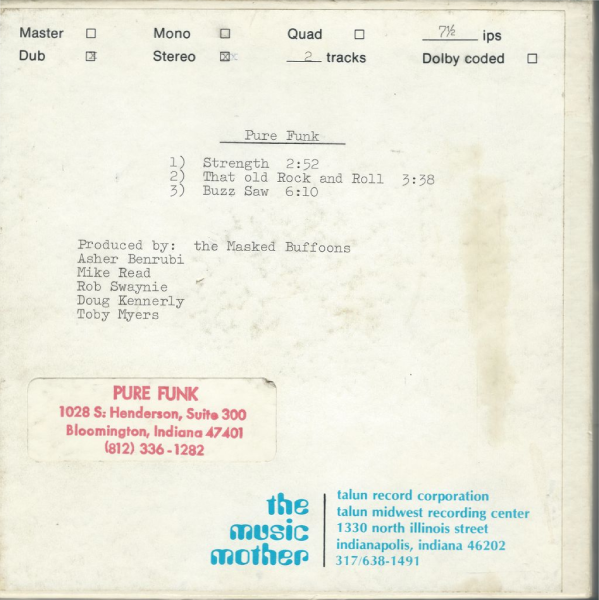
A 1973 Pure Funk tape box from Talun Recording Corporation in Indianapolis lists “Strength,” “That Old Rock and Roll,” and “Buzz Saw.” Production is credited to “the Masked Buffoons”: Asher Benrubi, Mike Read, Rob Swaynie, Doug Kennerly, and Toby Myers.
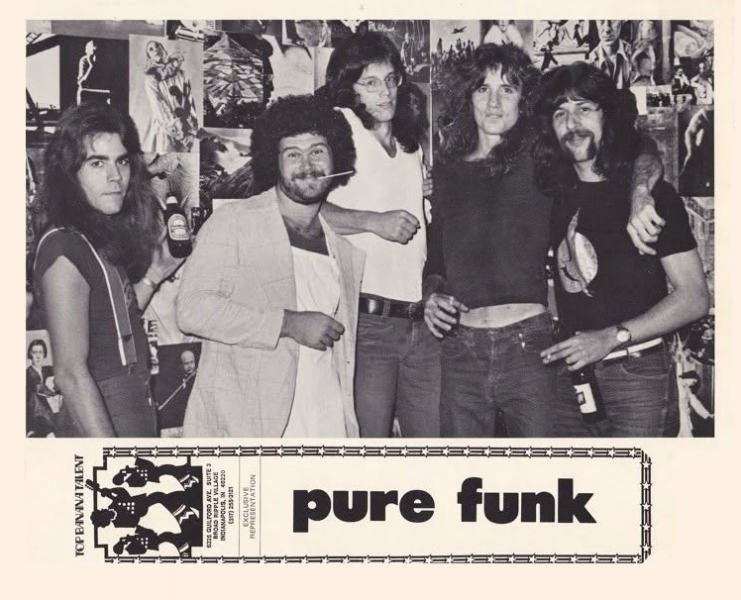
Pure Funk in an early promotional photo. Photo courtesy of Alan Kaye.
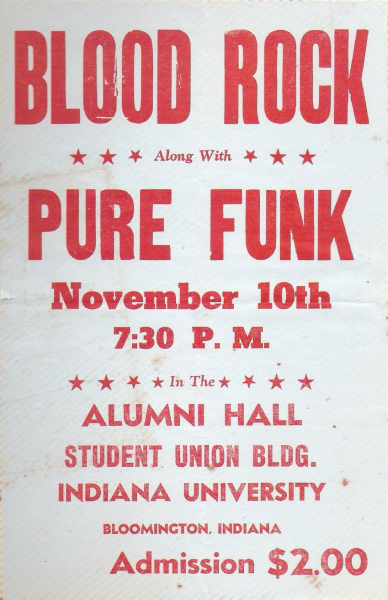
Concert poster for Bloodrock with Pure Funk at Alumni Hall in the Indiana University Student Union Building on November 10. Photo courtesy of Donnie Casel.
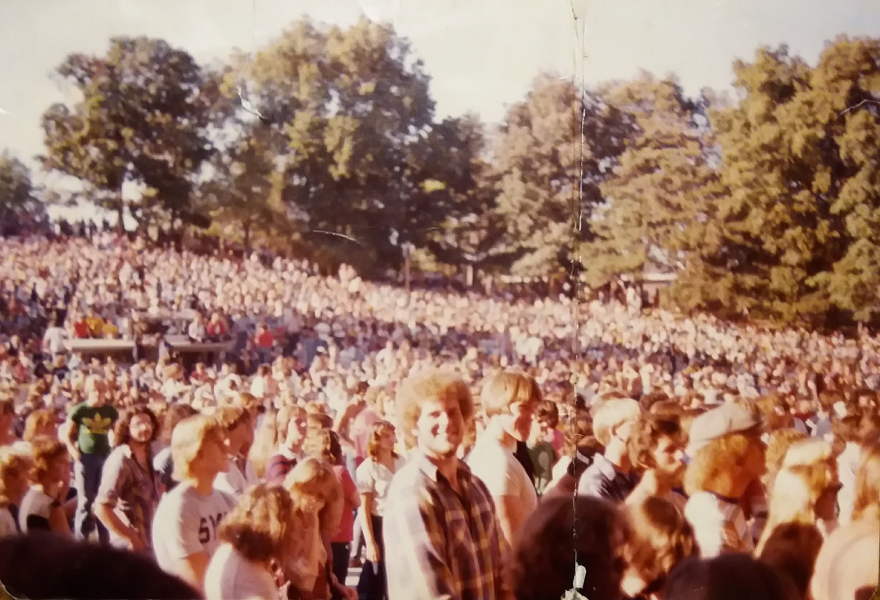
A large crowd gathers on Slayter Hill at Purdue University for a Roadmaster performance on September 23, 1973. Photo courtesy of Jeff Hudson.
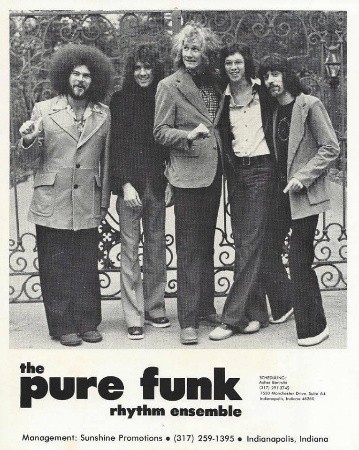
The Bloomington-based Pure Funk Rhythm Ensemble, which later evolved into Roadmaster, in an early promotional photo.
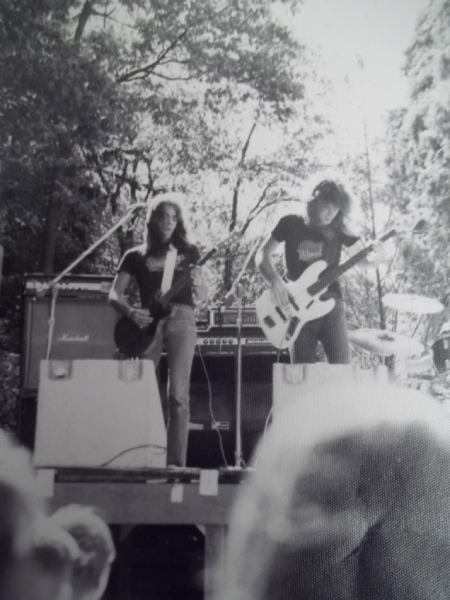
Pure Funk’s Rick Benick, left, and Toby Myers perform in Dunn Meadow at Indiana University Bloomington, circa 1975.
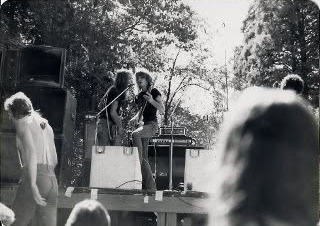
Pure Funk performing at Dunn Meadow, Indiana University, Bloomington, circa 1975. Left to right: Rick Benick, Toby Myers, and Asher Benrubi. Photo courtesy of Don Smith.
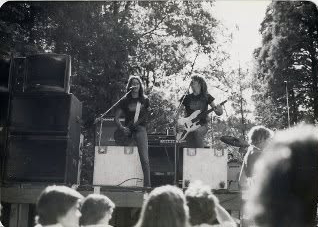
Pure Funk performing at Dunn Meadow, Indiana University, Bloomington, circa 1975. Left to right: Rick Benick on guitar and Toby Myers on bass. Photo courtesy of Don Smith.
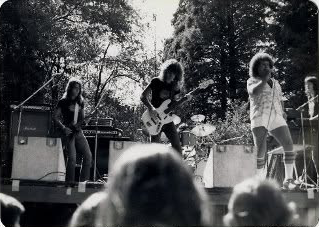
Pure Funk performing at Dunn Meadow, Indiana University, Bloomington, circa 1975. Left to right: Rick Benick on guitar, Toby Myers on bass, and Asher Benrubi on vocals. Photo courtesy of Don Smith.
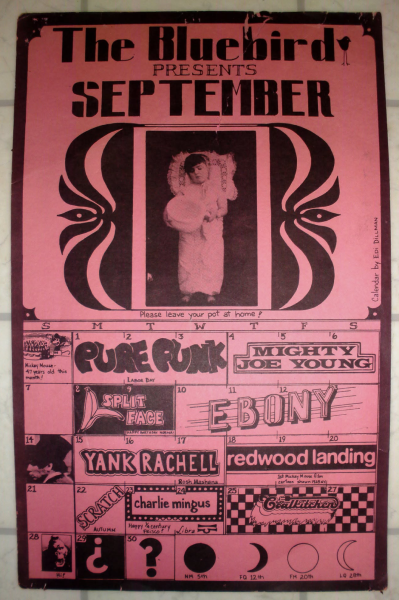
The Bluebird’s September 1975 entertainment calendar featuring Pure Funk.
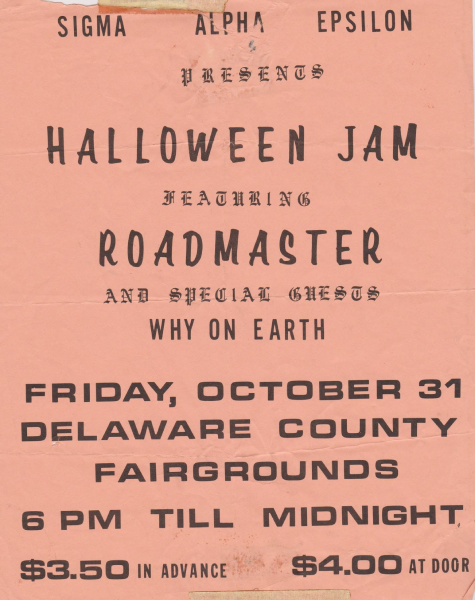
A poster for Sigma Alpha Epsilon’s Halloween Jam featuring Roadmaster and special guest Why on Earth at the Delaware County Fairgrounds on October 31, 1975.
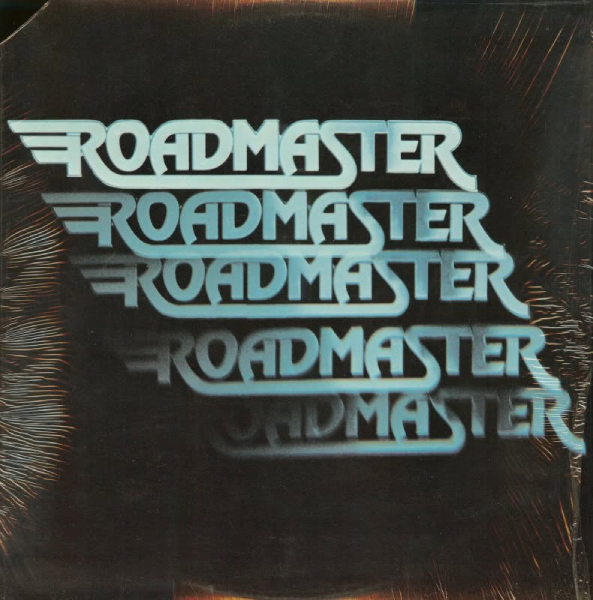
The cover of Roadmaster’s self-titled debut album, released by Village Records in 1976. Photo courtesy of Alan Kaye.
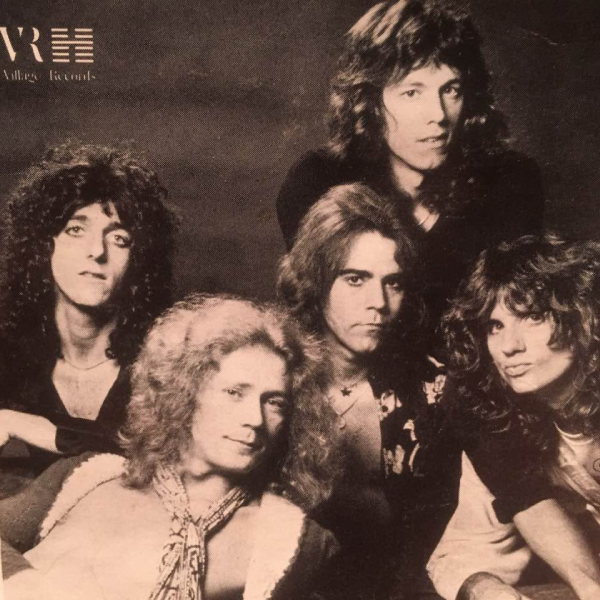
Roadmaster with drummer Stephen “Steve” Riley during the era of the band’s 1976 self-titled debut on Village Records.
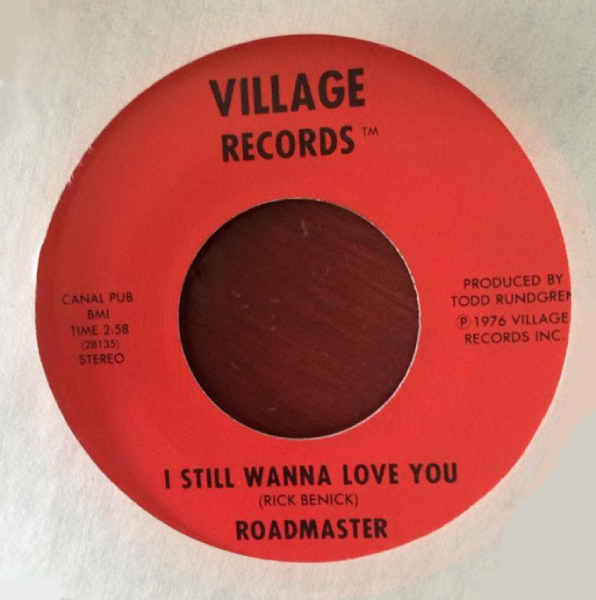
Roadmaster’s 1976 single “I Still Wanna Love You,” written by Rick Benick and produced by Todd Rundgren for Village Records.
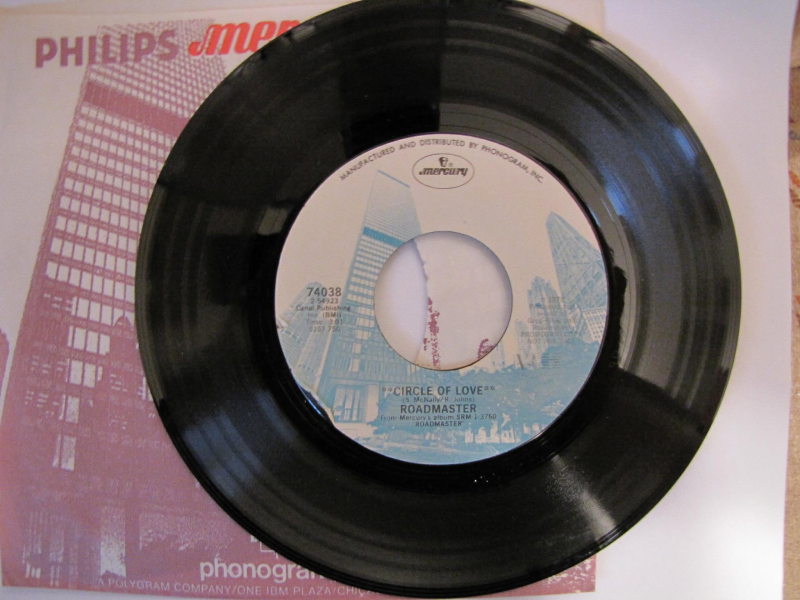
Roadmaster’s “Circle of Love” 45 rpm single, released on Mercury Records. Photo courtesy of Terry Stewart.
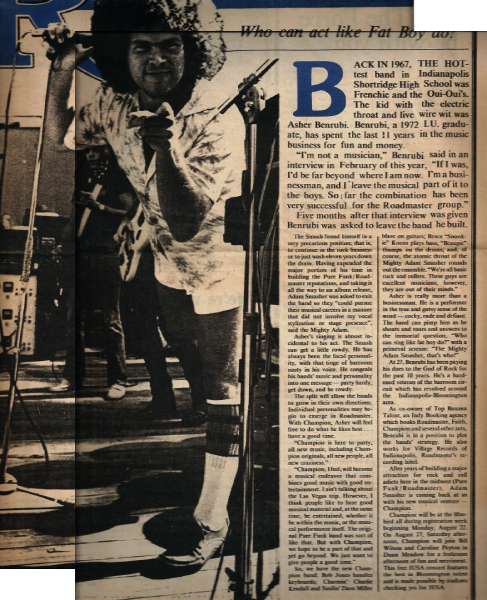
“Who Can Act Like Fat Boy Do?” profiles Roadmaster vocalist Asher Benrubi and his larger-than-life stage personality. Photo courtesy of Donnie Casel.
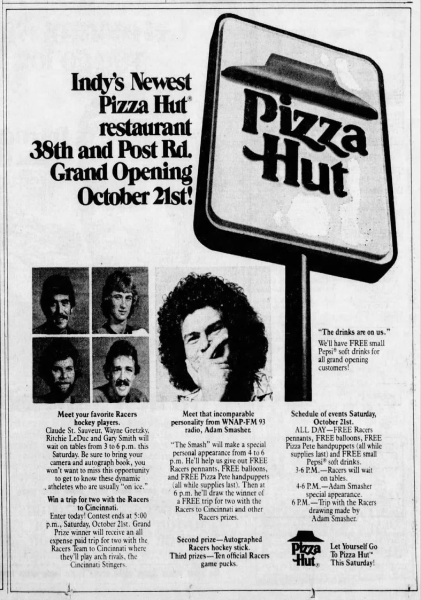
Asher Benrubi, known on the air as Adam Smasher, makes a special appearance at the October 21 grand opening of the Pizza Hut at 38th Street and Post Road in Indianapolis.
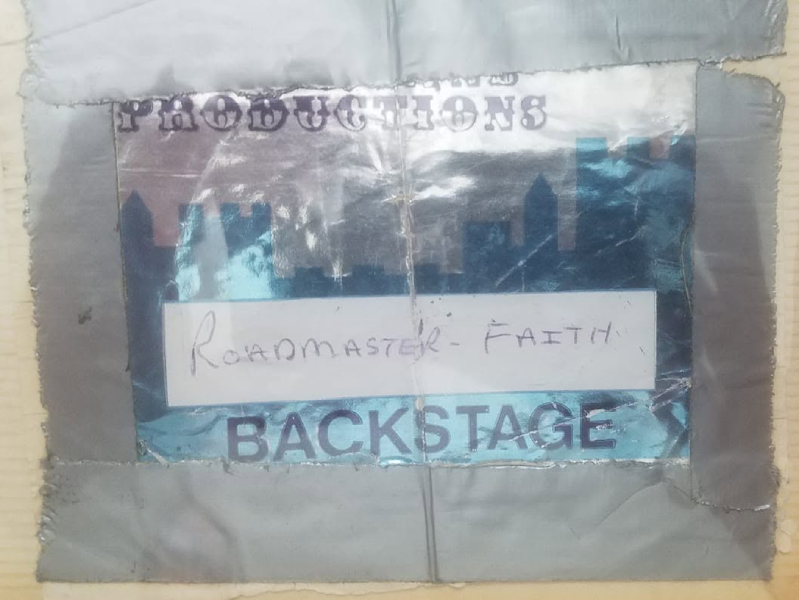
A backstage pass for a Roadmaster and Faith concert, circa 1976. Photo courtesy of Jeff Glover.
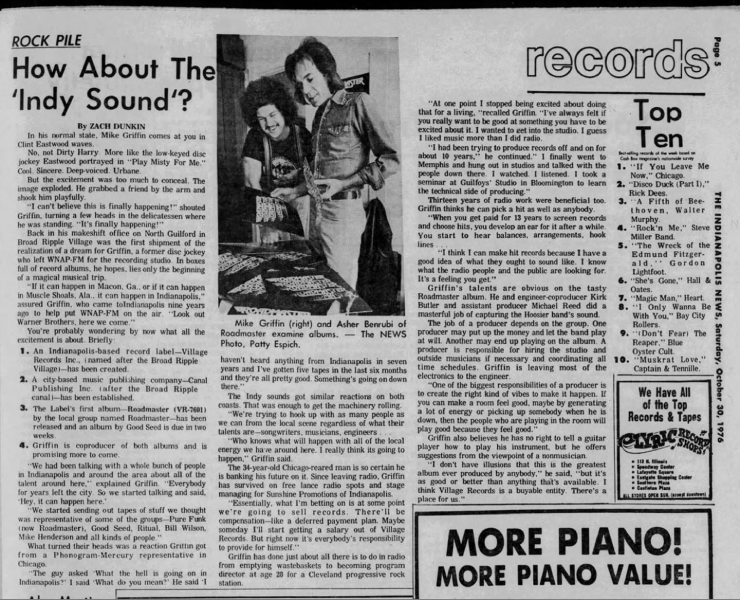
An October 30, 1976, Indianapolis News article by Zach Dunkin features producer Mike Griffin and Roadmaster keyboardist Asher Benrubi discussing the emerging “Indy Sound.” Photo courtesy of John Brian.
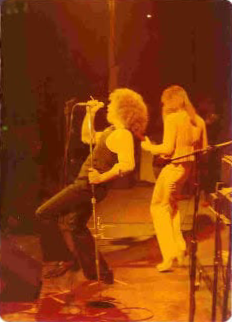
Steve McNally on vocals and Rick Benick on guitar performing with Roadmaster in December 1976. Photo courtesy of John Watson.
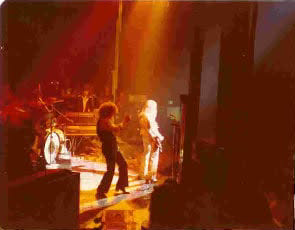
Steve McNally on vocals and Rick Benick on guitar during an early Roadmaster performance in December 1976. Photo courtesy of John Watson.
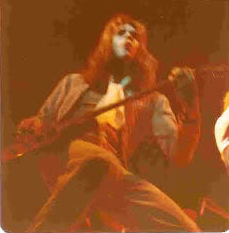
Rick Benick on guitar performing with Roadmaster in December 1976. Photo courtesy of John Watson.
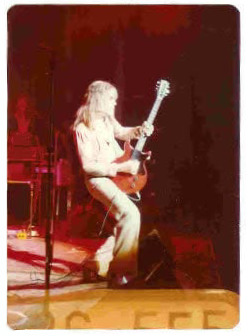
Rick Benick on guitar performing with Roadmaster in December 1976. Photo courtesy of John Watson.
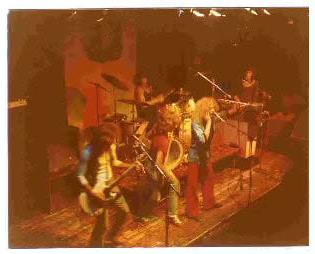
Roadmaster in concert, December 1976. Photo courtesy of John Watson.
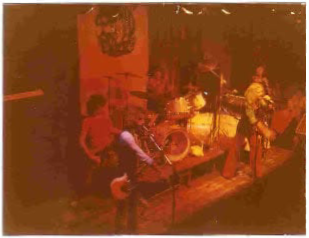
An early Roadmaster performance featuring vocalist Steve McNally and drummer Bobby Johns, December 1976. Photo courtesy of John Watson.
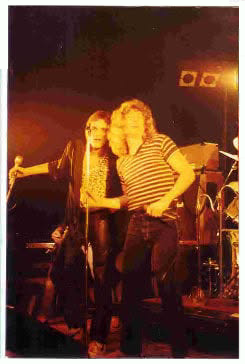
Roadmaster performance in December 1976. Photo courtesy of John Watson.
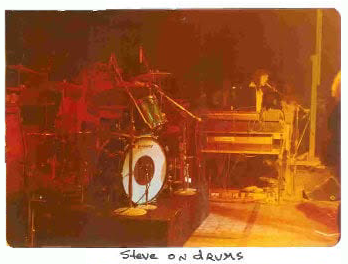
Steve on drums and Michael Read on keyboards performing with Roadmaster in December 1976. Photo courtesy of John Watson.
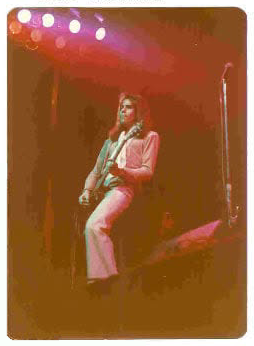
Rick Benick on guitar performing with Roadmaster in December 1976. Photo courtesy of John Watson.
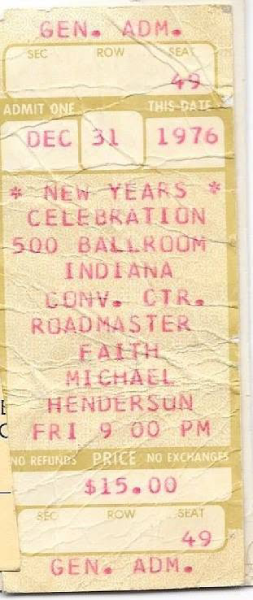
Roadmaster, Faith, and Michael Henderson performed at a New Year’s Eve celebration at the Indiana Convention Center on December 31, 1976. Photo courtesy of Alan Kaye.
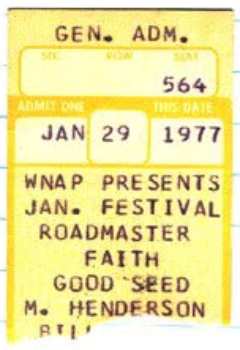
Ticket stub for WNAP’s January Festival featuring Roadmaster, Faith, Good Seed and Michael Henderson on January 29, 1977.
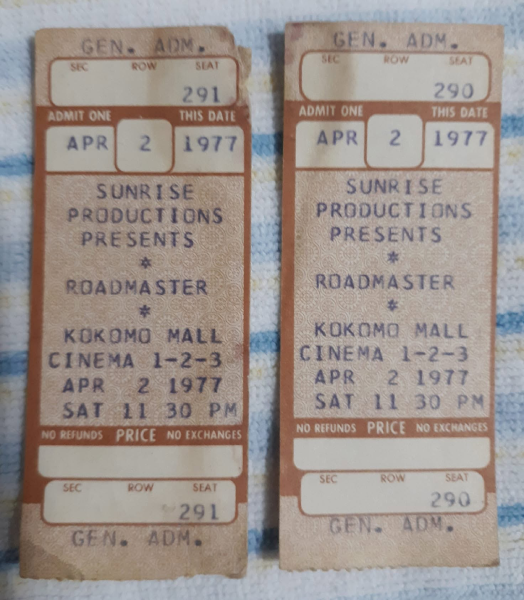
Ticket stubs for Sunrise Productions’ presentation of Roadmaster at Kokomo Mall Cinema 1-2-3 on April 2, 1977. Photo courtesy of David Gardner.
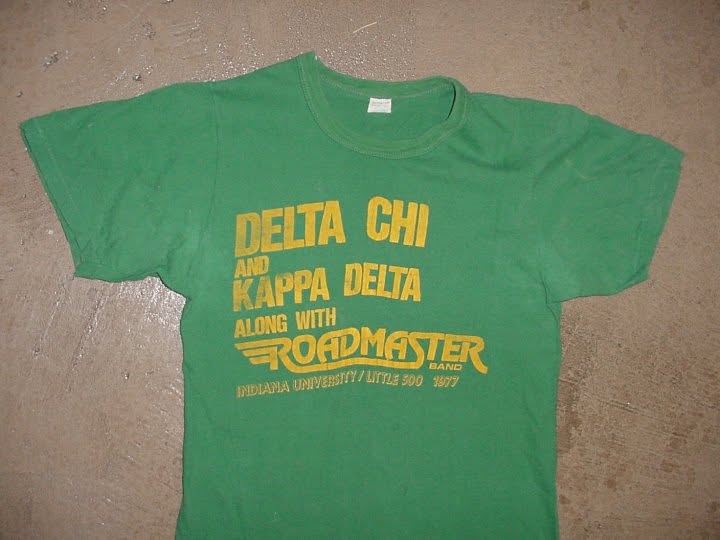
Roadmaster T-shirt from Indiana University’s Little 500 in 1977.
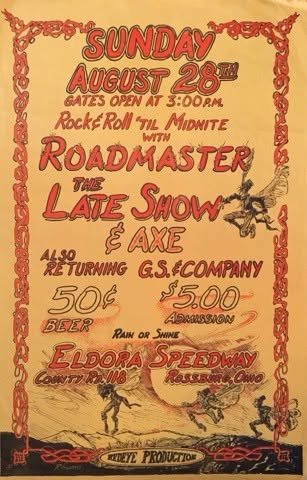
A concert poster announces Roadmaster with the Late Show, Axe, and G.S. & Company at Eldora Speedway in Rossburg, Ohio, on Sunday, August 28, 1977. Photo courtesy of Rony Frey.
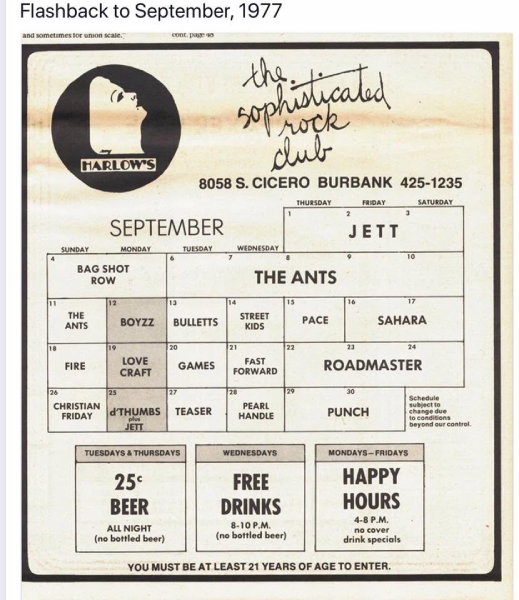
Harlow’s September 1977 calendar lists Roadmaster for September 23–24 at the Burbank, Illinois, rock club. Photo courtesy of Kathi Horsechick.
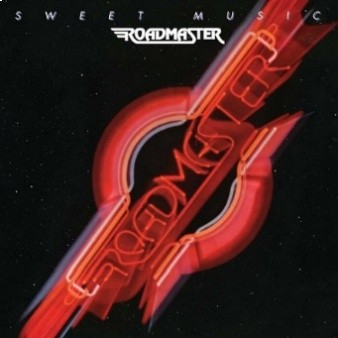
Front cover of Roadmaster’s 1978 LP “Sweet Music”.
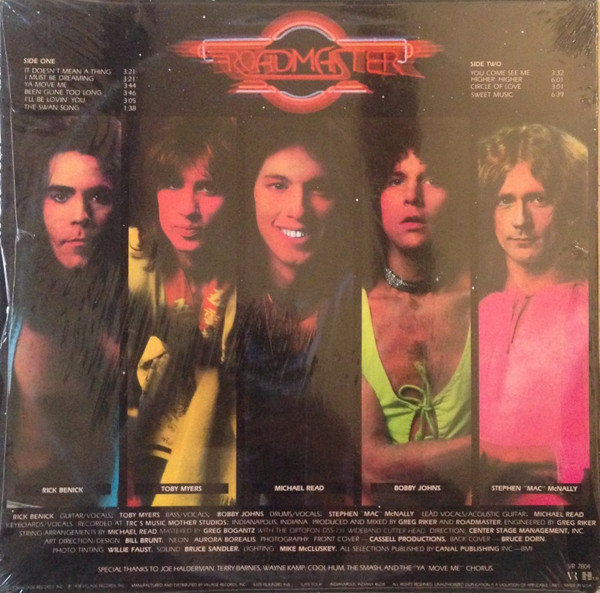
The back cover of Roadmaster’s 1978 album “Sweet Music”, featuring band portraits, the track listing, and album credits.
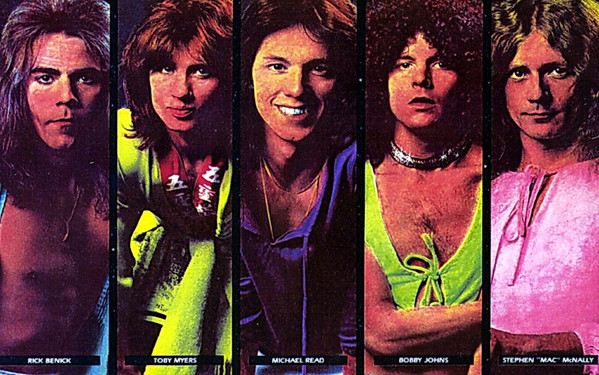
Roadmaster members pictured on the 1978 “Sweet Music” album cover, from left: Rick Benick, Toby Myers, Michael Read, Bobby Johns, and Stephen “Mac” McNally.
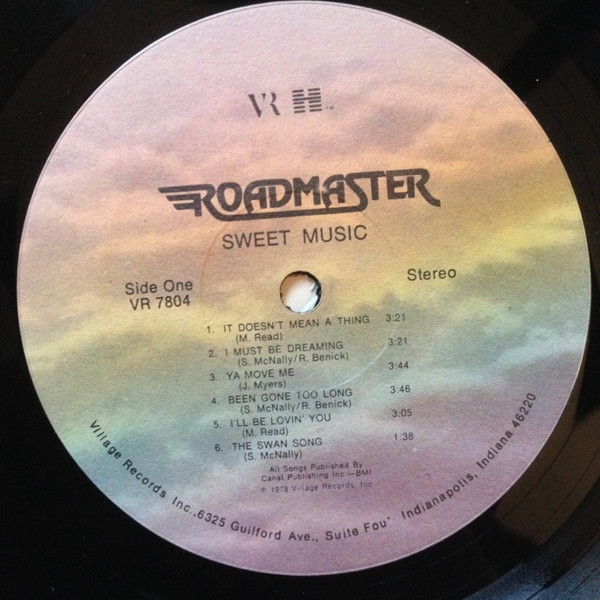
The Side 1 label of Roadmaster’s 1978 album “Sweet Music”, released on Village Records.
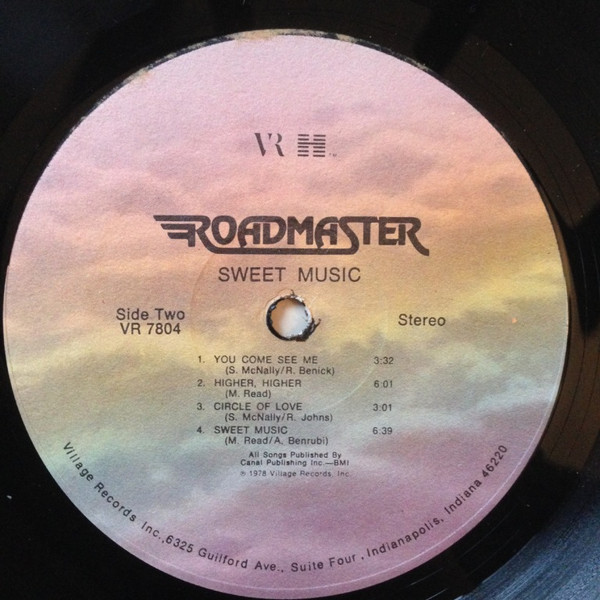
The Side 2 label of Roadmaster’s 1978 album “Sweet Music”, released on Village Records.
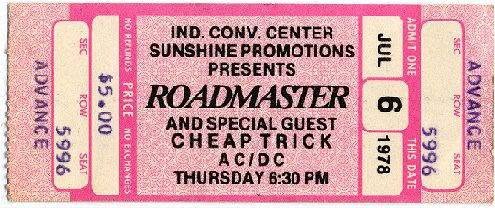
Advance ticket for Roadmaster’s July 6, 1978, concert with opening acts Cheap Trick and AC/DC at the Indiana Convention Center.
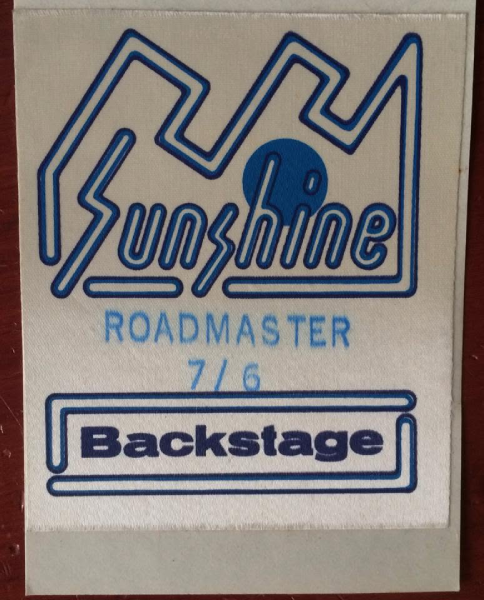
Sunshine backstage pass for Roadmaster’s July 6, 1978, concert with Cheap Trick and AC/DC at the Indiana Convention Center. Photo courtesy of Mary Lee Pappas.
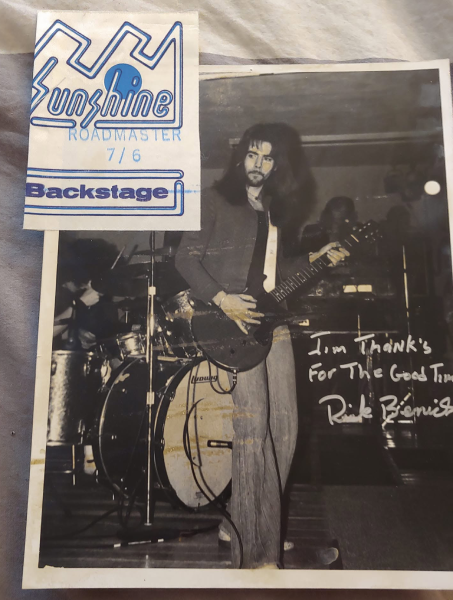
Autographed performance photo of Roadmaster guitarist Ricky Benick with a Sunshine backstage pass from July 6, 1978. Photo courtesy of Jimmy Drew.
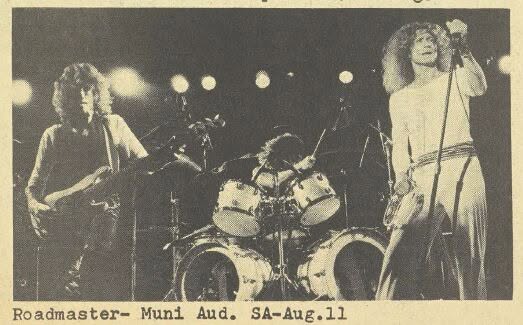
Roadmaster performs at Municipal Auditorium in San Antonio on August 11, 1978. Photo courtesy of John Watson.
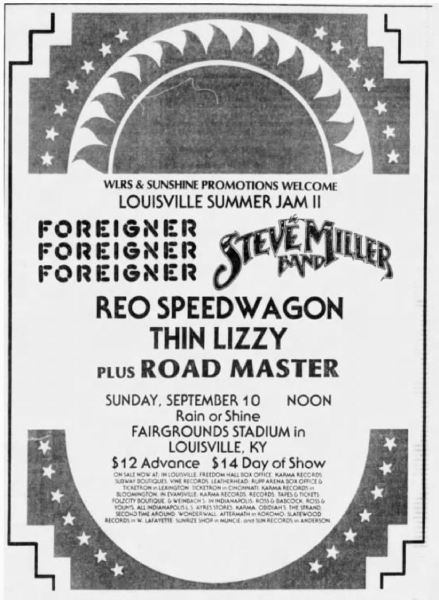
Poster for WLRS and Sunshine Promotions’ Louisville Summer Jam II featuring Foreigner, the Steve Miller Band, REO Speedwagon, Thin Lizzy and Roadmaster at Fairgrounds Stadium on September 10, 1978.
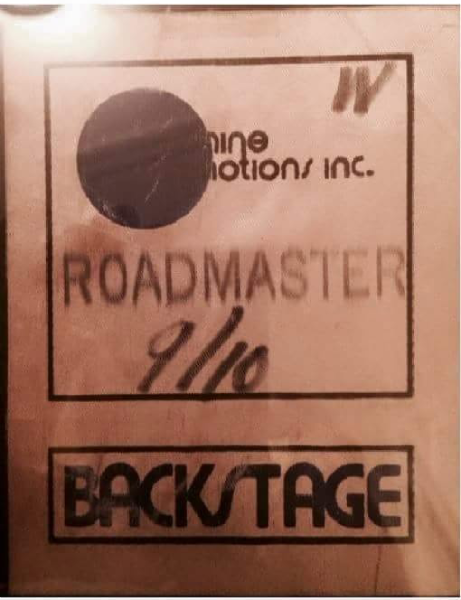
Sunshine Promotions backstage pass for Roadmaster on September 10. Photo courtesy of Richard Reasoner.
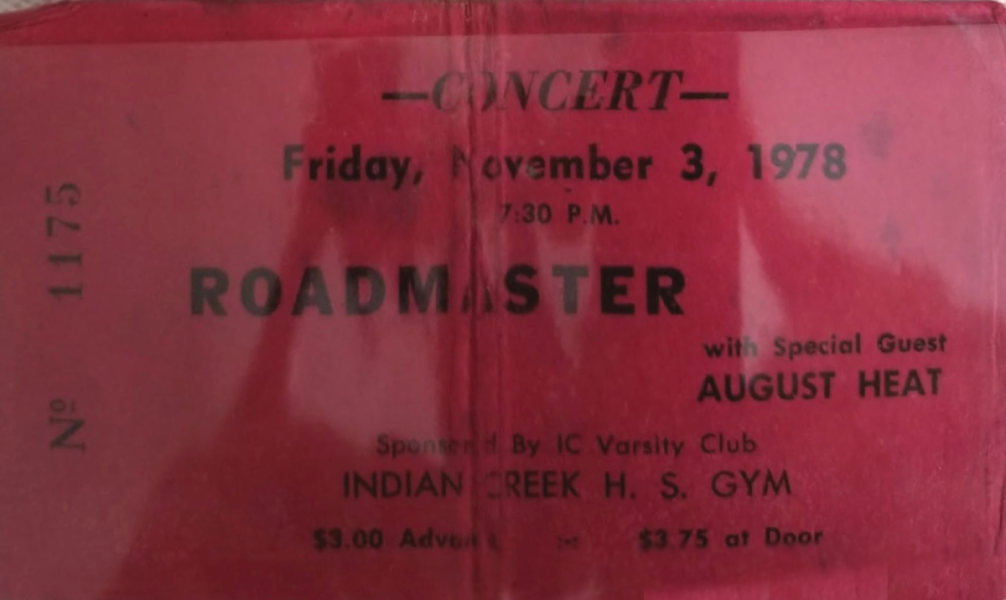
A ticket stub for Roadmaster with special guest August Heat at the Indian Creek High School gym on November 3, 1978. Photo courtesy of Eric Chenault.
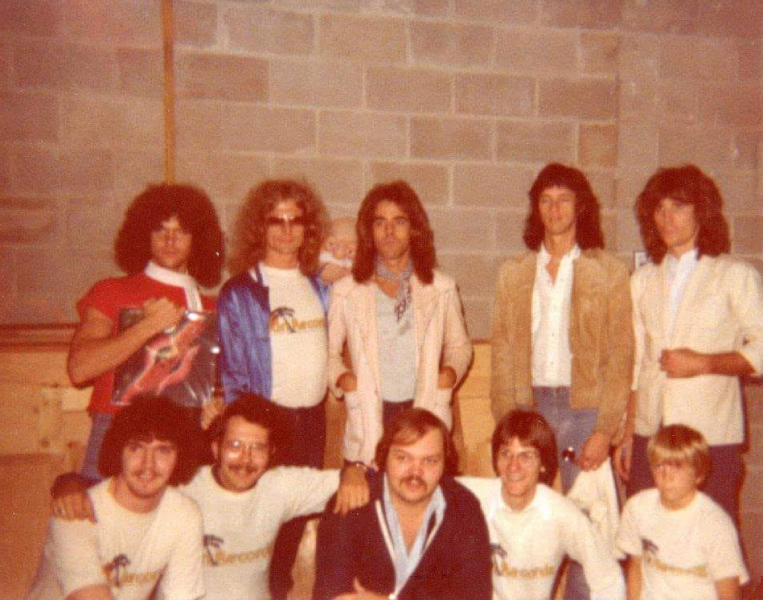
Roadmaster with the staff of Sun Records in Terre Haute, Indiana, in 1978. Photo courtesy of Tony Holladay.
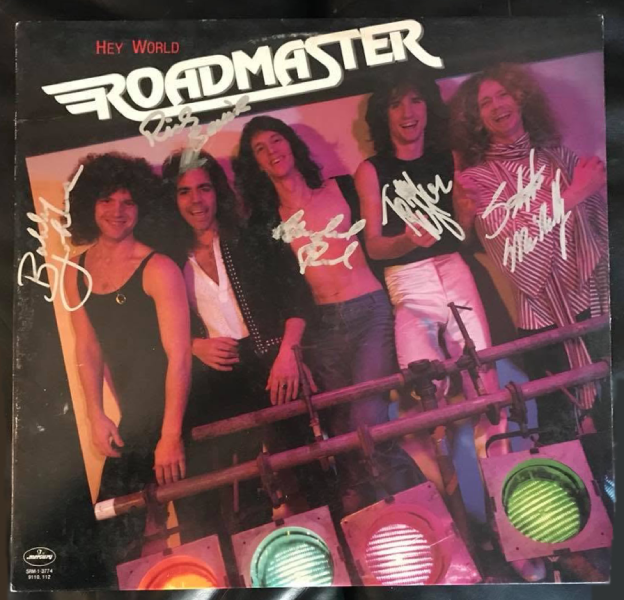
An autographed copy of Roadmaster’s 1979 album “Hey World”. Photo courtesy of Michelle Rushton Roberts.
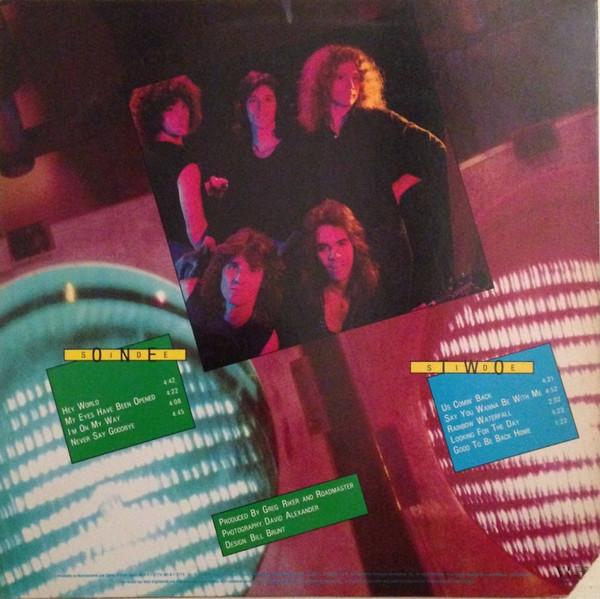
The back cover of Roadmaster’s 1979 album “Hey World”, featuring a band portrait, track listing, and production credits.
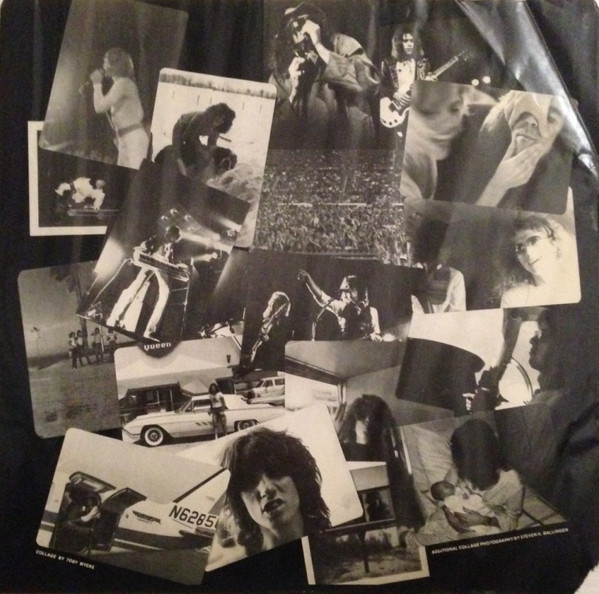
The front of the “Hey World” vinyl dust jacket features a collage of Roadmaster performance and behind-the-scenes photographs.
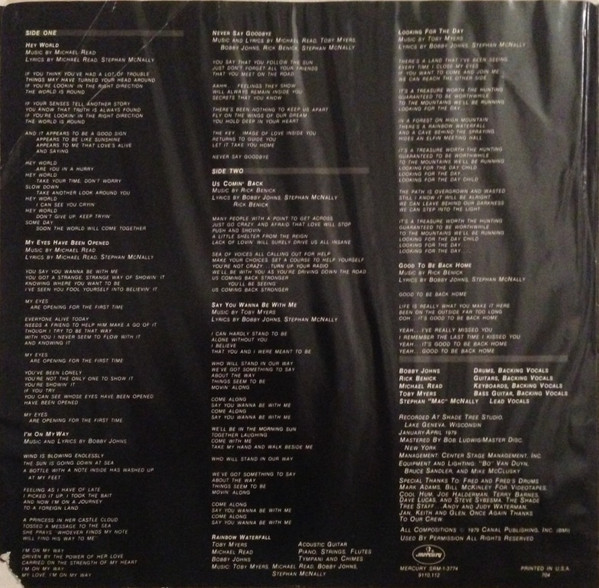
The back of the “Hey World” vinyl dust jacket features song lyrics, songwriting credits, and album personnel.
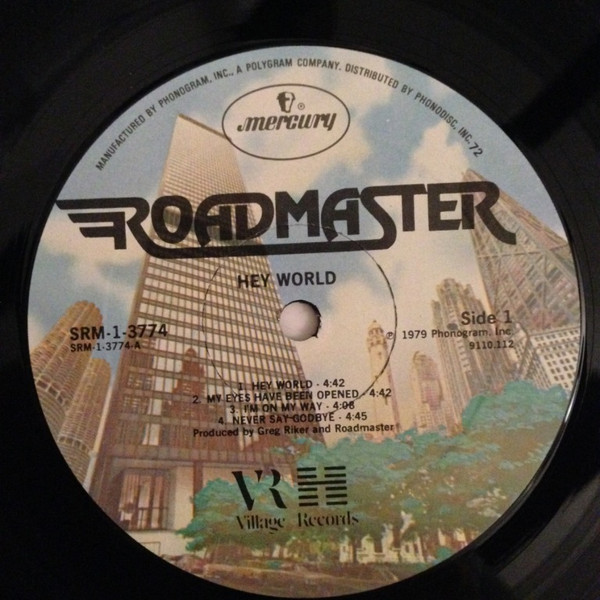
The Side 1 label of Roadmaster’s 1979 album “Hey World”, released on Mercury Records.
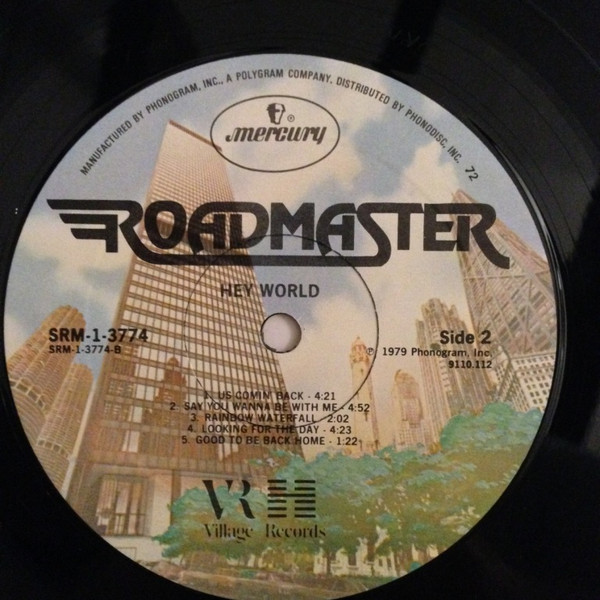
The Side 2 label of Roadmaster’s 1979 album “Hey World”, released on Mercury Records.
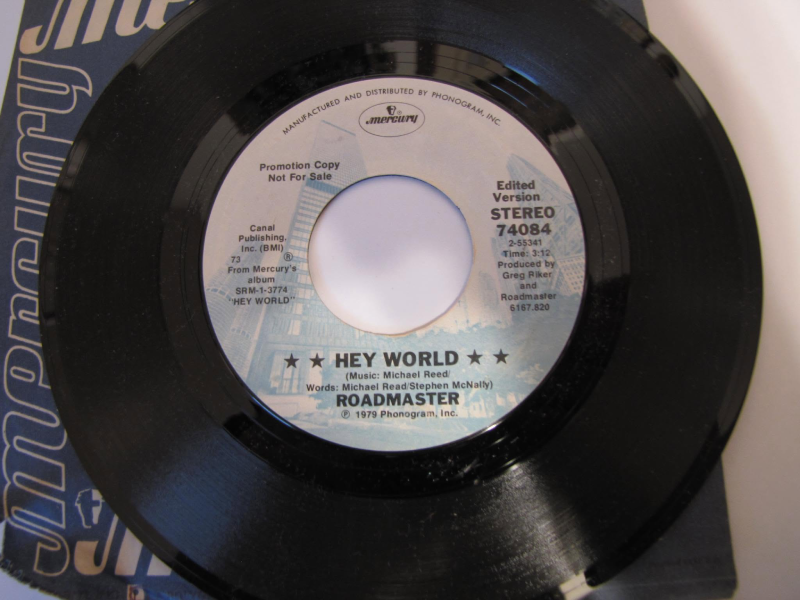
A promotional copy of Roadmaster’s 1979 “Hey World” 45 rpm single, released on Mercury Records. Photo courtesy of Terry Stewart.
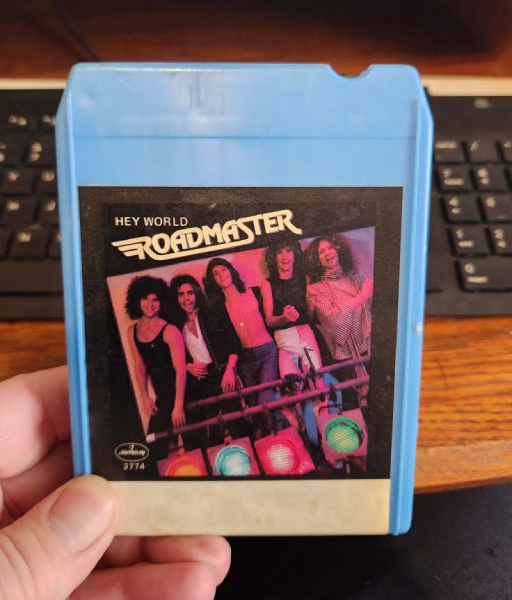
Roadmaster’s 1979 album “Hey World” on an 8-track cartridge. Photo courtesy of Mike Cate.
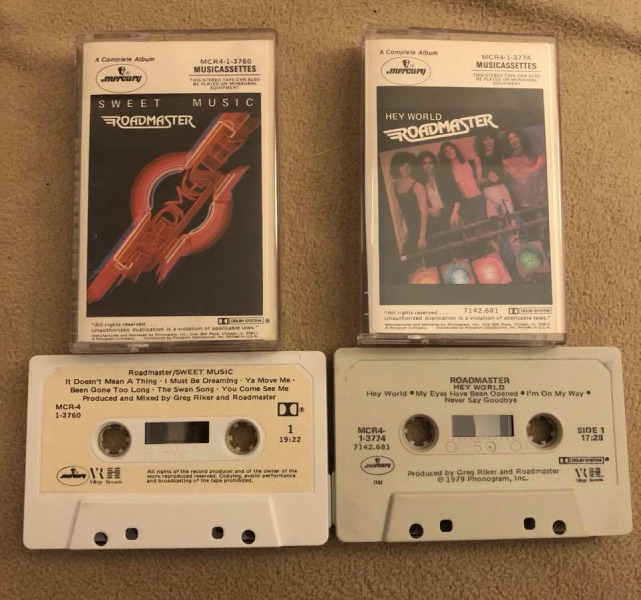
Cassette editions of Roadmaster’s “Sweet Music” and “Hey World” albums, shown with their original cases. Photo courtesy of Bob Drew.
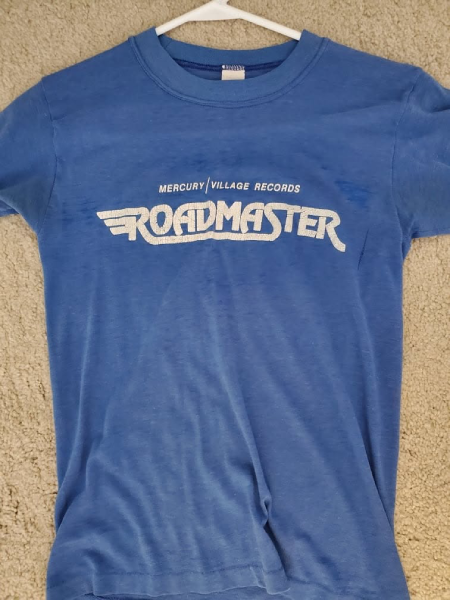
The front of a vintage Roadmaster *Hey World* T-shirt features the band’s winged logo and Mercury/Village Records. Photo courtesy of Brad Farber.
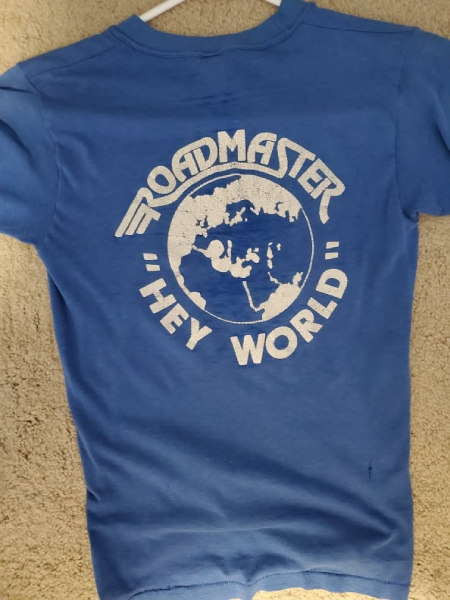
The back of a vintage Roadmaster *Hey World* T-shirt features the band’s logo surrounding a globe. Photo courtesy of Brad Farber.
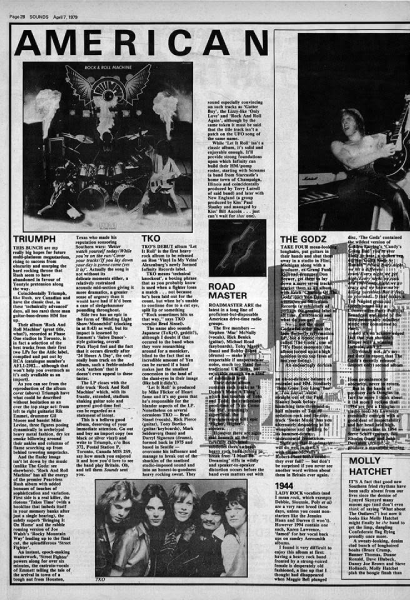
ROADMASTER – First UK Newspaper Review – April 7 1979 – Photo from Kelv Hellrazer
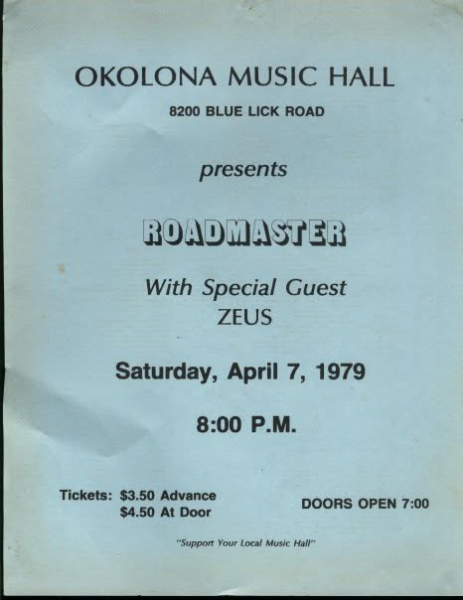
Concert poster for Roadmaster with special guest Zeus at Okolona Music Hall on April 7, 1979.
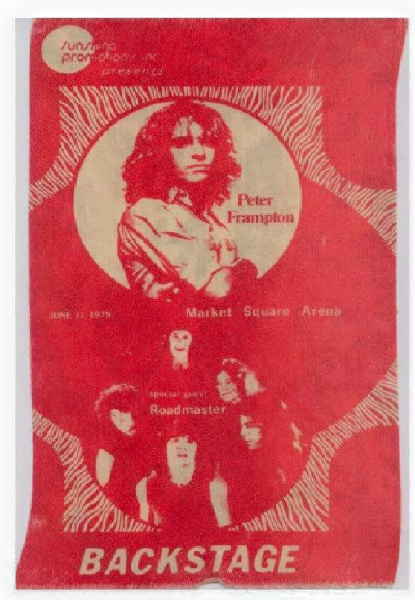
Backstage pass for Sunshine Promotions’ presentation of Peter Frampton with special guest Roadmaster at Market Square Arena on June 11, 1979. Photo courtesy of Richard Reasoner.
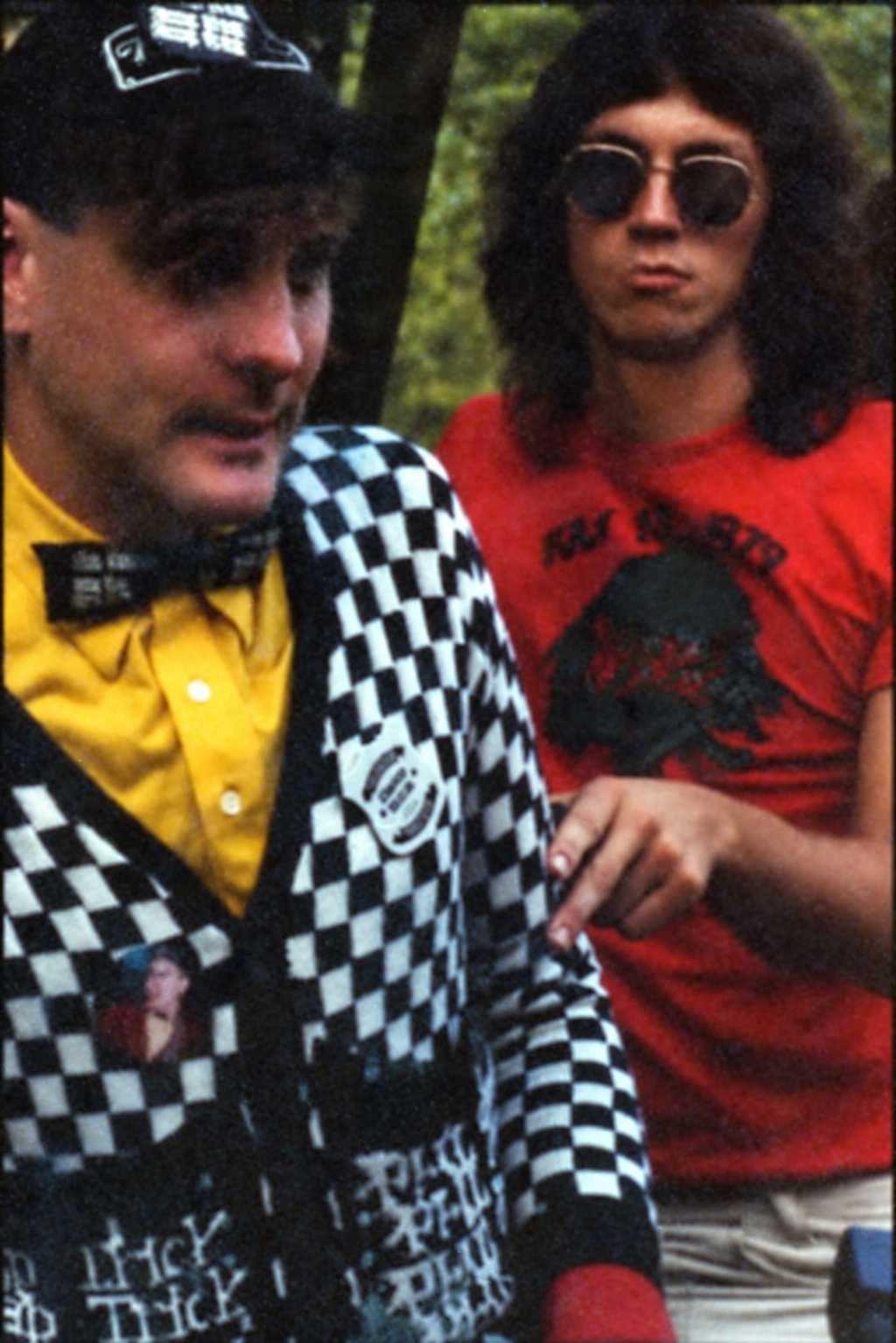
Cheap Trick’s Rick Nielsen (left) and Roadmaster’s Michael Read at Legend Valley on July 15, 1979, when their bands shared the bill with Todd Rundgren & Utopia, The Cars, and Eddie Money. Photo courtesy of Guy Davis.
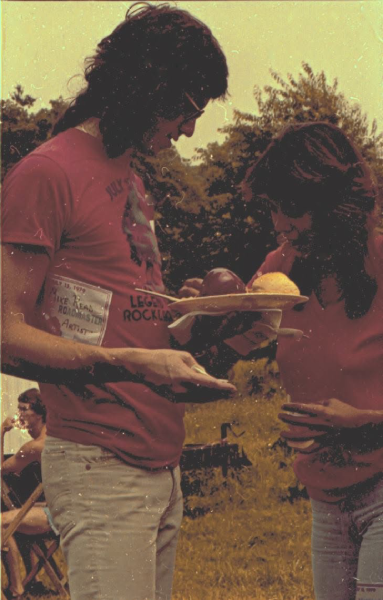
Roadmaster keyboardist Michael Read at Legend Valley on July 15, 1979, where Roadmaster performed alongside Todd Rundgren & Utopia, Cheap Trick, the Cars, and Eddie Money. Photo courtesy of Guy Davis.
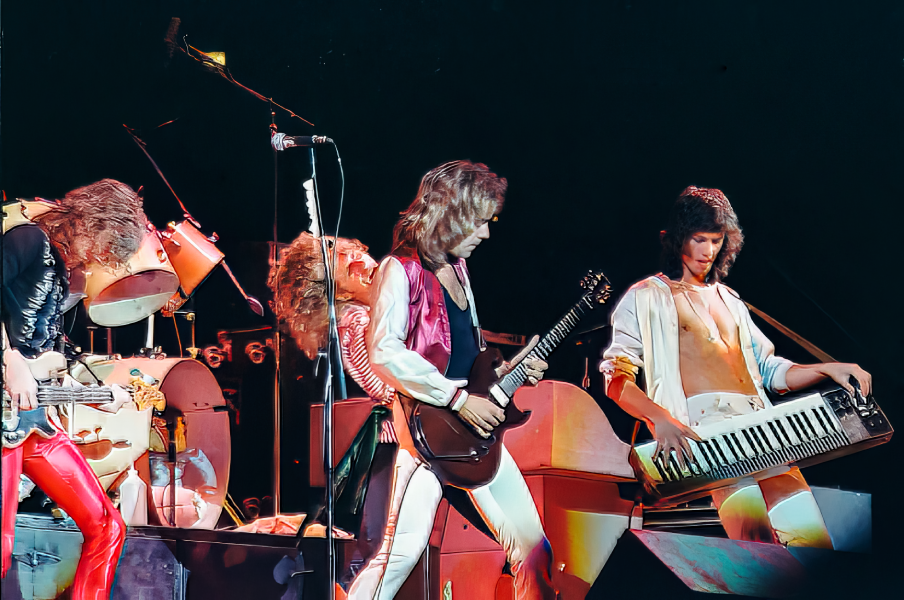
Roadmaster opens for Blue Öyster Cult at Denver’s McNichols “Big Mac” Arena on August 1, 1979. Photo by Steve Caudle.
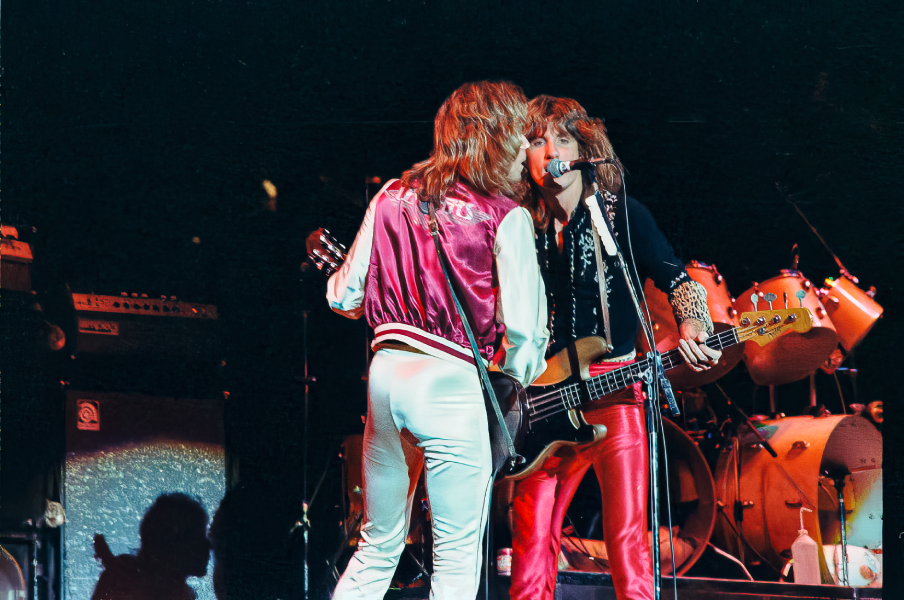
Roadmaster guitarist Rick Benick (left) and bassist Toby Myers perform as the band opens for Blue Öyster Cult at Denver’s McNichols “Big Mac” Arena on August 1, 1979. Photo by Steve Caudle.
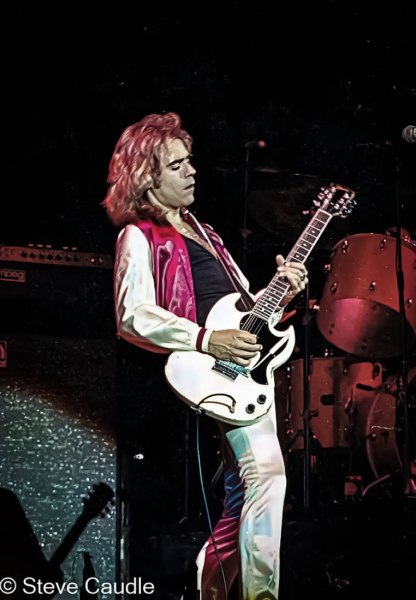
Roadmaster guitarist Rick Benick performs at Denver’s McNichols “Big Mac” Arena while opening for Blue Öyster Cult on August 1, 1979. Photo by Steve Caudle.
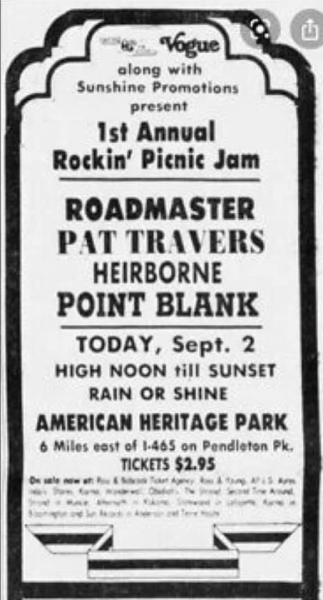
Advertisement for Sunshine Promotions’ First Annual Rockin’ Picnic Jam featuring Roadmaster, Pat Travers, Heirborne and Point Blank at American Heritage Park on September 2. Photo courtesy of Joe Williams.
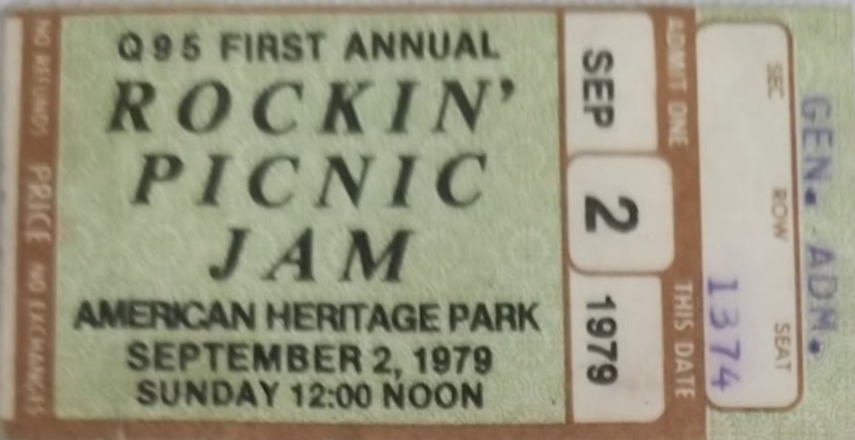
A ticket stub for Q95’s first annual Rockin’ Picnic Jam, featuring Roadmaster at American Heritage Park on September 2, 1979. Photo courtesy of Eric Chenault.
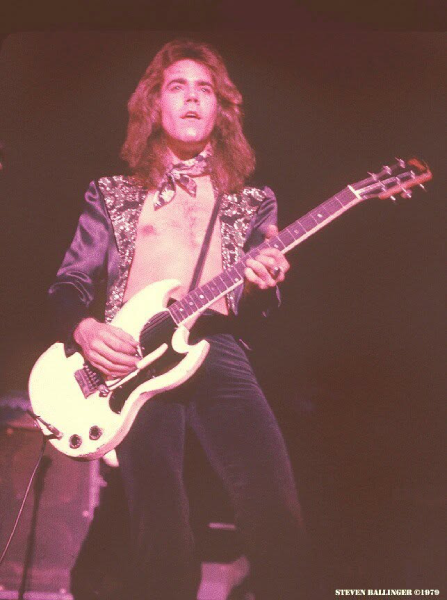
Roadmaster guitarist Ricky Benick performs live in 1979. Photo by Steven Ballinger.
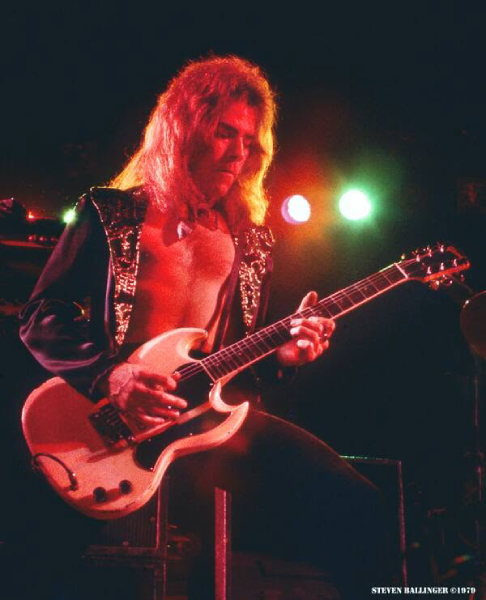
Roadmaster guitarist Ricky Benick performs under the stage lights in 1979. Photo by Steven Ballinger.
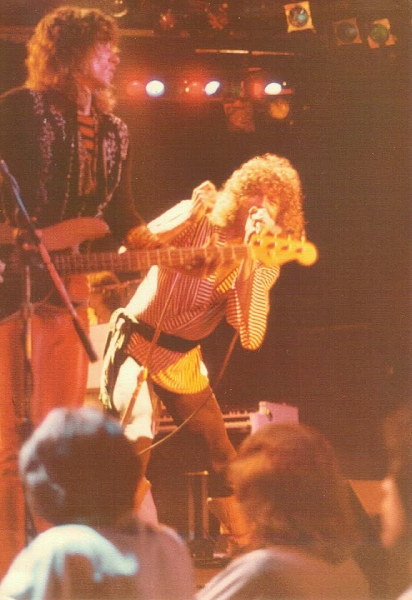
Roadmaster’s Toby Myers and Steve “Mac” McNally performing at Market Square Arena in 1979. Photo courtesy of Troy Salinas.
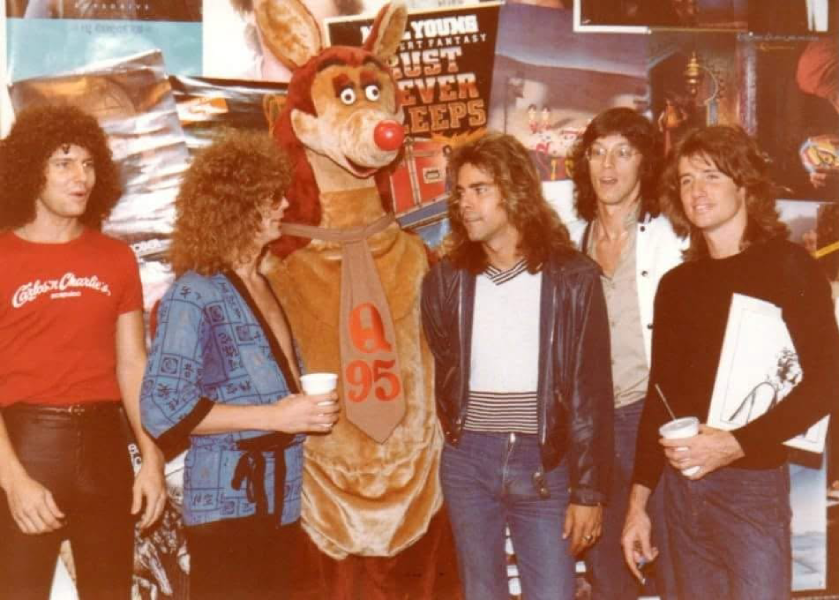
Roadmaster visits Third Sun Records in Columbus, Indiana, in 1979. Photo courtesy of store owner Tony Holladay.
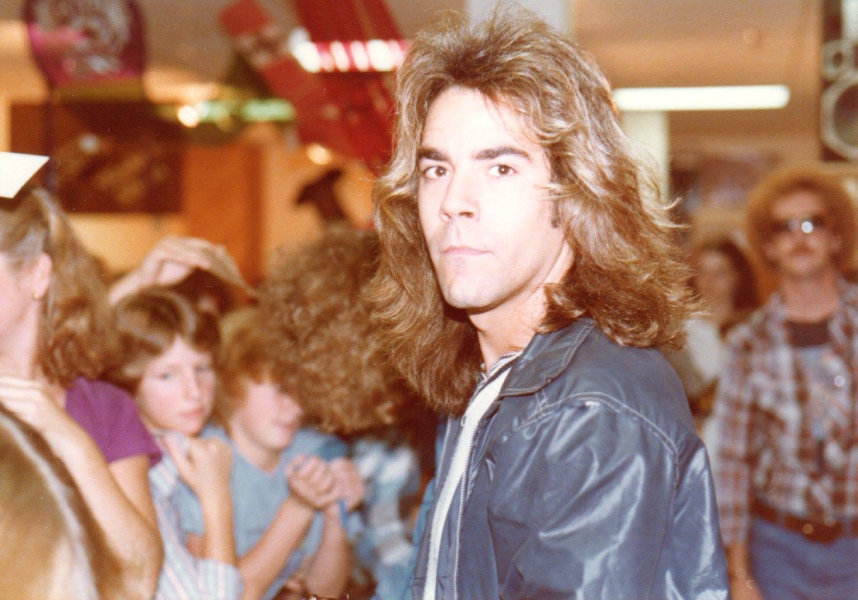
Roadmaster guitarist Ricky Benick at Tony Holladay’s Third Sun Records store in Columbus, Indiana, in late 1979.
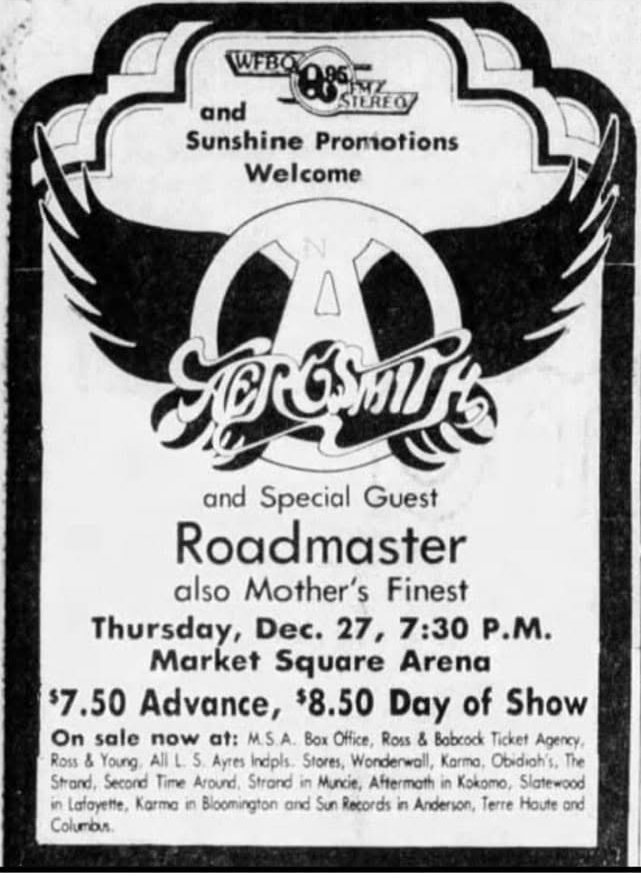
Advertisement for Sunshine Promotions’ presentation of Aerosmith with special guest Roadmaster and Mother’s Finest at Market Square Arena on December 27, 1979. Photo courtesy of Jeff Glover.
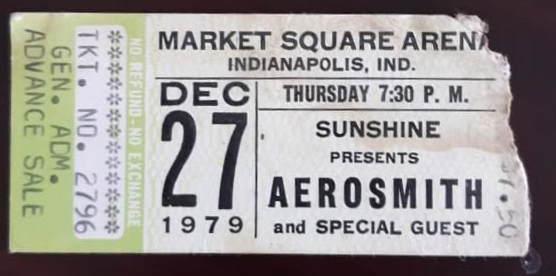
Ticket stub for Sunshine Promotions’ presentation of Aerosmith with special guest Roadmaster at Market Square Arena on December 27, 1979. Photo courtesy of David Gardner.
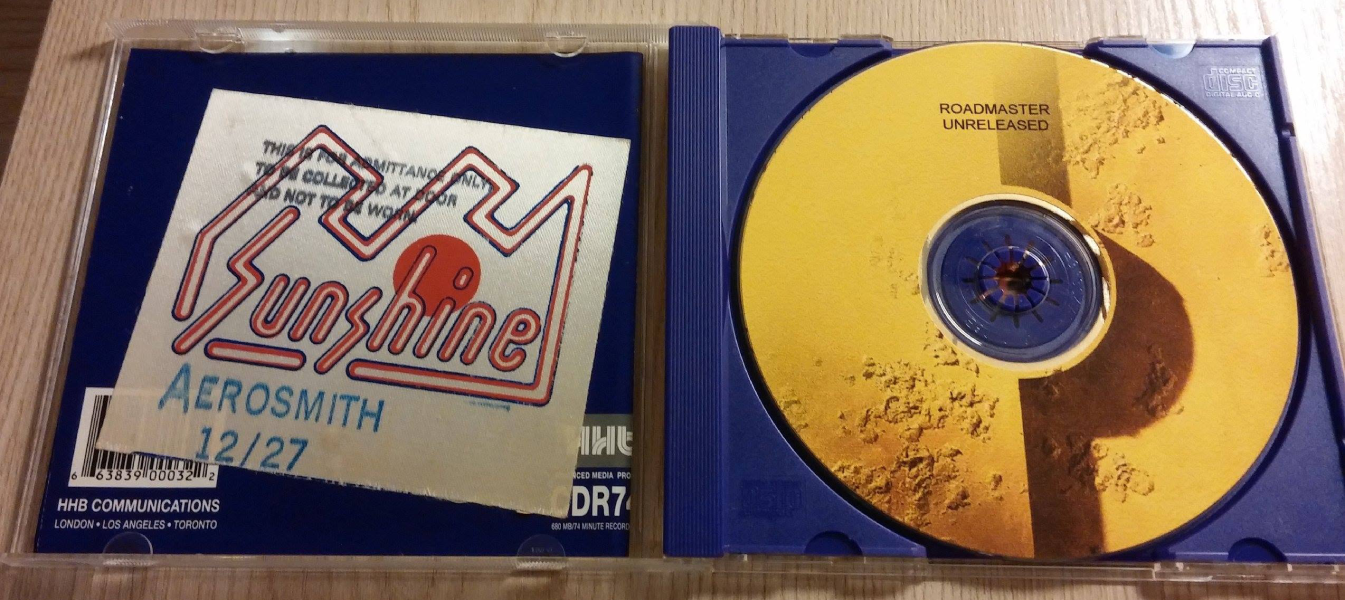
Sunshine backstage pass for the December 27, 1979, Aerosmith concert with special guest Roadmaster, displayed alongside a Roadmaster “Unreleased” CD. Photo courtesy of Jim Cuozzo Burnett.
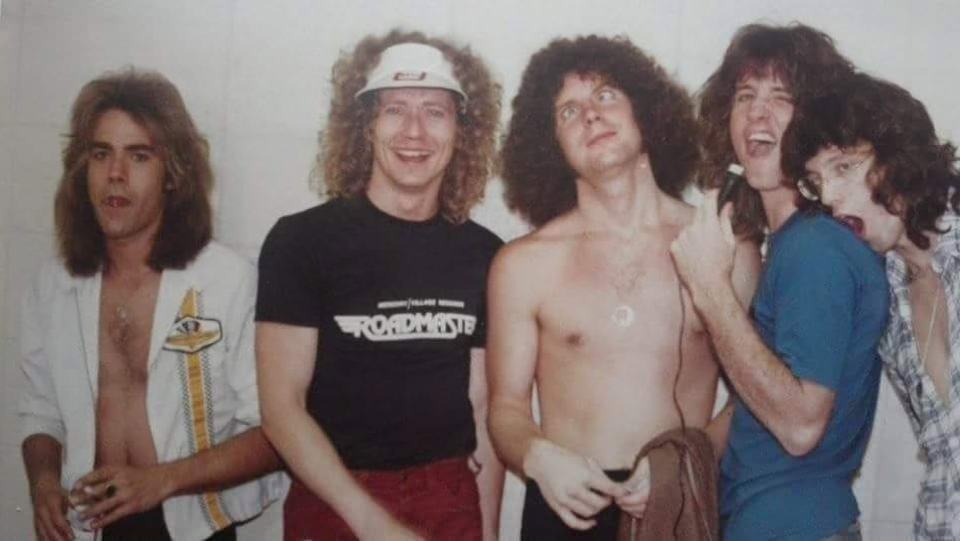
Roadmaster while opening for Aerosmith on December 27, 1979. From left: Ricky Benick, Steve McNally, Bobby Johns, Toby Myers, and Michael Read. Photo courtesy of Richard Reasoner.
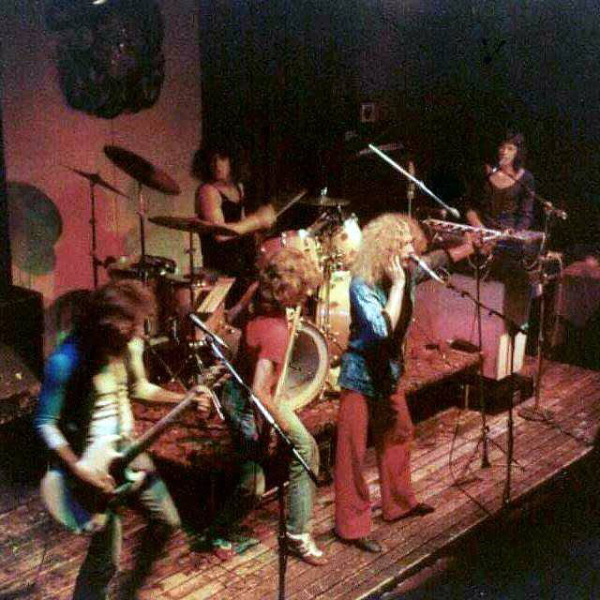
Roadmaster performs live in the late 1970s. Photo courtesy of Guy Davis.
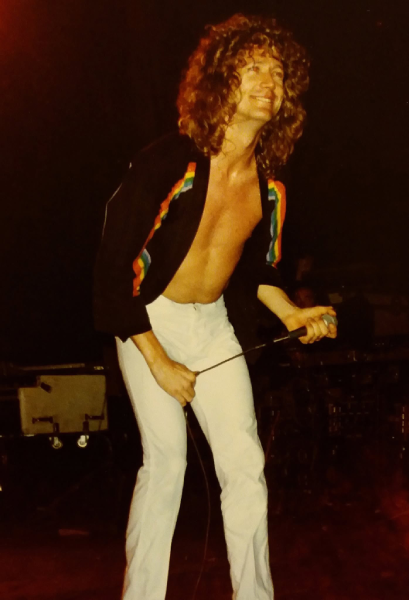
Roadmaster vocalist Steve “Mac” McNally performs live, circa the 1970s. Photo courtesy of Jeff Hudson.
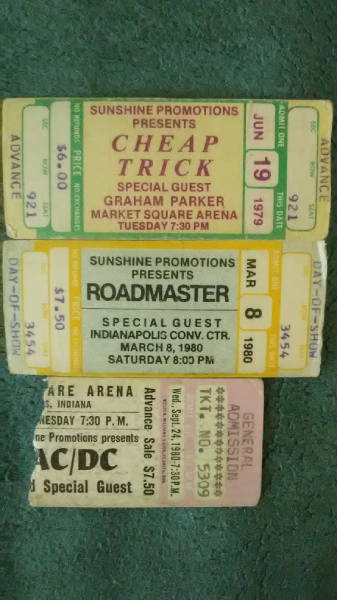
Sunshine Promotions ticket stubs for Cheap Trick with Graham Parker in 1979, Roadmaster in 1980, and AC/DC in 1980. Photo courtesy of Tom Wright.
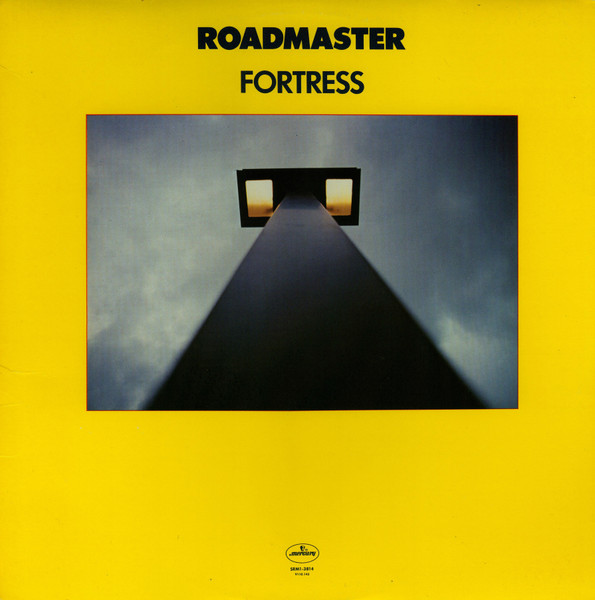
The front cover of Roadmaster’s 1980 album “Fortress”, designed by Ernie Cefalu using a photograph by Scott Enyart.
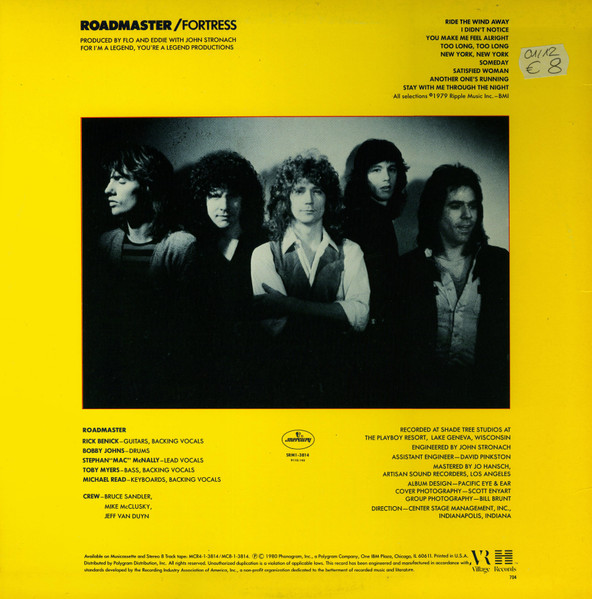
The back cover of Roadmaster’s 1980 album “Fortress”, featuring the band’s portrait, track listing, and recording credits.
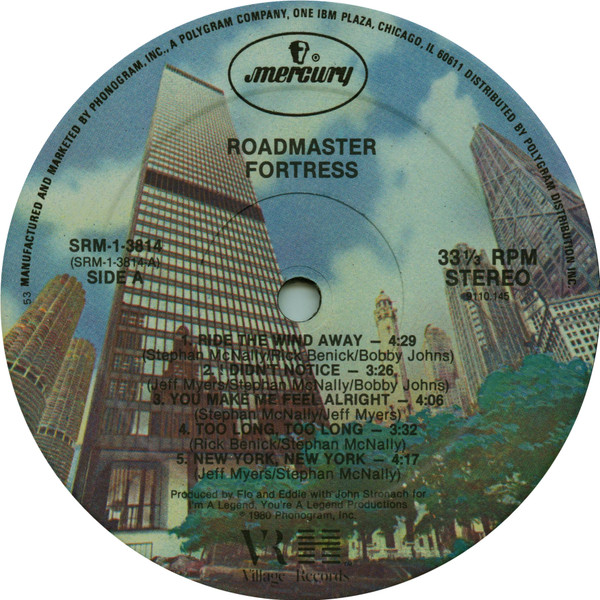
The Side A label of Roadmaster’s 1980 “Fortress” album, released on Mercury Records.
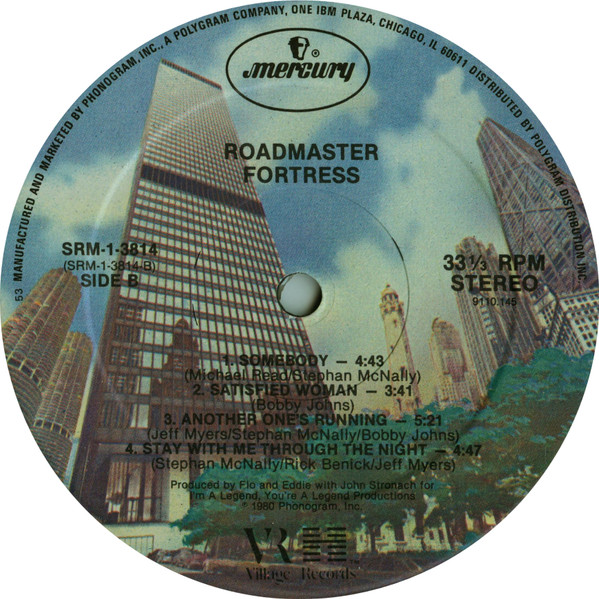
The Side B label of Roadmaster’s 1980 “Fortress” album, released on Mercury Records.
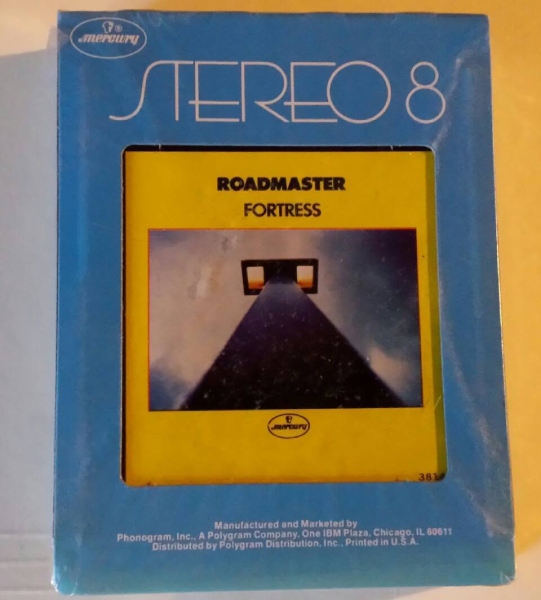
Roadmaster’s 1980 album “Fortress” on an 8-track cartridge, released by Mercury Records. Photo by Cris Renn.
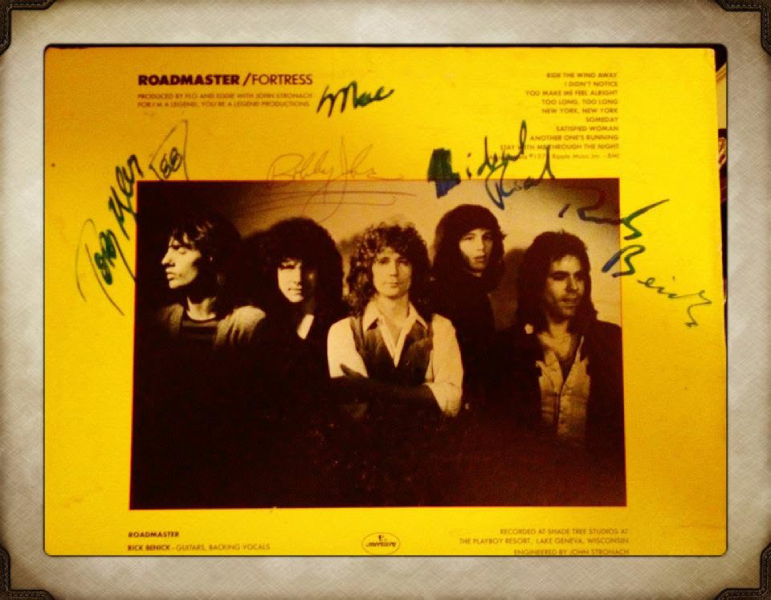
An autographed copy of Roadmaster’s “Fortress”, recorded at Shade Tree Studios in Lake Geneva, Wisconsin, and produced by Flo & Eddie with John Stronach.
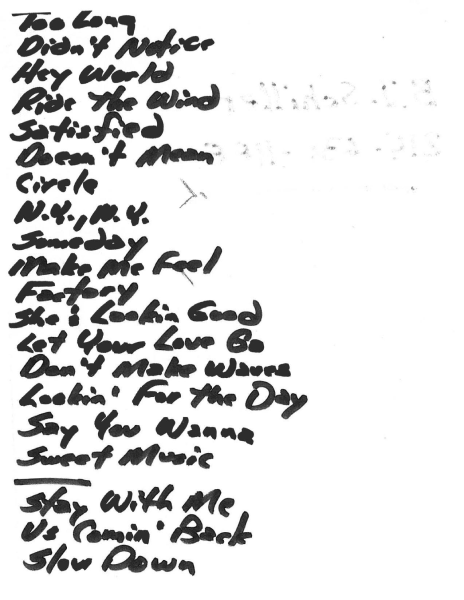
A handwritten setlist from a Roadmaster club performance during the “Fortress” tour. Photo courtesy of Jeff Van Duyn.
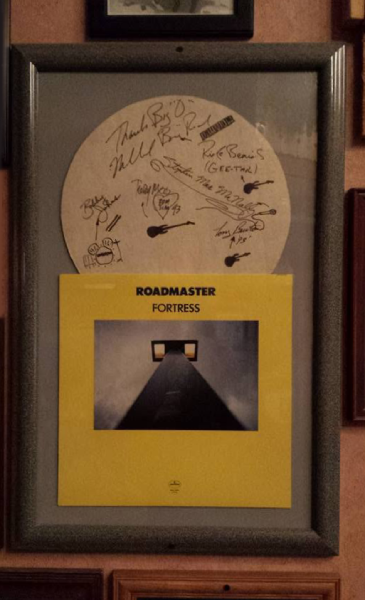
An autographed copy of Roadmaster’s “Fortress” is framed and displayed at Bruno’s in Lafayette, Indiana.
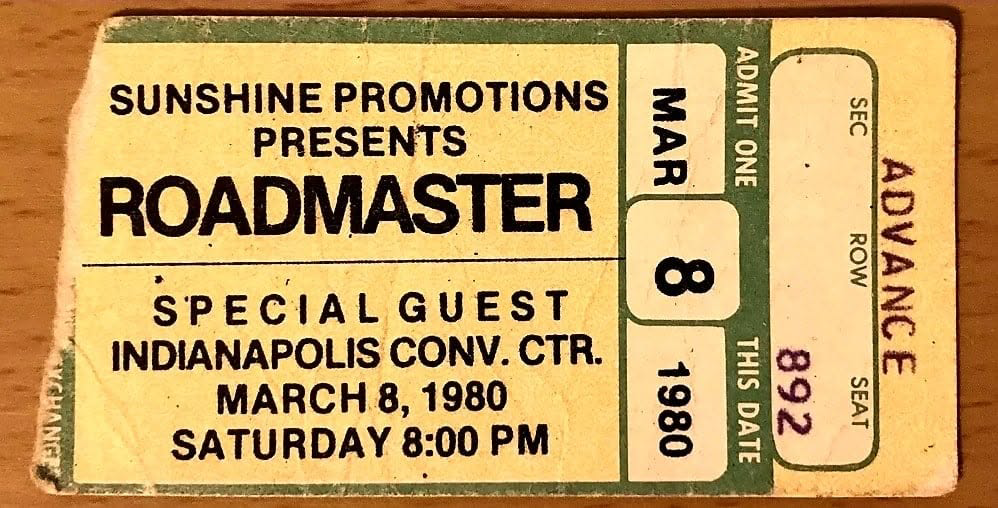
Ticket stub for Sunshine Promotions’ presentation of Roadmaster with special guest .38 Special at the Indianapolis Convention Center on March 8, 1980. Photo courtesy of John Watson.
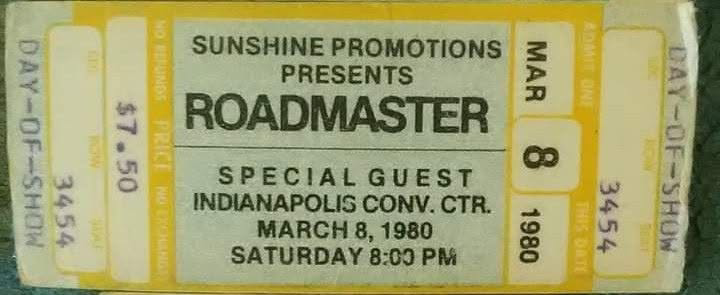
Day-of-show ticket stub for Sunshine Promotions’ presentation of Roadmaster with special guest .38 Special at the Indianapolis Convention Center on March 8, 1980. Photo courtesy of Tom Wright.
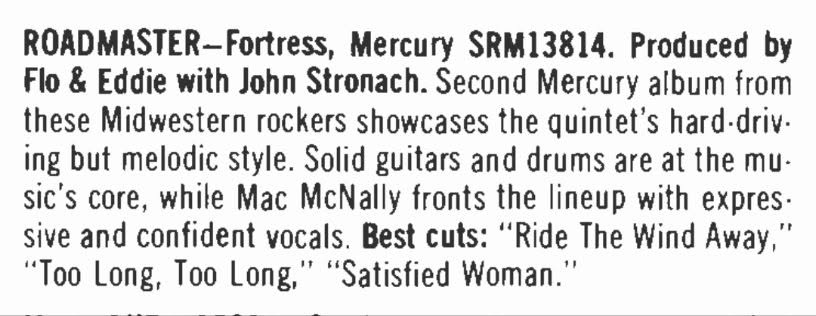
Billboard’s March 15, 1980, review praises “Fortress” for its hard-driving yet melodic style and highlights “Ride the Wind Away,” “Too Long, Too Long,” and “Satisfied Woman.” Photo courtesy of John Brian.
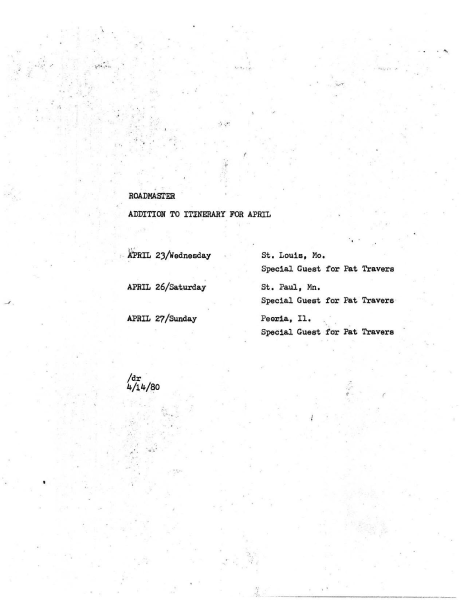
Page one of Roadmaster’s Sunshine Promotions itinerary lists April 1980 performances in St. Louis, St. Paul, and Peoria as special guest for Pat Travers.
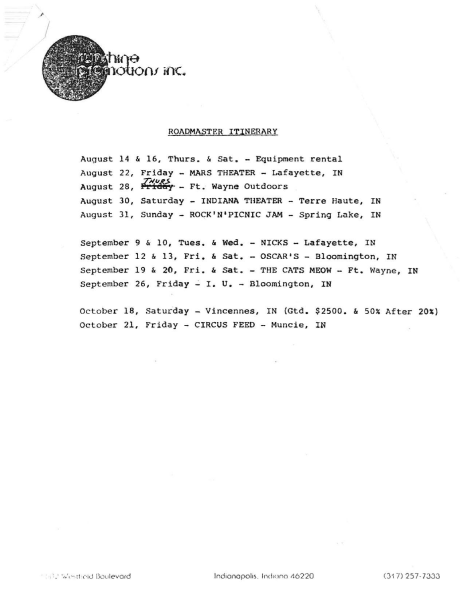
Page two of Roadmaster’s Sunshine Promotions itinerary lists performances across Indiana from August through October 1980.
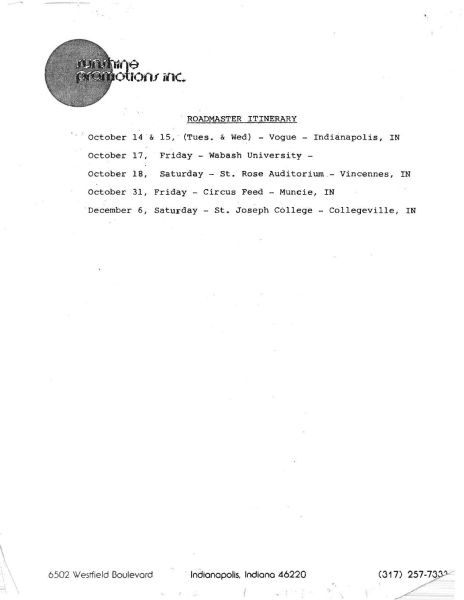
Page three of Roadmaster’s Sunshine Promotions itinerary lists performances from October through December 1980, including dates at the Vogue, Wabash University, St. Rose Auditorium, Circus Feed, and St. Joseph College.
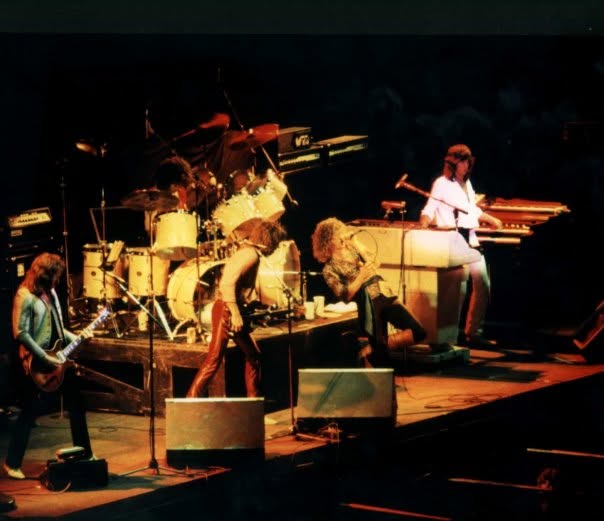
Roadmaster opening for Ted Nugent at the University of Illinois Assembly Hall in Champaign in 1980. Photo courtesy of Brian Ball.
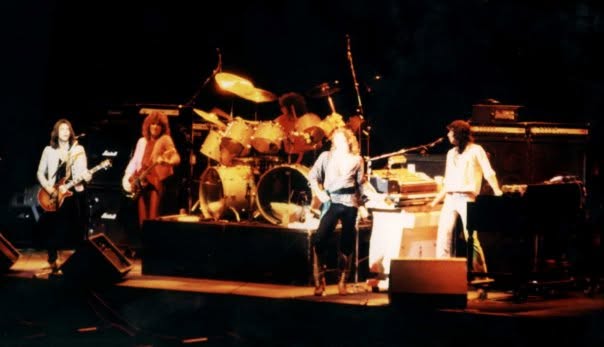
Roadmaster opening for Ted Nugent at the University of Illinois Assembly Hall in Champaign in 1980. Photo courtesy of Brian Ball.
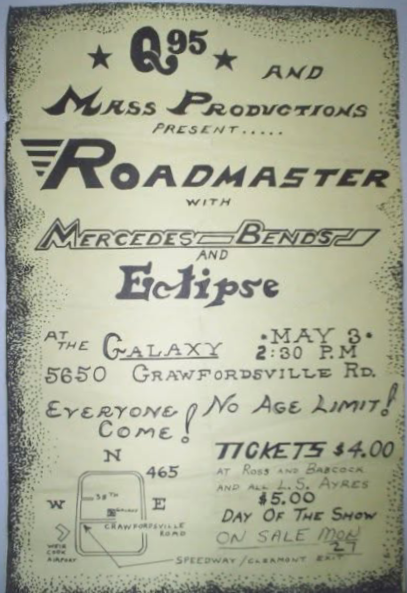
Q95 and Mass Productions present Roadmaster with Mercedes Bends and Eclipse at the Galaxy on Crawfordsville Road in Indianapolis, May 3, circa 1980.
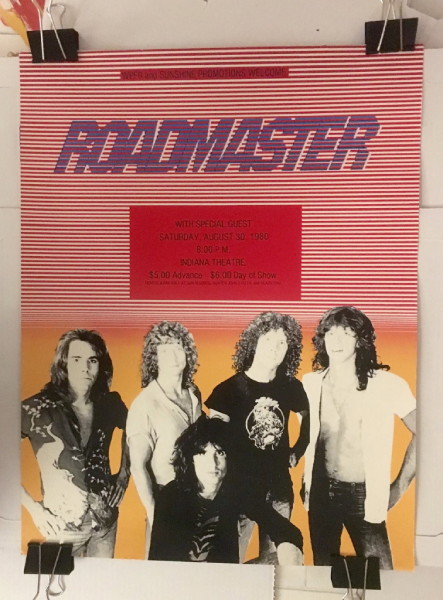
Poster for WPFR and Sunshine Promotions’ presentation of Roadmaster at the Indiana Theatre on August 30, 1980. Photo courtesy of Doug Babb.
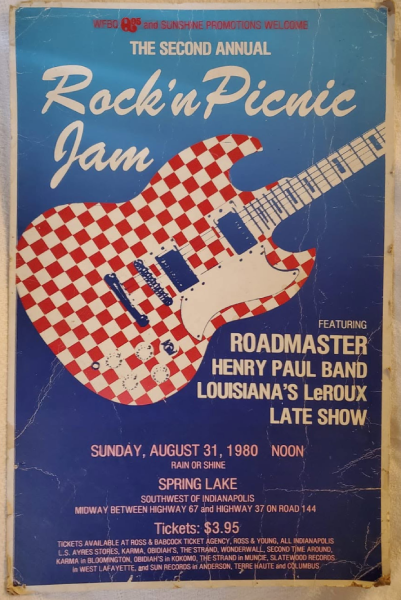
Poster for WFBQ Q95 and Sunshine Promotions’ Second Annual Rock ’N’ Picnic Jam featuring Roadmaster, the Henry Paul Band, Louisiana’s LeRoux and the Late Show at Spring Lake on August 31, 1980. Photo courtesy of Jim DeMao.
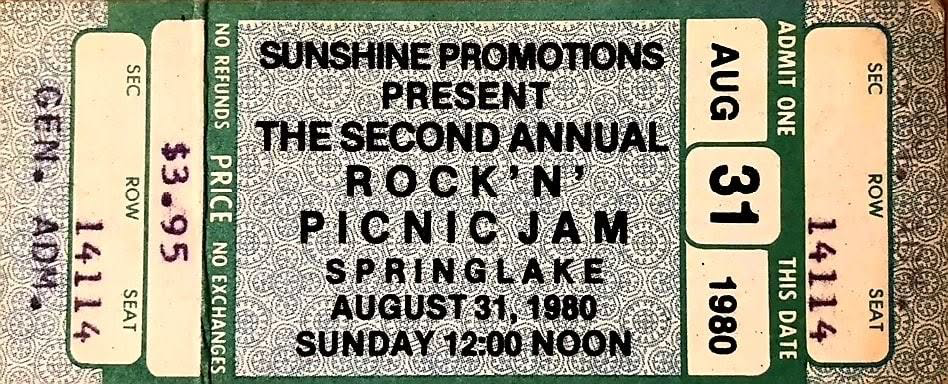
Ticket for Sunshine Promotions’ Second Annual Rock ’N’ Picnic Jam featuring Roadmaster, the Henry Paul Band, Louisiana’s LeRoux and the Late Show at Spring Lake on August 31, 1980. Photo courtesy of Sean O’Dalaigh.
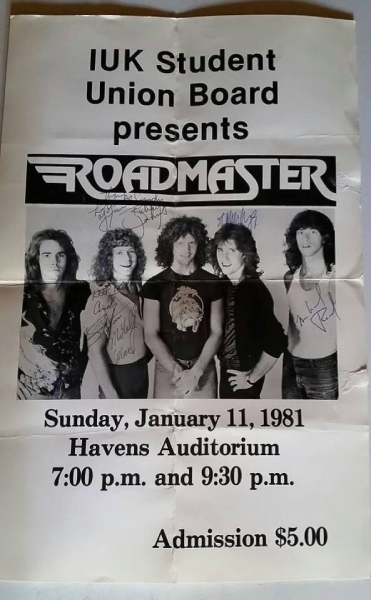
An autographed poster for Roadmaster’s two January 11, 1981, performances at Havens Auditorium, presented by the Indiana University Kokomo Student Union Board.
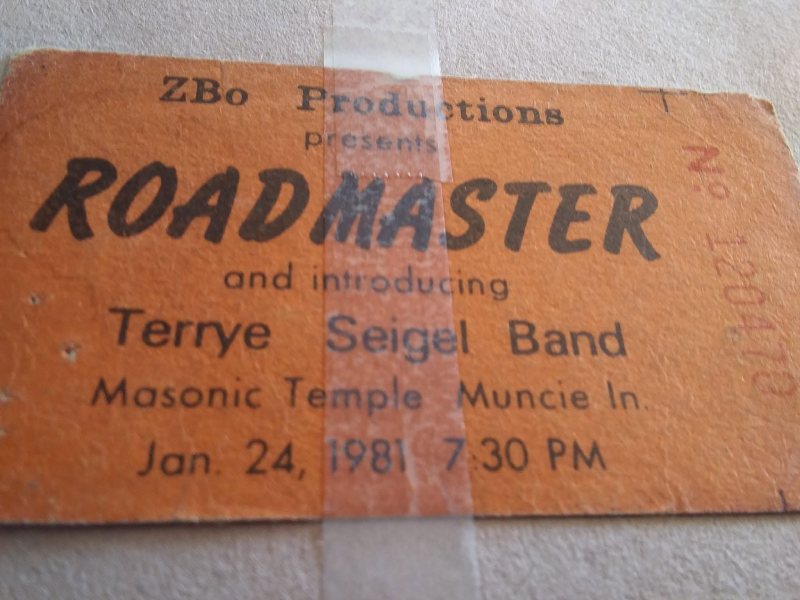
Ticket for ZBo Productions’ presentation of Roadmaster with the Terrye Seigel Band at the Masonic Temple in Muncie on January 24, 1981. Photo courtesy of Steven Prince.
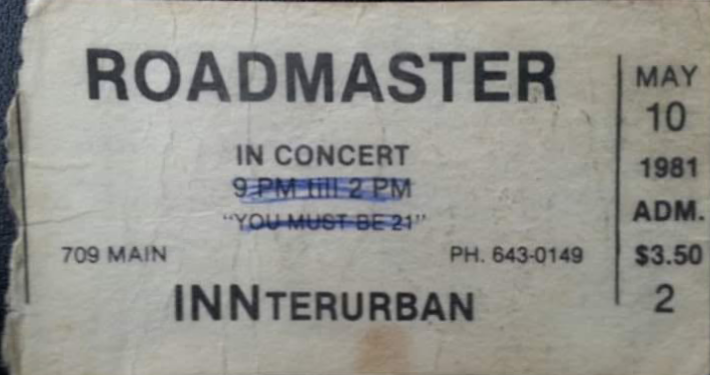
A ticket stub for Roadmaster’s May 10, 1981, concert at the INNterurban. Photo courtesy of Charlie Farmer.
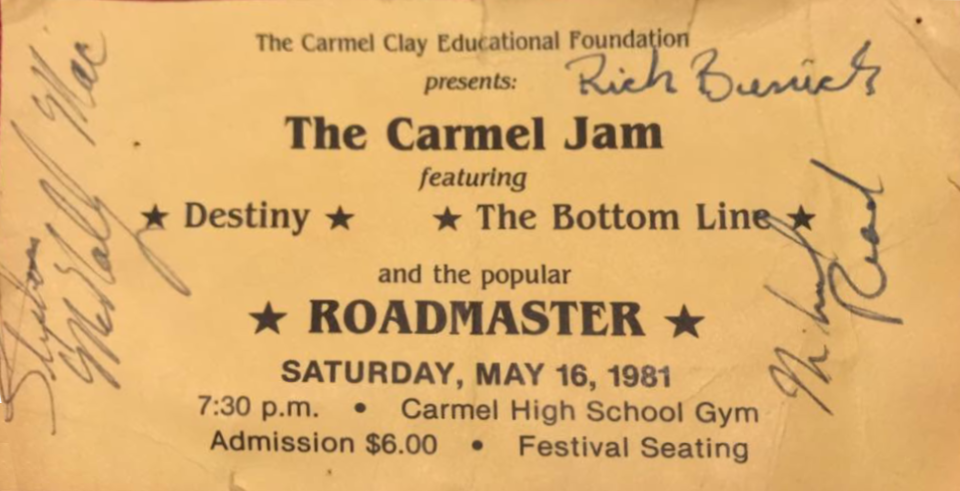
An autographed ticket for the Carmel Jam featuring Roadmaster, Destiny, and the Bottom Line at Carmel High School on May 16, 1981. Photo courtesy of Pam Ferrin Rhoades.
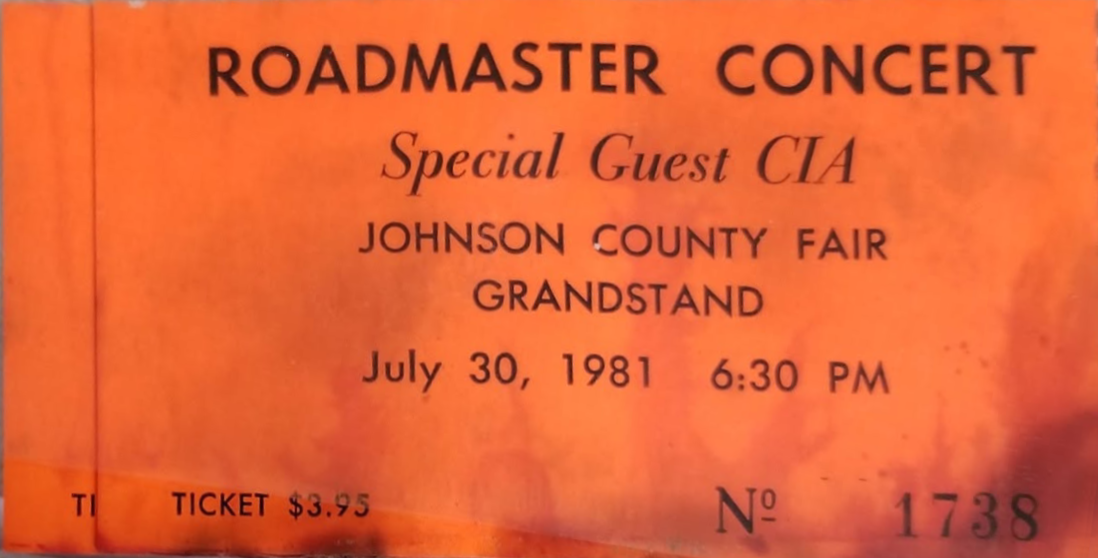
A ticket stub for Roadmaster with special guest CIA at the Johnson County Fair grandstand on July 30, 1981. Photo courtesy of Eric Chenault.
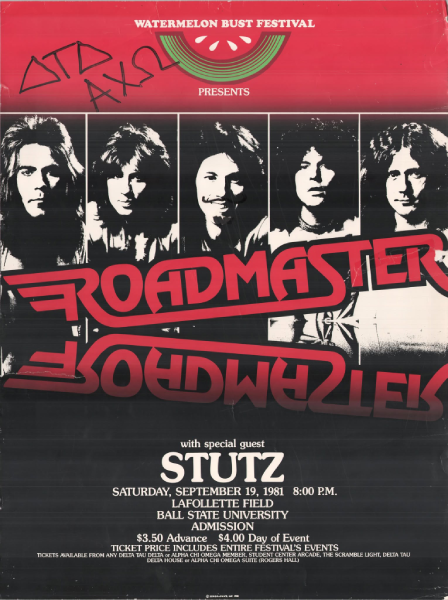
Poster for Roadmaster’s performance at the Watermelon Bust Festival at Ball State University on September 19, 1981. Photo courtesy of Brad Farber.
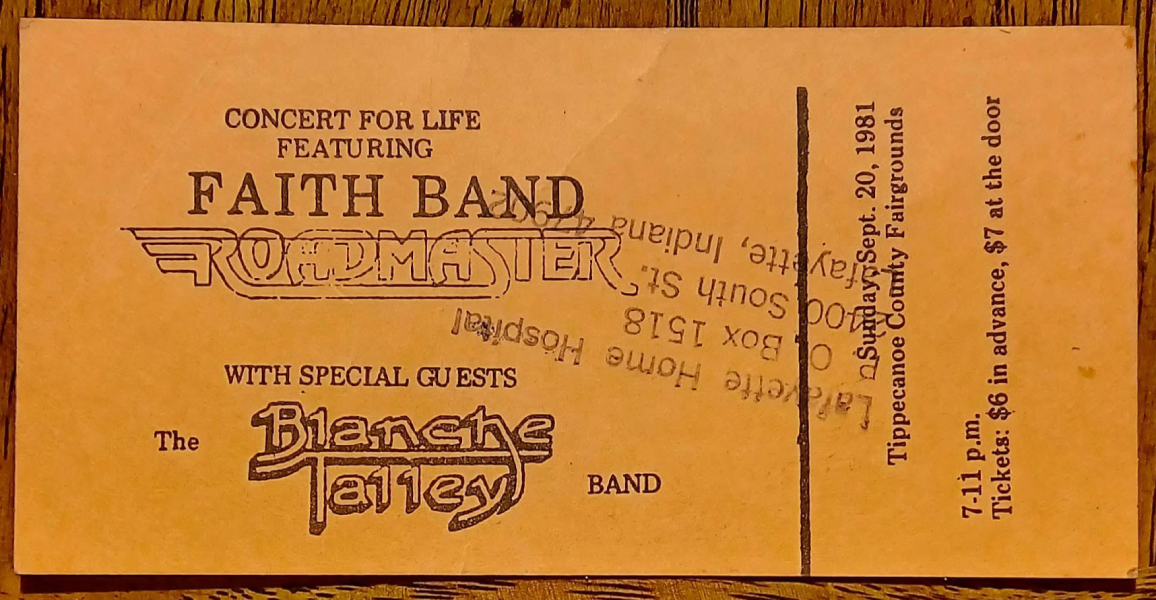
A ticket for the September 20, 1981, Concert for Life featuring Faith Band, Roadmaster, and special guest the Blanche Talley Band at the Tippecanoe County Fairgrounds. Photo courtesy of Jeff Hudson.
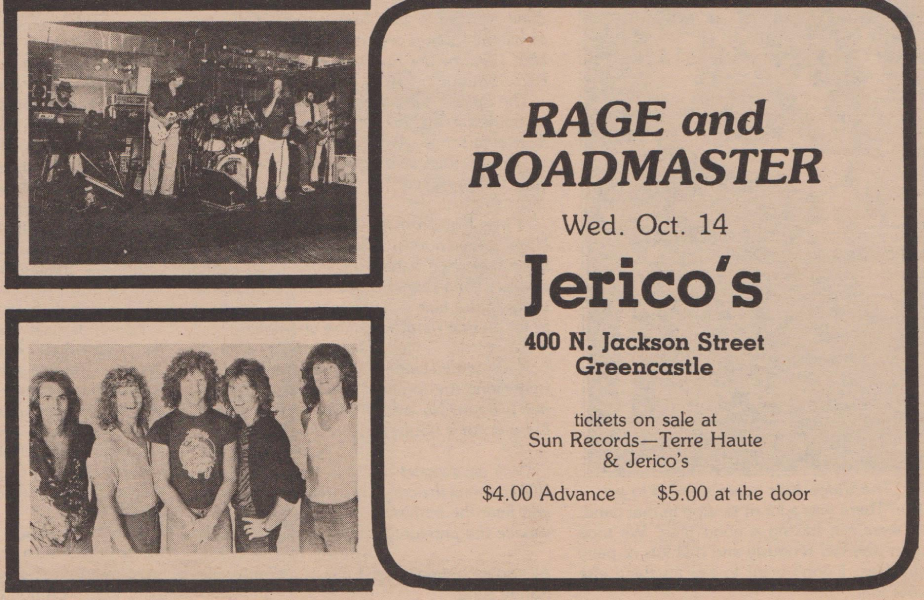
An October 1981 Hot Potato ad promotes Rage and Roadmaster appearing at Jerico’s in Greencastle, Indiana, on October 14. Photo courtesy of Brad Farber.
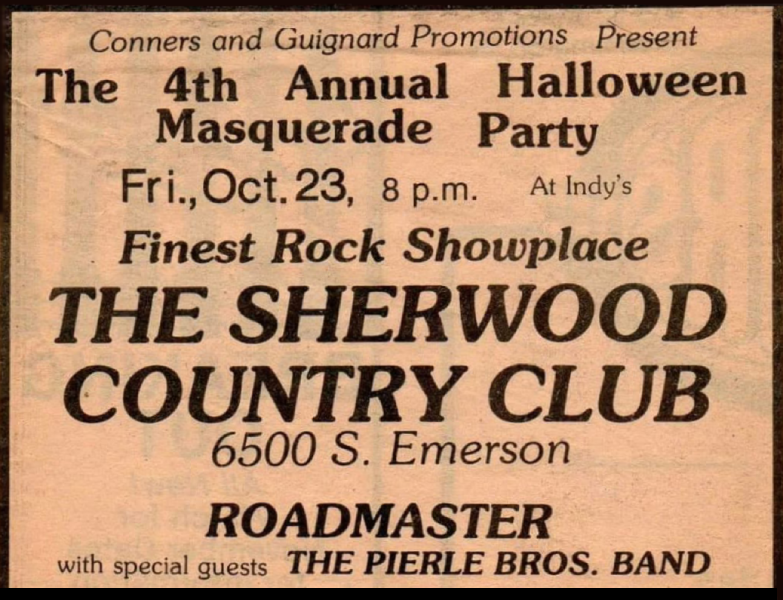
An advertisement for Conners and Guignard Promotions’ fourth annual Halloween masquerade party, featuring Roadmaster and the Pierle Brothers Band at the Sherwood Country Club on October 23, 1981. Photo courtesy of Mardy Wilson.
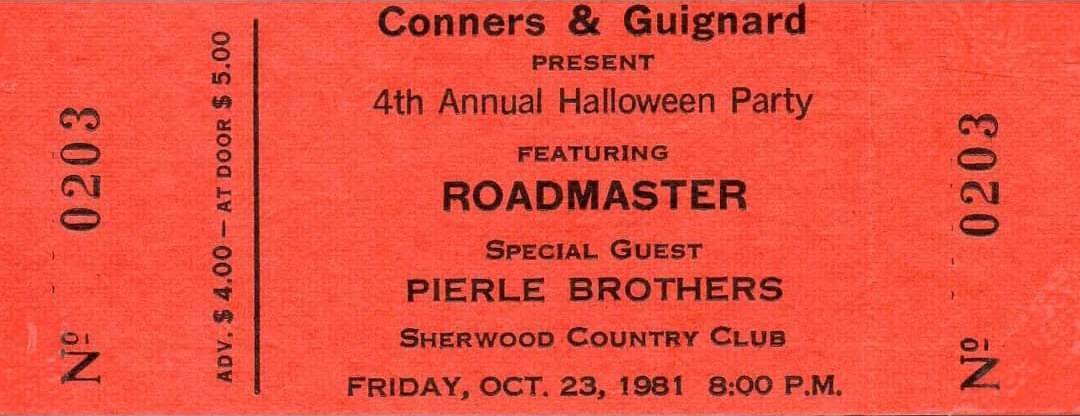
A ticket stub for Conners & Guignard’s fourth annual Halloween party, featuring Roadmaster and special guest the Pierle Brothers at Sherwood Country Club on October 23, 1981. Photo courtesy of Mardy Wilson.
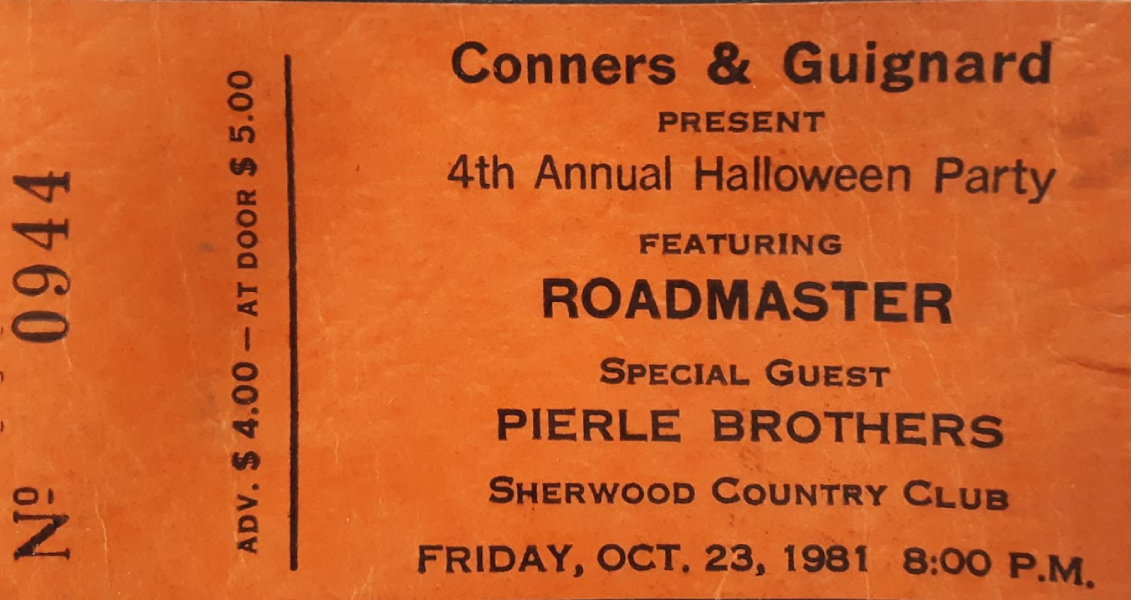
A ticket stub for Conners & Guignard’s fourth annual Halloween party, featuring Roadmaster and special guest the Pierle Brothers at Sherwood Country Club on October 23, 1981. Photo courtesy of Jeff Pelance.
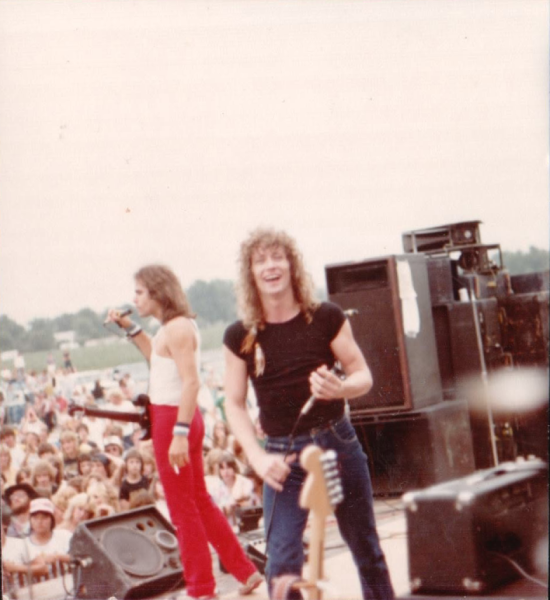
Roadmaster’s Steve McNally and Rick Benick perform at the North Drive-In in Alexandria, Indiana, in 1981. Photo by Michael Brooks.
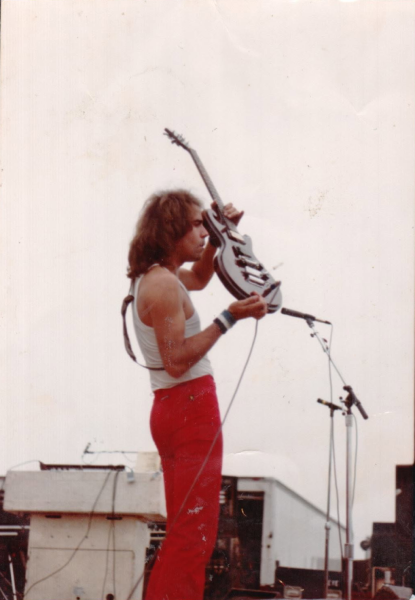
Roadmaster guitarist Rick Benick plays his “Screaming Epi Scroll” at the North Drive-In in Alexandria, Indiana, in 1981. Photo by Michael Brooks.
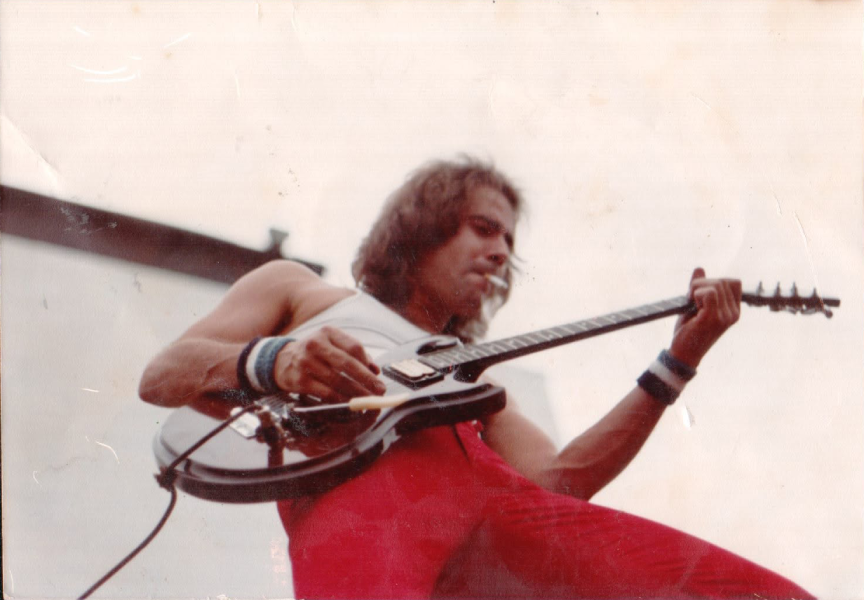
Roadmaster guitarist Ricky Benick performs at the North Drive-In in Alexandria, Indiana, in 1981. Photo by Michael Brooks.
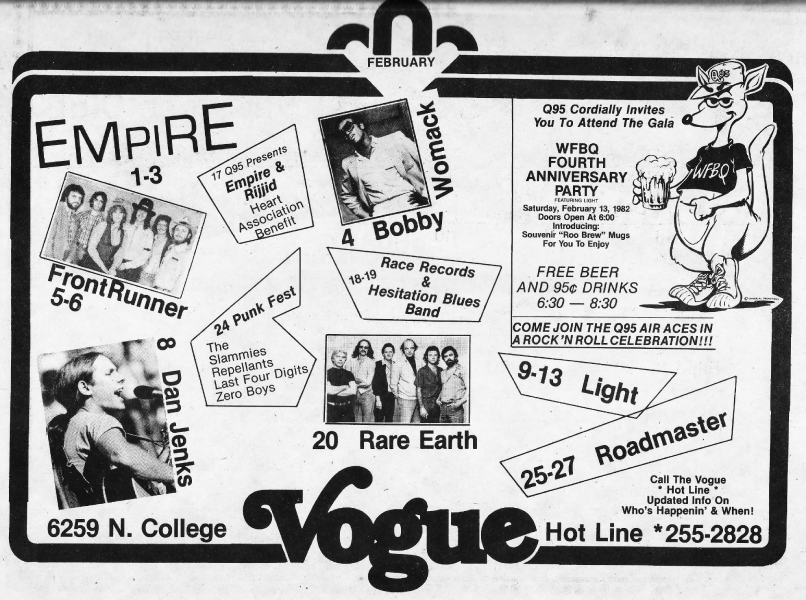
A February 1982 “Hot Potato” magazine ad announces Roadmaster’s three-night engagement at the Vogue, February 25–27. Photo courtesy of Roger Baker.
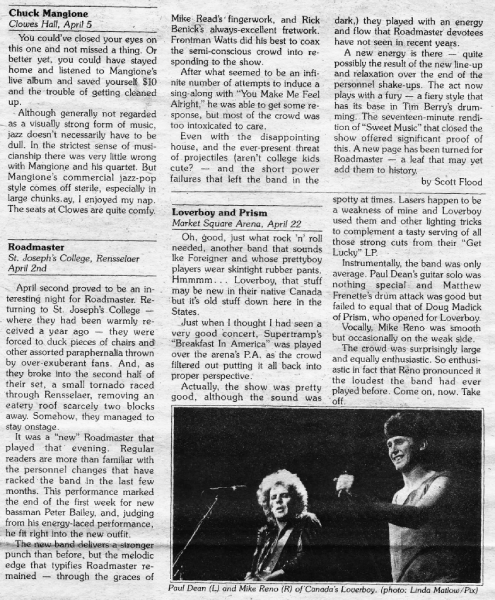
A concert review by Scott Flood covers Roadmaster’s April 2, 1982, performance at St. Joseph’s College in Rensselaer, Indiana. Photo courtesy of Roger Baker.
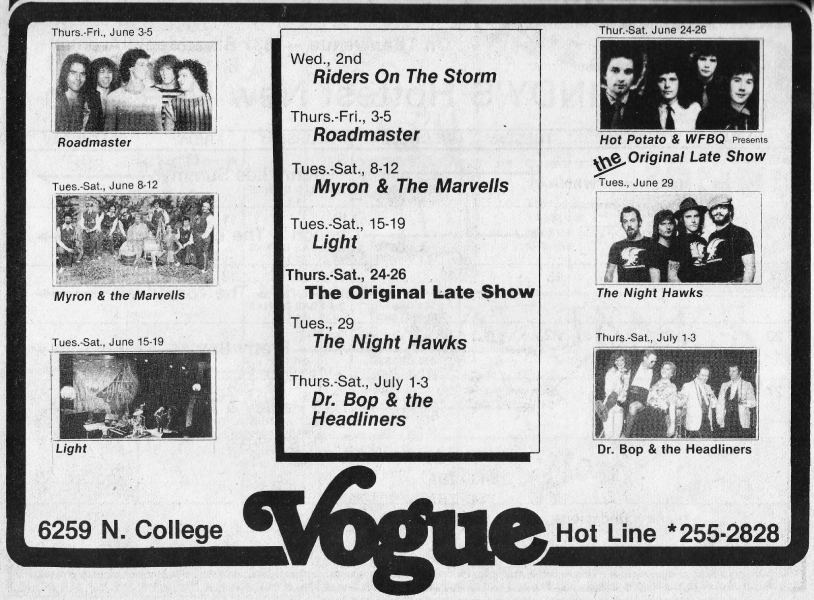
A June 1982 ad announces Roadmaster’s June 3–5 engagement at the Vogue in Indianapolis. Photo courtesy of Roger Baker.
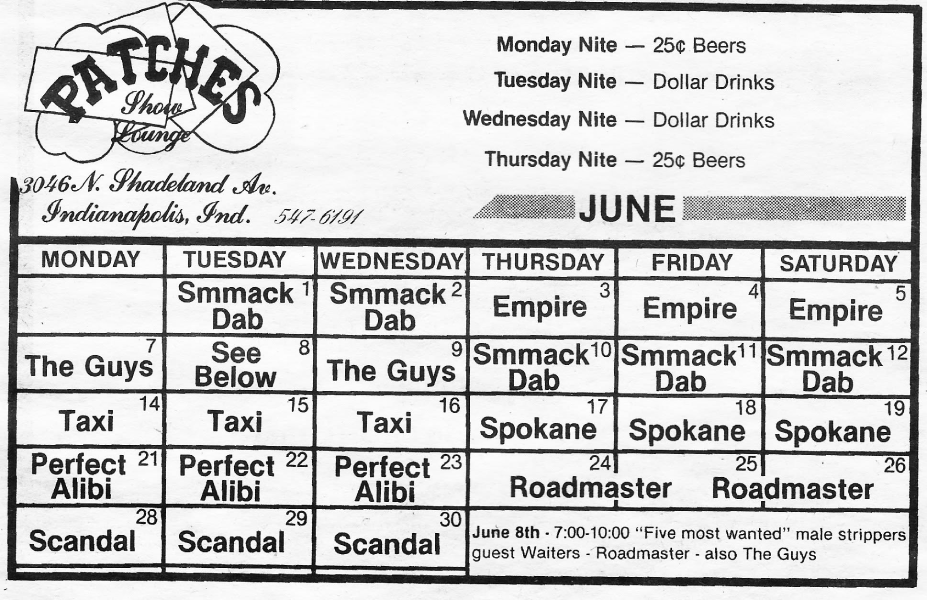
Patches Show Lounge’s June 1982 calendar lists Roadmaster for a three-night engagement, June 24–26, in Indianapolis. Photo courtesy of Roger Baker.
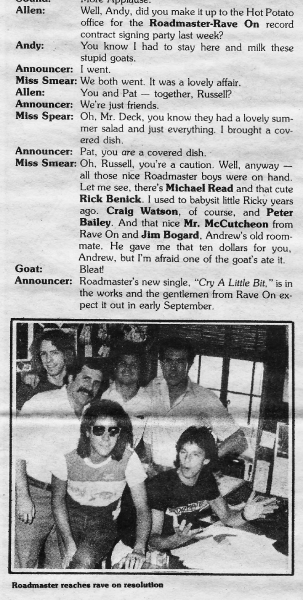
An August 1982 “Hot Potato” article covers Roadmaster’s contract signing with Rave On Records.
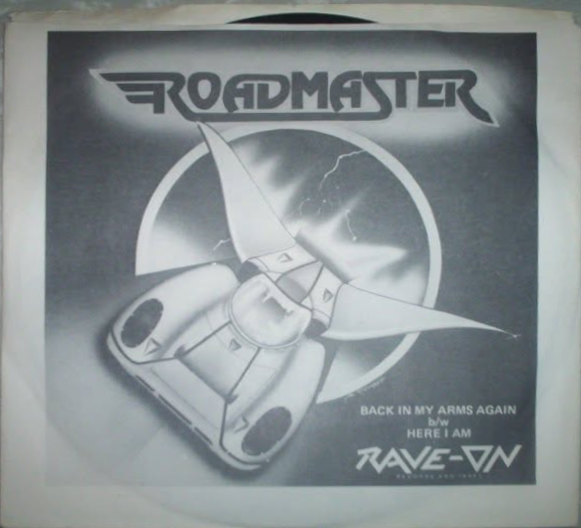
Picture sleeve for Roadmaster’s 1982 single “Back in My Arms Again,” backed with “Here I Am,” released on Rave-On Records.
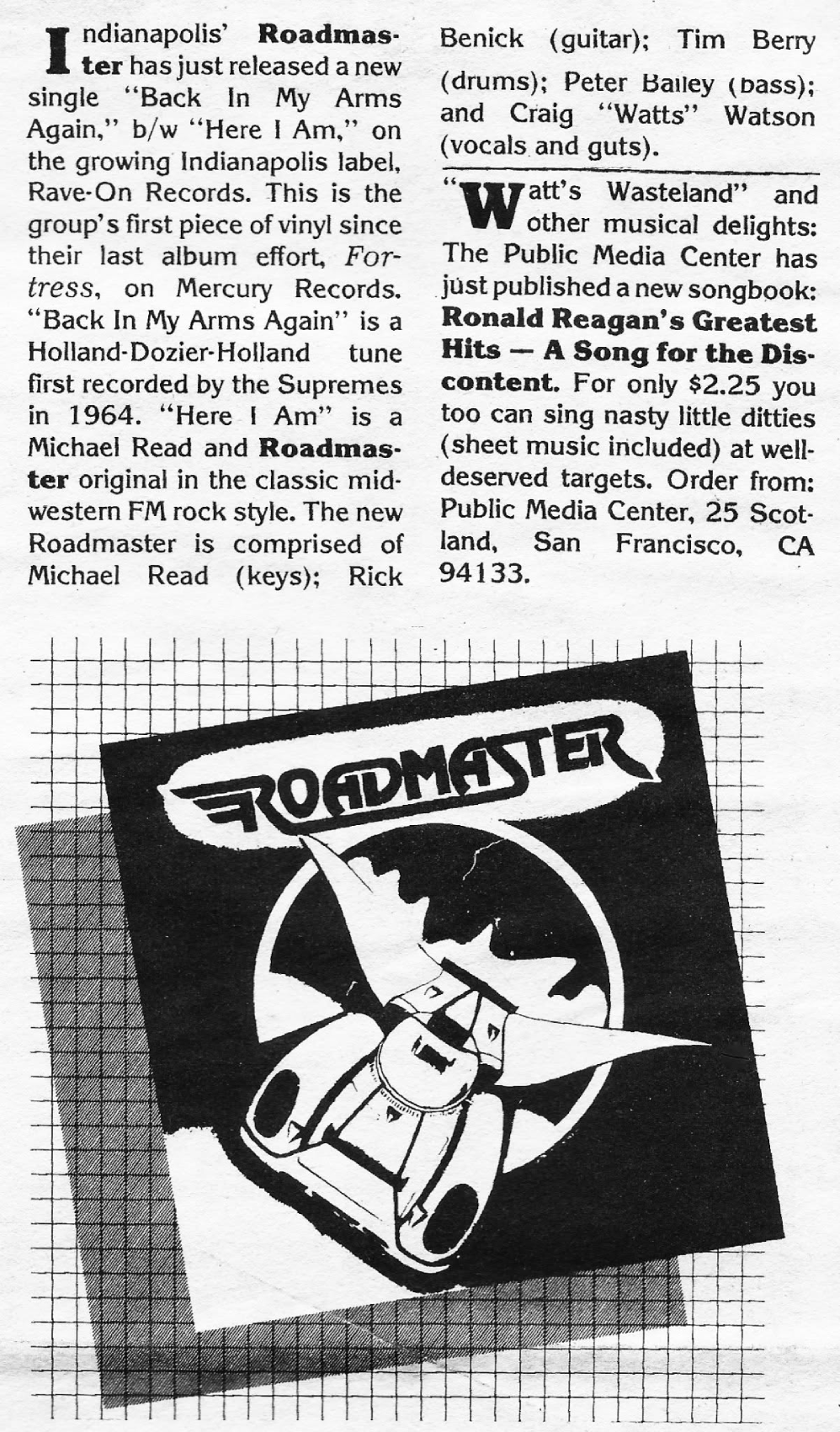
September 1982 Express Magazine article announcing Roadmaster’s Rave-On Records single Back in My Arms Again, backed with Here I Am, and introducing the band’s new lineup. Photo courtesy of Roger Baker.
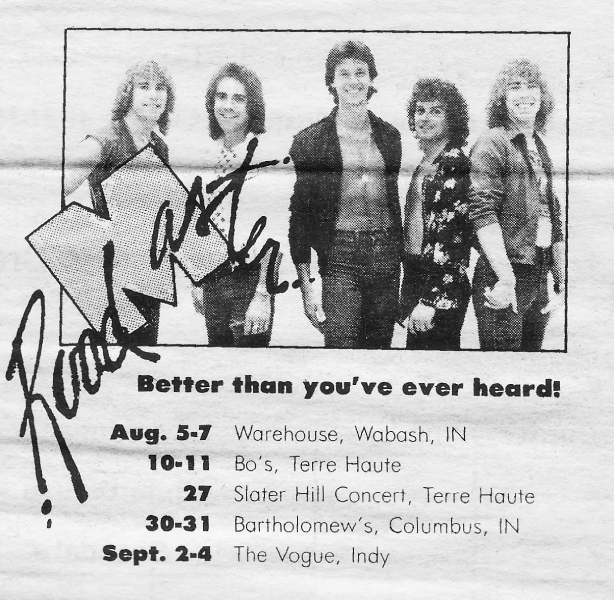
Roadmaster advertisement in the August 1982 issue of “Hot Potato” magazine, featuring a band portrait and August–September performance dates in Wabash, Terre Haute, Columbus, and Indianapolis.
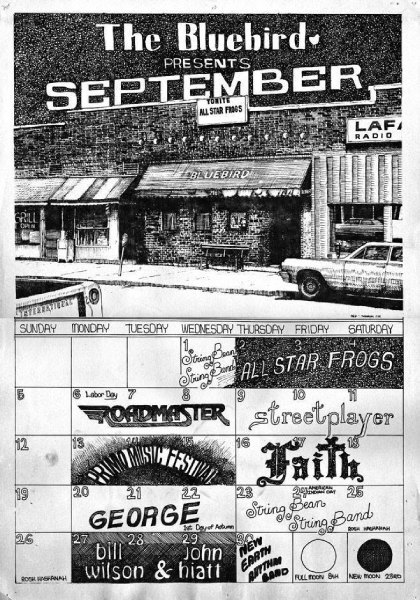
Roadmaster appears on the Bluebird Night Club’s September 1982 schedule in Bloomington, Indiana, performing on Labor Day, September 6. Photo courtesy of Donnie Casel.
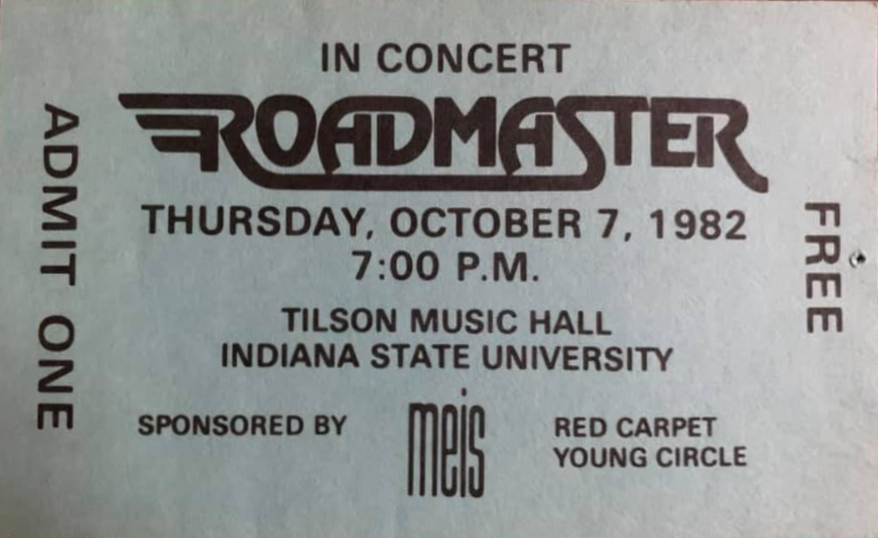
A ticket stub for Roadmaster’s October 7, 1982, concert at Tilson Music Hall at Indiana State University. Photo courtesy of Grant Kattmann.
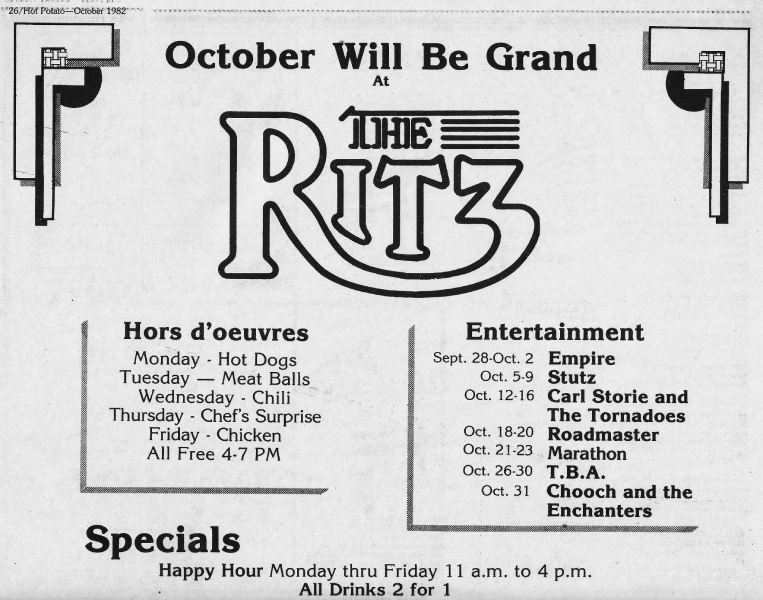
Advertisement for Roadmaster at The Ritz, October 18–20, 1982. Photo courtesy of Roger Baker.
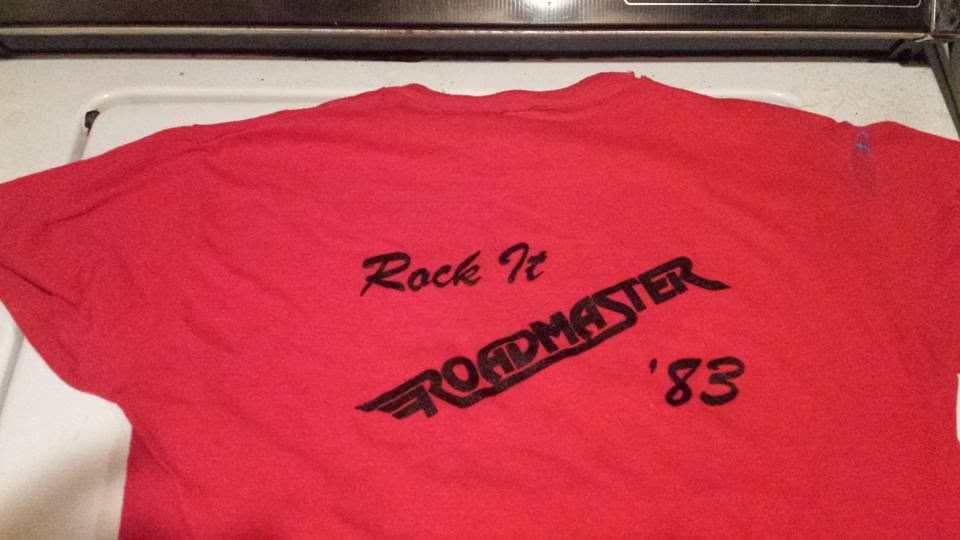
The front of a 1983 Roadmaster T-shirt displays the band’s logo and the slogan “Rock It ’83.” Photo courtesy of Cris Renn.
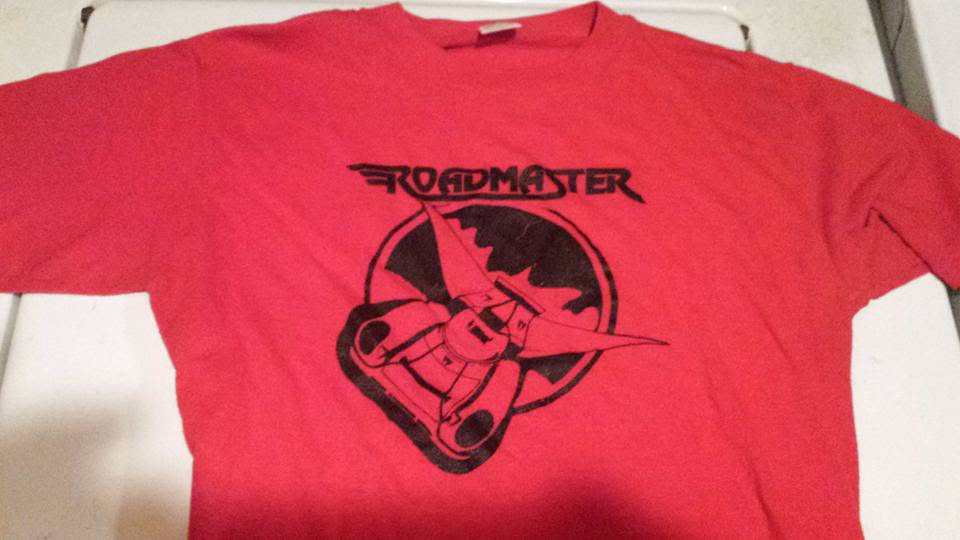
The back of a 1983 Roadmaster T-shirt features the band’s logo and winged truck design. Photo courtesy of Cris Renn.
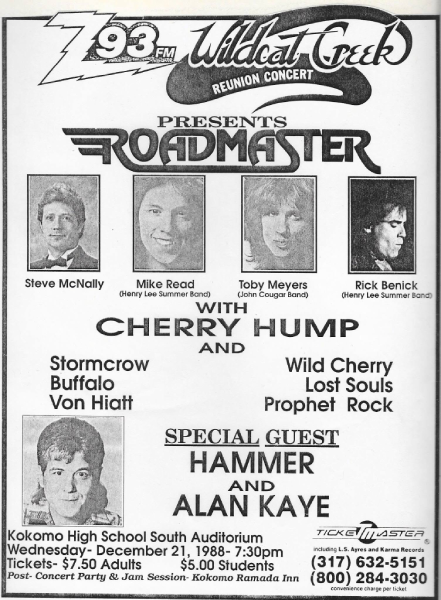
Poster for Z93’s Wildcat Creek Reunion Concert featuring Roadmaster, Cherry Hump and other Kokomo-area performers at Kokomo High School South Auditorium on December 21, 1988. Photo courtesy of Alan Kaye.
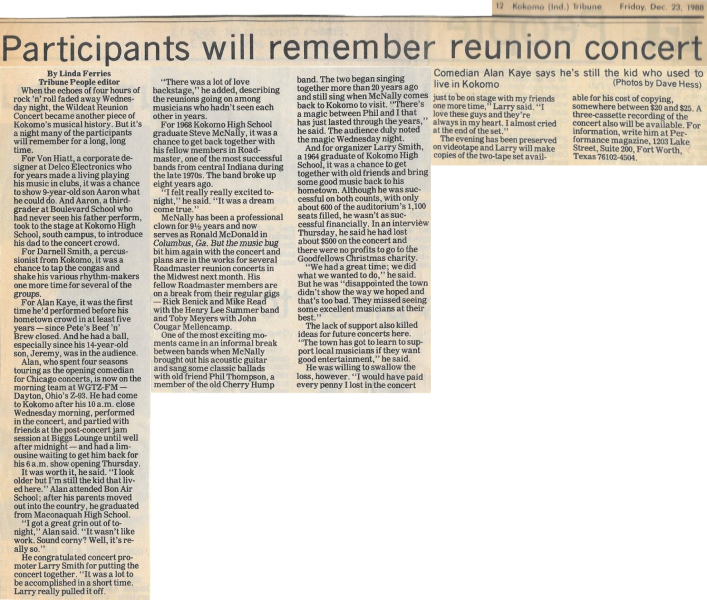
“Kokomo Tribune” article previewing the 1988 Wildcat Reunion concert, which brought together musicians from Kokomo’s 1970s music scene. Photo courtesy of Alan Kaye.
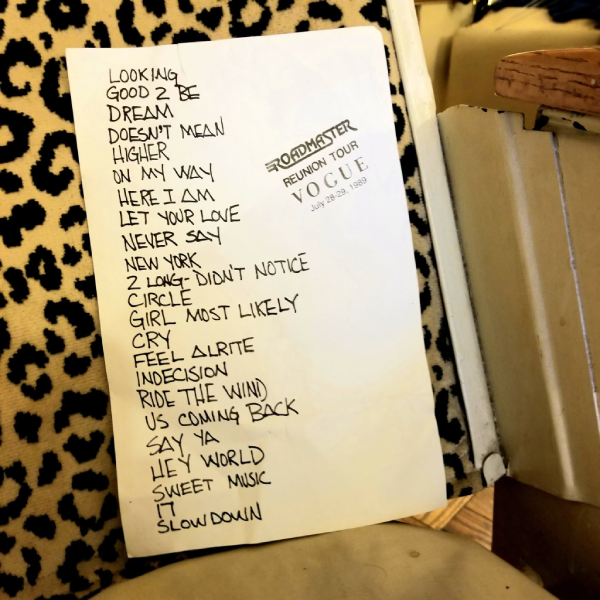
Roadmaster’s setlist from the band’s reunion performances at the Vogue on July 28–29, 1989. Photo courtesy of Gregory Dean.
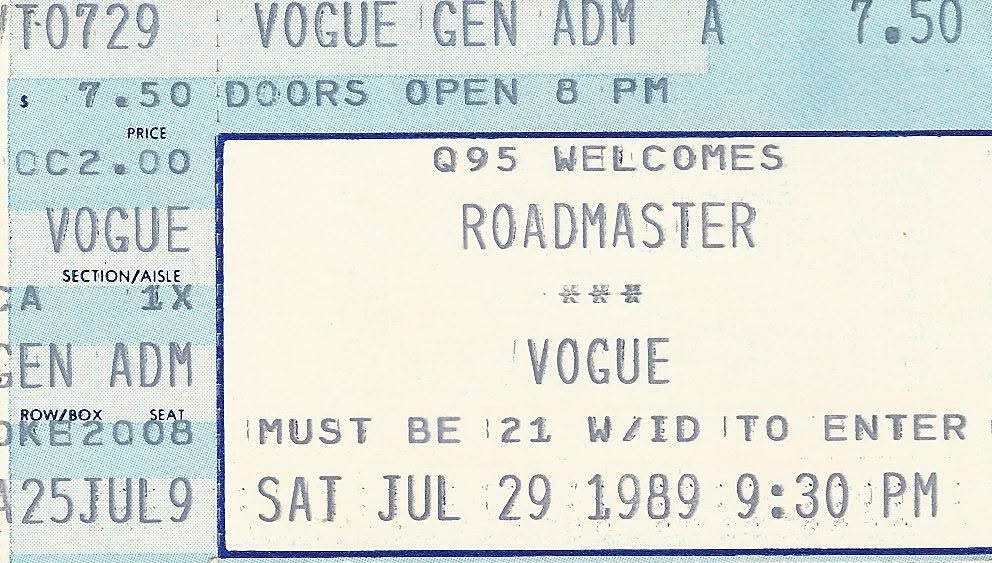
A ticket stub for Q95’s presentation of Roadmaster at the Vogue on July 29, 1989. Photo courtesy of Randall Halcomb.
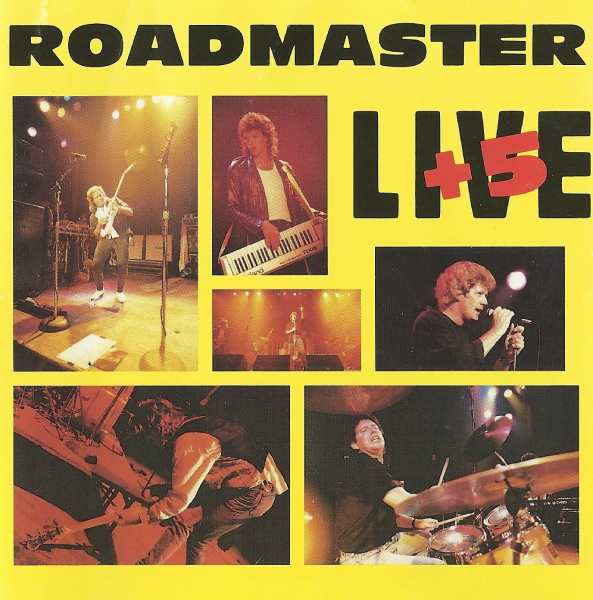
The front cover of Roadmaster’s 1989 album “Live + 5”, featuring photographs from the band’s reunion performances at the Vogue. Photo courtesy of Randall Halcomb.
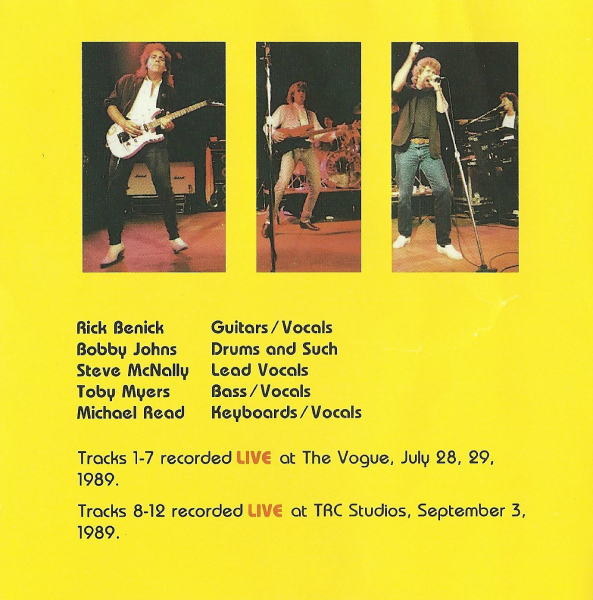
The back cover of Roadmaster’s “Live + 5”, featuring seven tracks recorded live at the Vogue on July 28–29, 1989, and five tracks recorded at TRC Studios on September 3, 1989. Photo courtesy of Randall Halcomb.
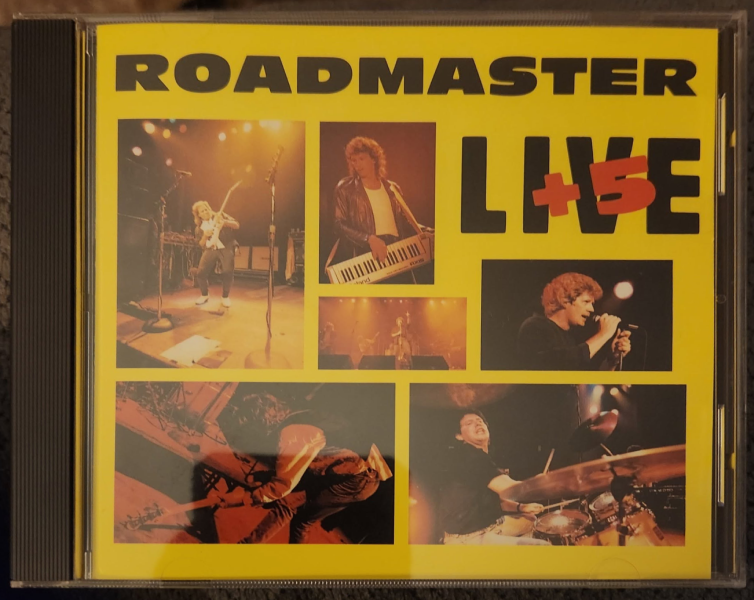
Front cover of Roadmaster’s 1989 album “Live + 5.”
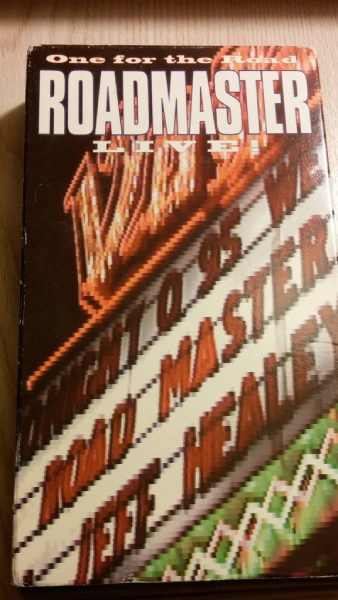
Roadmaster’s “One for the Road… Live!” VHS, recorded at the Vogue Theatre on August 28, 1993.
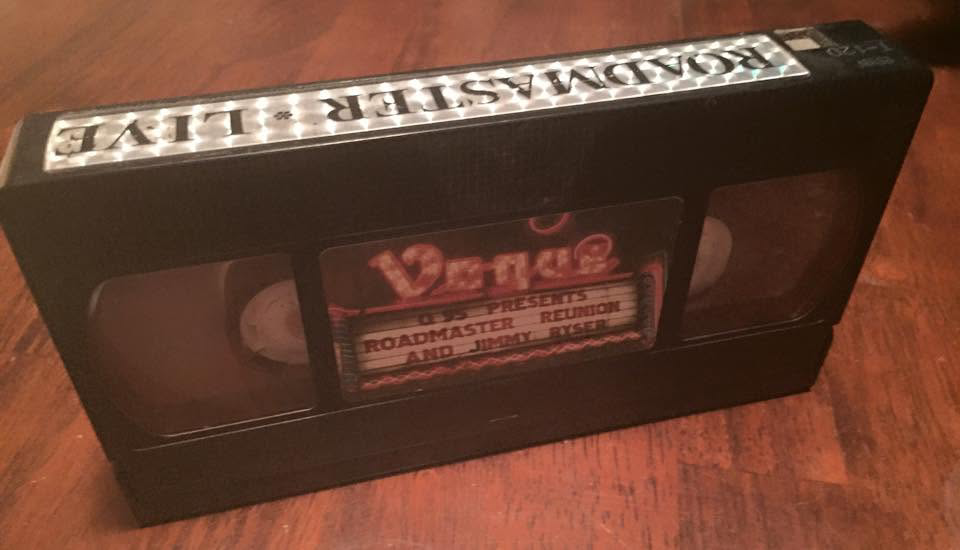
A VHS recording of Roadmaster’s reunion performance at the Vogue on July 29, 1989, filmed by Les Van Buskirk.
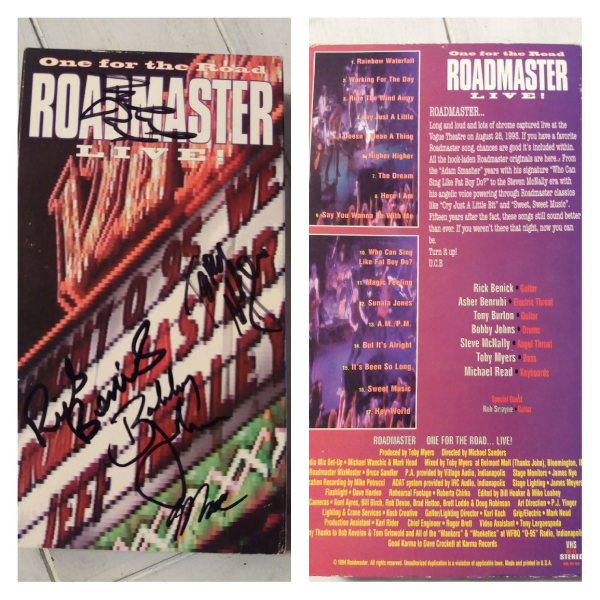
Front and back covers of Roadmaster’s “One for the Road… Live!” VHS, recorded at the Vogue Theatre on August 28, 1993. Photo courtesy of Charlie Farmer.
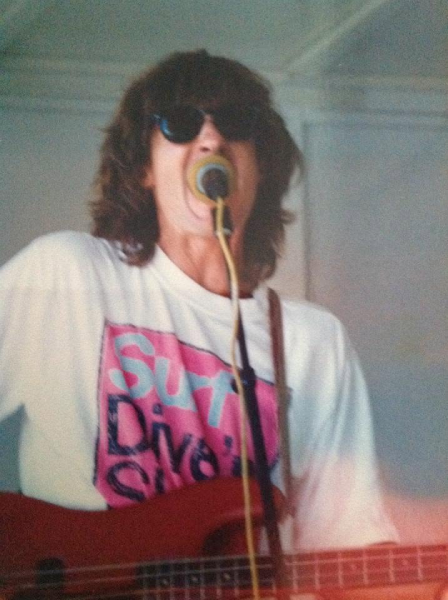
Roadmaster bassist Toby Myers performs live, circa the early 1990s. Photo courtesy of Michael Clapper.
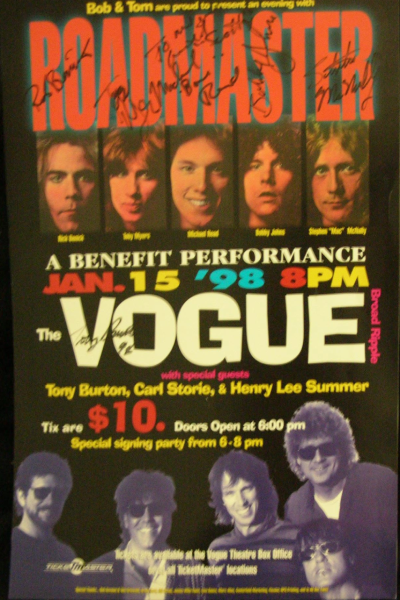
Bob & Tom presented Roadmaster in a benefit performance at the Vogue on January 15, 1998, with special guests Tony Burton, Carl Storie, and Henry Lee Summer. Photo courtesy of Scott Bee.
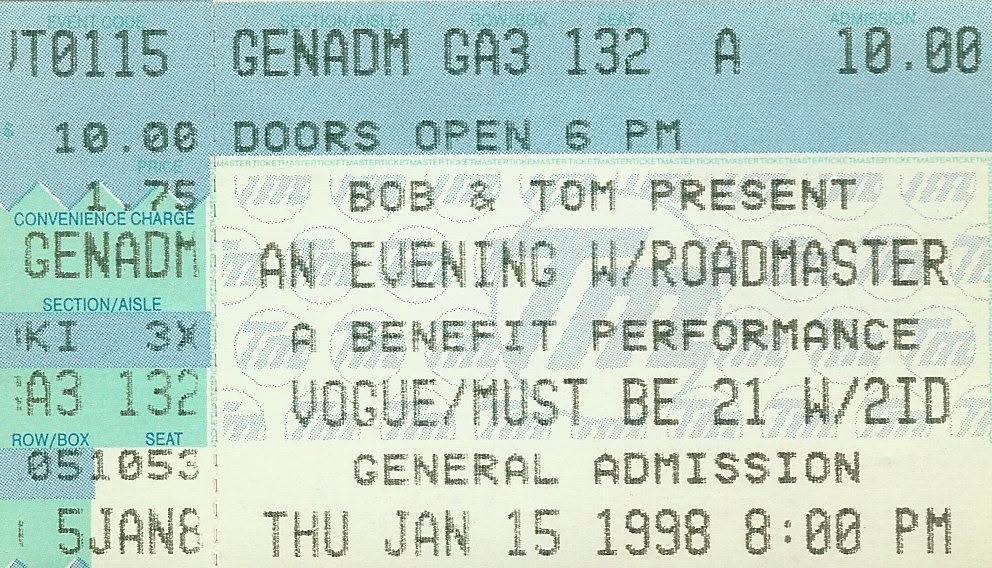
A ticket stub for Bob & Tom’s January 15, 1998, Roadmaster reunion benefit at the Vogue for vocalist Steve “Mac” McNally. Photo courtesy of Randall Halcomb.
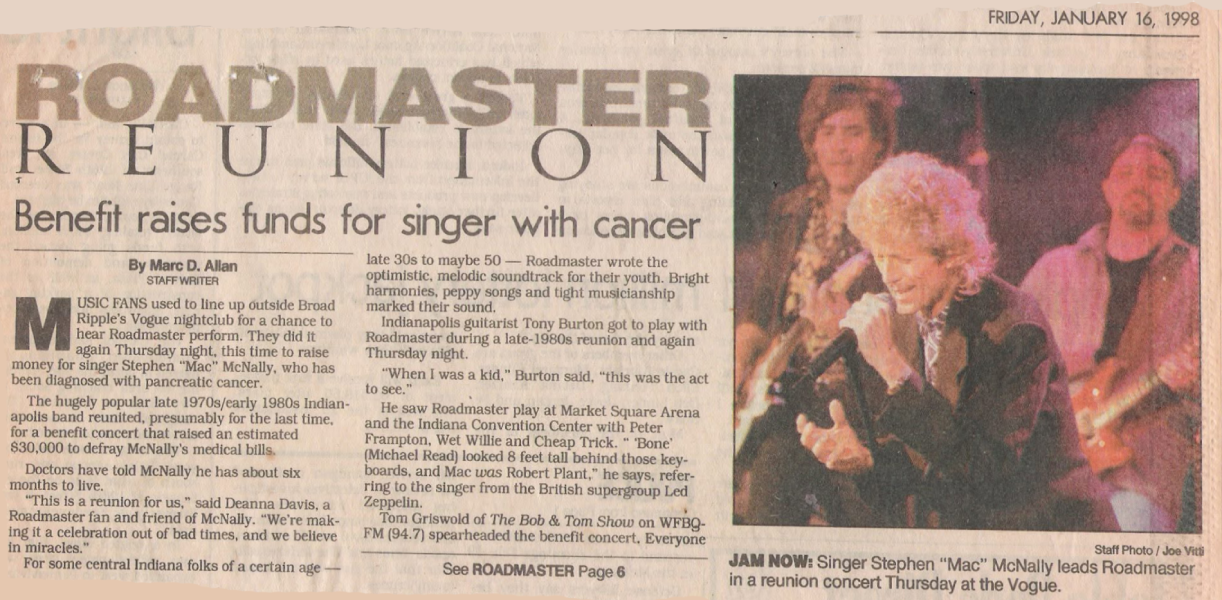
A January 16, 1998, newspaper article reports on Roadmaster’s sold-out reunion benefit at the Vogue, which raised an estimated $30,000 for vocalist Steve “Mac” McNally during his battle with pancreatic cancer. Clipping courtesy of Jim Drew.
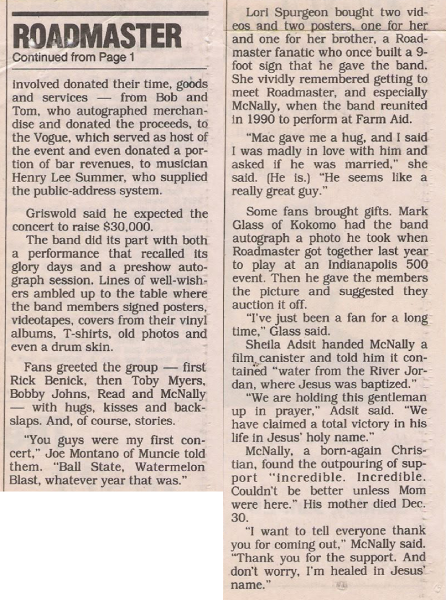
The continuation of the January 16, 1998, article details the community support behind Roadmaster’s reunion benefit and Steve “Mac” McNally’s gratitude to the fans. Clipping courtesy of Jim Drew.
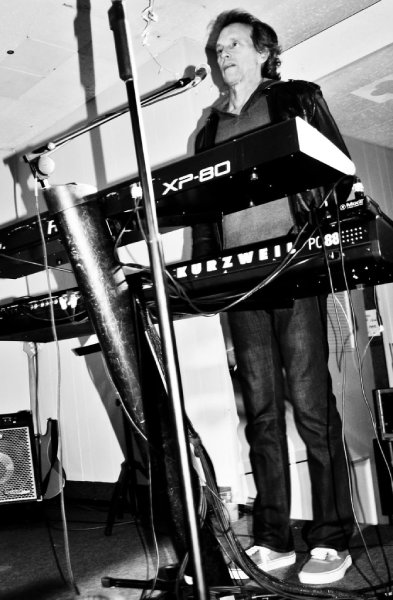
Michael Read performs on keyboards at the Riviera Club, circa 2016.
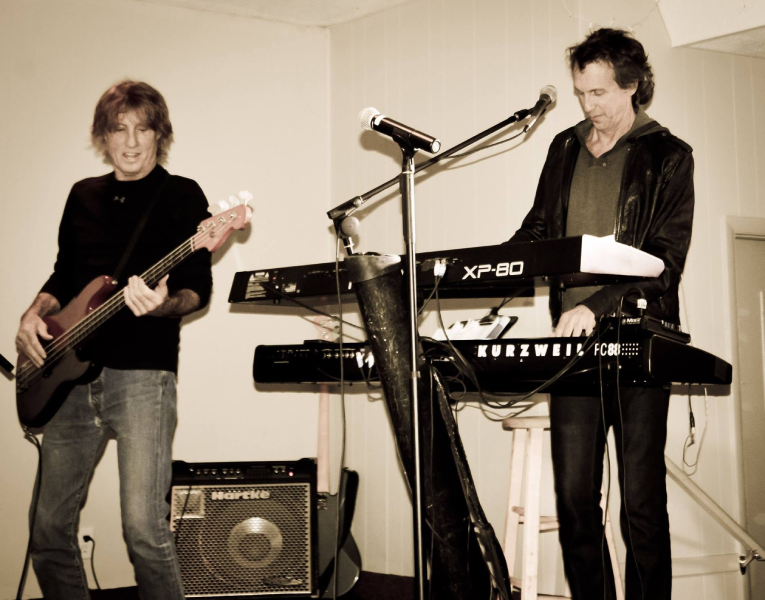
Roadmaster’s Toby Myers on bass guitar and Michael Read on keyboards at the Riviera Club, circa 2016.
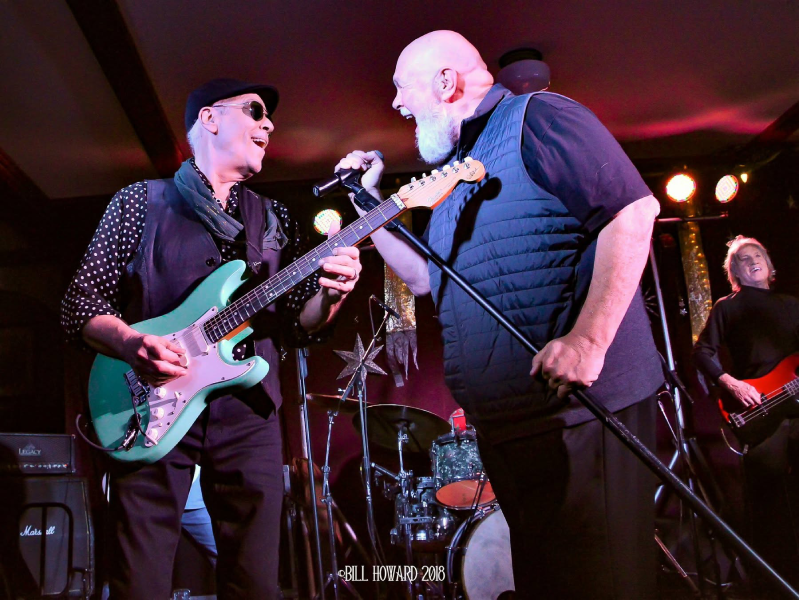
Ricky Benick, Asher Benrubi, and Toby Myers perform together during Roadmaster’s 2018 reunion. Photo by Bill Howard.
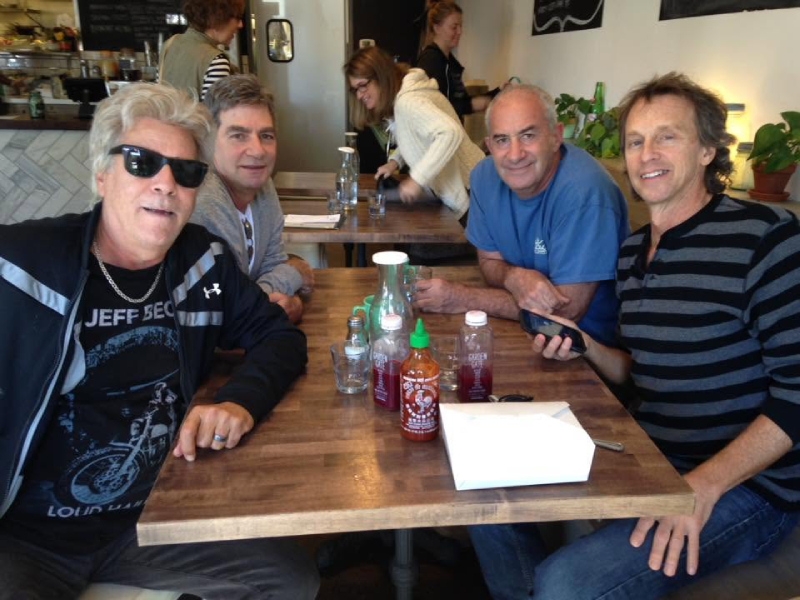
Rick Benick, Bruce Sandler, and Michael Read gather together, circa 2016.
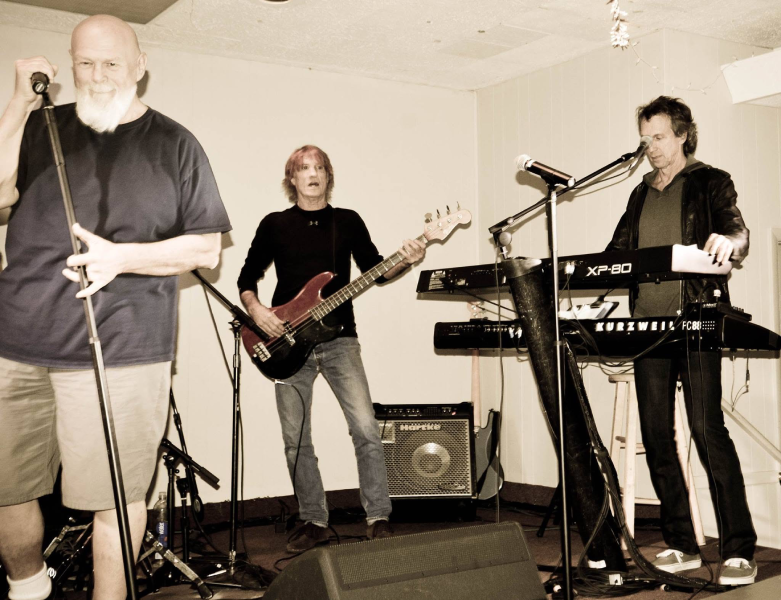
Roadmaster members Asher Benrubi on vocals, Toby Myers on bass guitar and Michael Read on keyboards at the Riviera Club, circa 2016.
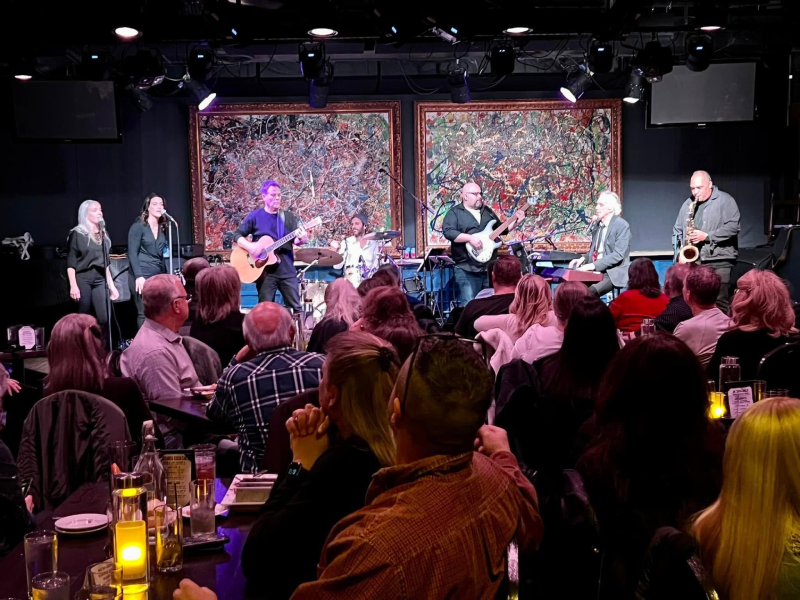
Michael Read performs at the Jazz Kitchen with Rob Dixon, Phillip Powers, Anne Manley, Dave Donahoe, Aimee Esenmann, and Chris Brown, circa 2023.
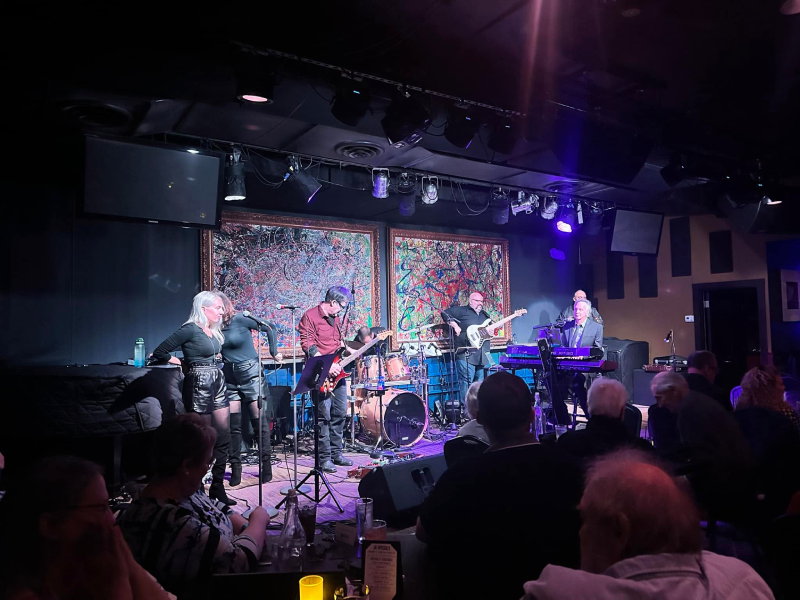
Michael Read performs at the Jazz Kitchen with Rob Dixon, Phillip Powers, Anne Manley, Dave Donahoe, Aimee Esenmann, and Chris Brown, circa 2023.
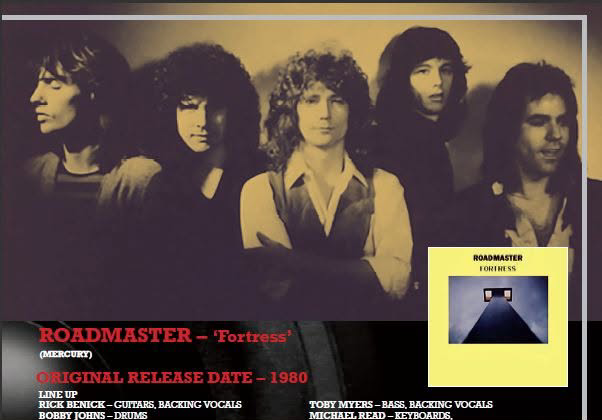
Part one of “Rock Candy” magazine’s April 2025 feature on Roadmaster looks back at the band’s 1980 album “Fortress”. Photo courtesy of John Watson.
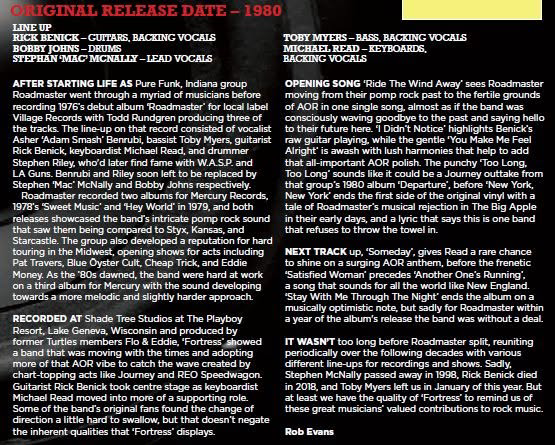
Part two of “Rock Candy” magazine’s April 2025 feature, written by Rob Evans, recounts Roadmaster’s history and reviews the songs and production of “Fortress.” Photo courtesy of John Watson.
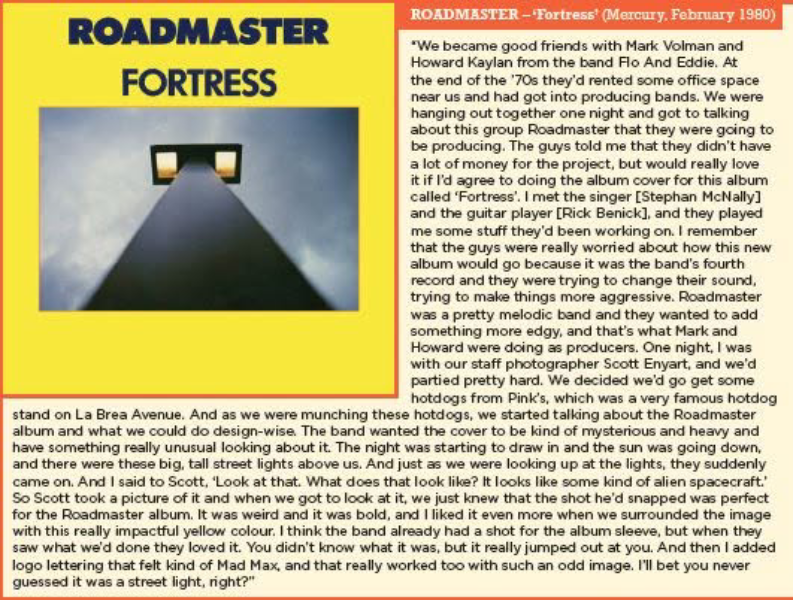
British magazine Rock Candy featured an interview with celebrated album artist Ernie Cefalu, who recalled creating the cover for Roadmaster’s 1980 album Fortress. The design used Scott Enyart’s photograph of streetlights on La Brea Avenue, transformed into the album’s mysterious, fortress-like image.
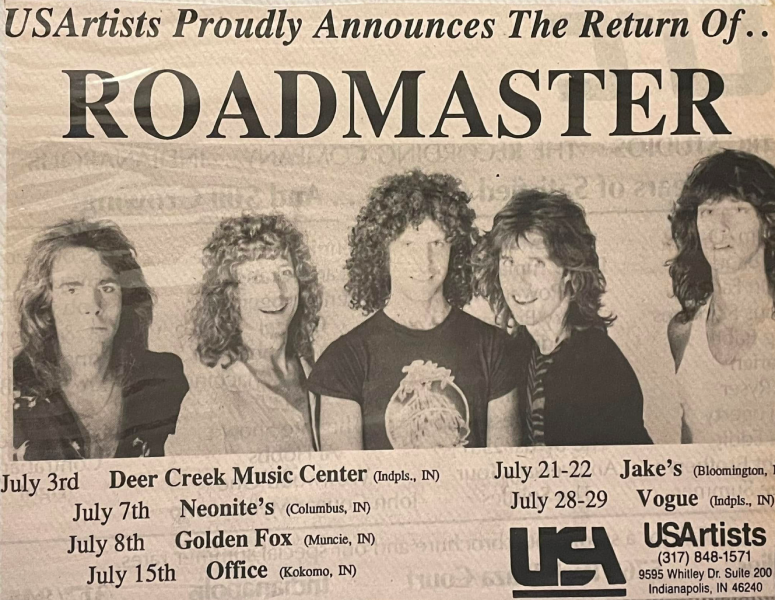
A USA Artists advertisement announces Roadmaster’s 1989 reunion tour, beginning July 3 at Deer Creek Music Center and continuing with dates across Indiana.
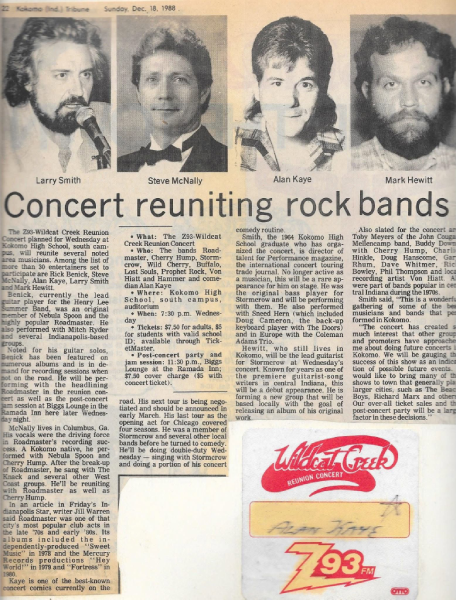
A December 18, 1988, “Kokomo Tribune” article previews the Wildcat Creek Reunion Concert and recounts Roadmaster’s history. Photo courtesy of Alan Kaye.
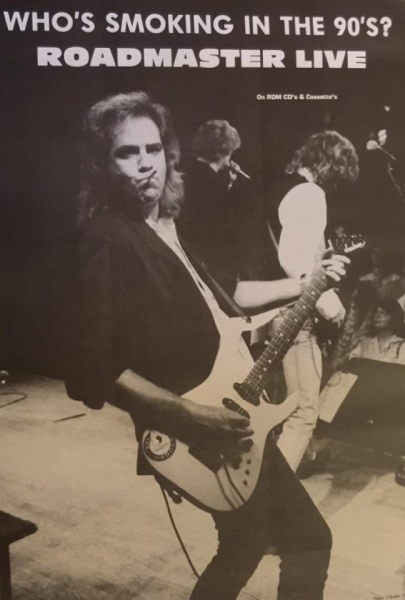
Roadmaster’s “Who’s Smoking in the ’90s?” live album.
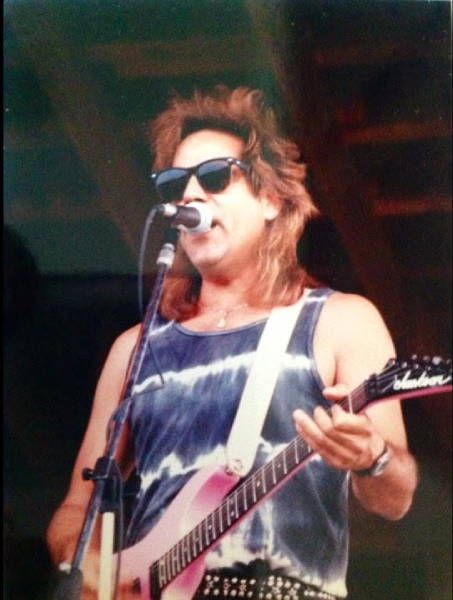
Roadmaster guitarist Rick Benick performs live, circa the 1980s. Photo courtesy of Michael Clapper.

Roadmaster guitarist Rick Benick performs live. Photo courtesy of Michael Clapper.
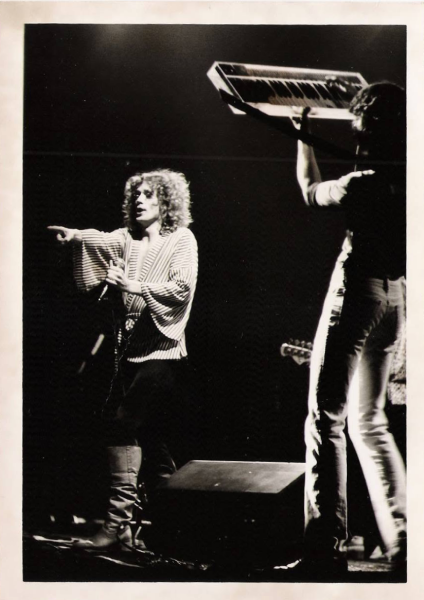
Steve “Mac” McNally and Michael Read perform with Roadmaster as Read raises his keyboard overhead. Photo courtesy of Jim Drew.
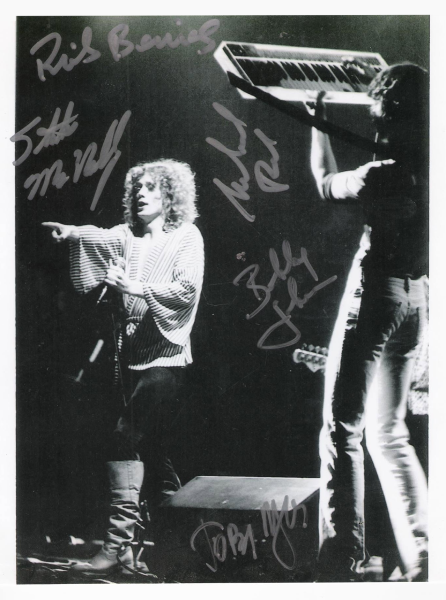
An autographed performance photo of Roadmaster’s Steve “Mac” McNally, left, and Michael Read. Photo courtesy of Jim Drew.
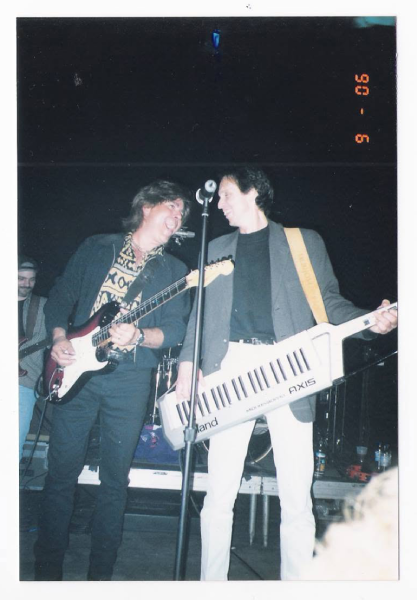
Ricky Benick and Michael Read perform together during a Roadmaster reunion show. Photo courtesy of Jim Drew.
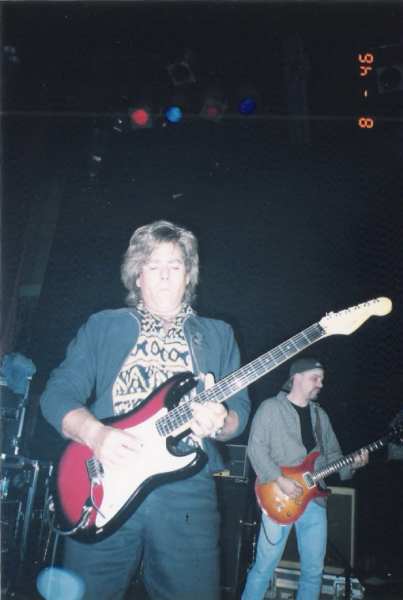
Roadmaster guitarist Ricky Benick performs live. Photo courtesy of Jim Drew.
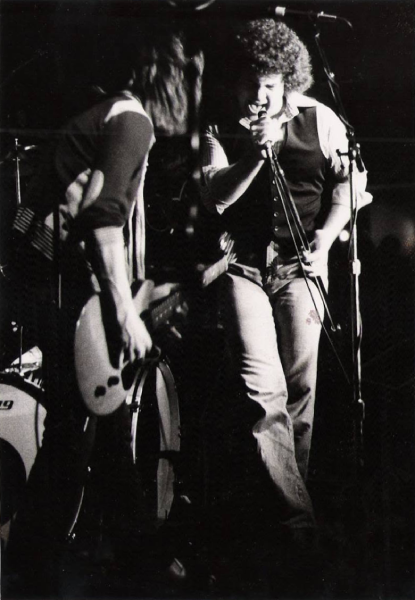
Roadmaster’s Ricky Benick and Steve “Mac” McNally share the stage during a live performance. Photo courtesy of Jim Drew.
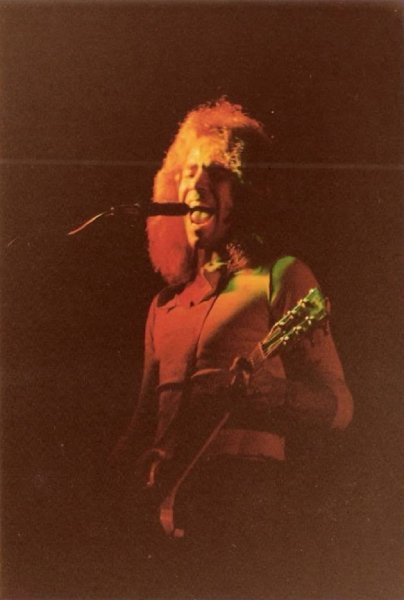
Roadmaster guitarist Rick Benick sings during a live performance. Photo courtesy of Jim Drew.
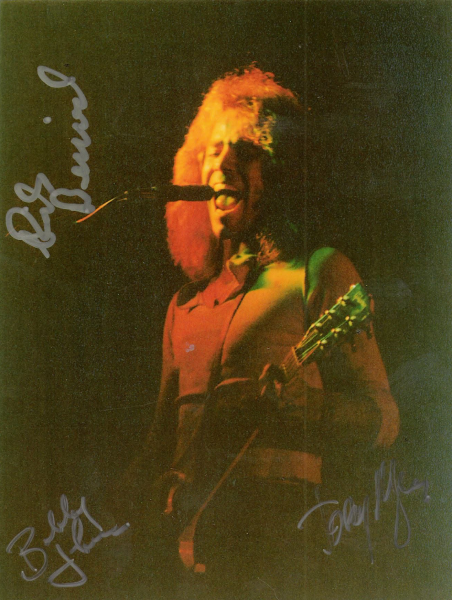
An autographed performance photo of Roadmaster guitarist Rick Benick. Photo courtesy of Jim Drew.
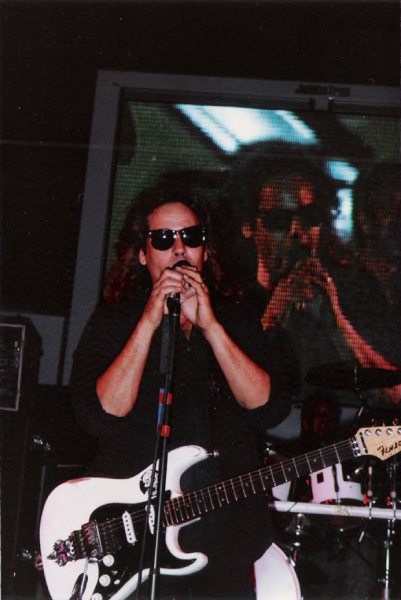
Roadmaster guitarist Rick Benick performs live with his image projected on the video screen behind him. Photo courtesy of Jim Drew.
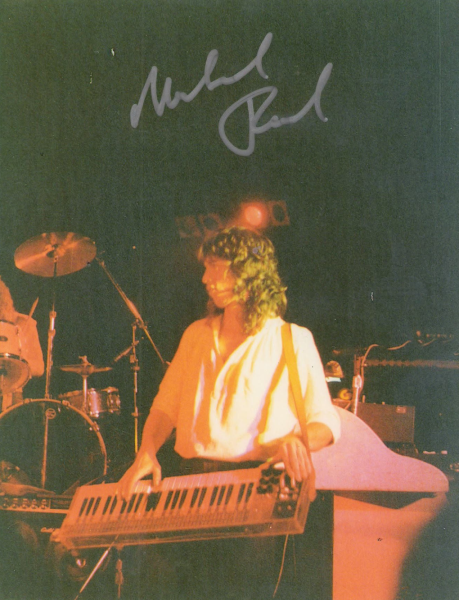
An autographed performance photo of Roadmaster keyboardist Michael Read. Photo courtesy of Jim Drew.
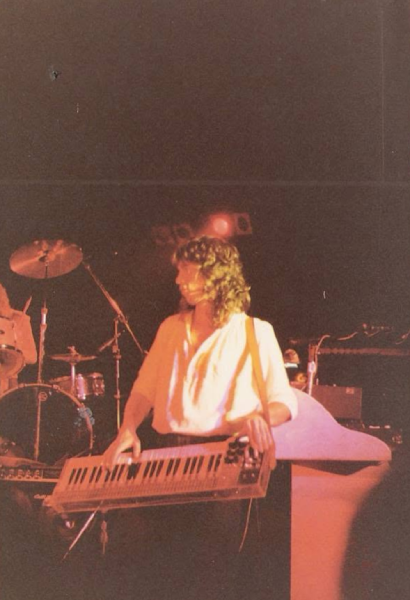
Roadmaster keyboardist Michael Read performs on keytar. Photo courtesy of Jim Drew.
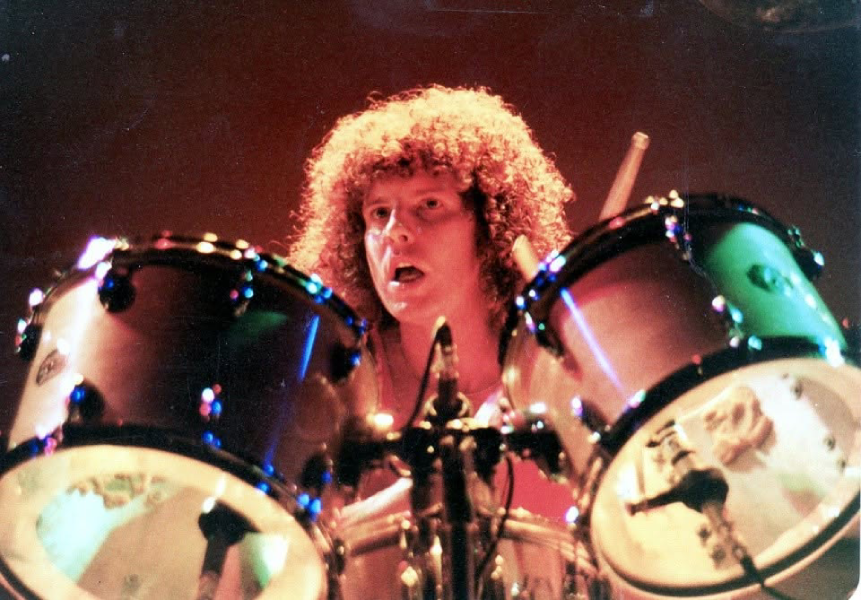
Roadmaster drummer Bobby Johns performs live. Photo courtesy of Bill Howard.
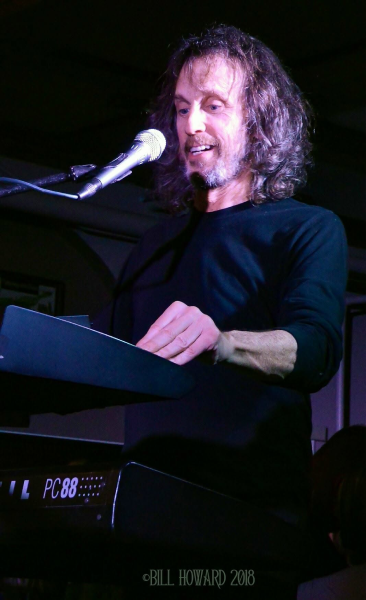
Roadmaster keyboardist Michael Read performs live in 2018. Photo by Bill Howard.
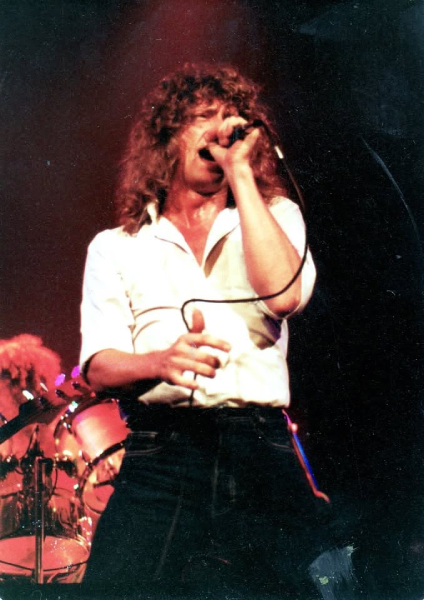
Roadmaster vocalist Steve “Mac” McNally performs live. Photo courtesy of Bill Howard.
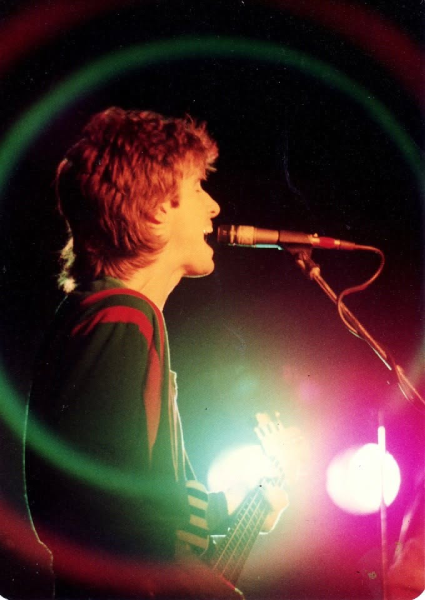
Roadmaster bassist Toby Myers sings during a live performance. Photo courtesy of Bill Howard.
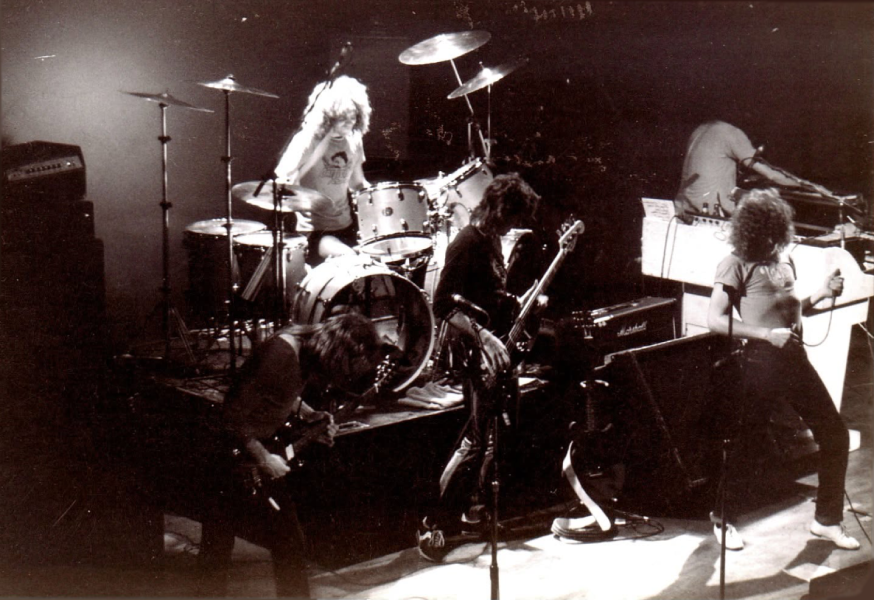
Roadmaster performs live at the Vogue in Indianapolis. Photo courtesy of Bill Howard.
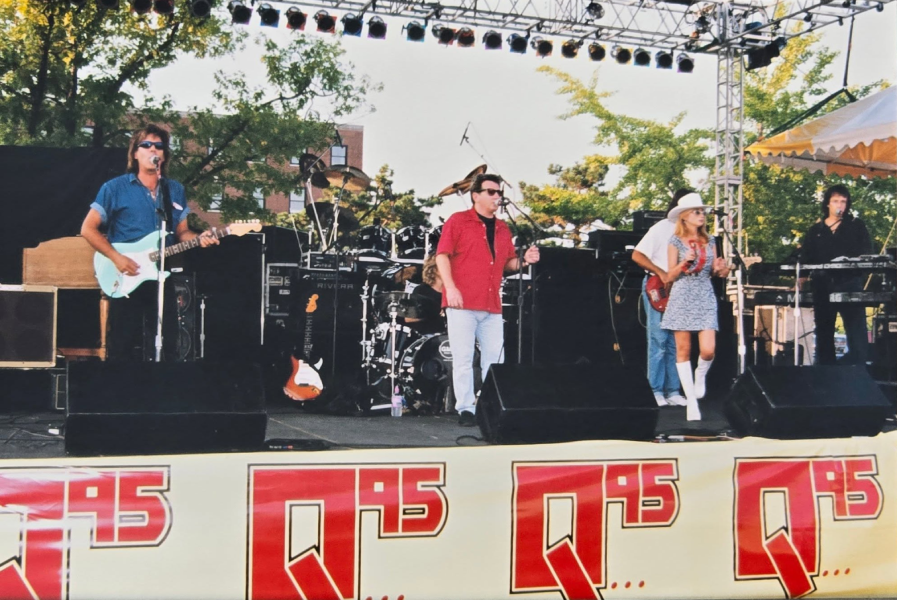
Roadmaster performs at a Q95-presented outdoor concert. Photo courtesy of Jeff Barry.
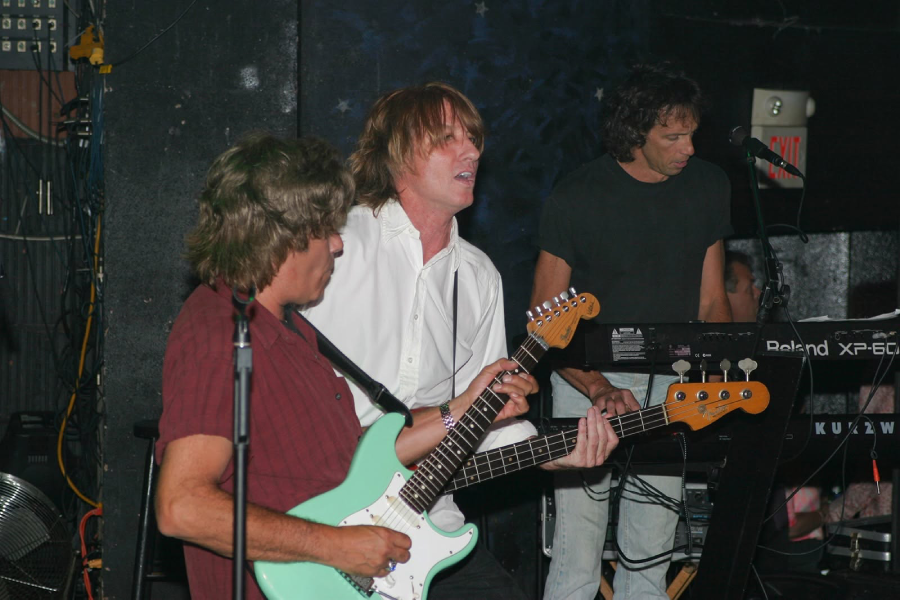
Roadmaster’s Rick Benick, Toby Myers, and Michael Read perform together. Photo courtesy of Jeff Barry.
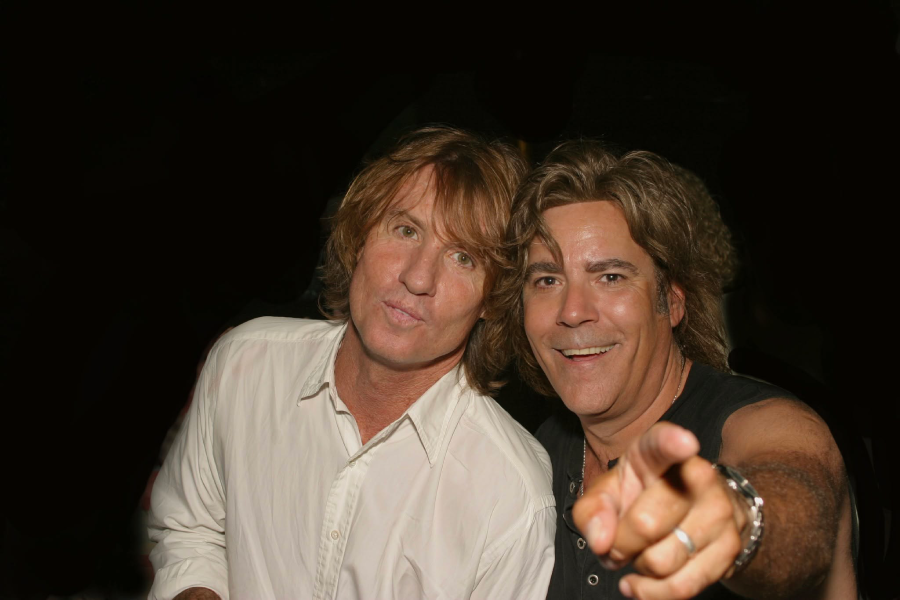
Roadmaster members Toby Myers and Ricky Benick. Photo courtesy of Jeff Barry.
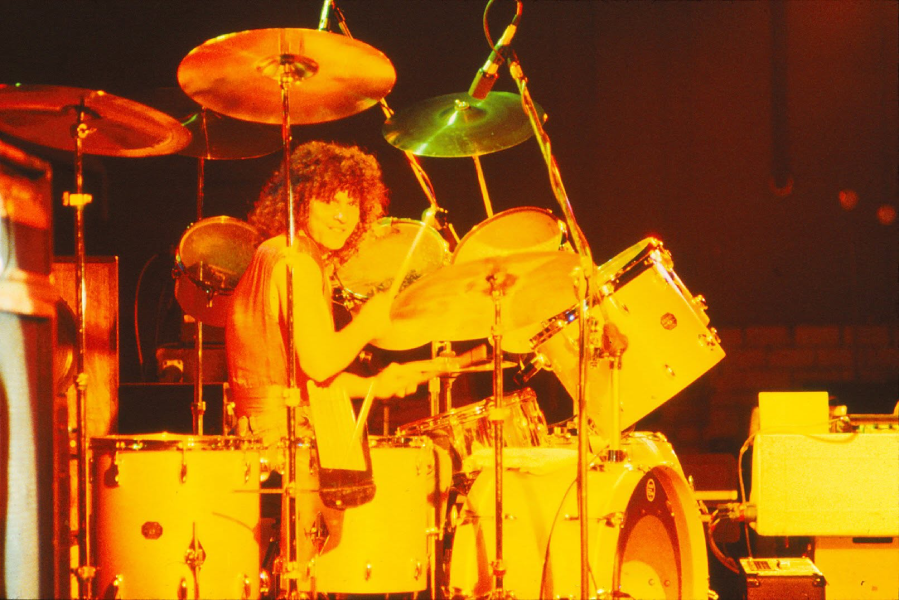
Roadmaster drummer Bobby Johns performs behind his expansive drum kit. Photo courtesy of Bob Ferguson.
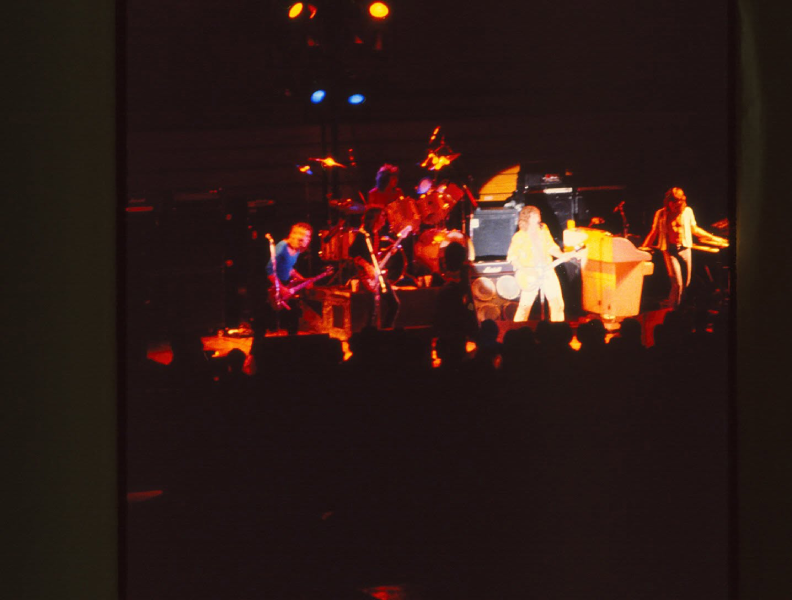
Roadmaster performs live before a packed crowd. Photo courtesy of Bob Ferguson.
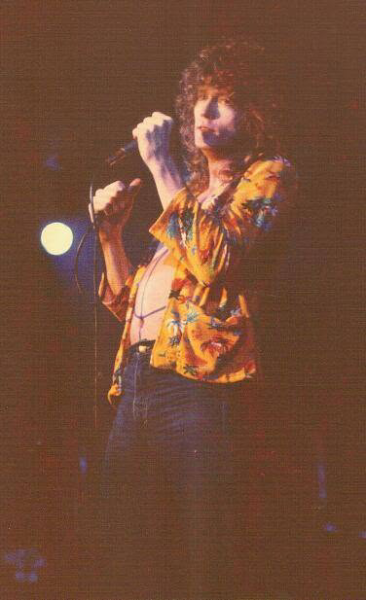
Roadmaster vocalist Steve “Mac” McNally performs live. Photo courtesy of Troy Salinas.
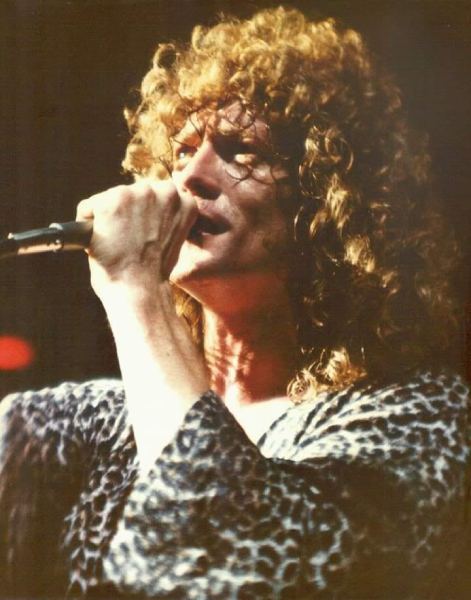
Roadmaster vocalist Steve “Mac” McNally performs live. Photo courtesy of Troy Salinas.
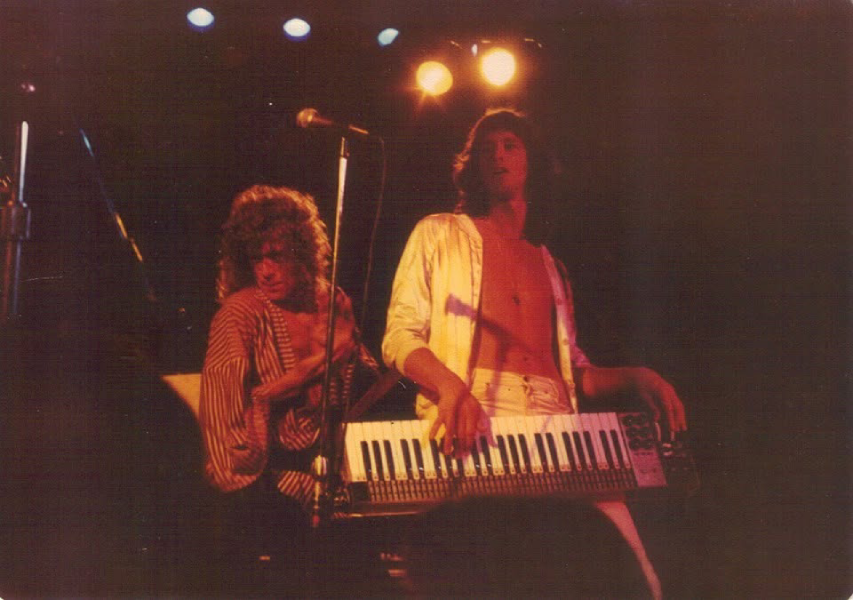
Roadmaster’s Steve “Mac” McNally and Michael Read perform together, with Read on keytar. Photo by Cindy Parongao.
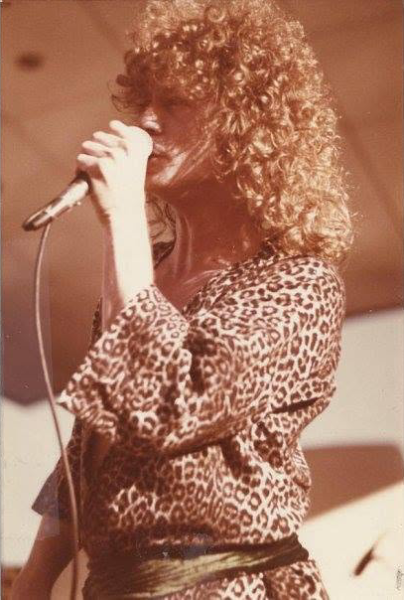
Roadmaster vocalist Steve “Mac” McNally performs live.
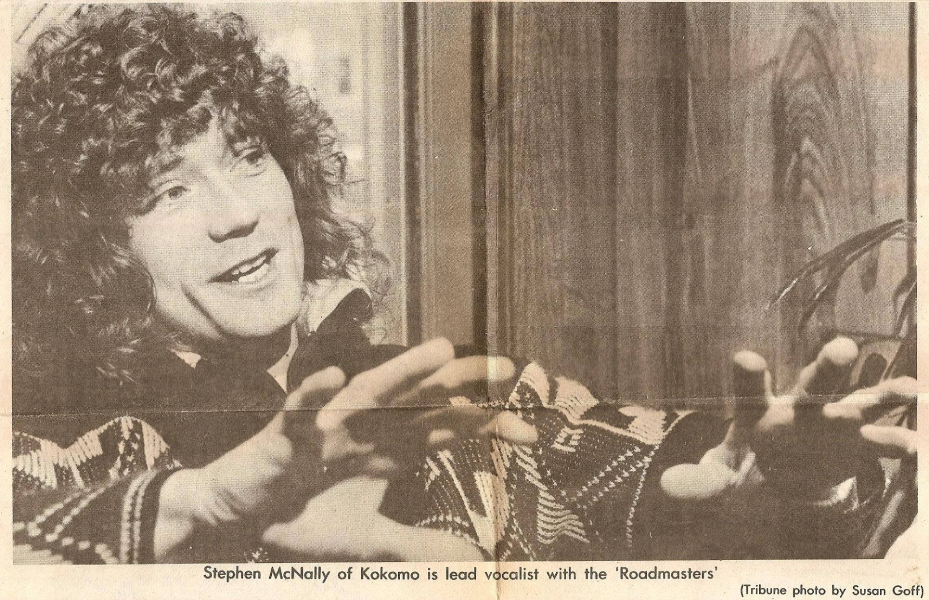
Kokomo native Steve “Mac” McNally, lead vocalist for Roadmaster. “Tribune” photo by Susan Goff.
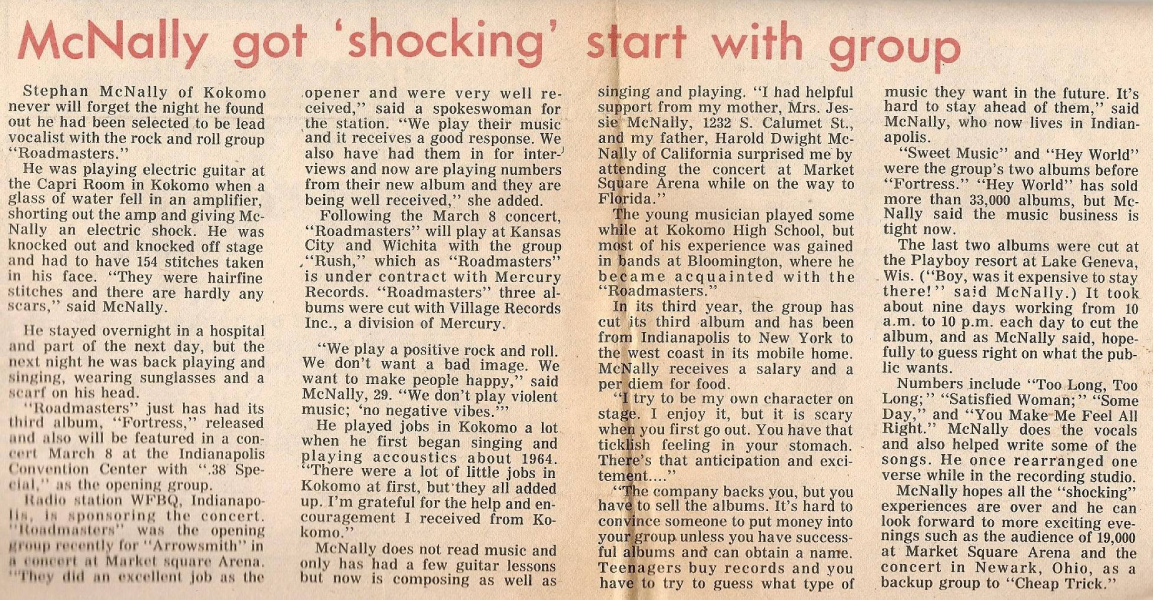
A newspaper article recounts Steve McNally’s severe onstage electrical shock and his path to becoming Roadmaster’s lead vocalist. Photo courtesy of Alan Kaye.
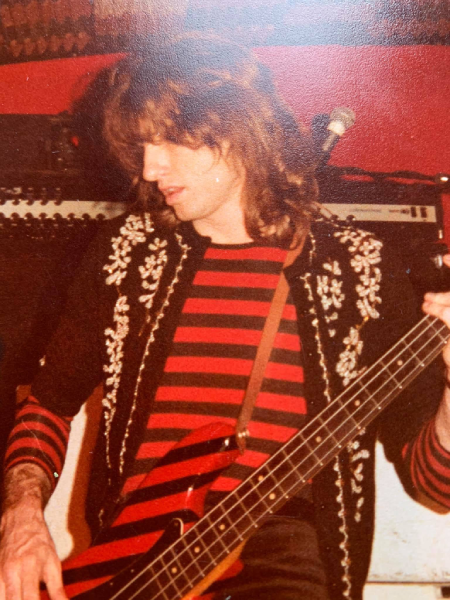
Roadmaster’s Toby Myers with his red-striped bass and matching shirt. Photo courtesy of Toby Myers.
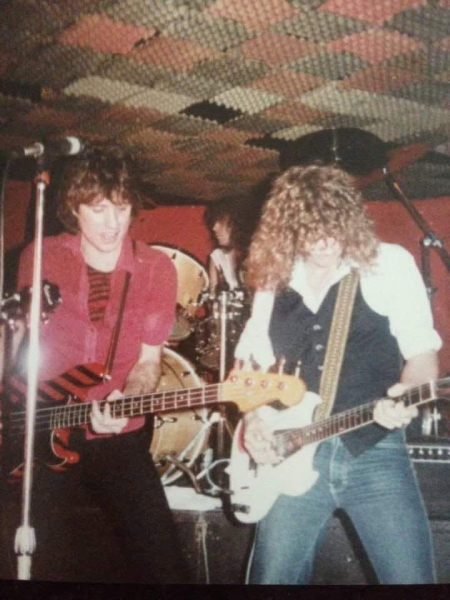
Roadmaster’s Toby Myers performing with his red-striped bass and matching shirt. Photo courtesy of Troy Salinas.
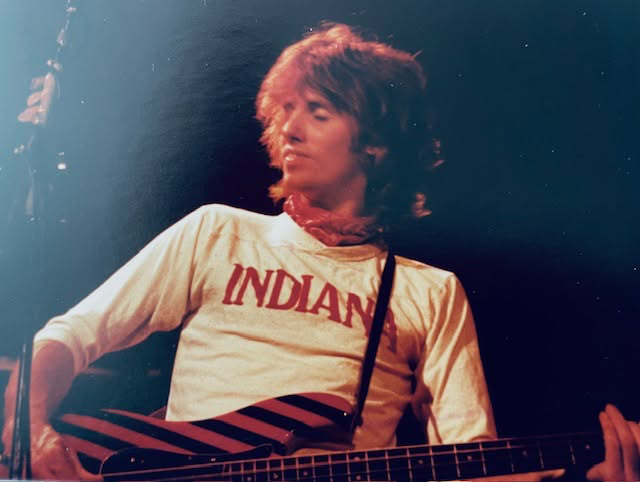
Roadmaster bassist Toby Myers performing with his red-and-black striped bass. Photo courtesy of Bobby Johns.
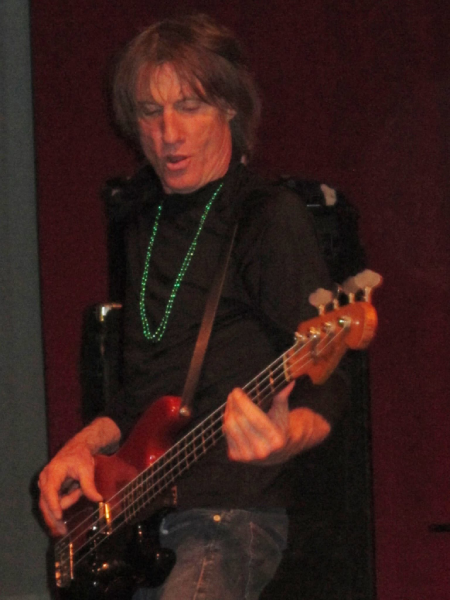
Toby Myers performing on bass guitar. Photo courtesy of Randall Halcomb.

Toby Myers performing with his white Fender P-Bass.
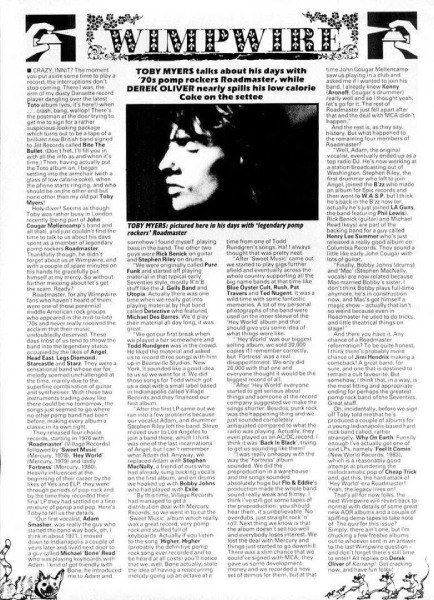
An interview with bassist Toby Myers looks back on his years with Roadmaster and the band’s place in 1970s Midwestern rock. Photo courtesy of Kelv Hellrazer.
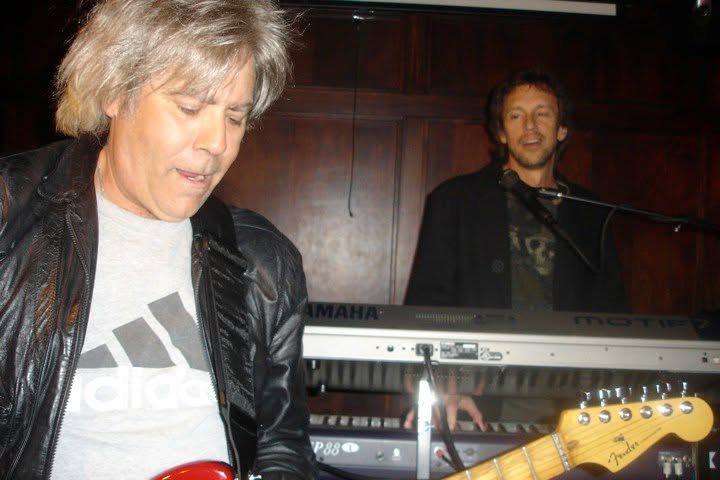
Roadmaster’s Ricky Benick on guitar and Michael Read on keyboards perform together.
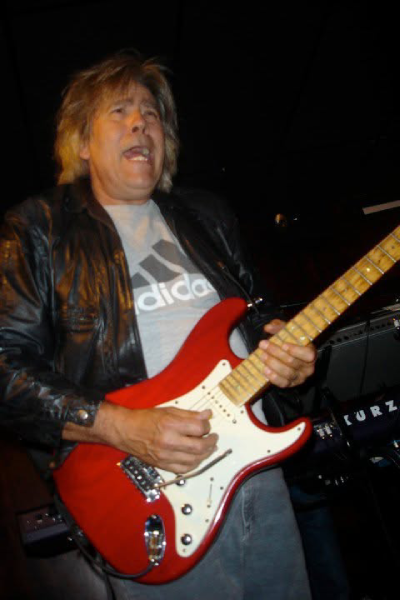
Roadmaster guitarist Ricky Benick rocks out during a live performance.
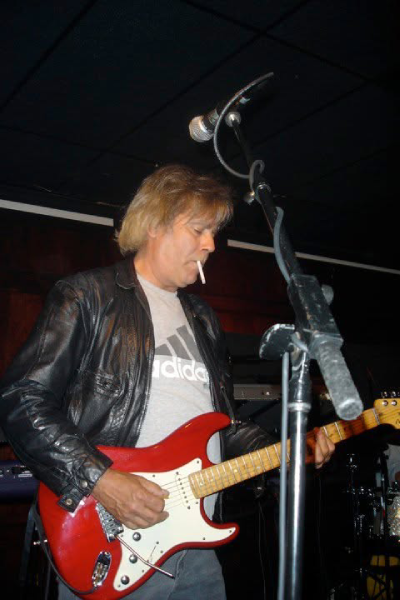
Roadmaster guitarist Ricky Benick performs live.
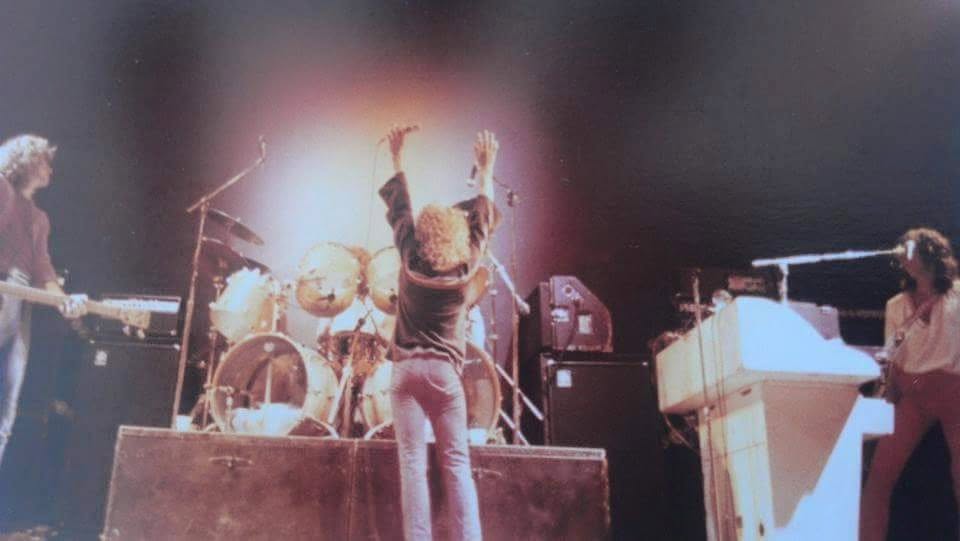
Roadmaster performs live beneath the stage lights. Photo courtesy of Richard Reasoner.
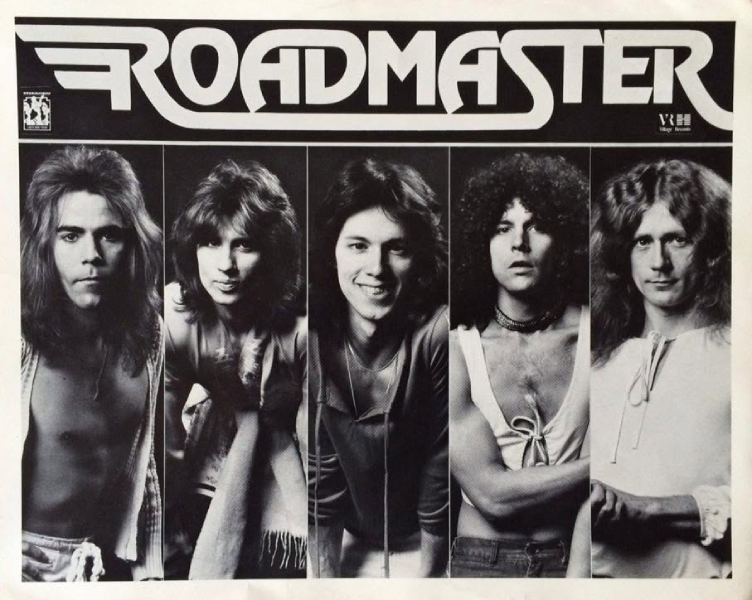
A Roadmaster promotional photo featuring, from left, Rick Benick, Toby Myers, Michael Read, Bobby Johns, and Steve “Mac” McNally.
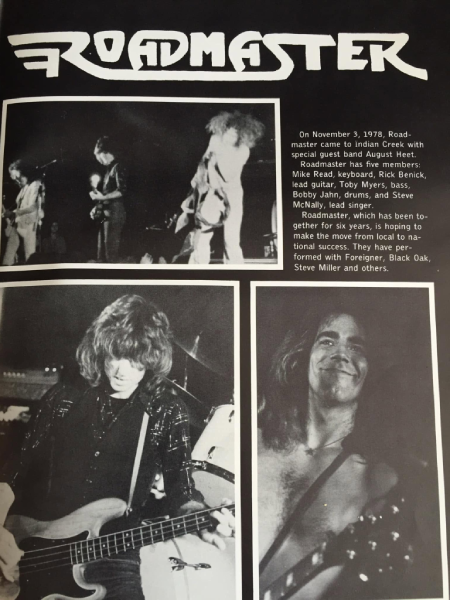
A Roadmaster profile promotes the band’s November 3, 1978, appearance at Indian Creek with special guest August Heat. It features Michael Read, Rick Benick, Toby Myers, Bobby Johns, and Steve McNally.
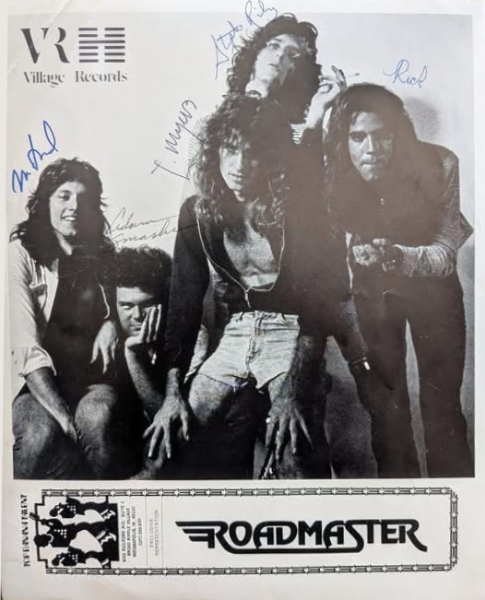
Autographed Village Records promotional photograph of Roadmaster.
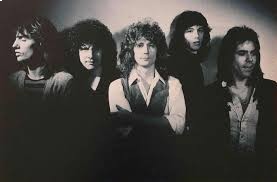
Black-and-white promotional portrait of Roadmaster.
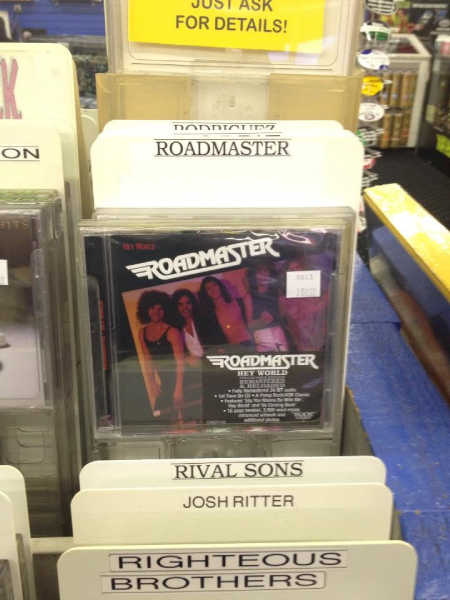
A Roadmaster “Hey World” CD in the music bins at Karma Records in Indianapolis. Photo courtesy of Les Van Buskirk.
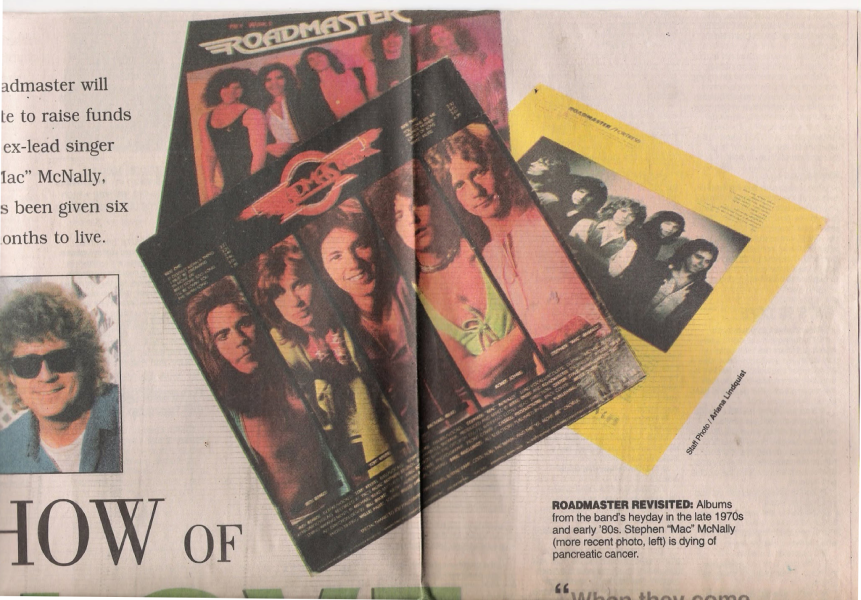
A newspaper feature revisits Roadmaster’s albums while announcing the band’s reunion benefit for former vocalist Steve “Mac” McNally, who was battling pancreatic cancer. Photo courtesy of Jim Drew.
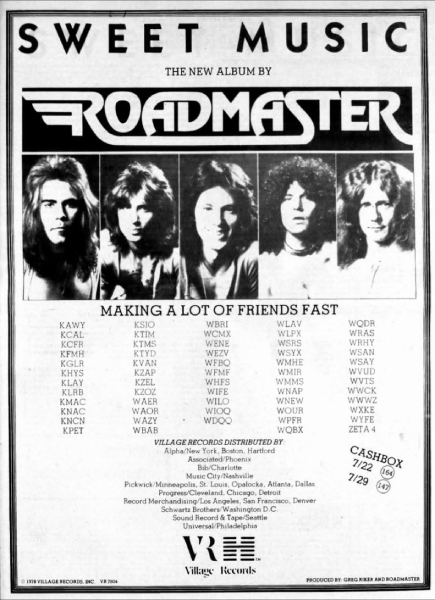
A 1978 “Radio & Records” magazine advertisement promotes Roadmaster’s *Sweet Music* album and its growing radio support nationwide. Photo courtesy of John Brian.
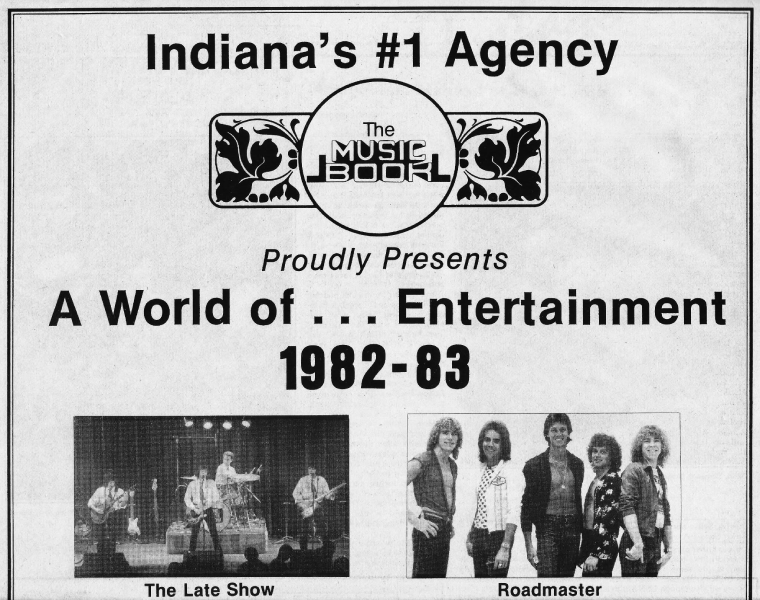
The Music Book agency advertisement featuring The Late Show and Roadmaster in its 1982–83 entertainment roster. Photo courtesy of Roger Baker.
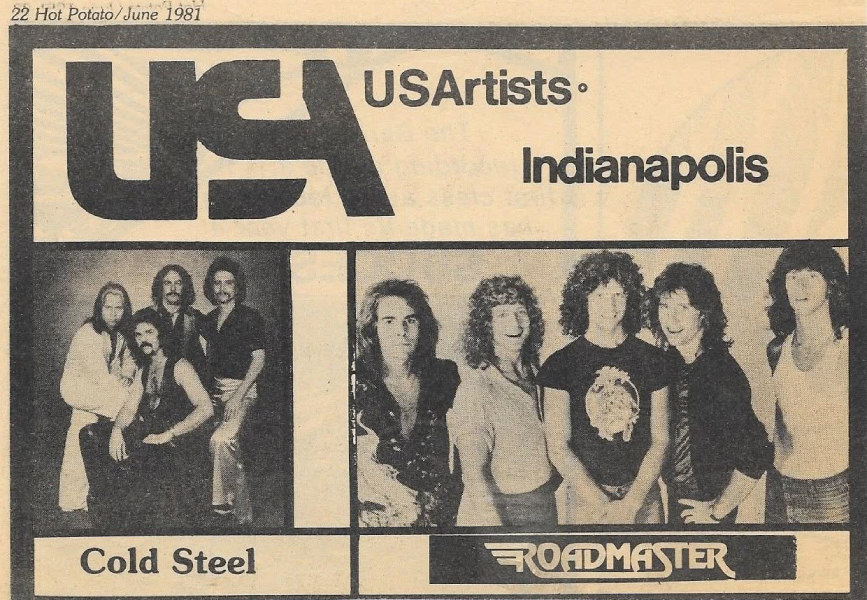
June 1981 USArtists advertisement featuring Indianapolis bands Cold Steel and Roadmaster. Photo courtesy of Alan Kaye.
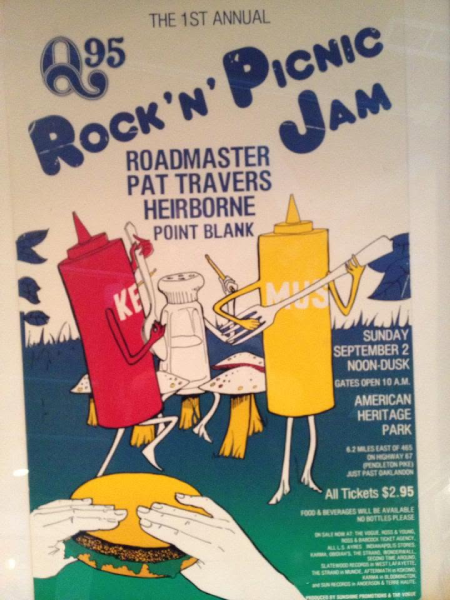
Q95’s first annual Rock ’n’ Picnic Jam featured Roadmaster, Pat Travers, Heirborne, and Point Blank at American Heritage Park on September 2. Photo courtesy of Bob Ferguson.
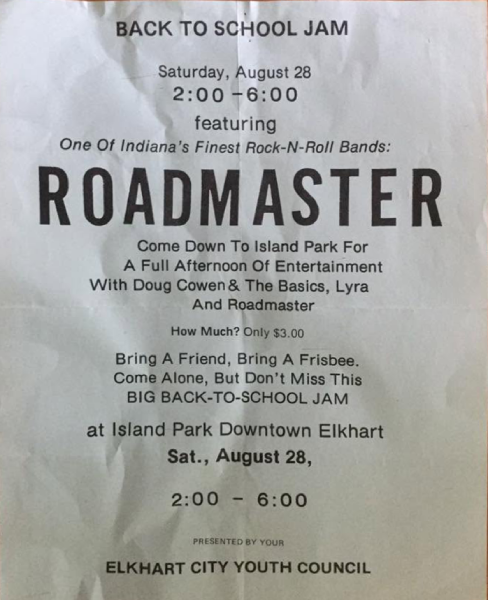
Flyer for the Back to School Jam featuring Roadmaster, Doug Cowen & the Basics, and Lyra at Island Park in downtown Elkhart, Saturday, August 28. Presented by the Elkhart City Youth Council. Image courtesy of Jeff Clausen.
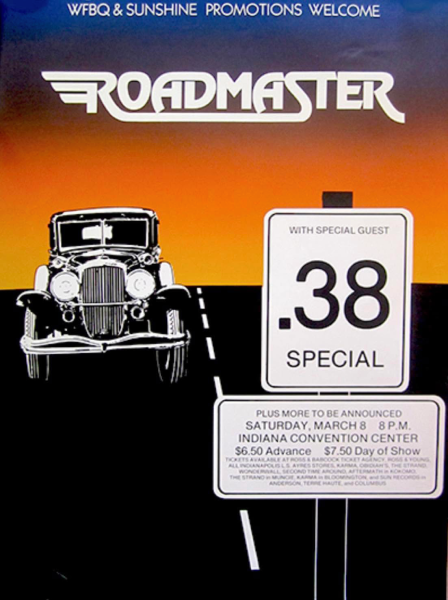
Concert poster for Roadmaster with special guest .38 Special at the Indiana Convention Center on March 8.
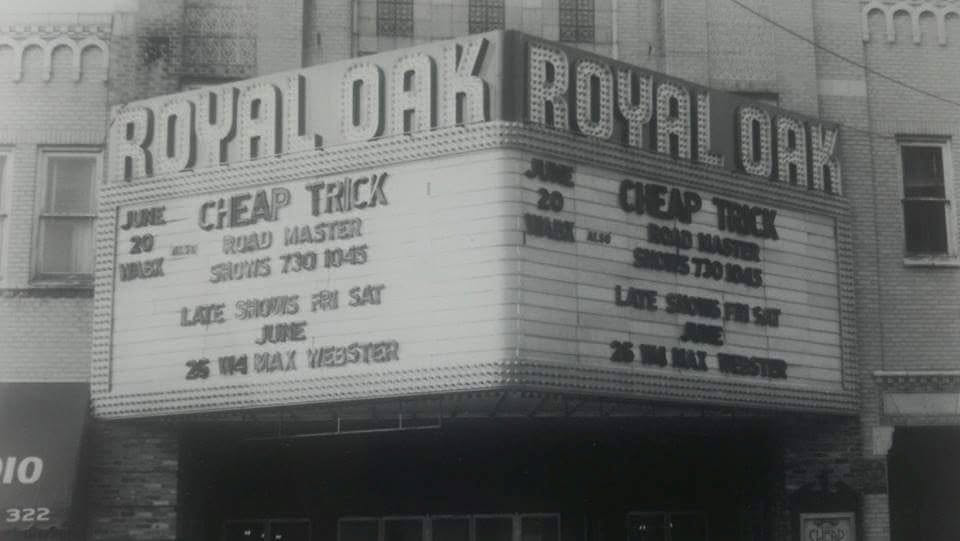
Royal Oak marquee advertising Cheap Trick with Roadmaster on June 20. Photo courtesy of Richard Reasoner.
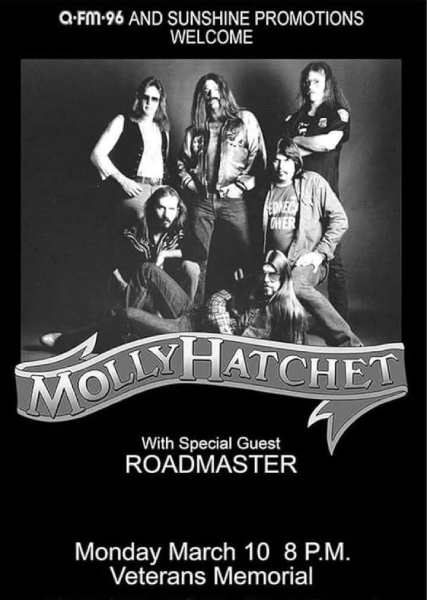
Concert poster for Sunshine Promotions’ presentation of Molly Hatchet with special guest Roadmaster at Veterans Memorial on March 10.
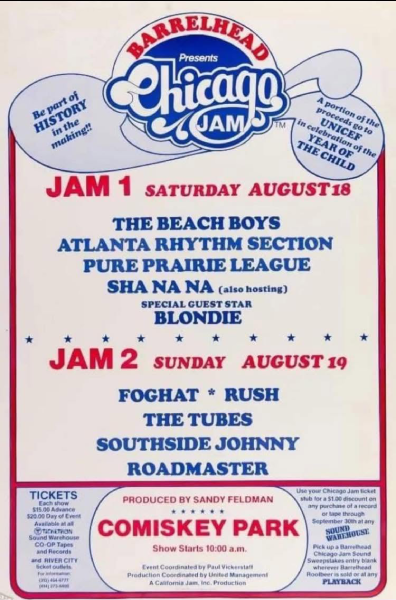
Poster for Barrelhead’s Chicago Jam at Comiskey Park, where Roadmaster performed with Foghat, Rush, the Tubes and Southside Johnny and the Asbury Jukes on August 19, 1979. Photo courtesy of Eric Cassel.
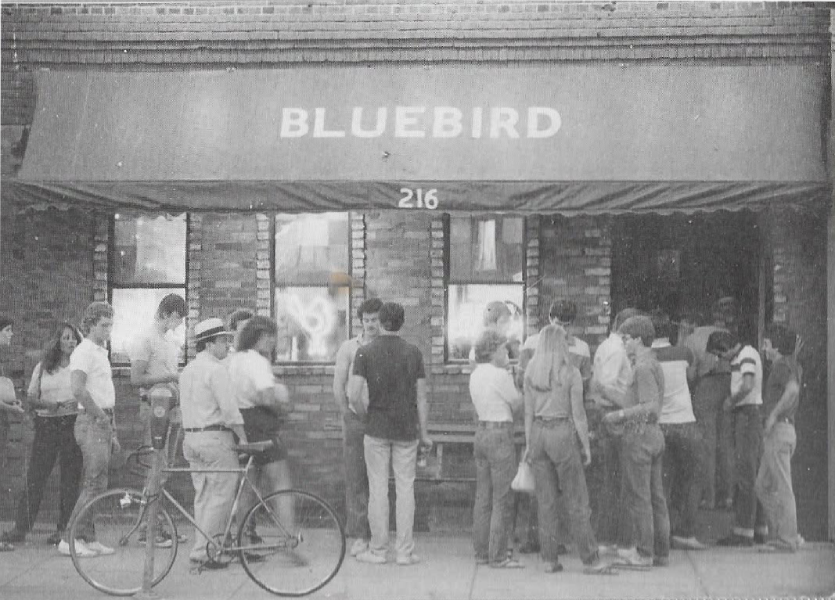
The Bluebird nightclub at 216 N. Walnut Street in Bloomington, Indiana. Photo courtesy of Alan Kaye.
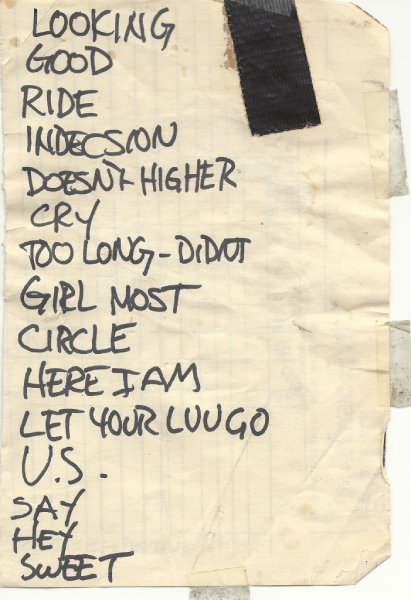
A handwritten Roadmaster setlist featuring favorites such as “Ride the Wind Away,” “Circle of Love,” “Hey World,” and “Sweet Music.” Photo courtesy of Randall Halcomb.
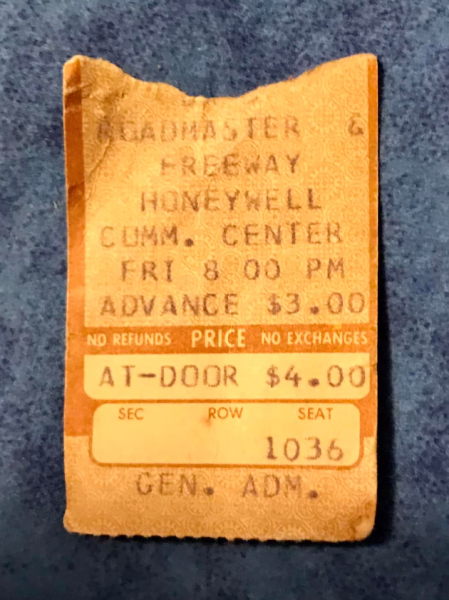
A ticket stub for Roadmaster and Freeway at the Honeywell Community Center in Wabash, Indiana. Photo courtesy of Barb Confer Hoover.
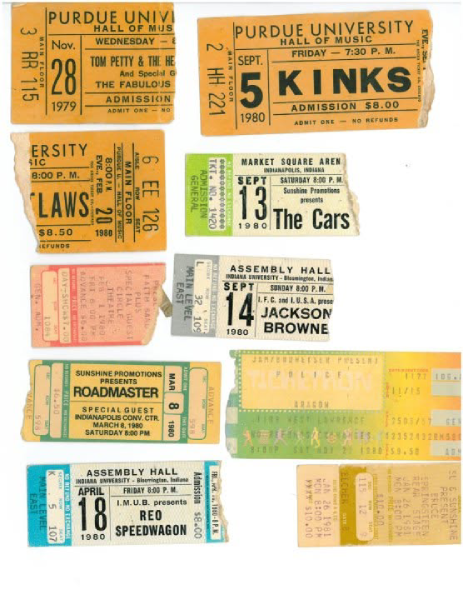
Doreen McGuire Crenshaw’s Indiana ticket stub collection includes Roadmaster’s March 8, 1980, concert at the Indianapolis Convention Center with special guest The Rockets. Collection courtesy of Doreen McGuire Crenshaw.
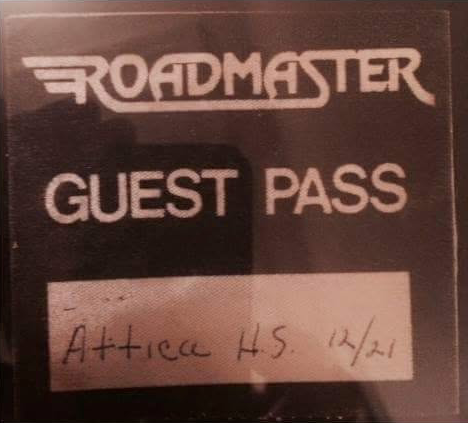
A Roadmaster guest pass for a December 21 performance at Attica High School.
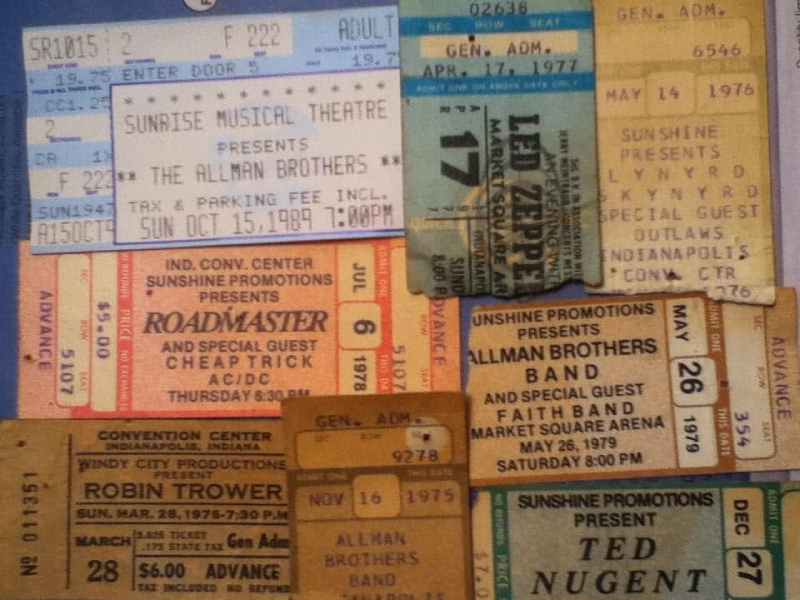
Collection of vintage Sunshine Promotions concert ticket stubs, including Roadmaster with special guests Cheap Trick and AC/DC on July 6, 1978. Photo courtesy of Peter Willis.
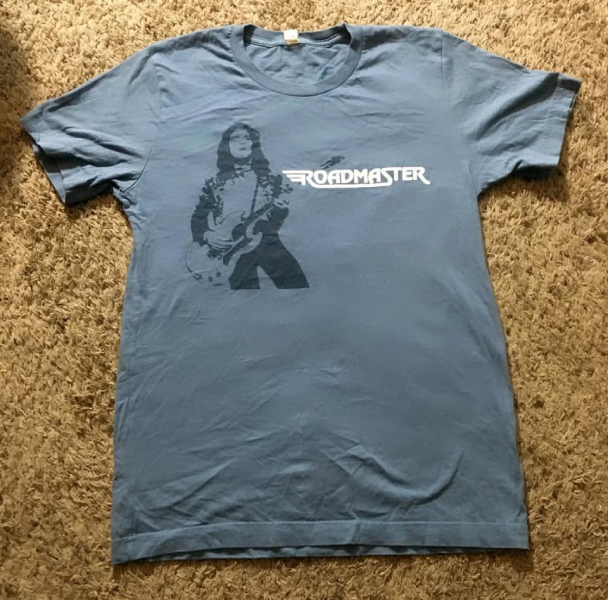
The front of a Ricky Benick tribute T-shirt features the Roadmaster guitarist in concert alongside the band’s logo. Photo courtesy of John Brian.
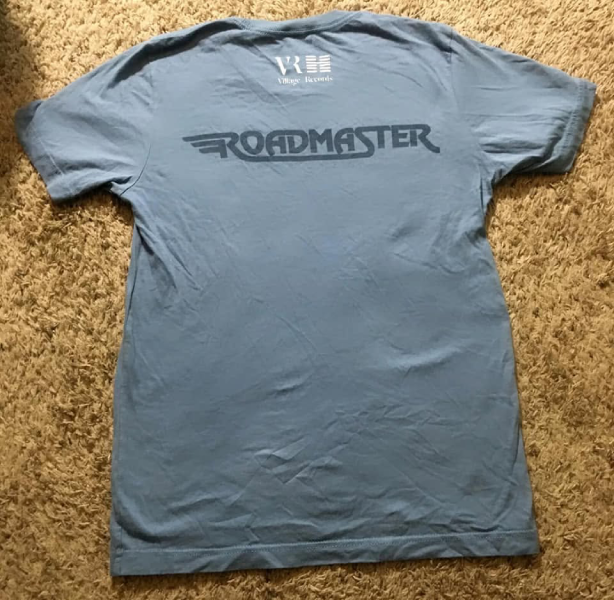
The back of a Ricky Benick tribute T-shirt features the Roadmaster and Village Records logos. Photo courtesy of John Brian.
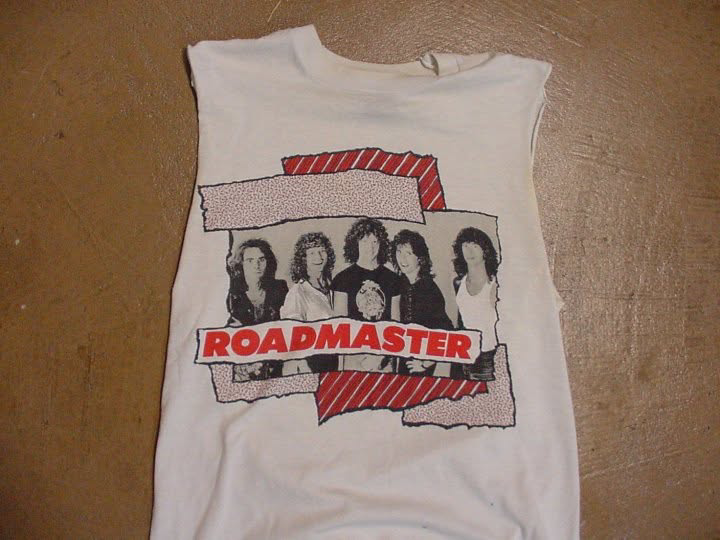
Vintage Roadmaster T-shirt featuring the band. Photo courtesy of Bob Drew.
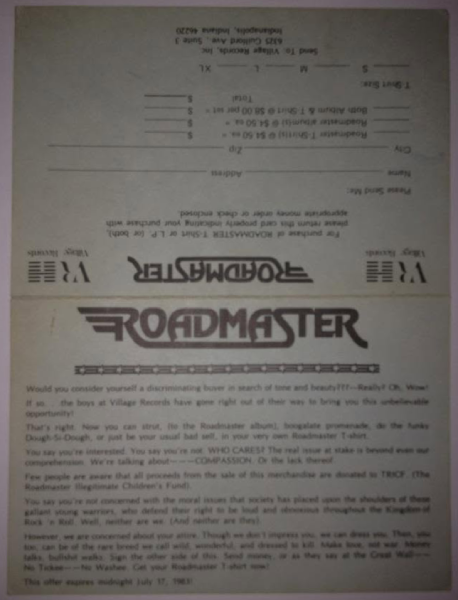
Roadmaster T-shirt order form and fan club membership flyer. Photo courtesy of Bruce Sandler.
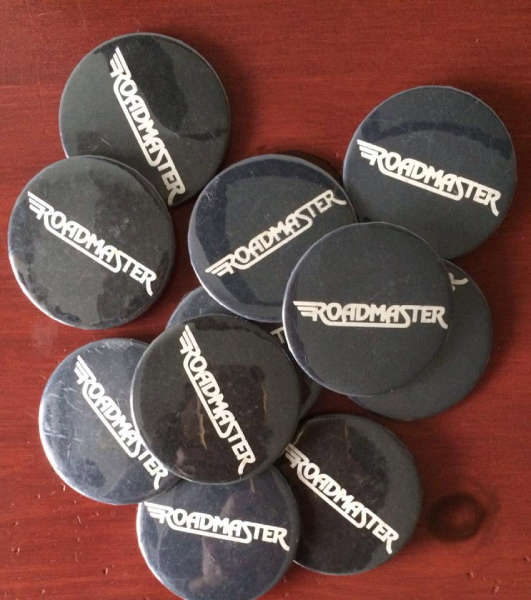
A collection of vintage Roadmaster promotional buttons featuring the band’s winged logo. Photo courtesy of Mary Lee Pappas.
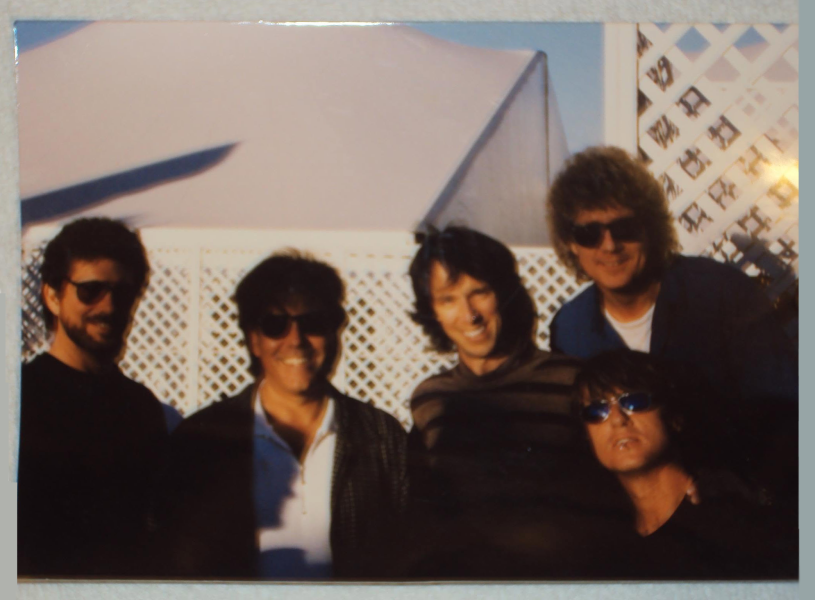
Roadmaster members Rick Benick, Michael Read, Toby Myers, and Steve “Mac” McNally at Indianapolis Motor Speedway. Photo by Melissa Schickel.
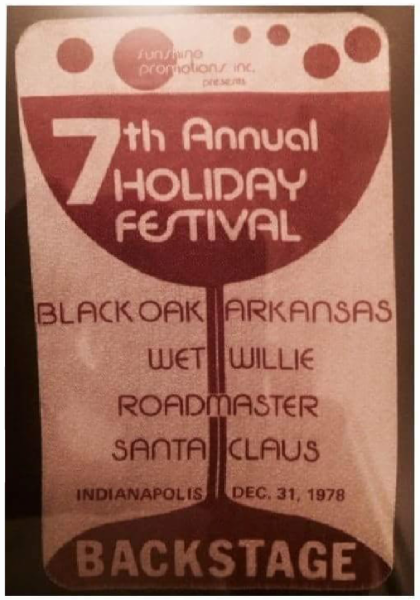
Backstage pass for Sunshine Promotions’ Seventh Annual Holiday Festival featuring Black Oak Arkansas, Wet Willie, Roadmaster and Santa Claus in Indianapolis on December 31, 1978. Photo courtesy of Richard Reasoner.
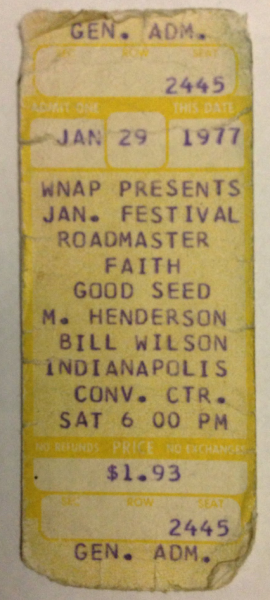
Ticket for WNAP’s January Festival featuring Roadmaster, Faith, Good Seed, Michael Henderson and Bill Wilson at the Indianapolis Convention Center on January 29, 1977. Photo courtesy of Derek Miller.
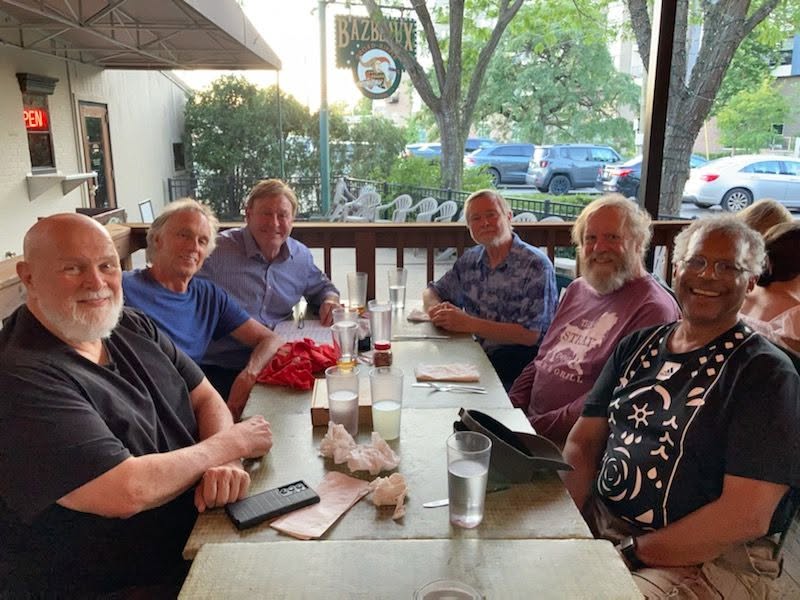
Members of Frenchie & the Oui-Ouis gather for a reunion. The band was an early musical collaboration between Michael Read and Asher Benrubi, years before Roadmaster. Photo courtesy of Randall Bernstein.
Preserving Indiana’s Music History
The Indiana Music History Project is made possible through the generous support of the Allen Whitehill Clowes Charitable Foundation. Their commitment to preserving Indiana’s rich musical heritage helps ensure these oral histories remain accessible for future generations.

Help Improve This Archive
Have additional information about this artist, story, or any of the photographs? If you can identify people, dates, locations, or have memories you’d like to share, we’d love to hear from you. Please use the button below and select “Submit Historical Information or Corrections” as the reason for your message.

