
Art Adams Oral History

Art Adams is a singer, songwriter, guitarist, and original-generation rockabilly musician whose musical career developed in Indiana during the 1950s. Born in Kentucky and raised in Indiana, Adams began as a country musician before recording songs including “Rock Crazy Baby,” “Indian Joe,” “Dancing Doll,” and “She Don’t Live Here No More” for Cherry Records in 1959 and 1960.
After years of performing while also building a career and raising a family, Adams left music completely in 1987. More than three decades later, he discovered that his early recordings had developed an enthusiastic following within the international rockabilly community. That unexpected rediscovery brought him back to the stage and led to performances in Las Vegas, Canada, England, France, and other locations, giving Adams a second musical career and introducing his recordings to generations of listeners who had not been born when they were originally released.
Interview Highlight
In this Interview Highlight, Art Adams recalls discovering that the records he made as a young musician had taken on an unexpected second life while he was away from the music business. More than 30 years after he stopped performing, Adams learned that songs such as “Dancing Doll” and “Rock Crazy Baby” had become favorites among rockabilly fans overseas, particularly in England.
That rediscovery eventually brought Adams back to the stage. He recalls traveling to England multiple times and performing at major rockabilly events including Hemsby, Americana, Wildest Cats, and the Rocker’s Reunion, as well as returning to Las Vegas and performing for audiences in Canada and France. What began with records made in Indiana decades earlier ultimately connected Adams with an international community of listeners who had kept his music alive.
Complete Interview
In this Complete Interview, Art Adams reflects on a musical life that began with country music and developed alongside the emerging sound that would become known as rockabilly. He discusses what rockabilly meant to musicians of his generation, his recordings from 1959 and 1960, years spent performing in clubs, and his experiences as a working musician while also building a business and raising a family.
Adams recalls stepping away from music completely in 1987 and having little idea that his early records were becoming increasingly sought after by collectors and rockabilly fans around the world. He describes the calls and letters that began arriving from overseas, learning that “Dancing Doll” and “Rock Crazy Baby” were being played regularly in England, and discovering that a new generation of listeners knew recordings he had made decades earlier.
The conversation follows Adams through his induction into the Rockabilly Hall of Fame and his remarkable return to performing. He remembers his first comeback appearance in Las Vegas, the reception he received from fans, repeated trips to England and other international performances, and the friendships he formed within the rockabilly community. Throughout the interview, Adams reflects on family, work, fellow musicians, audiences, and the unexpected second chapter that brought his music to listeners around the world.
Biography
Art Adams was born Arthur Adams on February 12, 1935, in Carrollton, Kentucky. He came from a musical family and moved with his family to a farm near Bean Blossom, Indiana, when he was twelve years old. Following his parents’ divorce, Adams’ formal education ended early, and by the age of fifteen he was living and working in Indianapolis.
While working for a shopping bag company in Indianapolis, Adams met Tommie Arlene Melton, whom he married while still a teenager. Work and family would remain important parts of Adams’ life even as he began developing as a musician.
Adams learned to play guitar with help from his brother-in-law, Dave Logsdon. In late 1954, Adams and Logsdon joined bassist Danny Cole and steel guitarist Ray Paley to form the Kentucky Drifters. The group initially concentrated on country music, the style from which Adams’ later rockabilly sound would develop.
Adams was also beginning to write songs. The Kentucky Drifters recorded demos of two of his compositions, “Down in Tennessee” and “She’s From Tennessee,” at an Indianapolis radio station. Hoping the recordings might lead to a record deal, the musicians made the trip to Memphis and brought their demos to Sun Records.
They arrived without an appointment and discovered that Sun founder Sam Phillips was not there. Producer Jack Clement listened to the recordings but felt Adams sounded too much like Johnny Cash and needed to develop a sound of his own. Sun was also busy with its existing roster of artists, and the visit did not result in a recording contract.
Adams continued developing his music as country and rhythm and blues were colliding with the emerging sounds of rock and roll during the 1950s. In his Indiana Music History Project interview, Adams explained that when he began playing, he considered himself a country musician. His music gradually evolved toward what later became identified as rockabilly, although Adams remembered that musicians were not necessarily using that term to describe themselves when he recorded in 1959 and 1960.
That distinction remained important to Adams throughout his life. He viewed the original rockabilly sound as something that grew naturally from country, blues, rhythm and blues, and early rock and roll rather than as a rigidly defined genre.
As Adams became increasingly interested in playing the emerging rockabilly style, his musical direction began to differ from Logsdon’s preference for traditional country. By 1957, the band had evolved into the Rhythm Knights, with Roy Robinette and Edwin Weil on guitars. Drummer Norm Wagner was later replaced by Bennie Abbott, also known as Kentucky Curly.
Art Adams and the Rhythm Knights became part of the Indianapolis club scene and secured a regular engagement at the Playmore Club. Performing in clubs gave Adams an opportunity to develop his music in front of live audiences while continuing to work outside music.
In July 1959, Art Adams and the Rhythm Knights signed a recording agreement with Cherry Records, an independent label based in Scottsville, Kentucky. A recording session in Nashville produced Adams’ first released single, pairing “Rock Crazy Baby” with “Indian Joe.”
A second Cherry single followed in 1960, pairing “Dancing Doll” with “She Don’t Live Here No More.” The recordings captured the energetic mixture of country, rhythm and blues, and early rock and roll that had become part of Adams’ musical identity.
Adams later remembered that the boundaries between those styles were not always as clearly defined as they would become in retrospect. While he considered some of his recordings straightforward rockabilly, “She Don’t Live Here No More” was classified in the rhythm and blues category by Billboard, illustrating how fluid the musical categories could be during the period.
Commercial opportunities for the recordings were limited. Rockabilly’s initial period of mainstream popularity was already beginning to fade by 1960, and Adams and the other musicians maintained regular jobs that made extensive touring and promotion difficult.
Although the agreement with Cherry Records was intended to produce additional releases, more of Adams’ recorded material remained unreleased. Among the songs associated with those sessions were his composition “Honey Girl” and an instrumental treatment of “Orange Blossom Special.”
Adams continued adapting to changing musical tastes. In the early 1960s, he formed the Epics and moved toward a broader rock and roll and rhythm and blues sound. Guitarist Billy Stewart became an important musical partner and longtime friend.
The group also found work backing nationally known performers who traveled through Indianapolis without their own touring bands. Adams recalled performing behind artists including Jerry Lee Lewis, Dee Dee Sharp, Conway Twitty, and Gene Simmons.
Music, however, was only one part of Adams’ working life. He held management positions outside the music business and eventually became involved in building his own company. At one point, the financial demands of starting a business led him to increase his club work substantially, performing multiple nights each week while simultaneously developing his business.
Adams also had a growing family. He and his wife raised three children, and balancing family responsibilities, work, and late-night performances became increasingly difficult.
By 1987, Adams decided to leave music completely.
For years afterward, he had little involvement with the music business. He concentrated on his company, his family, and the everyday responsibilities that had led him away from performing. What Adams did not know was that his recordings were continuing to circulate.
As interest in original American rockabilly grew internationally, collectors began searching for Adams’ Cherry Records singles. His recordings appeared on compilations, copies circulated among collectors, and “Dancing Doll” and “Rock Crazy Baby” developed a following far removed from the Indiana clubs where Adams had originally performed.
Adams gradually began receiving calls and correspondence from people who knew his records. One visitor from Germany offered to purchase copies of Adams’ old records, surprising Adams with the amount collectors were willing to pay for recordings he had once treated as little more than promotional material.
Another important connection came through Canadian rockabilly enthusiast Steve Kellerman. After receiving a letter from Kellerman, Adams initially wondered whether the interest was legitimate. The two eventually spoke and developed a friendship.
Kellerman also played an important role in Adams’ recognition by the Rockabilly Hall of Fame. Adams recalled Kellerman directing him to the Hall of Fame’s website and revealing that he had helped arrange Adams’ induction. Their connection eventually grew beyond correspondence, with Adams visiting Canada, performing there, and developing a friendship with Kellerman and his family.
The growing interest forced Adams to reconsider what his early recordings had become. While he had spent decades concentrating on business and family, a rockabilly revival had developed internationally, particularly in Europe. Younger listeners were discovering obscure American records from the 1950s and early 1960s, and Adams was one of the original musicians they wanted to hear.
By the early 2000s, the rediscovery was leading Adams back toward recording and performing. In 2003, Collector Records released Rock Crazy Baby, bringing together his original Cherry recordings with alternate takes and demo material.
That same year brought one of the most surprising moments of Adams’ career: a return to the stage in Las Vegas.
Adams had dreamed of playing Las Vegas when he was young, but by the time an opportunity finally arrived in April 2003, he had been away from the music scene for decades. He agreed to perform only if he could bring musicians he trusted, including longtime friend and guitarist Billy Stewart and Indianapolis rockabilly drummer Larry Goshen. Goshen, who had been part of the Indianapolis music scene since the late 1950s, would later become a founding member of the Indiana Music History Project and remains actively involved with the project today.
When Adams arrived at the event, he discovered just how much had changed while he was away. Fans approached him for photographs and autographs, knew his records, and treated the Indiana musician as an important figure from rockabilly’s original era.
The audience response surprised him. Adams recalled a venue becoming so crowded during one appearance that the fire marshal had to close the doors. For someone who had spent more than 30 years outside the music business, the attention was difficult to comprehend.
Las Vegas was only the beginning.
In 2003, Adams also traveled to England to perform at Hemsby, one of the major gatherings of the international rockabilly community. His reception there demonstrated that the enthusiasm he had encountered in Las Vegas extended well beyond the United States.
Adams returned to England repeatedly. During his Indiana Music History Project interview, he recalled traveling there eight times and performing at Hemsby on multiple occasions. His appearances also included Americana, Wildest Cats, the Rocker’s Reunion, and other British rockabilly events and venues.
The performances introduced Adams personally to people who had known his records for years before ever meeting him. Some fans had been listening to “Dancing Doll” and “Rock Crazy Baby” regularly in clubs while Adams was at home in Indiana with little knowledge that his music was being played at all.
Adams remembered long autograph lines following his performances. During one appearance in England, he spent approximately two and a half hours meeting fans and signing material. Similar experiences followed him at other international appearances.
His comeback expanded beyond England. Adams performed in Canada, France, and elsewhere in Europe, while returning to Las Vegas multiple times. These trips created friendships with promoters, musicians, collectors, and fans throughout the international rockabilly community.
Adams also developed friendships with other musicians from rockabilly’s original generation whom he had not necessarily known during the 1950s. His second career placed him within a community of performers whose early recordings had similarly been rediscovered by later generations.
The renewed attention also led Adams back into the recording studio. He released Rockin’ My Way Around in 2005, followed by Dancing Doll in 2006, allowing him to record new material while continuing to perform for the audience that had rediscovered his earlier work.
One particularly fitting chapter brought Adams back to Memphis. As a young musician, he had traveled to Sun Records hoping for an opportunity that never materialized. Decades later, after his return to music, Adams finally recorded at the historic Sun Studio at 706 Union Avenue for a project released through Germany’s Bear Family Records.
The experience connected the two halves of his musical life. The young Indiana musician who had once driven to Memphis carrying demo recordings had returned as a recognized member of rockabilly’s original generation.
Adams’ story also reflects the unusual way recorded music can outlive the circumstances in which it was created. His Cherry singles received limited attention when they were new, yet decades later those same recordings became the reason audiences in other countries wanted to see him perform.
The listeners who rediscovered Adams’ music did more than preserve old records. Their interest gave him an entirely new performing career and connected him with people he otherwise would never have met.
Throughout his Indiana Music History Project interview, Adams repeatedly returned to those relationships. He remembered fans who became friends, people who helped him at performances, musicians he met during his travels, and supporters who had known his recordings long before they knew him personally.
The international response was particularly meaningful because Adams had never expected to return to music after leaving in 1987. He had spent decades concentrating on his family and business and had largely disconnected himself from changes in the music industry.
When he returned, he discovered a musical world in which the recordings of his youth had acquired a history of their own.
Art Adams’ career ultimately developed in two remarkably different chapters. The first began with country music in Indiana, passed through the birth of rockabilly and early rock and roll, and produced a small group of recordings for Cherry Records that initially reached a limited audience.
The second began decades later, when collectors and fans brought those recordings back to his attention. That rediscovery carried Adams from Indiana to stages in Las Vegas, Canada, England, France, and elsewhere, allowing him to meet the generations of listeners who had kept his music circulating.
Through “Rock Crazy Baby,” “Dancing Doll,” and the recordings and performances that followed, Art Adams became part of both the original history of rockabilly and the international revival that gave the music a new life decades later.
Image Gallery
Explore photographs, records, promotional materials, performance images, and other items documenting Art Adams’ career, from his early years performing and recording in Indiana to the international rockabilly revival that brought him back to stages in the United States, Canada, England, France, and beyond.
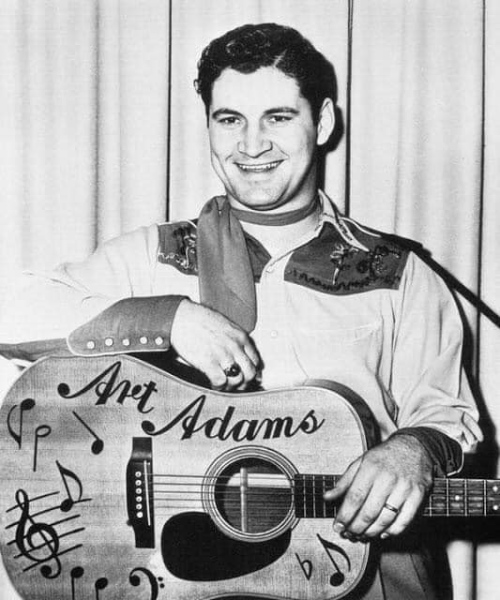
Art Adams promotional photograph for Cherry Records, pictured with his customized acoustic guitar. Adams recorded “Rock Crazy Baby” and “Indian Joe” for the label in 1959, followed by “Dancing Doll” and “She Don’t Live Here No More” in 1960.
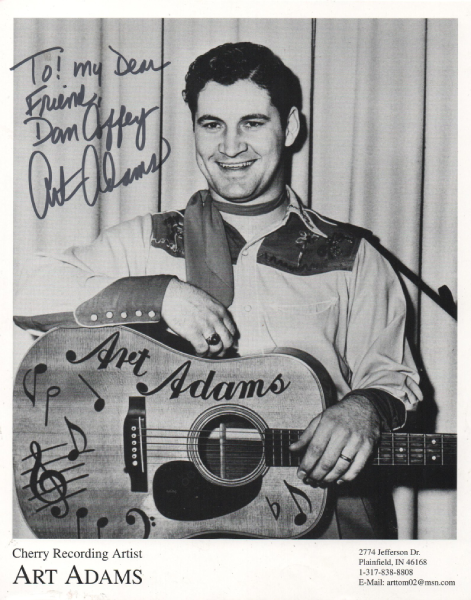
Cherry Records promotional photograph of Art Adams, autographed to his friend and longtime supporter Dan Coffey. Adams is pictured with his customized acoustic guitar during his early recording career.
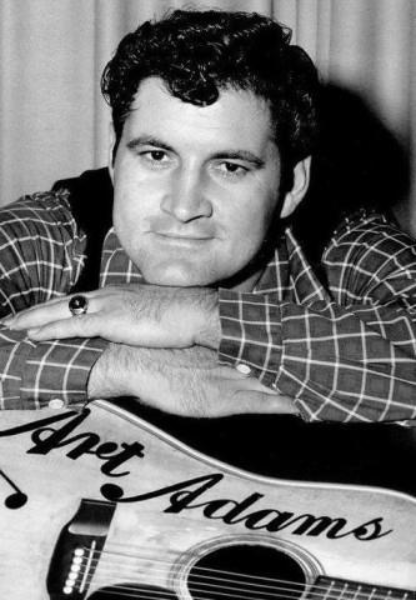
Cherry Records promotional photograph of Art Adams, pictured with his customized acoustic guitar during his early recording career.
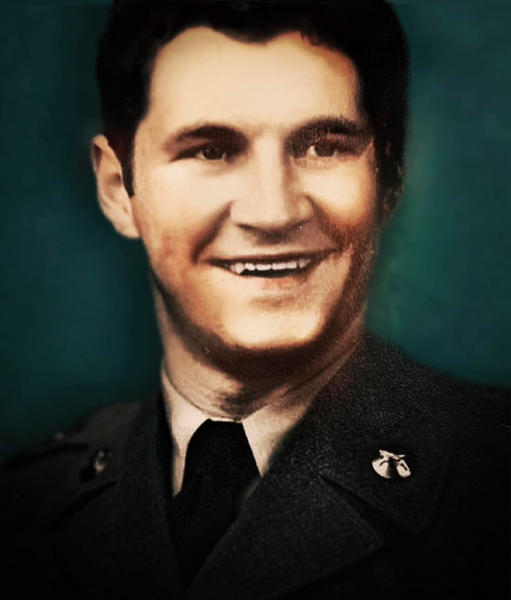
Art Adams Military Portrait
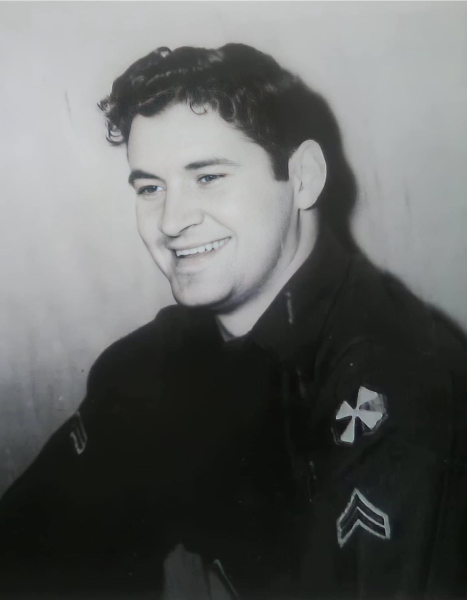
Art Adams during his service in the United States Army.
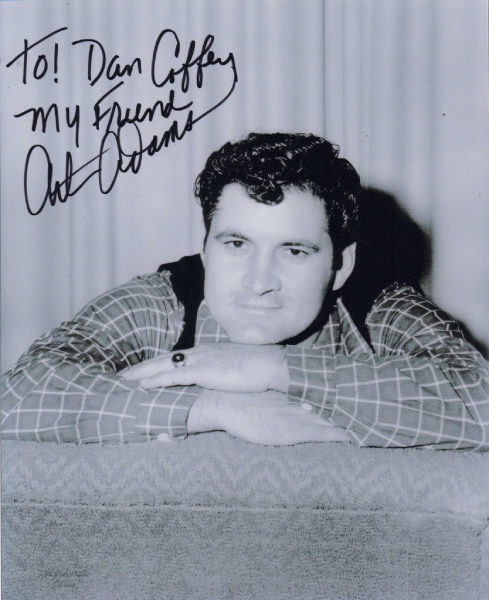
Art Adams in an autographed promotional photograph inscribed to his friend and longtime supporter Dan Coffey.
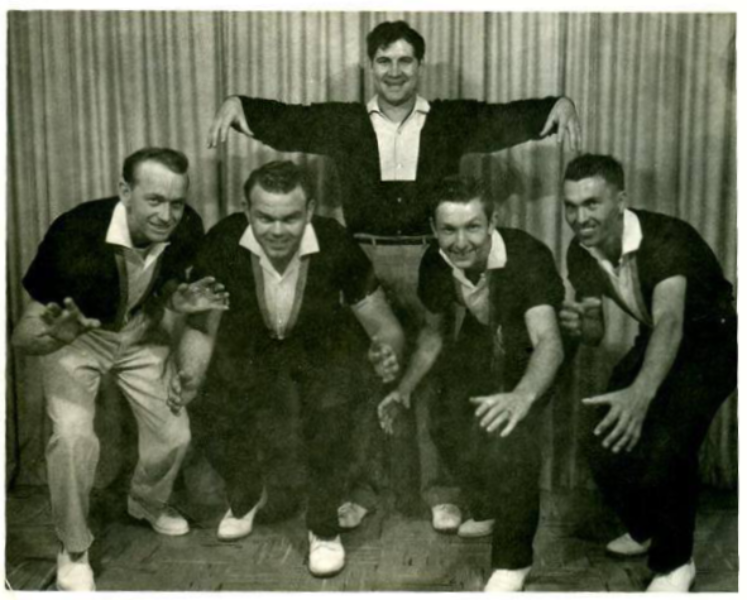
Art Adams, standing at rear, with members of his band during his early years performing in Indiana.
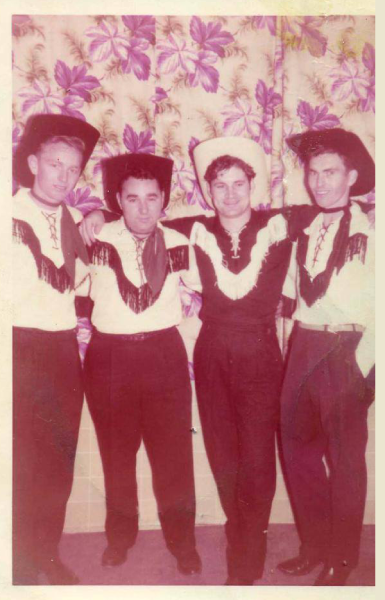
Art Adams, second from right, with fellow band members in matching Western stage attire during his early performing career.
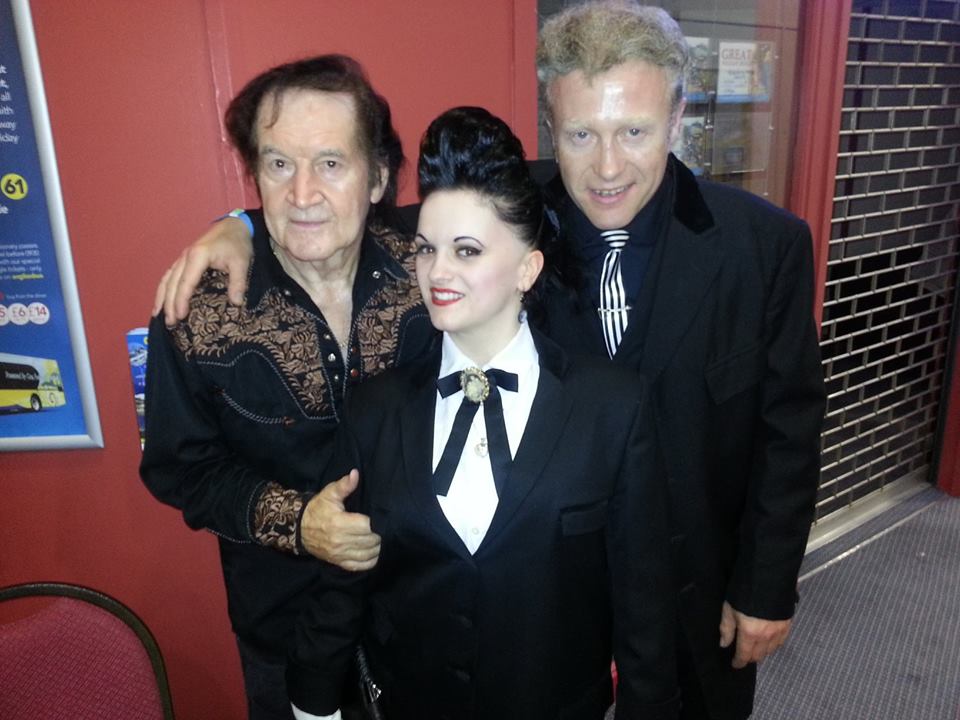
Art Adams, left, posing for a photograph during his later years as a performer.
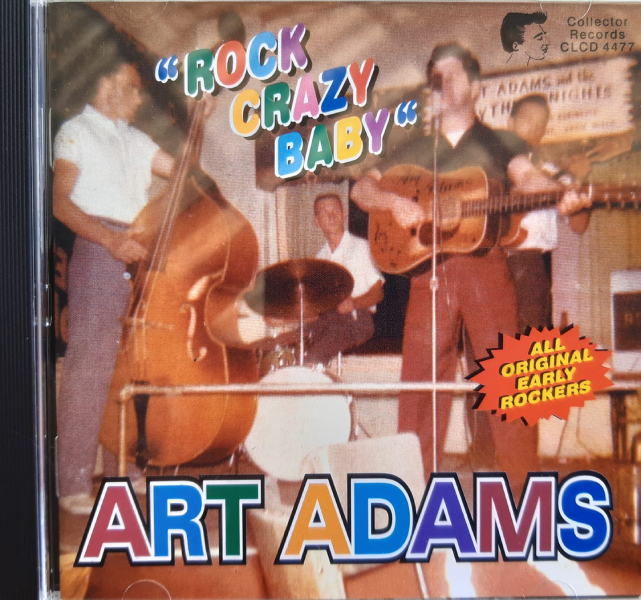
Art Adams’ Rock Crazy Baby CD, released by Collector Records in 2003, featuring his early rockabilly recordings, alternate takes, and demos.
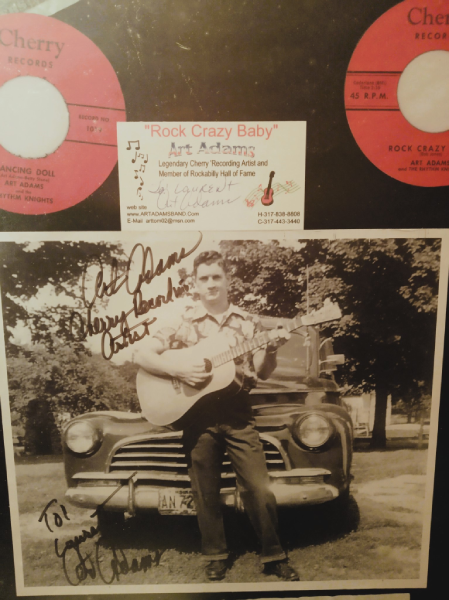
Cherry Records display featuring Art Adams’ original “Dancing Doll” and “Rock Crazy Baby” singles, along with an autographed photograph and promotional business card.
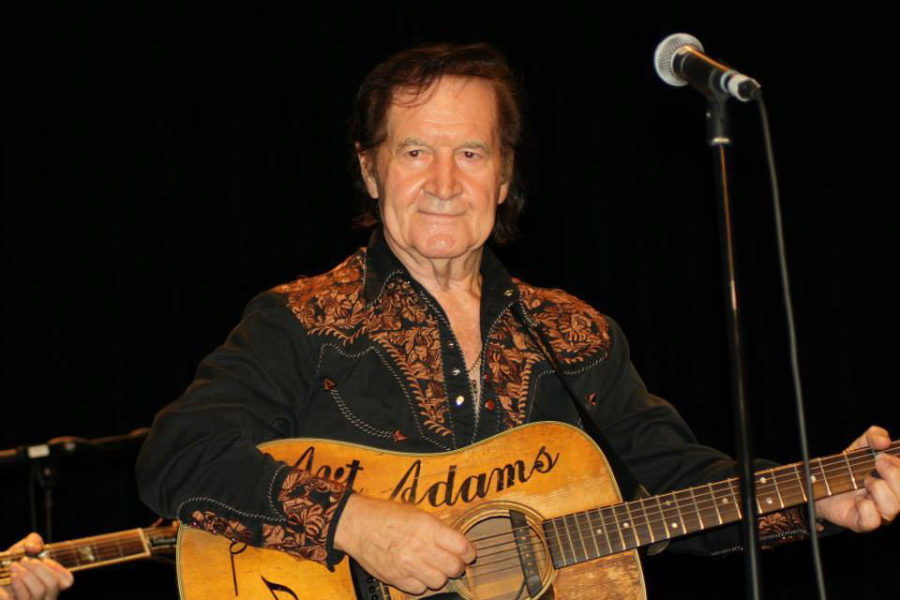
Art Adams posing with his customized acoustic guitar during his later performing career.

Art Adams, left, with his band during his later performing career following his return to rockabilly.
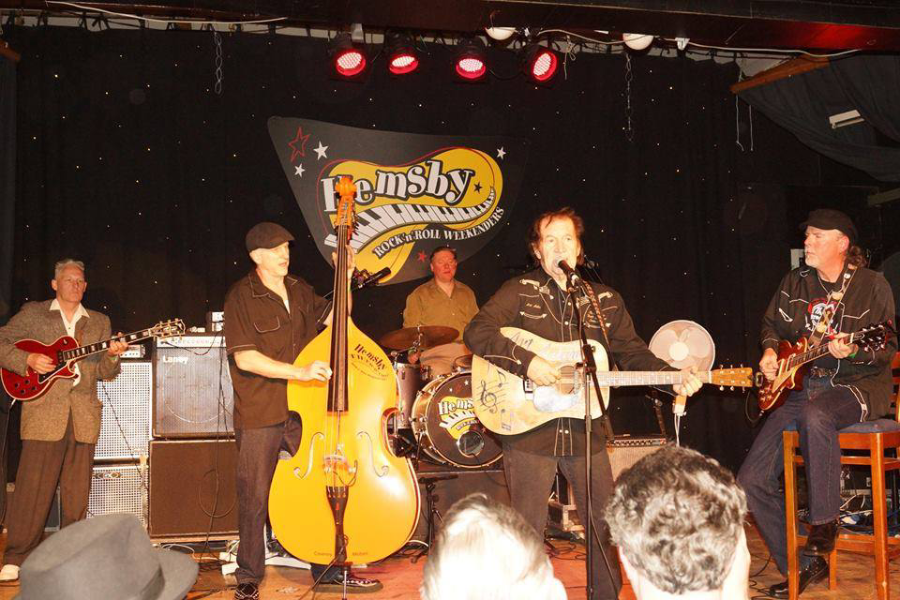
Art Adams performing at the Hemsby Rock ’n’ Roll Weekender in England, one of the major international rockabilly events where he appeared following his return to performing.

Hemsby 52 Rock ’n’ Roll Weekender poster from May 2014, featuring Art Adams among the festival’s international lineup of rockabilly and rock and roll performers.
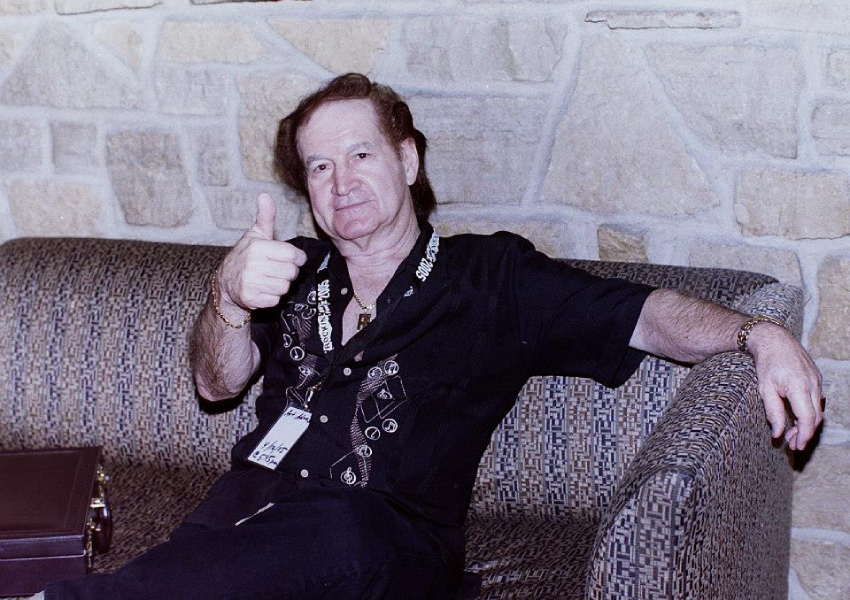
Art Adams backstage during one of his later appearances following his return to performing.
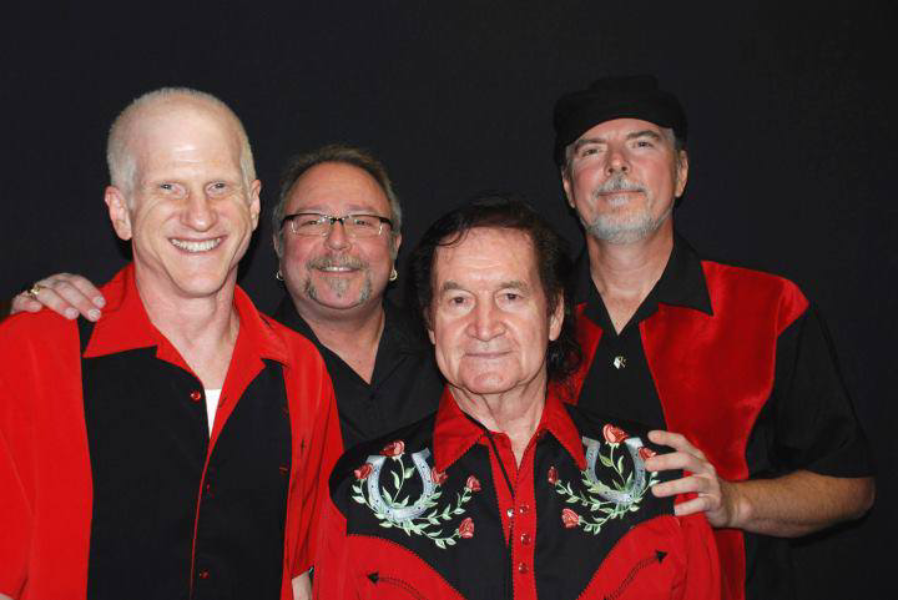
Art Adams, center, posing with his band during his later performing career.
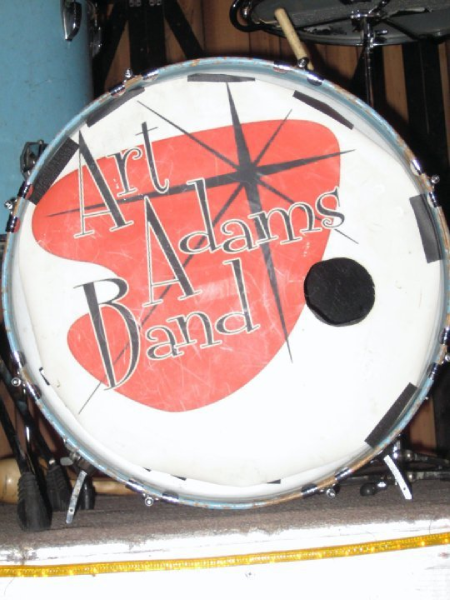
Art Adams Band bass drum head featuring the group’s mid-century-style logo.
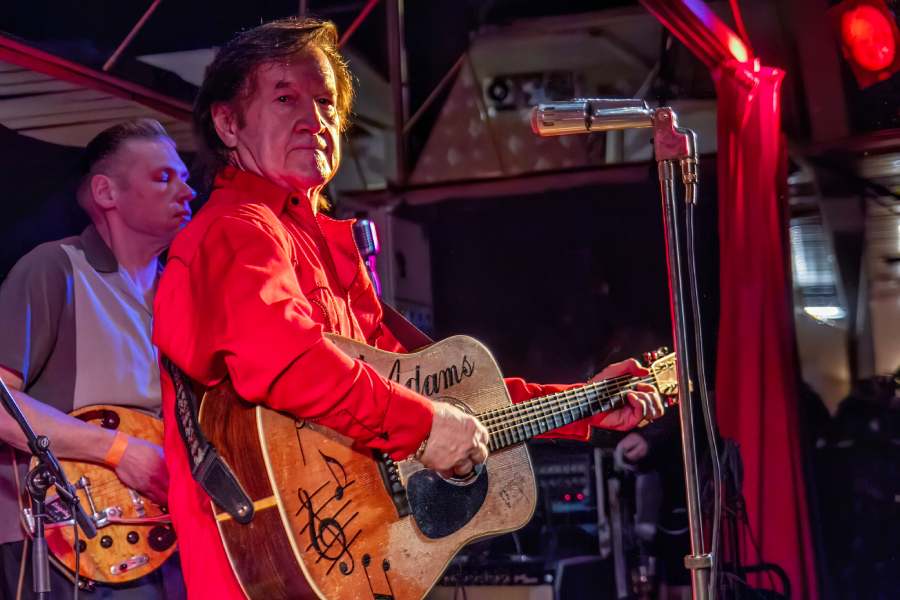
Art Adams performing with his customized acoustic guitar during his later performing career.
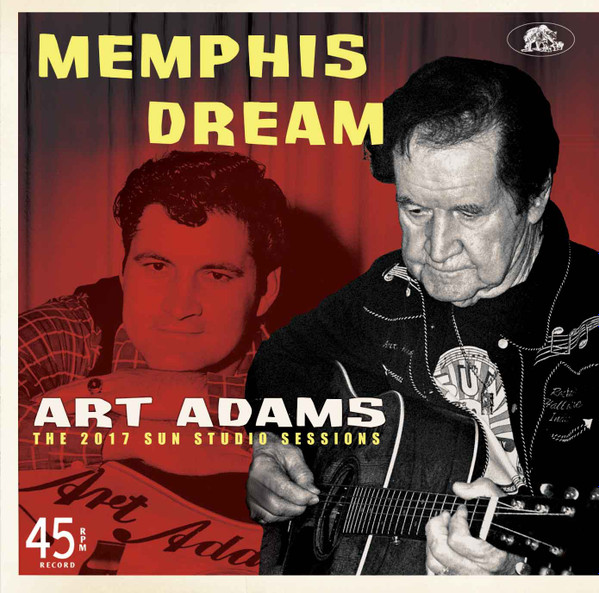
Art Adams – Memphis Dream – Front Cover — Released in 2017 by Bear Family Records. More than 50 years after Art Adams first traveled to Memphis hoping to record for Sun Records, he returned to the legendary Sun Studio to record four new tracks for this EP.
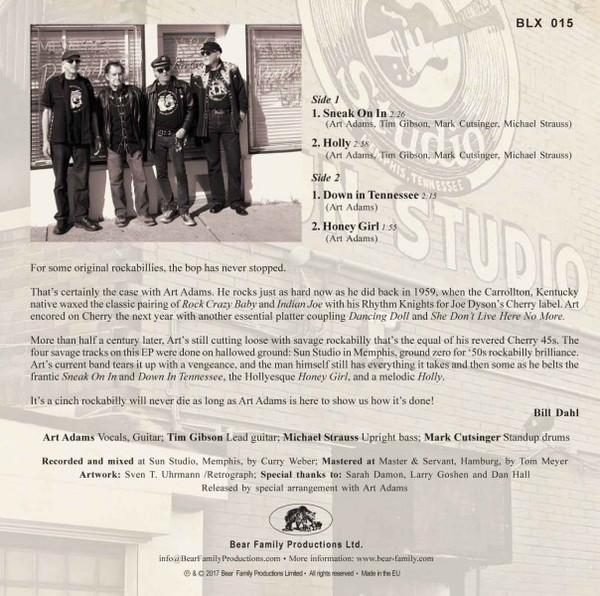
Art Adams – Memphis Dream – Back Cover — The 2017 Bear Family Records EP features four new Art Adams recordings—“Sneak On In,” “Holly,” “Down in Tennessee,” and “Honey Girl”—recorded and mixed at the legendary Sun Studio in Memphis.
Preserving Indiana’s Music History
The Indiana Music History Project is made possible through the generous support of the Allen Whitehill Clowes Charitable Foundation. Their commitment to preserving Indiana’s rich musical heritage helps ensure these oral histories remain accessible for future generations.

Help Improve This Archive
Have additional information about this artist, story, or any of the photographs? If you can identify people, dates, locations, or have memories you’d like to share, we’d love to hear from you. Please use the button below and select “Submit Historical Information or Corrections” as the reason for your message.

