David Andrichik Oral History
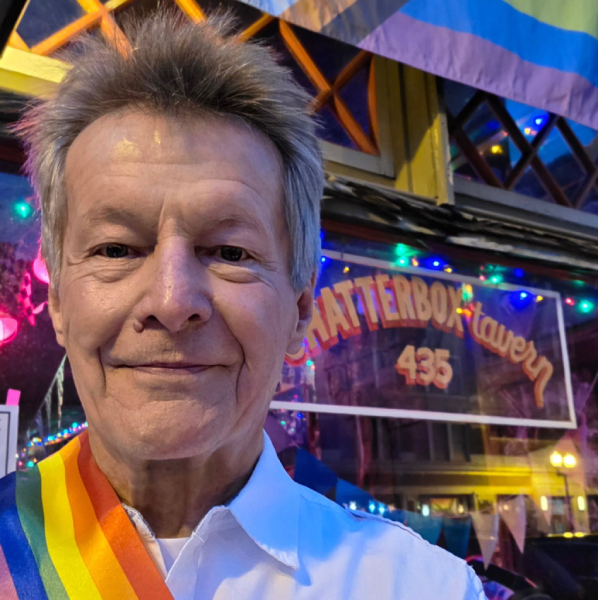
David Andrichik is an architect, historic preservationist, arts advocate, and longtime owner of the Chatterbox Tavern on Massachusetts Avenue in Indianapolis. Since purchasing the Chatterbox in 1982, Andrichik has helped transform the small neighborhood bar into one of Indiana’s most enduring live jazz venues and an important gathering place for generations of musicians, artists, students, and listeners.
When Andrichik purchased the Chatterbox, the bar had been operating under that name since 1939 but had never featured live music. His decision to extend its hours and introduce blues and jazz eventually led to live performances six nights a week, establishing a tradition that would connect the club to Indianapolis jazz history, area universities, touring musicians, and the redevelopment of Massachusetts Avenue for more than four decades.
Interview Highlight
In this Interview Highlight, David Andrichik recalls one of the most memorable nights in the history of the Chatterbox, when Wynton Marsalis came across Massachusetts Avenue after performing nearby and joined musicians at the club. Andrichik remembers Marsalis and members of his band arriving as the Chatterbox musicians were preparing for their late-night set, including a moment when Marsalis casually helped carry part of a drummer’s equipment inside before anyone realized who was helping them.
The evening reflected the informal musical culture that helped make the Chatterbox distinctive. Touring musicians could finish a concert elsewhere in Indianapolis, walk into the small Mass Ave bar, and find a place where local musicians, students, professionals, and internationally known artists could meet on the same stage. Encounters like these helped establish the Chatterbox as a destination within the wider jazz community.
Complete Interview
In this Complete Interview, David Andrichik traces the unlikely path that took him from architecture and historic preservation into more than four decades as the owner of one of Indianapolis’ best-known jazz venues. He recalls arriving in Indianapolis as a young architect, becoming interested in the preservation and redevelopment of downtown buildings, and learning about a small bar at 435 Massachusetts Avenue called the Chatterbox.
Andrichik describes purchasing the bar in May 1982, learning the tavern business while continuing to work full time as an architect, and deciding to introduce live entertainment as a way to extend the Chatterbox’s early closing hours. What began with blues and a small number of experimental performances quickly developed into a regular schedule of jazz, eventually reaching six nights of live music each week.
The conversation follows the growth of the Chatterbox alongside the redevelopment of Massachusetts Avenue and the wider Indianapolis arts community. Andrichik discusses the musicians and university programs that helped feed the city’s jazz scene, the importance of giving younger musicians opportunities to listen and learn, and memorable visits from performers including Wynton Marsalis. He also tells the story of the December 1989 night when Mick Jagger and Ron Wood of the Rolling Stones came to the Chatterbox simply to hear the band.
Andrichik also reflects on the Chatterbox itself: the signatures covering its surfaces, the memorabilia donated by regular customers, the international currency and dollar bills on the walls, and the sense of personal ownership that generations of patrons have developed toward the room. He discusses his wider involvement with historic preservation, galleries, theater, dance, and arts organizations in Indianapolis, as well as the challenges of closing the Chatterbox for 532 days during the COVID-19 pandemic and rebuilding the business afterward.
Biography
David Andrichik did not set out to become a nightclub owner. His professional background was architecture, and after earning his degree from the University of Illinois at Urbana-Champaign, he moved to Indianapolis when his wife found work in the city. Andrichik soon found a position with an architectural firm, completed the experience necessary to become licensed in Indiana, and developed a particular interest in historic architecture and adaptive reuse. His work increasingly involved restoring older buildings while finding new purposes for structures that might otherwise have been lost.
That interest placed Andrichik in Indianapolis at an important moment in the redevelopment of downtown. During the late 1970s and early 1980s, Massachusetts Avenue was being documented as part of an effort to place the historic corridor on the National Register of Historic Places. Through a colleague involved with that work, Andrichik was introduced to developer Scott Keller, who was already investing heavily along Mass Ave. When Andrichik expressed an interest in purchasing a downtown building himself, Keller told him about one property he did not want to acquire because it came with a bar business and liquor license: the Chatterbox at 435 Massachusetts Avenue.
The Chatterbox had operated under that name since 1939. It was a narrow, shotgun-style tavern measuring roughly 18 feet wide and 45 feet long, serving a working-class neighborhood that looked very different from the Mass Ave entertainment district that would develop decades later. When Andrichik encountered the business, the Chatterbox opened around 7:30 in the morning to serve workers coming off third shift and closed around 7:30 in the evening after serving the first-shift after-work crowd. There was no live music.
Andrichik purchased the Chatterbox in May 1982. He remembered completing the transaction with the previous owner and then walking back to the bar, where they counted the approximately $143 in the cash register. Andrichik wrote a check for the cash, returned the money to the drawer, stepped behind the bar as its new owner, and immediately began learning a business in which he had virtually no previous experience.
He was still working full time as an architect, which meant the Chatterbox’s existing schedule was particularly inconvenient. By the time Andrichik finished his architectural work and arrived at the bar in the evening, the business was preparing to close. He began thinking about ways to extend the hours and give himself, his friends, and other downtown customers a reason to remain there later at night. Live music became the answer.
Jazz, rhythm and blues, and blues were already among Andrichik’s favorite styles of music. His parents had listened to big bands, Frank Sinatra, Dean Martin, and other popular performers, while college radio and concerts further developed his interest in jazz and blues. As he became more involved with organizations and people throughout Indianapolis, he began making connections with musicians who might perform in the small room.
Blues guitarist Mary McAdams became what Andrichik remembers as essentially the first live entertainer at the Chatterbox. During the first several months, he experimented with different performers and schedules to determine whether audiences would come to the bar for music. Through those early relationships, he became connected with additional Indianapolis musicians and gradually moved the club toward jazz.
The experiment worked. Within approximately the first 18 months of Andrichik’s ownership, the Chatterbox had expanded to live music six nights a week, with Sunday remaining unavailable because Indiana bars could not open that day at the time. What had begun primarily as a way to keep the bar open later and make the investment more enjoyable for Andrichik evolved into the defining identity of the Chatterbox.
The transformation came at a significant moment in Indianapolis jazz history. By the early 1980s, many of the clubs that had once supported the legendary Indiana Avenue jazz scene were gone or disappearing. At the same time, Indianapolis and Bloomington were home to major music programs whose students, instructors, and graduates needed places to perform. Butler University, Indiana University and the jazz program developed under David Baker, and the institution now known as the University of Indianapolis all became part of the musical network that Andrichik gradually discovered.
There was no master plan for building a nationally known jazz venue. Musicians heard about the room from other musicians, approached Andrichik about performing, returned on other nights, and told friends and colleagues about the Chatterbox. Students became professional musicians, professors brought students, musicians moved to Chicago, New York, Los Angeles, Boston, San Francisco, and overseas, and the network surrounding the small Indianapolis bar continued to expand.
Andrichik describes his role as providing loose “guardrails” rather than attempting to control every aspect of the music. The musicians themselves created much of the culture. The Chatterbox gave them a stage, an audience, and the freedom to learn from one another, while Andrichik allowed the musical community to develop largely through its own relationships.
That philosophy connected the Chatterbox to an older tradition in Indianapolis jazz. Andrichik became increasingly familiar with the history of Indiana Avenue and musicians who had learned by spending time in clubs, listening to established performers, sitting in when invited, making mistakes, and receiving guidance from older players. Musicians associated with Indianapolis jazz history, along with later generations of students and professionals, brought that tradition of mentorship into the Chatterbox.
The club hosted performers with deep connections to the city’s earlier jazz history, including members of the Hampton family, while musicians such as drummer Dick Dickinson became important mentors to younger players. Andrichik saw firsthand how musicians passed knowledge from one generation to the next, not always through formal classroom instruction, but through performances, rehearsals, conversation, and opportunities to sit in with experienced players.
One particularly vivid example involved saxophonist and educator Sean O’Connor. Before she was old enough to enter the Chatterbox, O’Connor was studying with reed player Frank Glover. Her mother would bring her to the club, where the young musician sat outside the front window in a lawn chair, sometimes bundled in a sleeping bag, so she could watch Glover perform. During breaks, Glover would come outside and discuss what he had been playing. Years later, O’Connor became a professional musician and jazz educator herself.
For Andrichik, stories like that illustrate one of the Chatterbox’s most important roles. It is not simply a room where jazz is performed; it has also functioned as a place where musicians encounter one another, learn, develop relationships, and carry those experiences into other stages of their careers.
The Chatterbox’s reputation eventually reached musicians traveling through Indianapolis. One of the most memorable visitors was trumpeter Wynton Marsalis. After performing at a nearby concert, Marsalis and members of his group came across Massachusetts Avenue to the Chatterbox, where the late-night music was just getting started.
Andrichik remembered one of the Chatterbox musicians unloading equipment when a man carrying his own music case offered to help. The musician accepted without immediately recognizing him. After the stranger carried part of the drum equipment inside, the musician realized that Wynton Marsalis had just helped him load into the club. Marsalis responded simply that they were all musicians.
Marsalis and members of his group eventually sat in with the musicians at the Chatterbox. The visit reinforced the club’s reputation as a place where the usual boundaries between touring artists and local musicians could temporarily disappear. Other traveling musicians and members of touring Broadway productions would later become familiar with the Chatterbox and stop in when their work brought them to Indianapolis.
Another legendary night came in December 1989, when the Rolling Stones were in Indianapolis during their Steel Wheels tour. Mick Jagger, Ron Wood, and members of their entourage had finished dinner and wanted somewhere to hear live music. A hotel concierge who was also a Chatterbox customer knew exactly where to send them.
Andrichik received a telephone call asking who was playing that night and warning him that members of the Rolling Stones might be arriving. There were only a small number of customers in the room. He asked them not to request autographs, take photographs, or overwhelm the visitors. At first, several patrons assumed he was joking.
About 15 minutes later, two white limousines arrived outside.
Mick Jagger and Ron Wood entered with several other people and settled into tables while the Chatterbox band continued playing. Andrichik recalled that they were there simply to listen to the music. During the band’s break, the visitors spoke with the musicians and attempted to contact drummer Charlie Watts, who had his own deep interest in jazz, so that he could come hear the group as well.
The Rolling Stones entourage stayed for roughly an hour. Their tab was about $25, and the bartender Andrichik happened to be training that evening received a $50 bill and was told to keep the change. By the time word spread through Indianapolis and additional people arrived at the Chatterbox, Jagger and Wood had already left. The story became part of the club’s folklore and was later commemorated in an article displayed behind the bar.
While the music built the Chatterbox’s reputation, the surrounding neighborhood was undergoing its own transformation. Andrichik’s background in architecture and historic preservation placed him close to the redevelopment of Massachusetts Avenue. Developers including Scott Keller restored historic buildings, apartments returned to upper floors, art galleries occupied storefronts, and cultural organizations helped bring people back downtown.
A particularly important moment came when the Sears store near the Chatterbox closed. The large historic building had been a major neighborhood anchor, and Andrichik and others worried that its vacancy would damage the fragile redevelopment taking place around it. Through the efforts of city officials, developers, and the O’Malia family, the former Sears property eventually became an O’Malia’s grocery store, giving downtown residents an important amenity and supporting further residential development.
The Sears closing also indirectly created one of the Chatterbox’s most recognizable traditions.
After the store’s closing party, several Sears employees who were regular Chatterbox customers came to the bar to continue the evening. They asked if they could place their name tags on the refrigerator as a remembrance of the store. One person had lost a name tag and asked whether he could simply sign the refrigerator instead.
As an architect, Andrichik always had a Sharpie nearby.
The employees began signing the refrigerator with their names and dates. Other customers followed, and eventually signatures spread across surfaces throughout the Chatterbox. Andrichik saw the practice as a form of personal ownership: people wanted to leave evidence that they had been part of the room.
The rest of the Chatterbox’s distinctive interior developed in much the same way. Photographs, objects, signs, foreign currency, memorabilia, and oddities accumulated over the years, most of them given to the club by regular customers. Each item carried a story or personal connection. Later, patrons began signing dollar bills and attaching them to the walls as well.
Together, those layers turned the Chatterbox into a physical record of the community that had passed through it. Its appearance was not created by an interior designer or marketing plan. It accumulated gradually as musicians, customers, visitors, and regulars contributed pieces of themselves to the room.
Andrichik’s involvement with Indianapolis culture also extended far beyond his own business. His work in architecture and historic preservation introduced him to the wider redevelopment of downtown, while his interest in the arts drew him into galleries, theater, dance, and arts education.
He became involved with Young Audiences, now known as Arts for Learning, which brought artists and arts programming into schools throughout Indiana. Andrichik served on its board and developed relationships with musicians and other artists through the organization.
His interest in theater led to involvement with the Phoenix Theatre and its founder, Bryan Fonseca. Andrichik and another architect contributed professional expertise to the conversion of a historic church building into a theater, allowing them to support the organization through architectural work as well as board service.
Dance became another part of his cultural life through organizations such as Dance Kaleidoscope. Andrichik attended performances, supported artists, introduced friends to cultural events, and even took tap-dancing lessons himself. The Chatterbox, architecture, music, theater, visual art, dance, and historic preservation all became parts of the same interconnected Indianapolis community.
That network also shaped Andrichik’s understanding of what the Chatterbox should be. Although the room is often described affectionately as a dive bar, he sees its intimacy and informality as strengths. Customers sit close together, strangers share tables, musicians perform only a few feet from listeners, and people from very different backgrounds occupy the same small room.
The Chatterbox developed a reputation as a place where people could be comfortable being themselves. Andrichik describes the philosophy simply: welcome people, allow the room to develop organically, and maintain enough guardrails to protect the community without trying to manufacture the atmosphere.
That community was tested dramatically during the COVID-19 pandemic.
Because the Chatterbox is a small indoor bar centered around live music rather than food service, Andrichik concluded that reopening under early distancing restrictions was neither financially practical nor safe. The venue remained closed for a total of 532 days.
The shutdown was financially and emotionally difficult. Andrichik continued paying basic expenses while bringing in virtually no business revenue and ultimately drew from his retirement funds to help maintain the property. Beer and other inventory had to be discarded, and for a long period there was no clear answer about when the club could operate normally again.
During the closure, Andrichik tried to continue supporting the musicians who would normally have been performing at the Chatterbox. He posted information about scheduled performers and encouraged customers to send musicians money electronically through services such as Venmo and PayPal.
The pandemic also accelerated changes in the way the Chatterbox operated. When the club eventually reopened, electronic and cashless payments had become far more common, leading the business to adopt a modern point-of-sale system. Musicians similarly became accustomed to receiving electronic tips through QR codes and payment applications.
When full occupancy was finally permitted and the Chatterbox reopened, audiences gradually returned. Andrichik remembers a pent-up demand for live performance that eventually brought the club back to its regular rhythm. Some longtime customers remained cautious about enclosed spaces, while others rediscovered how much they had missed hearing live music.
Through all of those changes, the fundamental character of the Chatterbox remained remarkably consistent.
The room is still small. The audience is still close to the musicians. The walls still carry signatures and artifacts left by generations of customers. Students still encounter experienced players. Touring musicians still discover the club through other musicians. And jazz remains at the center of the experience.
More than four decades after Andrichik purchased a neighborhood tavern because he wanted to invest in a historic downtown building, the Chatterbox has become inseparable from his own story and from the history of jazz on Massachusetts Avenue.
What began without a grand plan developed through relationships: musicians telling other musicians, teachers mentoring students, customers bringing friends, artists supporting other artists, and a changing city gradually rebuilding around a small bar that kept its stage available.
In his Indiana Music History Project interview, Andrichik repeatedly returns to the importance of those networks. The Chatterbox did not become a jazz institution because one person designed it to be one. It became one because generations of people used the room, contributed to it, learned inside it, and carried stories about it into the wider world.
For David Andrichik, his role has been to provide the space and allow those connections to happen.
Image Gallery
Explore photographs, historic images, memorabilia, performance materials, and other items documenting David Andrichik’s more than four decades at the Chatterbox Tavern, the musicians and audiences who helped shape the club, and the transformation of Massachusetts Avenue into one of Indianapolis’ most important arts and entertainment districts.
David Andrichik in front of the Chatterbox Tavern on Massachusetts Avenue in Indianapolis, a venue he has owned since 1982 and helped establish as one of the city’s best-known live jazz clubs.
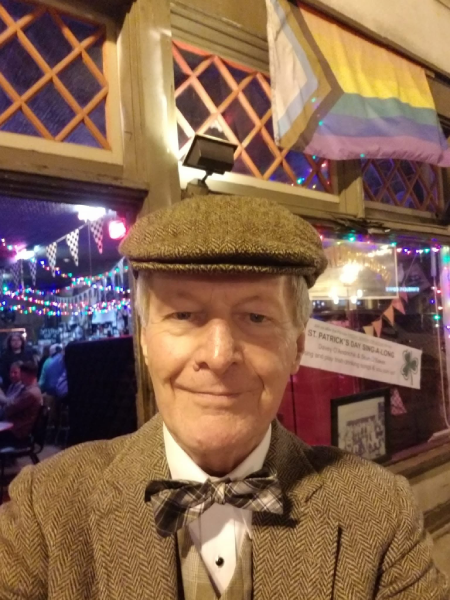
David Andrichik in front of the Chatterbox Tavern on Massachusetts Avenue in Indianapolis. Andrichik purchased the Chatterbox in 1982 and has guided the intimate venue through more than four decades as a home for live jazz.
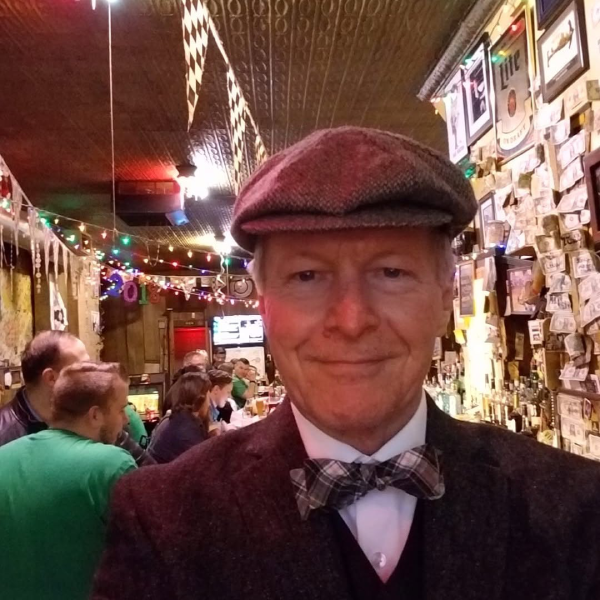
David Andrichik inside the Chatterbox Tavern, surrounded by the signatures, memorabilia, and dollar bills that have accumulated throughout the club over the years.
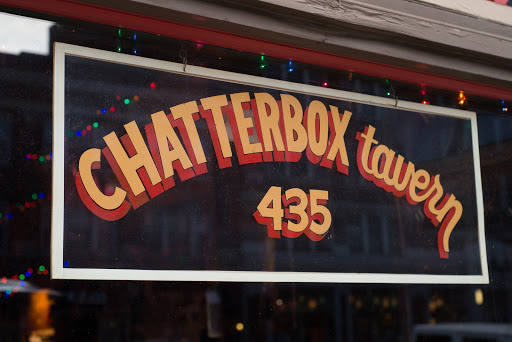
The distinctive hand-painted Chatterbox Tavern sign at 435 Massachusetts Avenue in Indianapolis, marking the entrance to the longtime live jazz venue.
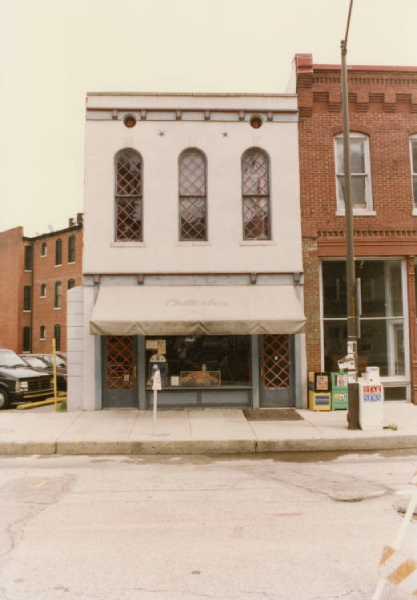
The Chatterbox Tavern at 435 Massachusetts Avenue in Indianapolis in 1990, eight years after David Andrichik purchased the bar and began developing it as a home for live music.
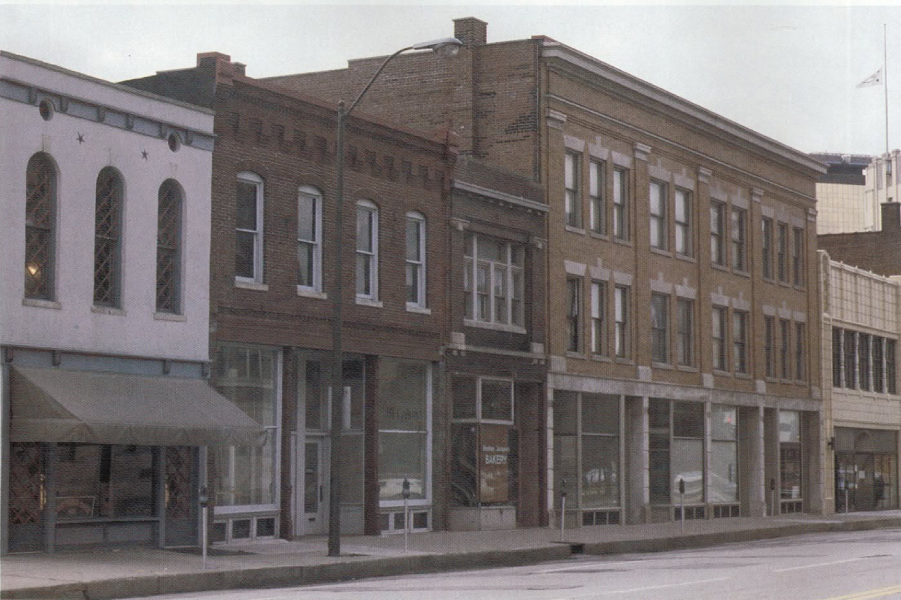
Massachusetts Avenue in Indianapolis during the 1986–87 redevelopment period, with buildings near the Chatterbox and the former Sears property undergoing renovation for O’Malia’s. The uncovered and restored tower can be seen in the upper right corner.
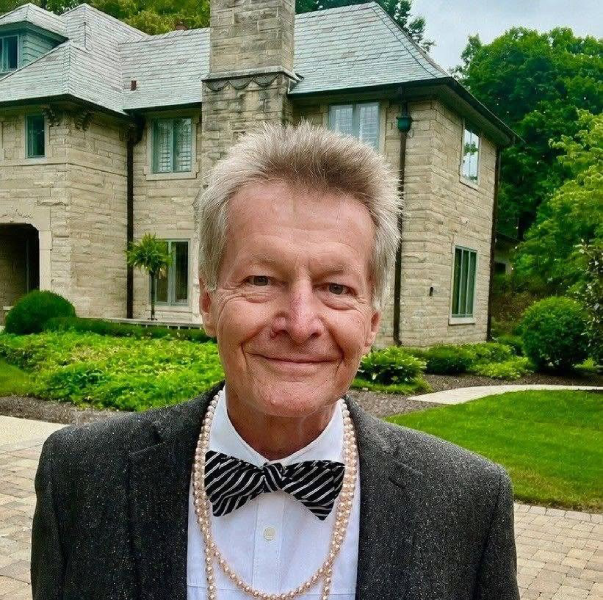
David Andrichik, longtime owner of the Chatterbox Tavern and an architect and historic preservationist whose work has been closely connected to the cultural development of downtown Indianapolis.
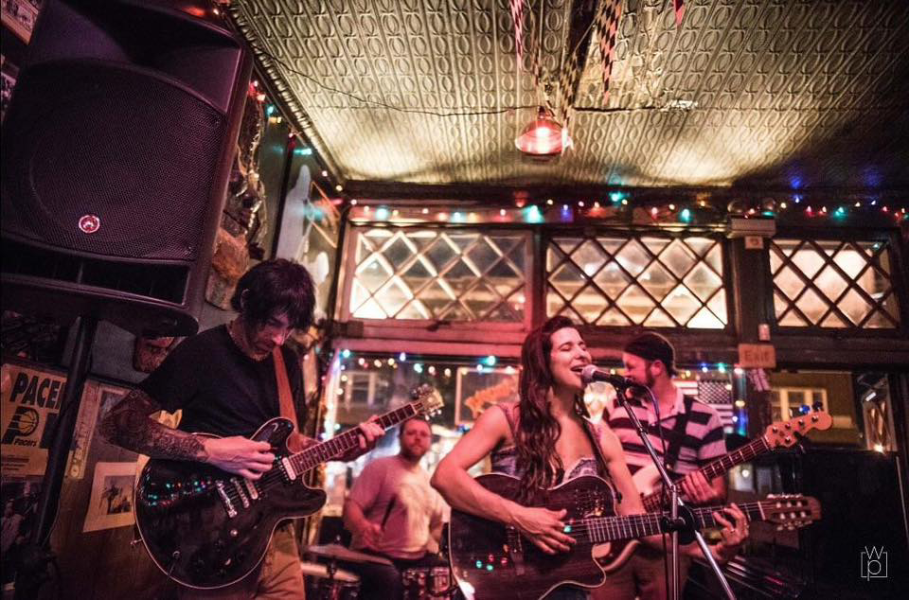
Sarah Grain performing with her band inside the Chatterbox Tavern, where the intimate setting places musicians only a few feet from the audience.
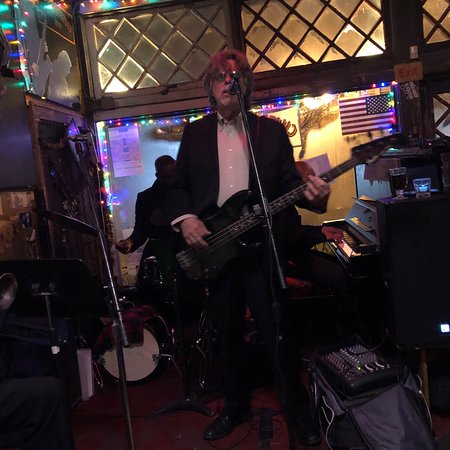
A live performance on the intimate stage inside the Chatterbox Tavern, where musicians have performed just a few feet from audiences for more than four decades.
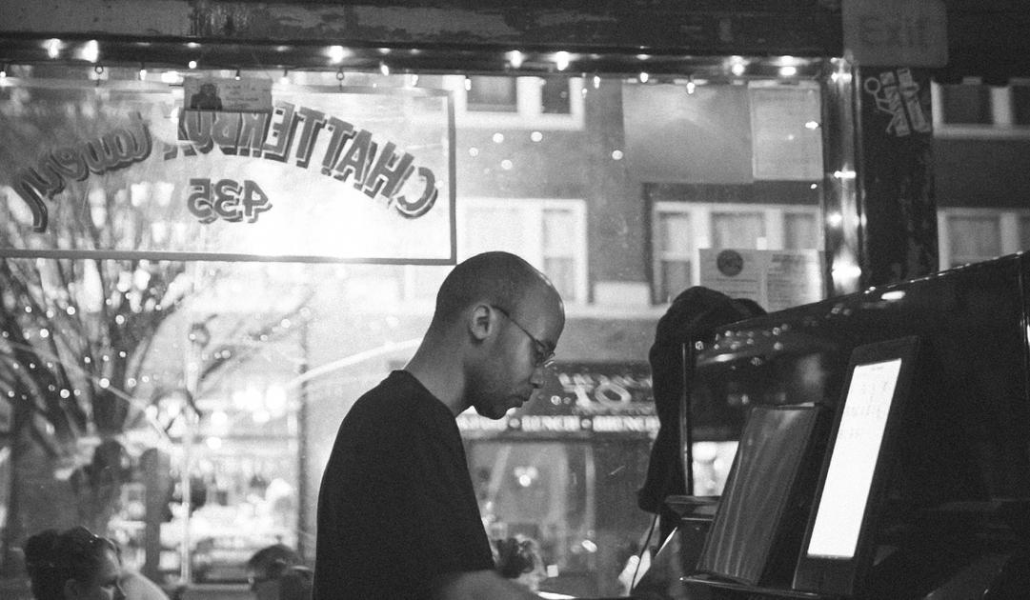
A pianist performing inside the Chatterbox Tavern, framed by the club’s front window overlooking Massachusetts Avenue in Indianapolis.
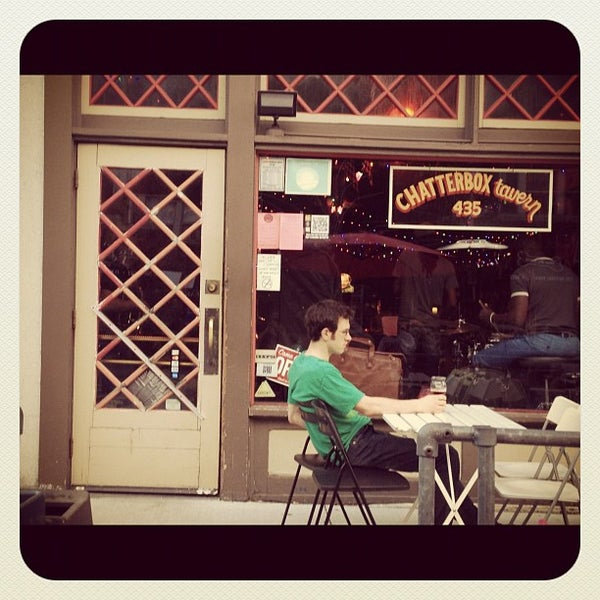
The patio outside the Chatterbox Tavern on Massachusetts Avenue, offering a street-side view into the intimate jazz club through its front window.
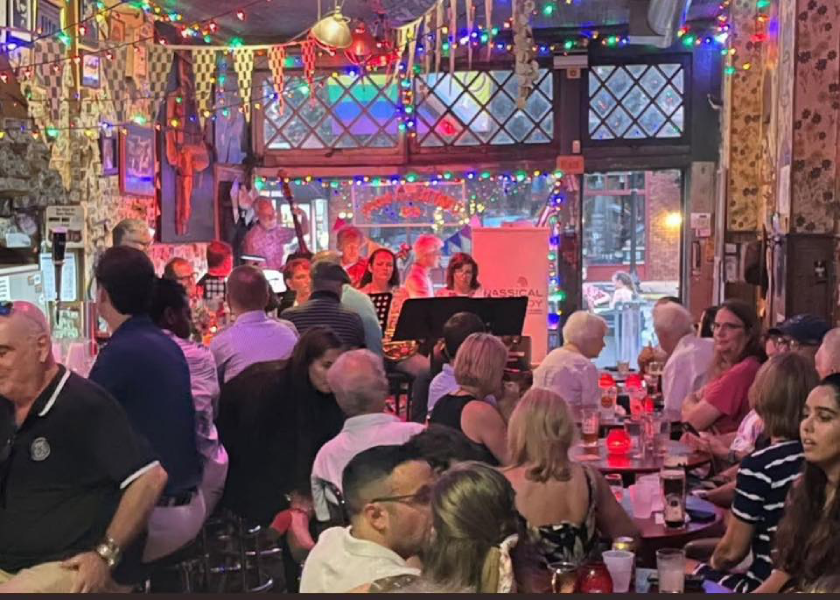
A packed house inside the Chatterbox Tavern, illustrating the intimate atmosphere that brings audiences and musicians together in the small Massachusetts Avenue jazz club.
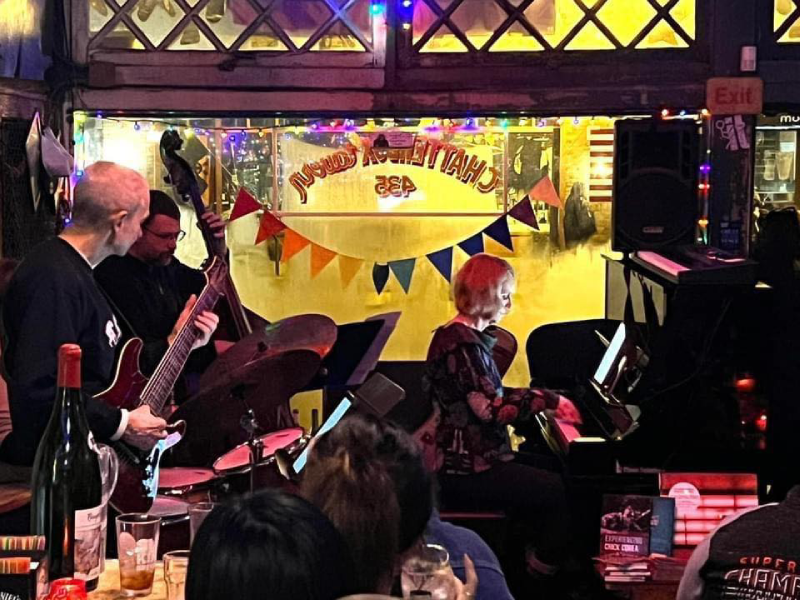
Pianist Monika Herzig performing with fellow musicians inside the Chatterbox Tavern on Massachusetts Avenue in Indianapolis.
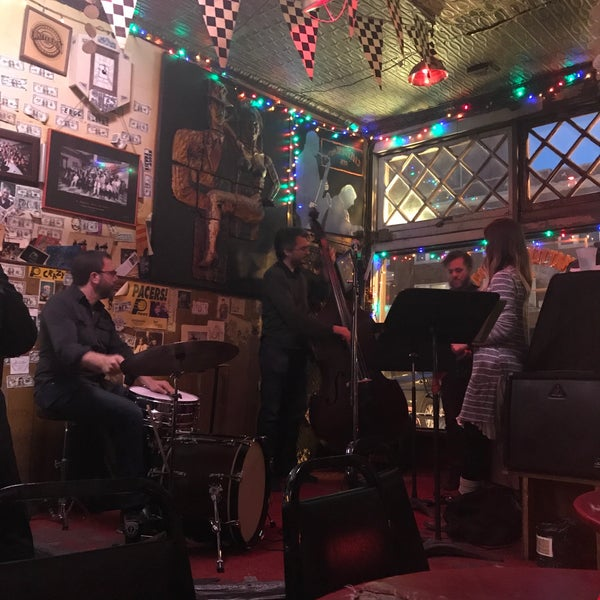
A jazz ensemble performing inside the Chatterbox Tavern, surrounded by the signatures, memorabilia, and colorful lights that have become part of the club’s distinctive atmosphere.
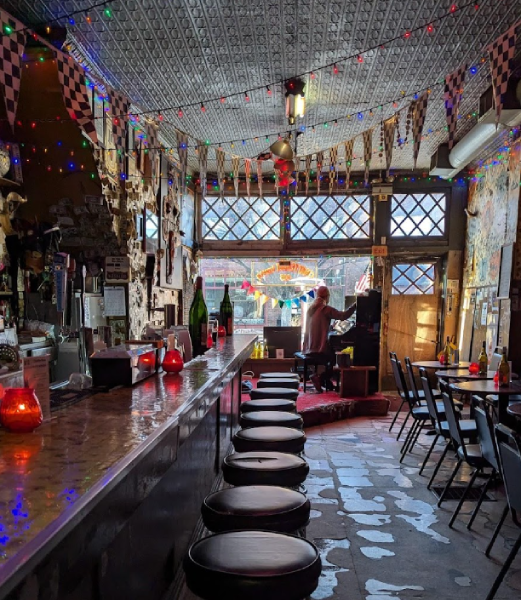
The interior of the Chatterbox Tavern, showing its long bar, intimate performance area, colorful lights, and walls layered with memorabilia accumulated over decades.
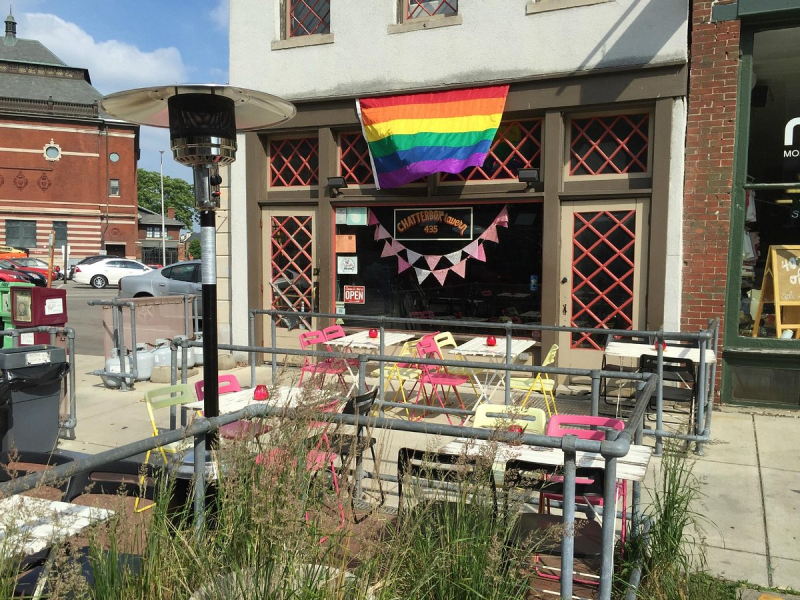
The exterior and patio of the Chatterbox Tavern at 435 Massachusetts Avenue in Indianapolis, a longtime home for live jazz on Mass Ave.
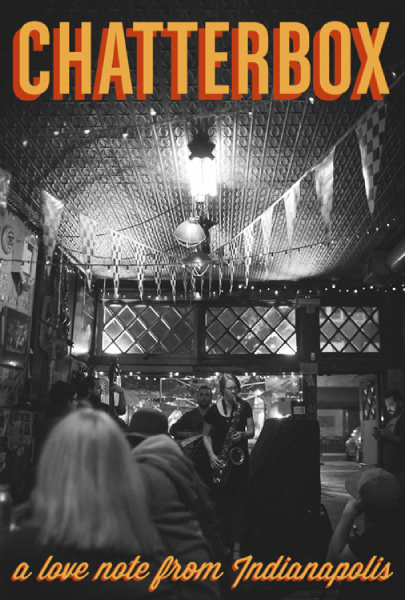
Promotional poster for the Chatterbox Tavern, “A Love Note from Indianapolis,” featuring a black-and-white view of a live jazz performance inside the intimate Mass Ave club.
Preserving Indiana’s Music History
The Indiana Music History Project is made possible through the generous support of the Allen Whitehill Clowes Charitable Foundation. Their commitment to preserving Indiana’s rich musical heritage helps ensure these oral histories remain accessible for future generations.

Help Improve This Archive
Have additional information about this artist, story, or any of the photographs? If you can identify people, dates, locations, or have memories you’d like to share, we’d love to hear from you. Please use the button below and select “Submit Historical Information or Corrections” as the reason for your message.