
Eddie Flowers Oral History

Eddie Flowers is a musician, writer, visual artist, record collector, and longtime participant in underground music whose story stretches from the earliest days of Indiana punk to decades of experimental music in Los Angeles and his eventual return to Bloomington.
Best known as a member of the original 1976-era Gizmos, Flowers entered Bloomington’s music scene through the network of fanzines, record collectors, writers, and independent labels that preceded the punk explosion of the late 1970s. His later work with Crawlspace pushed far beyond conventional punk into improvisation, psychedelia, noise, garage rock, and experimental sound, producing exactly 75 releases over the group’s long history. Since returning to Bloomington in 2018, Flowers has continued making music through Heavy Mother and other collaborations while maintaining the independent, exploratory approach that has defined his creative life.
Interview Highlight
In this Interview Highlight, Eddie Flowers recalls the unusual beginnings of The Gizmos in Bloomington during the mid-1970s. Flowers had entered a national network of teenage record collectors and fanzine writers years before punk became a widely recognized movement, and those connections eventually brought him together with Ken Highland, Bob Richert, and the circle that developed around Bloomington’s emerging independent music scene.
Flowers describes The Gizmos as the first Indiana punk band, while also acknowledging how unconventional the original group actually was. The musicians were brought together largely to make a record, and after the first recording session they went their separate ways for nearly a year. What later became recognized as an important early punk recording grew out of a much looser network of writers, collectors, musicians, and friends who were simply trying to make the kind of rock and roll they wanted to hear.
Complete Interview
In this Complete Interview, Eddie Flowers traces a creative life that began with an obsession with records and fanzines and eventually carried him through The Gizmos, Los Angeles punk and experimental music, Crawlspace, Heavy Mother, writing, visual art, and a return to Bloomington more than four decades after he first became connected to the city.
Flowers recalls growing up in Jackson, Alabama, discovering rock and roll through his older brother’s records, and entering the early-1970s fanzine network while still a teenager. Those publications connected young music obsessives across the country long before the internet, creating relationships that eventually brought Flowers into the orbit of Bloomington writer and record-label founder Bob Richert and fellow fanzine contributor Ken Highland.
The conversation explores the formation of the original Gizmos, their crude early recording sessions, the release of their first records through Gulcher Records, and Flowers’ complicated relationship with the language later used to describe the group. He discusses moving to Los Angeles in 1979, witnessing the emergence of hardcore, forming Crawlspace in the mid-1980s, and deliberately pushing that group away from conventional punk toward improvisation, psychedelia, drones, noise, and experimentation.
Flowers also reflects on the 2014 Gizmos reunion that finally put him onstage with the band, his return to Bloomington in 2018, the formation of Heavy Mother, his collaborations with other underground musicians, and his continuing desire to make new music without worrying about commercial success. Throughout the interview, Flowers returns to a simple creative philosophy: figure things out for yourself, remain curious, and make the music you actually want to hear.
Biography
Eddie Flowers was born in Jackson, Mississippi, and grew up in Jackson, Alabama, a small town roughly 70 miles north of Mobile. His father worked in construction, and the family moved several times during Flowers’ earliest years before settling in Alabama when he was about five. He remained there until he was 22. There was little in the way of a local music scene, and Flowers remembered growing up in a dry county without bars or the kind of clubs that might have exposed him directly to working bands.
His introduction to rock and roll instead came largely through records. Flowers’ older brother was a teenager during the 1960s and owned recordings by artists including Johnny Rivers, The Ventures, Jan and Dean, Otis Redding, and others. Although his brother’s interest in the records was fairly casual, Flowers became obsessed with them. By the time he was nine or ten years old, he was buying records of his own and searching for music far beyond what was immediately available in his hometown.
That interest eventually led Flowers to one of the most important cultural networks of his youth: fanzines. Around 1970, he encountered an article describing the growing world of amateur rock publications. Fanzines had existed for decades within science fiction and comic-book culture, but a new network devoted to record collecting, early rock and roll, garage music, and emerging underground sounds was beginning to develop around the country.
Flowers was fascinated by publications that could be mimeographed, cheaply printed, mailed from one teenager to another, and still function as genuine music magazines. Writers and collectors shared addresses, reviews, discoveries, arguments, and recommendations through the mail. For a teenager living far from any major music center, the network provided access to a community that did not otherwise exist around him.
Flowers began contributing to fanzines in 1972 when he was only 14 years old. One of his earliest outlets was a publication connected to Andy Shernoff, who later became a founding member of the New York band The Dictators. Flowers went on to contribute to numerous underground publications during the early 1970s, establishing relationships with music obsessives scattered across the country.
One of those connections was Ken Highland, another young fanzine writer. Flowers and Highland encountered each other’s work through the same mail-based network and eventually began writing songs together despite living far apart. Another important connection was Bloomington-based writer and publisher Bob Richert, whose publications became part of the same underground exchange. By the mid-1970s, Flowers and Highland were both contributing to Richert’s projects, creating the relationships that would eventually bring them together in Bloomington.
The fanzine world and the beginnings of independent recording were closely intertwined. Richert eventually developed Gulcher, a Bloomington-based publication and record label that connected local activity with the national underground. The magazine was professionally printed and distributed rather than operating strictly as a homemade fanzine, but its writers and audience grew from the same network of collectors and underground music enthusiasts.
In early 1976, those connections unexpectedly produced the original incarnation of The Gizmos.
Highland had recorded some material on his own, and Richert suggested releasing the tapes as a record. Highland instead proposed assembling a group and making a proper recording. Flowers had never previously been in a band, but he and Highland had already written songs and discussed the possibility of playing together. When Highland invited him to participate, Flowers agreed.
The resulting group became The Gizmos. The original lineup included Ken Highland, Rich Coffee, Rick Czajka, Davey Medlock, Dave Sulak, Ted Niemiec, Eddie Flowers, and Jim DeVries.
Flowers later summarized their place in Indiana music history with characteristic qualification: The Gizmos were the first Indiana punk band, but in some ways they were barely a band at all. The original lineup existed primarily to make a record. After the first recording session, the musicians scattered and did not reconvene for nearly a year.
The band’s earliest recordings were made at Home Grown Studios in Bloomington with Richard Fish. Flowers remembers the studio as essentially a room in a house. Although multitrack technology may have been available, the sessions were recorded live to stereo, leaving little or no opportunity for conventional mixing afterward. The recording was crude, immediate, and appropriate for the music the group was creating.
Those sessions produced Muff Divin’, released by Bloomington-based Gulcher Records in 1976. The record included “Muff Divin’ (In Willkie South),” “That’s Cool (I Respect You More),” “Mean Screen,” and “Chicken Queen (The [Ass] End).” Its labels identify Bob Richert and The Gizmos as producers and Richard Fish as the recording engineer at Home Grown Studios.
The first Gizmos record appeared just before punk rock exploded into widespread public awareness. That timing became important. Independent releases by artists such as Patti Smith and Television had already demonstrated that small-scale records could reach listeners outside the established record industry, but there were still relatively few recordings available for audiences searching for what would soon be called punk or new wave.
The Gizmos therefore found themselves appearing in places they might never have expected, including alternative charts overseas alongside artists such as Alex Chilton and The Saints. For a brief period, a tiny Bloomington record existed within an international network that was actively searching for something new.
Flowers is careful, however, about applying later terminology to those recordings. Although The Gizmos are now frequently discussed as pioneers of do-it-yourself punk, Flowers does not remember musicians in their world using the term “DIY” in 1976. Gulcher functioned as a small record label, the musicians signed an agreement, and Richert handled the release. To Flowers, it was a miniature version of working with a record company rather than a deliberate attempt to follow an ideology that had not yet been named.
Even “punk” meant something somewhat different in the world Flowers inhabited. Before the late-1970s punk explosion, the term could describe obscure 1960s garage bands, while artists such as the MC5, The Stooges, Alice Cooper, and The Flamin’ Groovies were sometimes grouped under other loose descriptions. Flowers and his friends were less concerned with defining a genre than with searching bargain bins and record stores for anything that genuinely rocked.
The original Gizmos returned to the studio in April 1977 for a second round of recording. The sessions produced the material that would become two more EPs, Amerika First and Gizmos World Tour, completing the trio of early Gulcher releases associated with the original incarnation of the band.
The sessions were considerably more chaotic than the first. Highland, one of the principal songwriters in the original group, was serving in the Marines and stationed at Fort Meade, Maryland. He appeared only near the end of the recording period, while other musicians were absent at different times. Flowers even played drums on one track despite not considering himself a drummer.
Amerika First was released by Gulcher Records in 1977 and included “Amerika First,” “Human Garbage Disposal,” “Ballad of the Gizmos,” “Kiss of the Rat,” “Pumpin’ to Playboy,” “Cave Woman,” and “Regular Dude.”
The third EP, Gizmos World Tour, followed in 1978. Its material came from the 1977 recording period, but the record itself carries a 1978 release date. Together, Muff Divin’, Amerika First, and Gizmos World Tour established the recorded legacy of the original Gizmos.
By this period, Flowers had already largely left Indiana. The Gizmos name continued in Bloomington, but the personnel and character of the group changed substantially. A later incarnation developed around musicians who remained active in Bloomington, meaning that the history of The Gizmos is better understood as a series of related lineups rather than one uninterrupted band. Flowers’ place in that history belongs specifically to the original mid-1970s group and its early Gulcher recordings.
While a punk and new-wave scene continued developing around Bloomington and Gulcher Records, Flowers was no longer physically part of it. His relationship with the later Bloomington scene was therefore more complicated than retrospective accounts sometimes suggest: his recordings helped establish an important early foundation, but much of the scene associated with those records developed after he had gone.
Flowers eventually moved to Los Angeles in August 1979. He arrived during an extraordinary period in the city’s underground music history, just as bands such as Black Flag were beginning to establish the hardcore scene. Flowers remembers a period when so many compelling bands were performing simultaneously that it would have been possible to attend several worthwhile shows on almost any night.
Although part of his reason for moving west was to form another band with former Gizmos associate Rich Coffee, that project never materialized. Flowers spent several years without a serious musical outlet and eventually began writing again during the mid-1980s. His desire to return to making music led to the formation of Crawlspace.
Crawlspace began taking shape around 1985 with musicians Flowers knew through both Indiana and Los Angeles connections. The early lineup included Bill McCarter and musicians associated with The Lazy Cowgirls, another group with Indiana roots that established itself after moving to Los Angeles. By 1987, Crawlspace had developed into a working band and begun performing and recording.
From the beginning, Flowers wanted Crawlspace to avoid becoming trapped within a single sound. His primary rule for the group was that it should continually evolve. Punk remained part of its musical vocabulary, but Flowers was already losing interest in both hardcore and the limitations of conventional punk rock. He wanted the group to remain curious enough to move somewhere different whenever its current approach became predictable.
That philosophy eventually carried Crawlspace through punk, garage rock, improvisation, psychedelic music, extended drones, tape manipulation, noise, and free-form experimentation. Flowers described the band as genuinely psychedelic not because it attempted to reproduce the fashion or musical conventions of the 1960s, but because psychedelic experiences influenced the way its members approached sound and improvisation.
An early Crawlspace release, Silent Invisible Conversation, appeared in 1988, followed by the group’s first full-length album, In the Gospel Zone, in 1989. Flowers later identified In the Gospel Zone as one of the group’s stronger early statements because it captured the transition between relatively recognizable rock music and the much more open-ended direction the band would pursue. An extended interpretation of a song by the German group Can pointed toward the increasingly improvisational music that followed.
During the 1990s, Crawlspace continued recording prolifically, including albums released through Majora Records in Seattle. Flowers was particularly interested in the label because it also released music by Sun City Girls, a group that became one of his major musical influences.
The Crawlspace catalog eventually became enormous. Flowers stated during his Indiana Music History Project interview that the group produced exactly 75 releases. Some were conventional albums, while others appeared as limited cassettes, CD-Rs, and other small-run projects. Not all of the material remains readily available, and Flowers himself no longer possesses copies of everything the group released.
Some recordings pushed experimentation to extremes. Flowers described a series the group called “blimp music,” built from sustained synthesizer tones, guitar feedback, percussion, and drones. Other projects involved manipulating tape machines and cassettes through mixing boards. By the later years of Crawlspace, much of the group’s music was almost entirely improvised.
Commercial success was never the guiding objective. In Los Angeles, the particular kind of experimental music Crawlspace pursued often attracted more interest from listeners elsewhere than from the city’s immediate club scene. The band did not become a conventional touring act, and Flowers was comfortable operating within a much smaller underground network.
Music was only one part of Flowers’ participation in that culture. Writing, publishing, illustration, and graphic design remained intertwined with his musical life. Fanzines had been his original point of entry into the underground, and he continued writing about music and contributing to other artists’ records. His work included liner notes for The Lazy Cowgirls and visual or graphic-design contributions to releases by artists including The Afrika Korps, Mooseheart Faith, Teenage Larvae, and Bassholes.
The surviving record sleeves provide a physical record of that work. Flowers received cover design and graphics credits on The Afrika Korps’ Music to Kill By, released in 1977, and later designed covers for releases such as Mooseheart Faith’s Golden Light and Teenage Larvae’s Songs for Pigs. He also created artwork for Bassholes’ 1992 release John Henry. These projects extended the same outsider visual sensibility that appeared throughout his music and writing.
His relationship with The Gizmos unexpectedly resurfaced decades later.
Interest in the original Gizmos recordings steadily grew among underground record collectors, musicians, and fanzine writers during the 1990s and 2000s. Reissues and lengthy articles introduced the band to listeners who had not been around when the original records appeared. Eventually, conversations began among Flowers, Ken Highland, Ted Niemiec, Rich Coffee, and others about playing together again.
The reunion finally became real in 2014, when musicians from the original-era Gizmos returned to Bloomington. They performed at The Bishop and followed the appearance with shows in several other cities, including dates in Dayton, Memphis, Boston, New York, and Chicago.
For Flowers, there was an unusual twist: despite being one of the musicians on the original recordings, the 2014 reunion represented the first time he had actually performed onstage with The Gizmos in a normal concert setting. The original group had only played a small number of shows in the 1970s, and Flowers had been seriously ill during the principal Bloomington performance.
The reunion was therefore both a return and something entirely new. Audiences now knew the records, understood the band’s historical significance, and actively wanted to see the musicians who had made them. Flowers found himself performing songs that had once existed in an obscure corner of the underground for listeners who considered them part of punk history.
The Gizmos continued playing occasional reunion shows through 2019, although the performances became less frequent over time. More importantly for Flowers personally, those trips reconnected him with Bloomington.
After nearly four decades in Los Angeles, Flowers found himself increasingly unhappy with his circumstances there. Returning to Indiana for Gizmos performances introduced him to younger musicians and people in Bloomington and Indianapolis who knew his work. He began considering whether moving back might be possible.
In August 2018, Flowers returned to Bloomington. A young punk musician who knew of him through The Gizmos offered him a place to live, and Flowers moved back to Indiana despite barely knowing the people he would be living with. More than 40 years after his original Bloomington recordings, the city again became his home.
Flowers quickly began thinking about another band.
His years performing the reunited Gizmos had reminded him how much he enjoyed playing straightforward rock and roll for an audience that immediately responded to it. After spending decades deliberately making difficult and experimental music with Crawlspace, Flowers became interested in creating something simpler and more direct.
That impulse eventually led to Heavy Mother.
Flowers began writing with Bloomington guitarist Martin McWhorter, although McWhorter’s other musical commitments and the COVID-19 pandemic delayed the group’s development. Heavy Mother finally became active after venues began reopening in 2021.
The band’s recordings carried forward Flowers’ preference for inexpensive, independent production. Basic tracks for the first Heavy Mother album were recorded on four-track cassette in McWhorter’s garage, with Flowers recording vocals in his basement. McWhorter later added overdubs and mixed the recordings digitally, creating a finished record that Flowers felt sounded far more polished than its basic recording method might suggest.
Flowers was equally involved in the visual presentation. The album artwork drew loosely from the chaotic party photograph inside The Rolling Stones’ Beggars Banquet and the staged imagery of the New York Dolls, although the final photographs became something distinctly their own. Wigs, props, food, and deliberately exaggerated staging created a visual counterpart to the band’s rock-and-roll personality.
Heavy Mother has remained fluid, with musicians moving, playing in other groups, and returning when schedules permit. Flowers regards that instability as part of the process rather than a reason to stop. New combinations of musicians create new possibilities, and improvisation has again begun finding its way into his current work.
Flowers has also continued collaborating with musicians whose work connects different generations of underground rock. His Bloomington projects have brought him into contact with players associated with scenes in Cleveland, Los Angeles, Indiana, and elsewhere, extending the same kind of informal network that first connected him to fanzines more than half a century earlier.
Throughout his career, writing and visual art have remained closely related to music. Long before Flowers ever played in a band, he was writing about records. Fanzines were his original entry into underground culture, and album design later provided another form of expression connected to the sounds he was making.
Flowers’ attitude toward recognition has remained remarkably consistent. He never built his bands around the expectation of commercial success. Even his musical heroes—artists such as Captain Beefheart, The Stooges, and the MC5—were groups whose influence ultimately became much larger than their commercial achievements during their original careers.
That example freed Flowers from measuring his own work by conventional industry standards. With Crawlspace, he sometimes actively resisted promotional conventions, declining to create formal band photographs and showing little interest in packaging the group for a larger audience. What mattered most was the sound and the experience of encountering it.
During his Indiana Music History Project interview, Flowers reduced his advice to younger artists to something similarly straightforward: do it.
For Flowers, there is no reliable blueprint for an independent creative life. Musicians and writers have to listen, experiment, make mistakes, and discover their own methods rather than simply reproduce what previous generations already accomplished.
That philosophy connects the teenager in Alabama writing letters to distant fanzine editors with the musician still developing new material in Bloomington decades later. The technology, cities, bands, and audiences have changed, but the underlying process has remained much the same: find something interesting, make contact with other people who care about it, and create something of your own.
Eddie Flowers’ Indiana music story therefore reaches far beyond the few years he originally spent in Bloomington during the 1970s. The original Gizmos helped establish an early landmark in Indiana punk, but Flowers’ larger body of work shows what happened when the curiosity behind those recordings continued for another half century.
Through The Gizmos, Crawlspace, Heavy Mother, fanzines, underground publishing, recording, visual art, and an international network of independent musicians and collectors, Flowers has remained committed to music made outside conventional expectations. His work reflects an underground culture built less around career advancement than around discovery, experimentation, friendship, and the simple desire to keep making something new.
Image Gallery
Explore photographs, recordings, fanzines, liner notes, album artwork, promotional materials, and other items documenting Eddie Flowers’ creative life—from the original Gizmos recordings in 1970s Bloomington through his writing and graphic-design work, Crawlspace, his years in Los Angeles, the Gizmos reunion, Heavy Mother, and his return to Indiana.
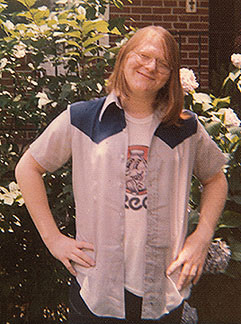
Eddie Flowers, musician, writer, visual artist, and original member of The Gizmos, whose work has been part of underground music culture since the 1970s.
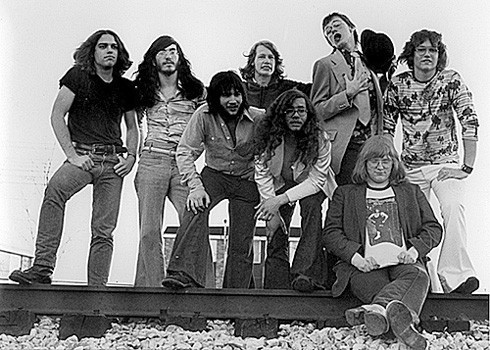
The Gizmos in Bloomington during the 1970s. From left: Ken Highland, Rich Coffee, Rick Czajka, Davey Medlock, Dave Sulak, Ted Niemiec, Jim DeVries, with Eddie Flowers seated at lower right.
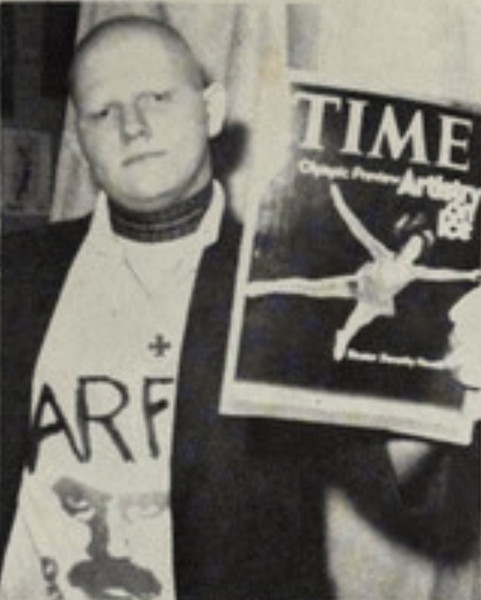
Eddie Flowers holding a copy of Time magazine, a photograph also featured in the liner notes for The Gizmos’ 1978 EP Gizmos World Tour, where he is identified as “Beat Mon Eddie Flowers.”

The Gizmos performing at the Middle East Downstairs in Cambridge, Massachusetts, during one of the band’s reunion performances.
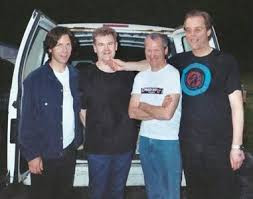
The Gizmos gathered beside their touring van during the band’s later reunion years.
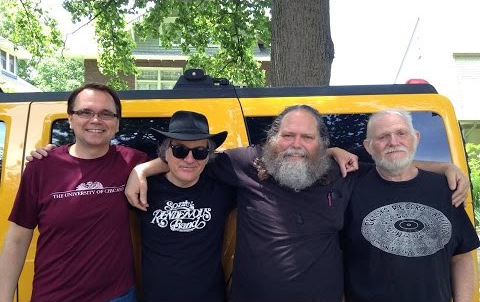
The Gizmos during a later reunion, with Eddie Flowers at far right.
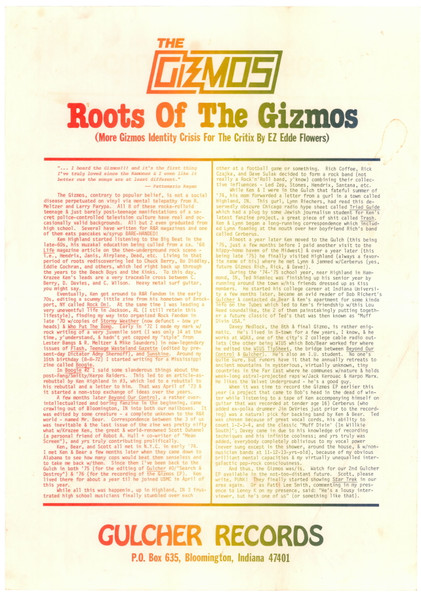
Roots of the Gizmos, a Gulcher Records retrospective written by Eddie Flowers recounting the origins and early history of The Gizmos.
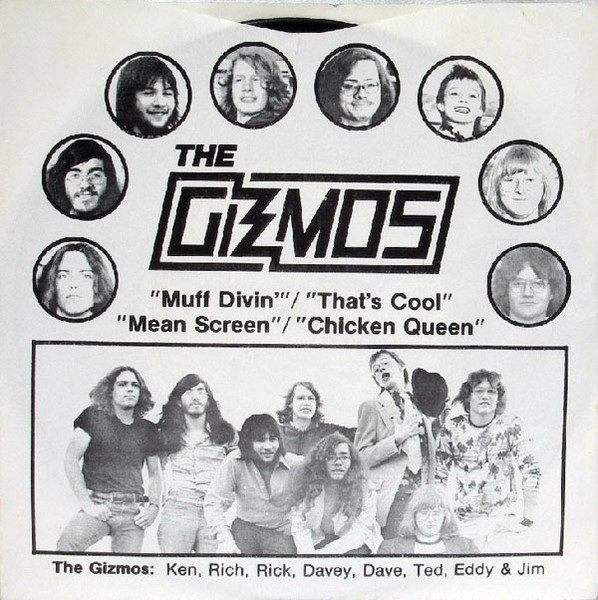
Front cover of The Gizmos’ Muff Divin’, featuring the eight-member lineup of Ken Highland, Rich Coffee, Rick Czajka, Davey Medlock, Dave Sulak, Ted Niemiec, Eddie Flowers, and Jim DeVries.
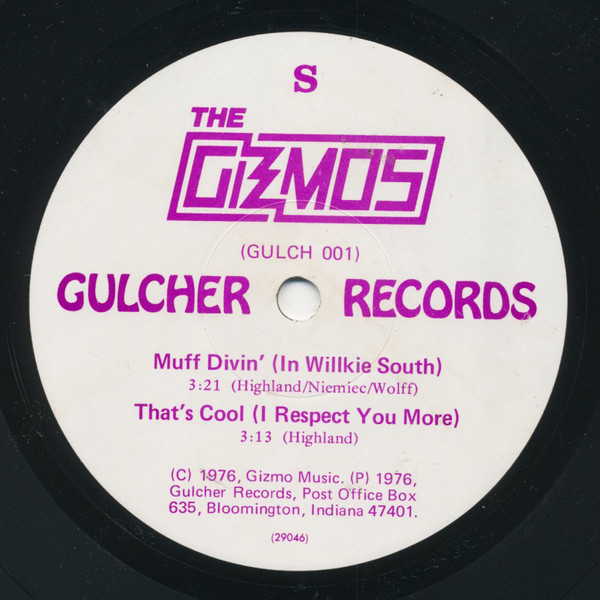
Side A vinyl label for The Gizmos’ Muff Divin’, released by Bloomington-based Gulcher Records in 1976, featuring “Muff Divin’ (In Willkie South)” and “That’s Cool (I Respect You More).”
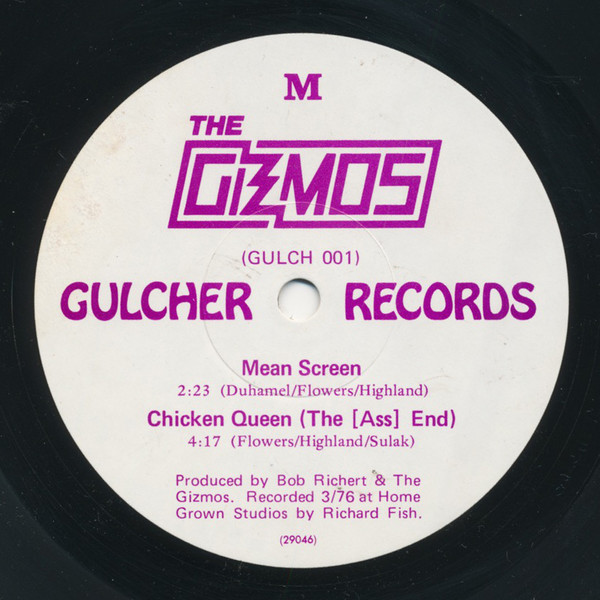
Side B vinyl label for The Gizmos’ Muff Divin’, featuring “Mean Screen” and “Chicken Queen (The [Ass] End).” The label also credits Bob Richert and The Gizmos as producers and notes that the record was recorded in March 1976 at Home Grown Studios by Richard Fish.
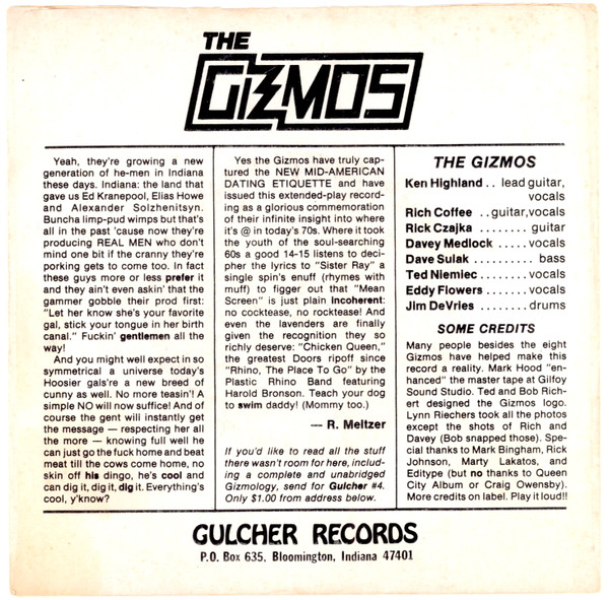
Back cover of The Gizmos’ Muff Divin’, featuring the band lineup, credits, and promotional notes from Gulcher Records.
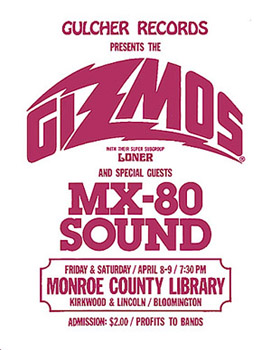
Concert poster for The Gizmos with MX-80 Sound at the Monroe County Library in Bloomington, April 8–9, 1977. Eddie Flowers recalled these as the original Gizmos’ rare live appearances during that period.
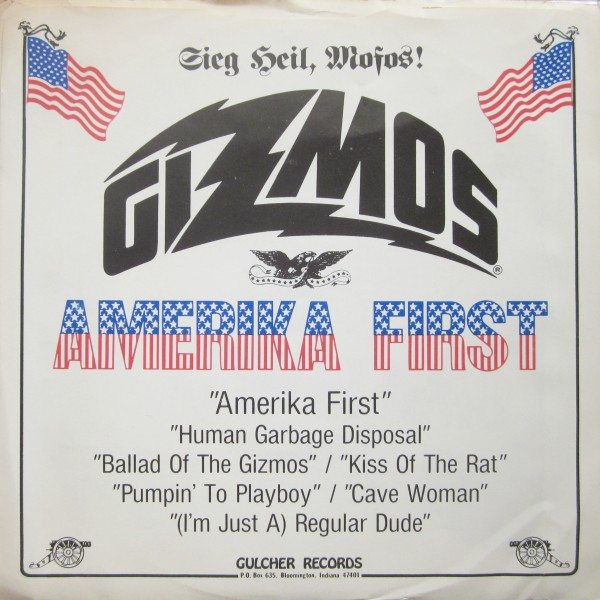
Front cover of The Gizmos’ Amerika First, released by Bloomington-based Gulcher Records and featuring songs from the band’s early recordings.
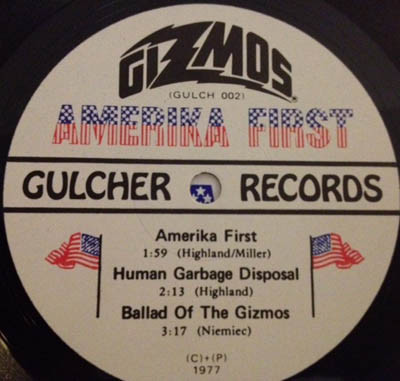
Side A vinyl label for The Gizmos’ Amerika First, released by Gulcher Records in 1977, featuring “Amerika First,” “Human Garbage Disposal,” and “Ballad of the Gizmos.”
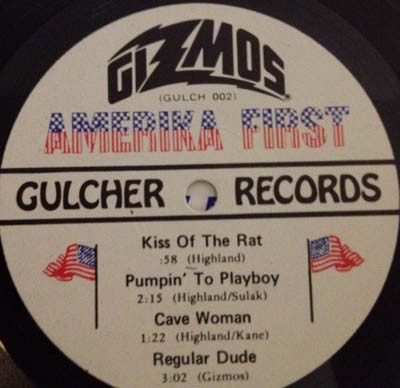
Side B vinyl label for The Gizmos’ Amerika First, featuring “Kiss of the Rat,” “Pumpin’ to Playboy,” “Cave Woman,” and “Regular Dude.”
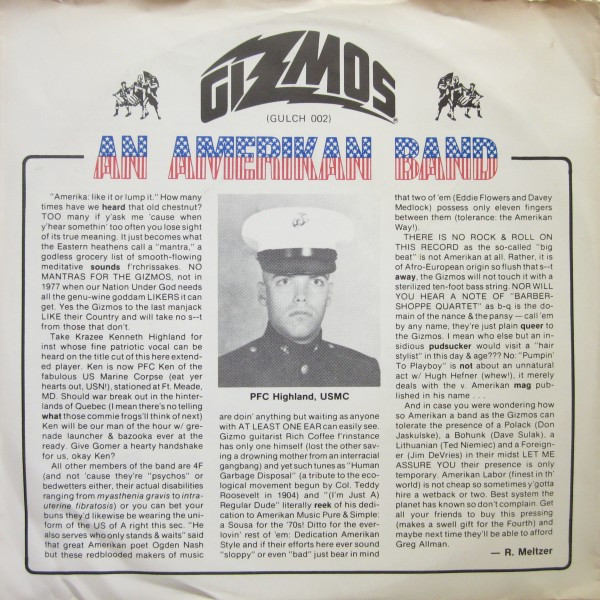
Back cover of The Gizmos’ Amerika First, released by Gulcher Records, featuring PFC Ken Highland, USMC, and liner notes by writer and music critic Richard Meltzer. The notes reflect the scattered, unconventional nature of the original Gizmos lineup, including Eddie Flowers and Davey Medlock.
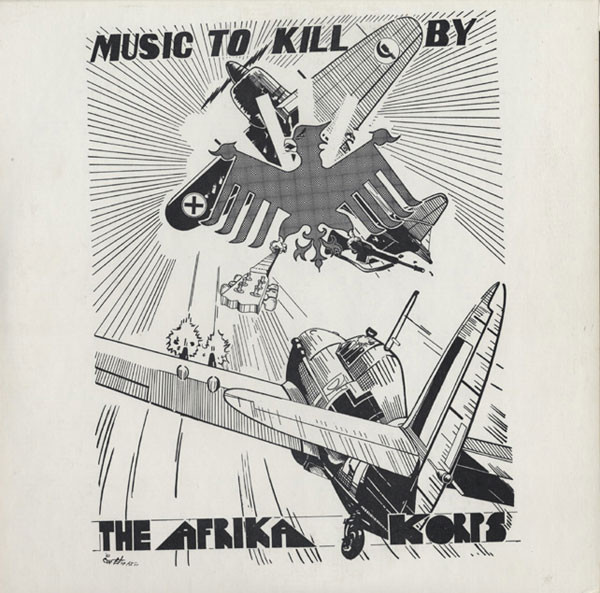
Front cover of The Afrika Korps’ Music to Kill By, released in 1977 by Iron Cross Records. Eddie Flowers is credited with the album’s cover design and graphics.
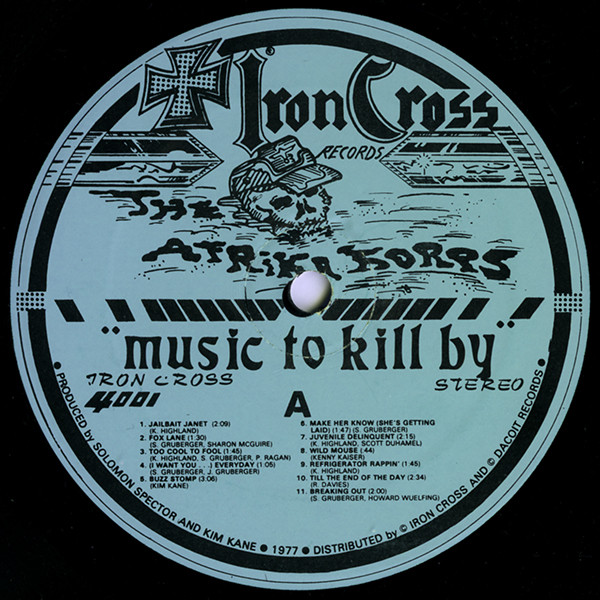
Side A vinyl label for The Afrika Korps’ Music to Kill By, released by Iron Cross Records in 1977, featuring eleven tracks and the album’s distinctive Afrika Korps artwork.
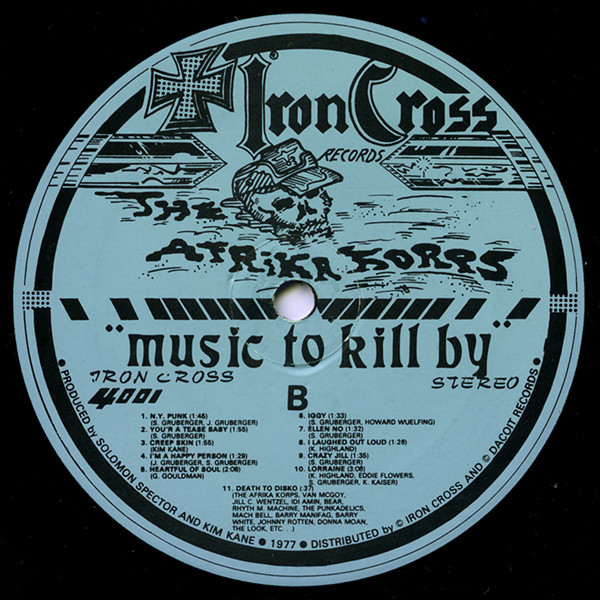
Side B vinyl label for The Afrika Korps’ Music to Kill By, released by Iron Cross Records in 1977. The label includes “Lookin’ for Dead Flowers,” credited to Ken Highland and Eddie Flowers.
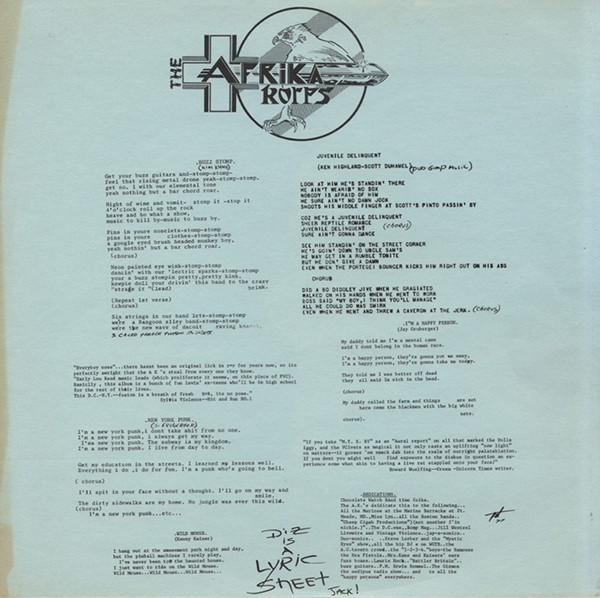
Liner notes for The Afrika Korps’ Music to Kill By, featuring lyrics, commentary, and additional album information.
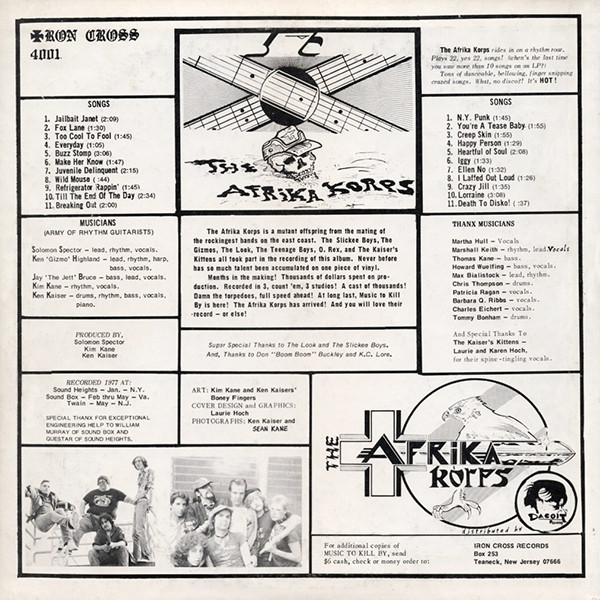
Back cover of The Afrika Korps’ Music to Kill By, featuring the album’s track listing, personnel, credits, and photographs. Eddie Flowers is credited for the cover design and graphics.
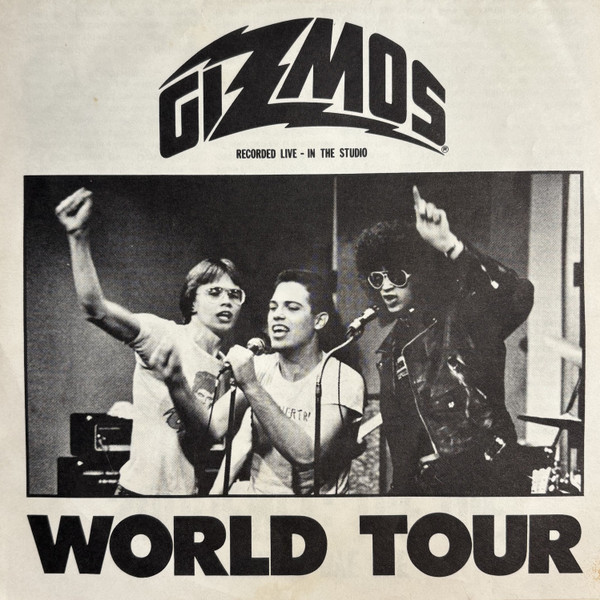
Front cover of The Gizmos’ Gizmos World Tour, released by Gulcher Records in 1978. The EP was the third and final release by the original incarnation of The Gizmos, featuring Eddie Flowers.
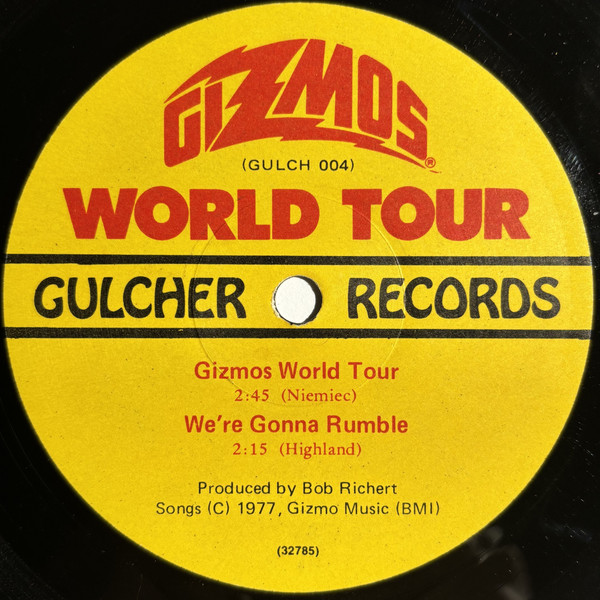
Vinyl label for The Gizmos’ Gizmos World Tour, released by Gulcher Records in 1978. This side features “Gizmos World Tour,” written by Ted Niemiec, and “We’re Gonna Rumble,” written by Ken Highland; the label also credits Bob Richert as producer.
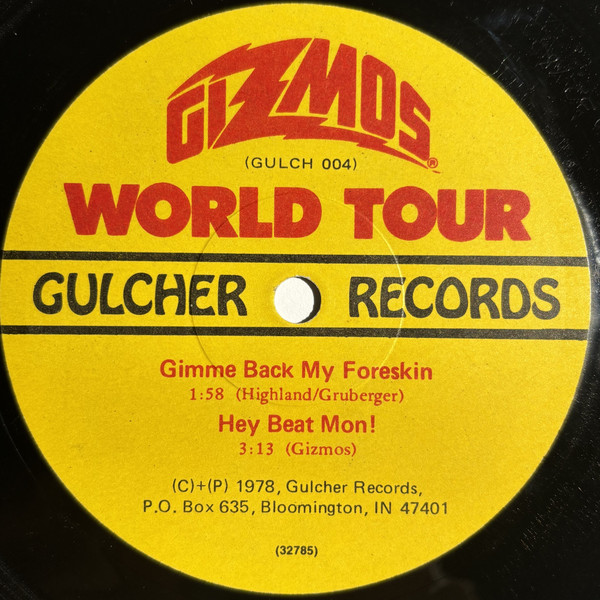
Vinyl label for The Gizmos’ Gizmos World Tour, released by Gulcher Records in 1978. The label features “Gimme Back My Foreskin” and “Hey Beat Mon!” and confirms the record’s 1978 copyright and publication date.
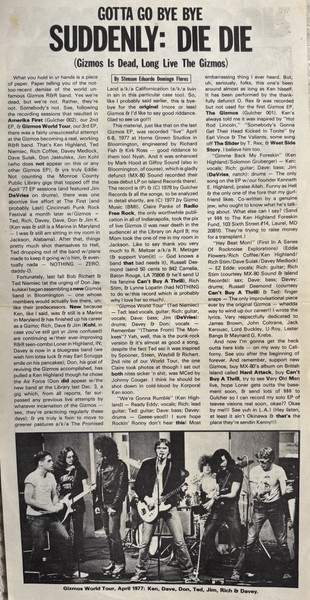
Insert accompanying The Gizmos’ Gizmos World Tour, recounting the history of the band and featuring a photograph of the April 1977 lineup: Ken Highland, Dave Sulak, Don Regan, Ted Niemiec, Jim DeVries, Rich Coffee, and Davey Medlock.
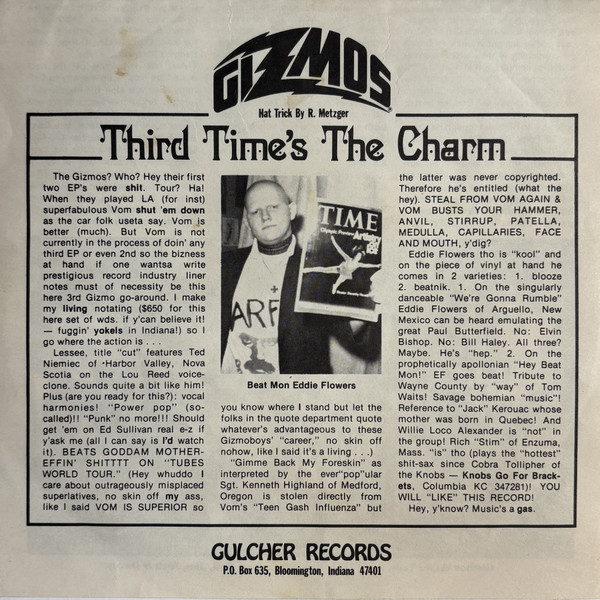
Liner notes for The Gizmos’ Gizmos World Tour, written by rock critic Richard Meltzer under the heading “Third Time’s The Charm.” The notes discuss the band’s first two EPs before introducing their third release and include a photograph of Eddie Flowers.
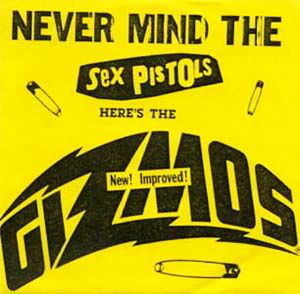
Never Mind the Sex Pistols Here’s the Gizmos, a later release by the post-1977 incarnation of The Gizmos. The deliberately provocative title and cover parody the Sex Pistols’ Never Mind the Bollocks, Here’s the Sex Pistols while presenting the continuing Bloomington version of the band that followed the original Eddie Flowers-era lineup.
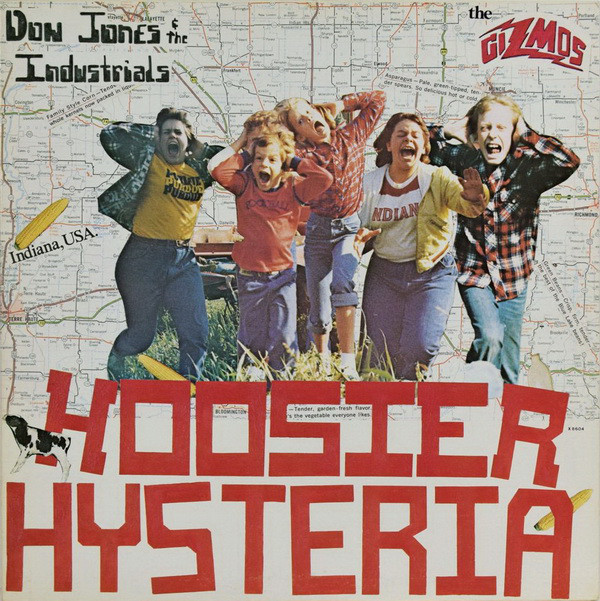
Cover of Hoosier Hysteria, a 1980 split LP featuring Don Jones & the Industrials and the later incarnation of The Gizmos. The Gizmos side features Dale Lawrence, Tim Carroll, Billy Nightshade, and Shadow Myers, documenting the group’s evolution after the original Eddie Flowers-era lineup.
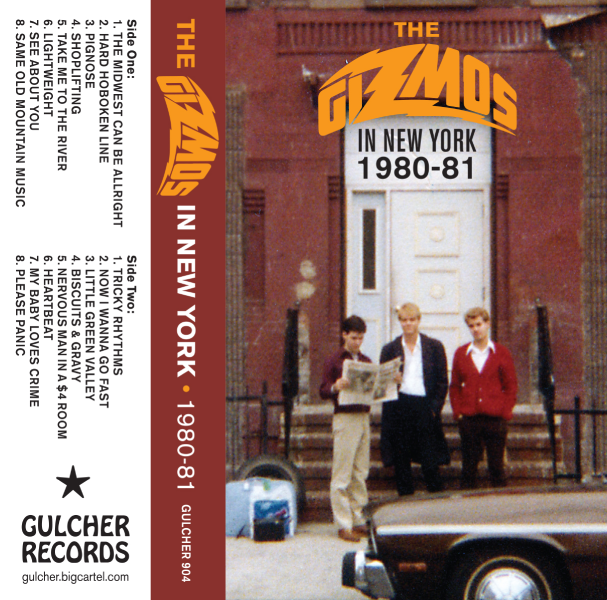
The Gizmos in New York 1980–81 cassette, released by Gulcher Records in 2021. The collection documents the later Gizmos lineup of Dale Lawrence, Billy Nightshade, Tim Carroll, and Robbie Wise during the band’s New York-area period in 1980 and 1981.
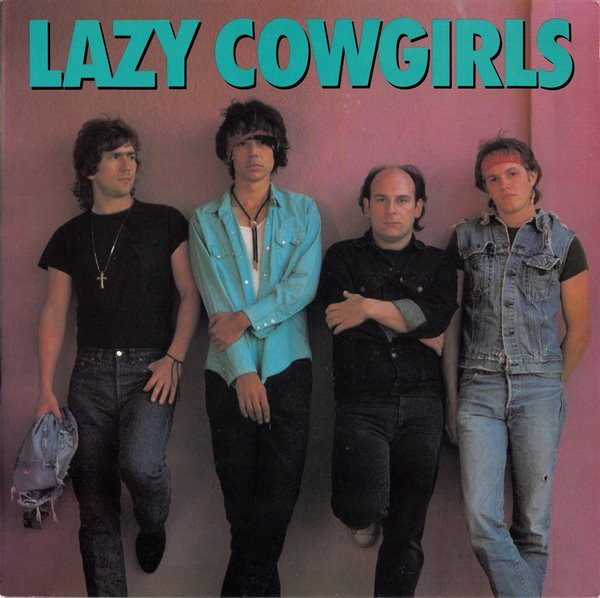
Back cover of The Lazy Cowgirls’ self-titled album, featuring liner notes by Eddie Flowers alongside a photograph and lineup of the Los Angeles band.
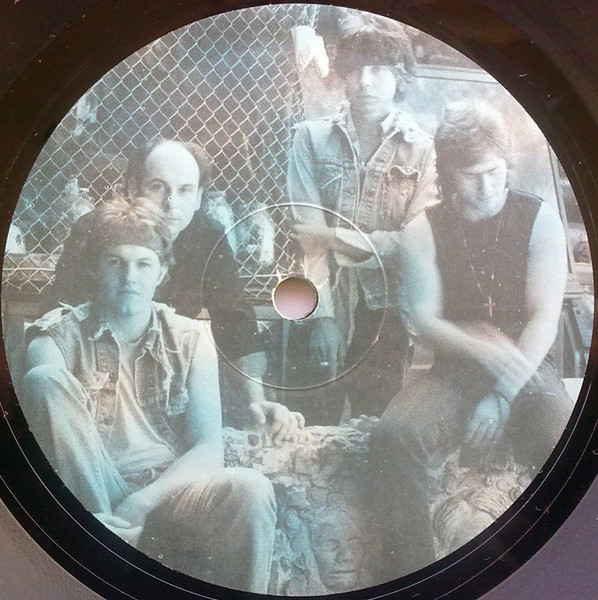
Vinyl label from The Lazy Cowgirls’ self-titled album, featuring a photograph of the Los Angeles band. Eddie Flowers contributed liner notes to the release.
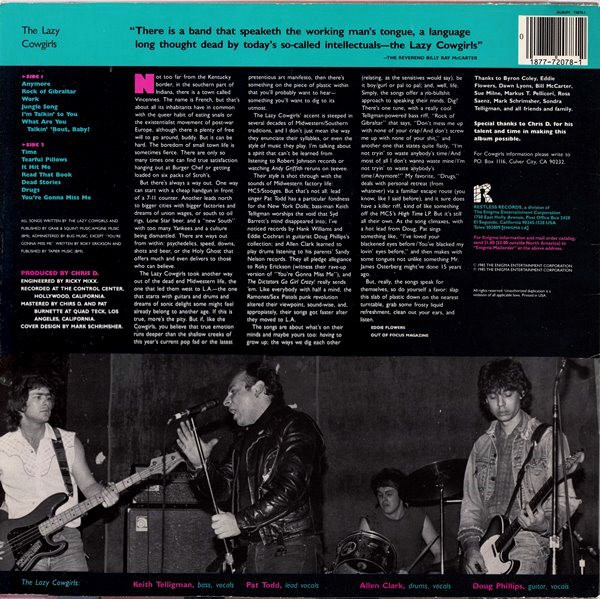
Back cover of The Lazy Cowgirls’ self-titled album, featuring liner notes by Eddie Flowers alongside a photograph and lineup of the Los Angeles band.
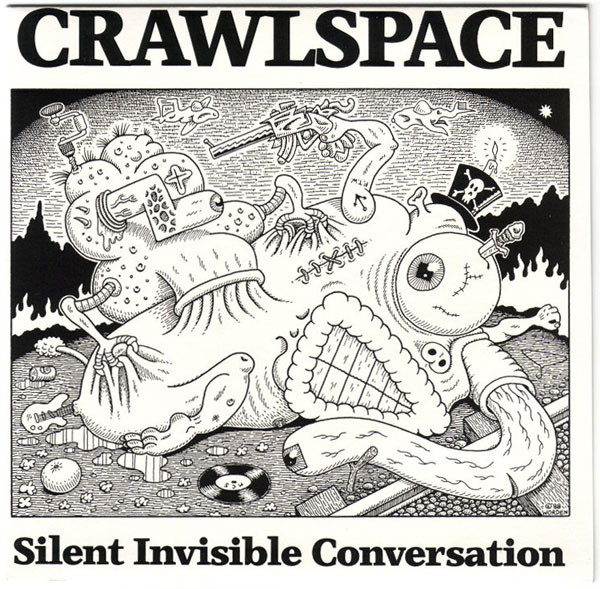
Front cover of Crawlspace’s Silent Invisible Conversation, reflecting the surreal and experimental visual aesthetic surrounding Eddie Flowers’ long-running underground music project.
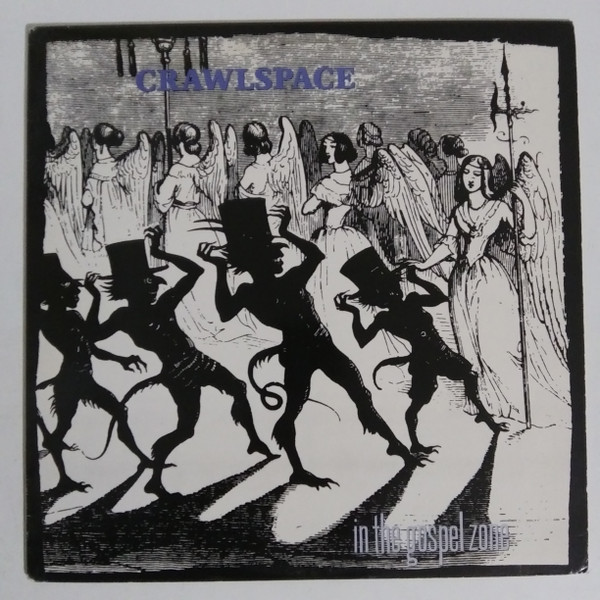
Front cover of Crawlspace’s In the Gospel Zone, the group’s 1989 debut album and an early document of Eddie Flowers’ increasingly experimental musical direction.
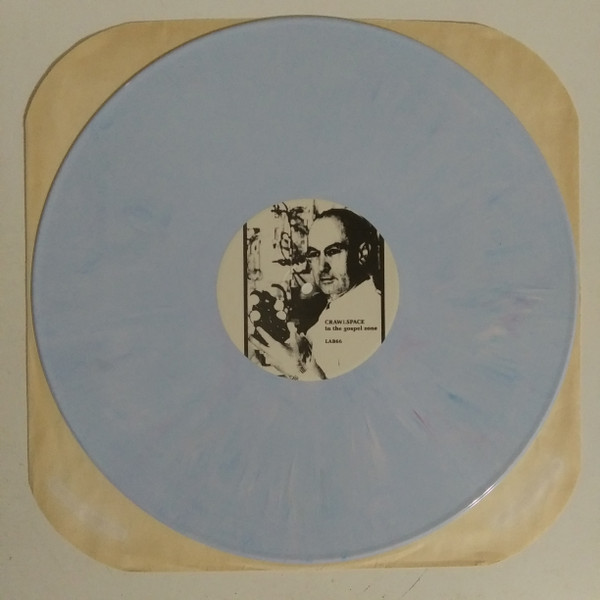
Vinyl edition of Crawlspace’s In the Gospel Zone, the group’s 1989 debut album, featuring a distinctive light-colored pressing and custom center label.
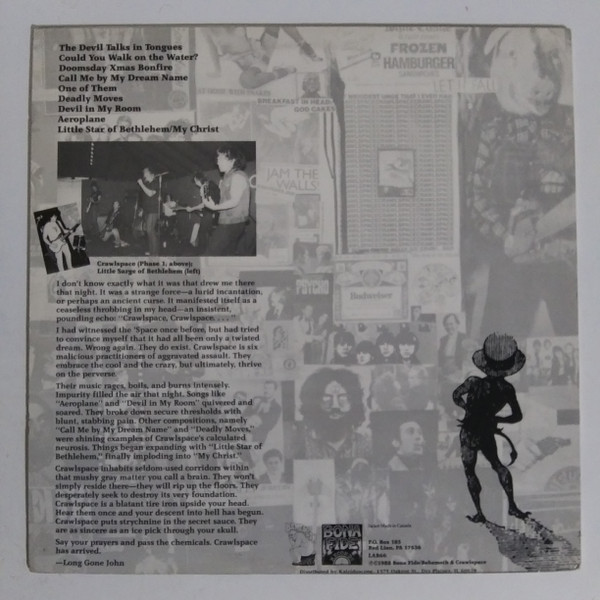
Back cover of Crawlspace’s In the Gospel Zone, the group’s 1989 debut album, featuring a collage of images, the album’s track listing, and liner notes.
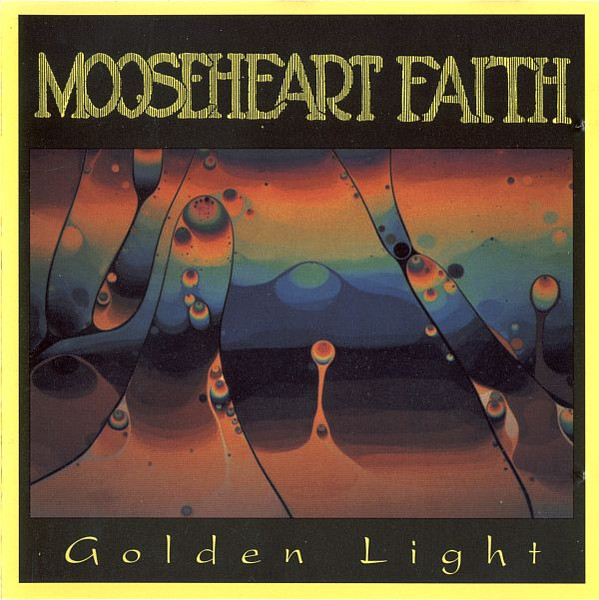
Front cover of Mooseheart Faith’s Golden Light, released in 1992. The album’s cover design is credited to Eddie Flowers.
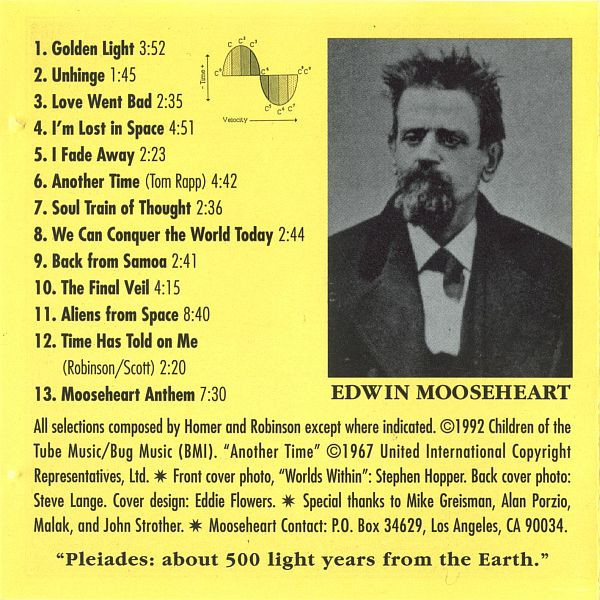
Back cover of Mooseheart Faith’s Golden Light, released in 1992, featuring the album’s track listing and credits. The cover design is credited to Eddie Flowers.
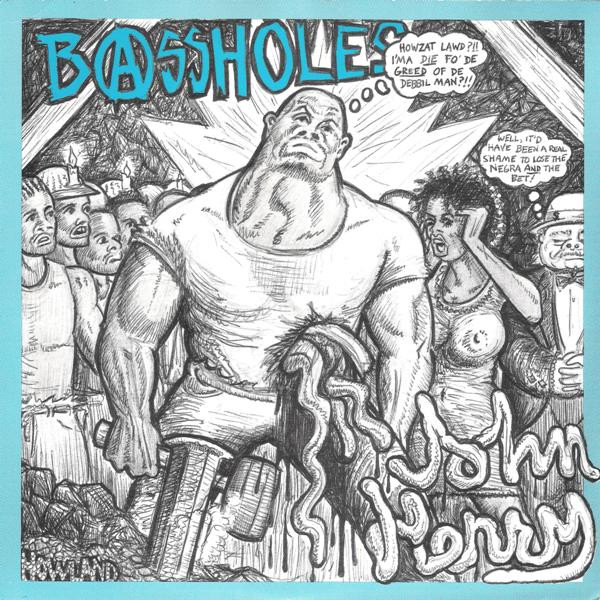
Front cover of Bassholes’ John Henry, a 7-inch single released by Sympathy for the Record Industry in 1992, featuring cover artwork by Eddie Flowers.
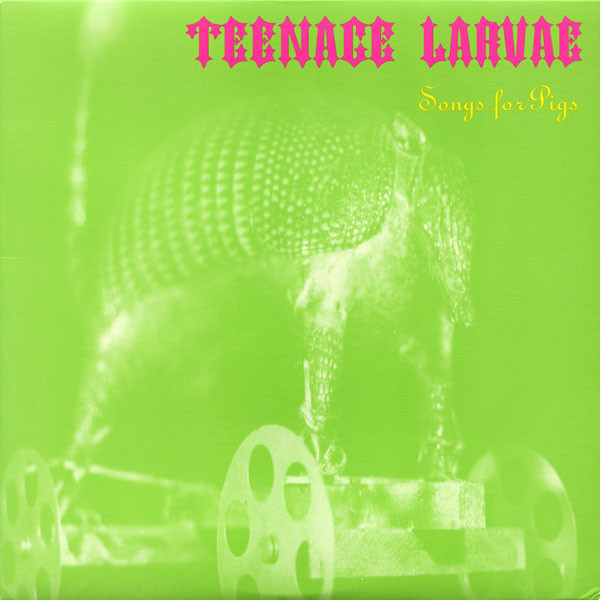
Front cover of Teenage Larvae’s Songs for Pigs. The album’s graphic design is credited to Eddie Flowers.
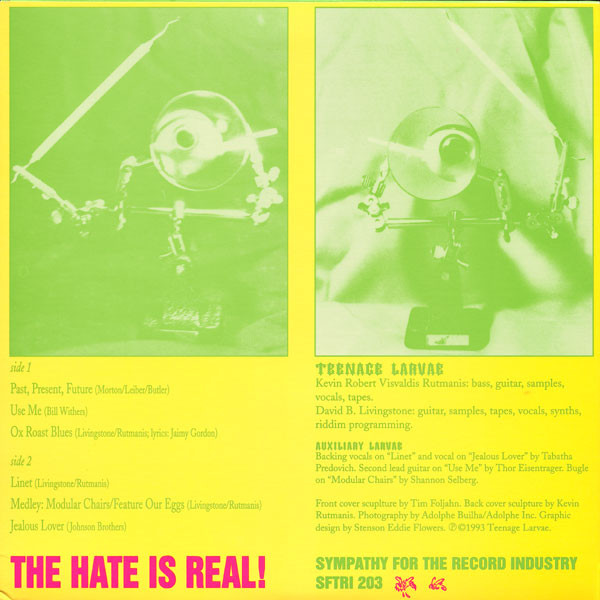
Back cover of Teenage Larvae’s Songs for Pigs, featuring album credits and artwork. The graphic design is credited to Eddie Flowers.
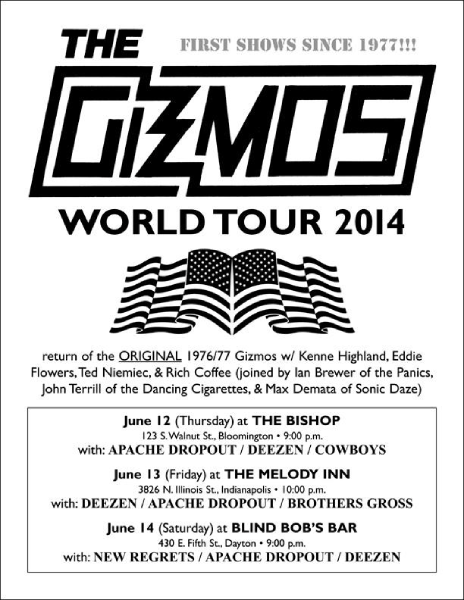
The Gizmos World Tour 2014 poster announcing the return of original 1976–77 members Kenne Highland, Eddie Flowers, Ted Niemiec, and Rich Coffee, joined by Ian Brewer, John Terrill, and Max Demata. The June 2014 shows included performances at The Bishop in Bloomington, The Melody Inn in Indianapolis, and Blind Bob’s Bar in Dayton.
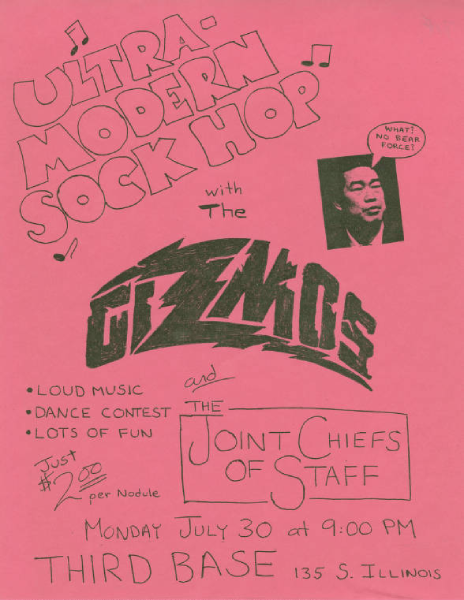
Concert flyer for The Gizmos and the Joint Chiefs of Staff at Third Base, 135 S. Illinois St. The hand-drawn flyer advertises an “Ultra-Modern Sock Hop,” dance contest, and $2 admission for the July 30 performance.
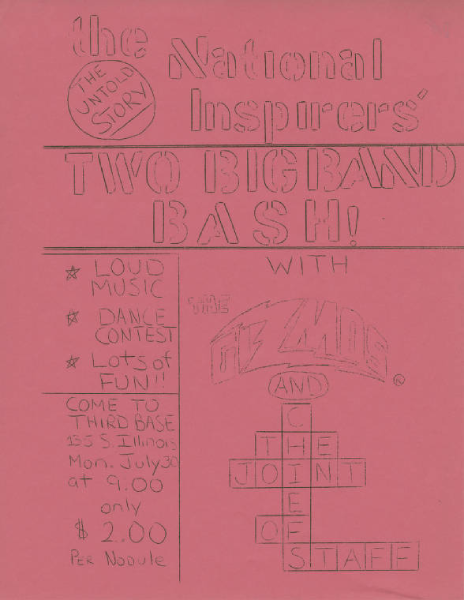
Alternate concert flyer for The Gizmos and the Joint Chiefs of Staff at Third Base, 135 S. Illinois St. Promoted as a “Two Big Band Bash,” the July 30 show featured loud music, a dance contest, and $2 admission.
Preserving Indiana’s Music History
The Indiana Music History Project is made possible through the generous support of the Allen Whitehill Clowes Charitable Foundation. Their commitment to preserving Indiana’s rich musical heritage helps ensure these oral histories remain accessible for future generations.

Help Improve This Archive
Have additional information about this artist, story, or any of the photographs? If you can identify people, dates, locations, or have memories you’d like to share, we’d love to hear from you. Please use the button below and select “Submit Historical Information or Corrections” as the reason for your message.

