
Faith Band Oral History

Faith Band, 1977. Left to right: Dave Barnes, David Bennett, Mark Cawley, John Cascella, and Carl Storie.
In this oral history interview, Dave Barnes and Carl Storie share their personal journeys into music, the formative years of the band, and vivid stories from their time performing together as part of Faith Band. They recall opening for legendary acts like the Allman Brothers, the Doobie Brothers, and Fleetwood Mac, and reflect on both the highs and the struggles of a career spent chasing—and achieving—moments of rock and roll glory.
This interview is part of the Indiana Music History Project’s Amazing Indiana Music Stories series, generously supported by the Allen Whitehill Clowes Charitable Foundation. On this page, you’ll find the Complete Interview, an Interview Highlight, and Image Gallery that capture the history and spirit of Faith Band.
Interview Highlight
In this interview highlight, Carl Storie and Dave Barnes reflect on the formation and rise of Faith Band, tracing the group’s roots in Indianapolis and their progression from regional clubs to major concert stages. They share stories of touring and performing alongside national acts including the Doobie Brothers, Allman Brothers Band, and Fleetwood Mac, offering firsthand insight into a period when Indiana-based bands were gaining access to the highest levels of the touring rock circuit.
Oral History Interview
In this complete interview, Carl Storie and Dave Barnes offer an in-depth look at the history of Faith Band, from the group’s early roots in Indianapolis to their development as a nationally touring rock act during the 1970s. They discuss the band’s evolving lineup, rehearsal and recording experiences, and the realities of life on the road, while reflecting on the regional music scene that helped shape their sound. Together, their recollections provide a detailed portrait of a Midwest band navigating the professional rock landscape during a pivotal era in American music history.
Biography
Faith Band’s story connects the music scenes of Muncie, New Castle, and Indianapolis through a series of bands and lasting musical partnerships. The group’s roots include The Invincibles and The Chosen Few, followed by Limousine and, eventually, Faith. Behind those changing names were musicians whose backgrounds ranged from school jazz bands to family music-making in Tennessee.
Drummer Dave Barnes grew up in New Castle and began playing snare drum in junior high. In high school, jazz and dance-band music helped shape his playing. His early musical experiences also brought him together with fellow New Castle musician Dave Bennett, beginning a partnership that continued through Dave and the Dynamics and into Faith Band.
Singer Carl Storie spent his early childhood in Tennessee before moving to Muncie around age five or six. He credits his grandparents with encouraging his interest in music: his grandmother sang and played instruments, and his grandfather was a music teacher. Summer visits to Tennessee kept him connected to those beginnings. He remembers trying to sing like Elvis Presley and buying “Denise” by Randy & the Rainbows as his first record.
Those paths came together through the regional club circuit. Barnes recalls spending about a year and a half playing at the Triangle in Greenville, Ohio, after high school. Storie, already a member of The Chosen Few, remembers going to hear Barnes and Bennett after learning about their playing. Impressed by what they heard, the group recruited the two musicians.
By the early 1970s, the band’s story had shifted to Indianapolis and Limousine. Bassist and songwriter Mark Cawley joined from the New York band Beggar’s Opera, adding songs and musical ideas to the group. The core Faith lineup brought together Storie on vocals and harmonica, Bennett on guitar, Barnes on drums, John Cascella on keyboards, and Cawley on bass.
Limousine released an album on GSF Records before producer Terry Knight reworked the recordings for a 1973 release on his Brown Bag label under the name Faith. In their interview, Barnes and Storie recall a promotional campaign that concealed the musicians’ identities and suggested they were established stars performing anonymously. The experience proved frustrating, but support from Village Records helped the band continue. Storie credits that backing with giving them renewed hope at a difficult point in their career.
Faith Band went on to release four more albums through Village and Mercury, building a following in Indianapolis and across the Midwest. Written by Carl Storie, “Dancin’ Shoes” became their signature song. Faith Band’s recording and Nigel Olsson’s version appeared on the Billboard Hot 100 at the same time in late 1978 and early 1979, reaching No. 54 and No. 18, respectively. Their concert history included opening for the Allman Brothers Band, the Doobie Brothers, and Fleetwood Mac. Barnes recalls the Doobie Brothers visiting their dressing room and inviting Faith Band onstage for encores, with Barnes taking over one of the headlining band’s two drum kits. Both Barnes and Storie remember the musicians’ warmth and generosity.
The members’ musical lives continued beyond Faith Band. Cascella joined John Mellencamp’s band, while Storie and Cawley formed Blinding Tears, releasing an album in 1986. Cawley also developed a career as a songwriter and mentor. In 2010, Faith Band released Legacy, a 19-track digital collection drawn from its archives, including previously unreleased recordings.
Image Gallery
Photographs and memorabilia from Faith Band’s history and the musical lives of its members.

Faith Band, 1977. Left to right: Dave Barnes, David Bennett, Mark Cawley, John Cascella, and Carl Storie.

Faith Band, 1976. Left to Right: John Cascella, Carl Storie, Dave Barnes, Mark Cawley, and David Bennett.

Dave Barnes playing drum set in the high school band.
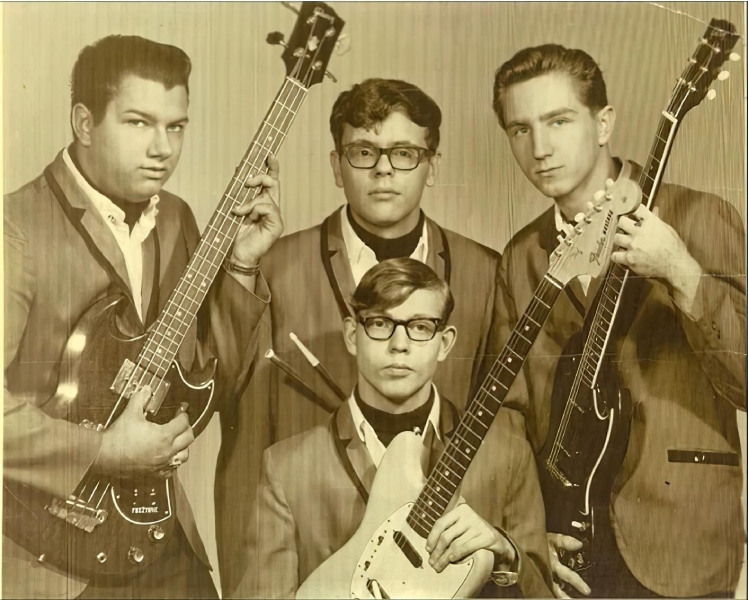
of Lonnie Mack.

The Wild Things, 1967, with Dave Barnes, Phil Mann, Gary Hamilton, and Dave Bennett.

The Chosen Few: John Cascella (upper left), Jack Hamilton (upper right), Carl Storie (center), Dave Bennett (lower left), and Dave Barnes (lower right).

Carl Storie sings during a live performance.
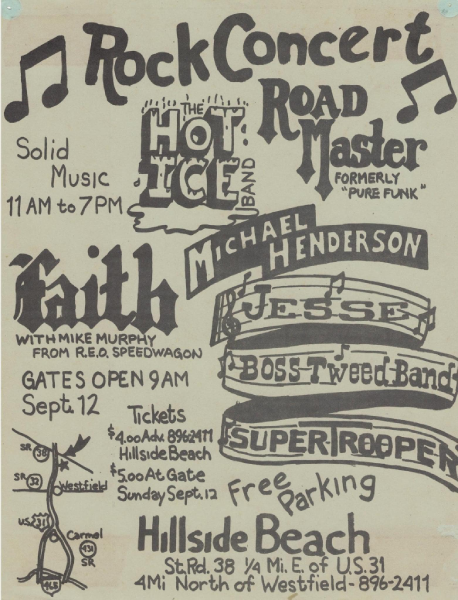
Poster for a September 12 rock concert at Hillside Beach near Westfield, advertising Faith with Mike Murphy from REO Speedwagon, Roadmaster, and other acts.
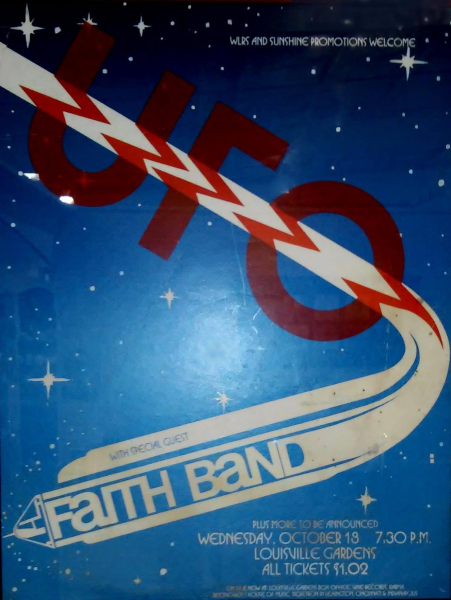
Concert poster for UFO with special guest Faith Band at Louisville Gardens on Wednesday, October 18. Photo courtesy of Guy Davis.
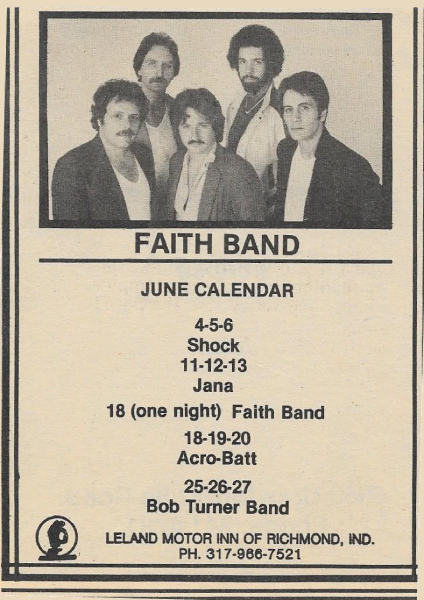
June 1981 entertainment calendar for the Leland Motor Inn in Richmond, Indiana, advertising a one-night appearance by Faith Band on June 18.

Cover of Faith Band’s Excuse Me… I Just Cut an Album (1977), released on Village Records.

Cover of Faith Band’s Rock’n Romance (1978), featuring “Dancin’ Shoes.”

Cover of Faith Band’s Face to Face (1979), released on Mercury Records.
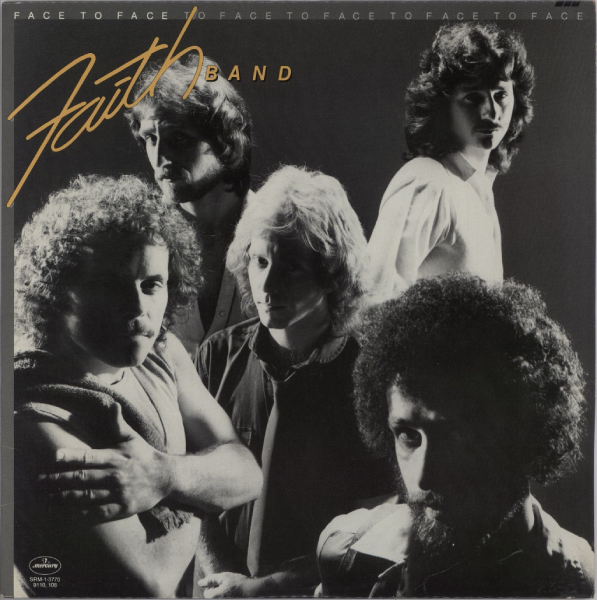
Front cover of Faith Band’s Face to Face (1979), released on Mercury Records.
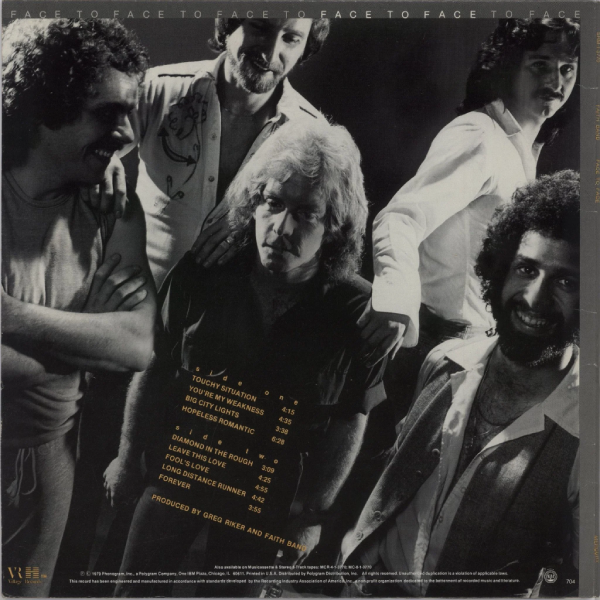
Back cover of Faith Band’s Face to Face (1979). Left to right: Dave Barnes, David Bennett, Mark Cawley, Carl Storie, and John Cascella.
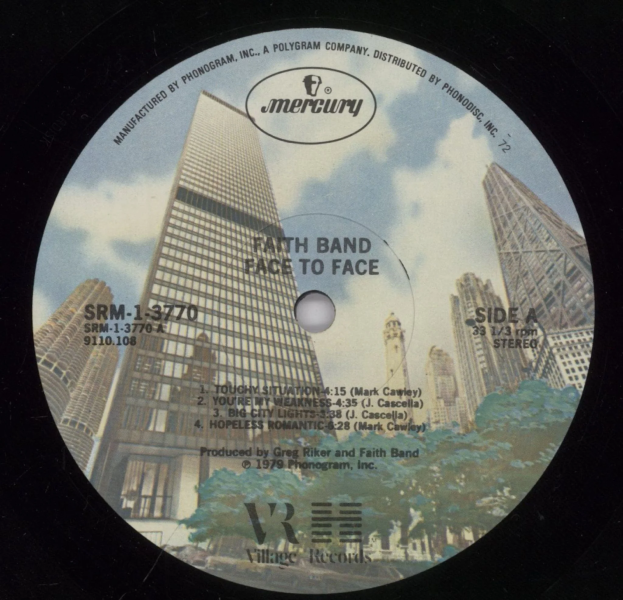
Side A label of Faith Band’s Face to Face (1979), featuring “Touchy Situation,” “You’re My Weakness,” “Big City Lights,” and “Hopeless Romantic.”

Cover of *Legacy* (2010), Faith Band’s 19-track digital collection featuring previously unreleased recordings.

Carl Storie, lead vocalist and harmonica player for Faith Band, in a studio portrait.

Carl Storie performing live.
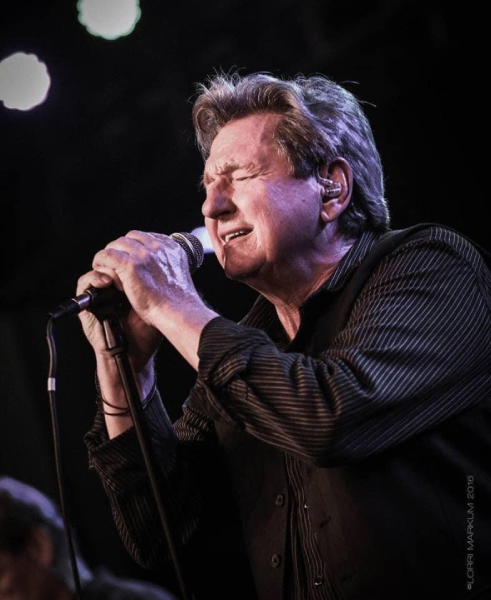
Carl Storie singing live with Faith.

Carl Storie at the microphone and David Bennett on guitar during a live performance.

Carl Storie performs with David “Benny” Bennett and Roadmaster’s Rick Benick. Photo by Larry Goshen.

Faith Band performing live for an audience gathered close to the band.

Dave Barnes and Carl Storie at Studio G of Plus One Audio Services.
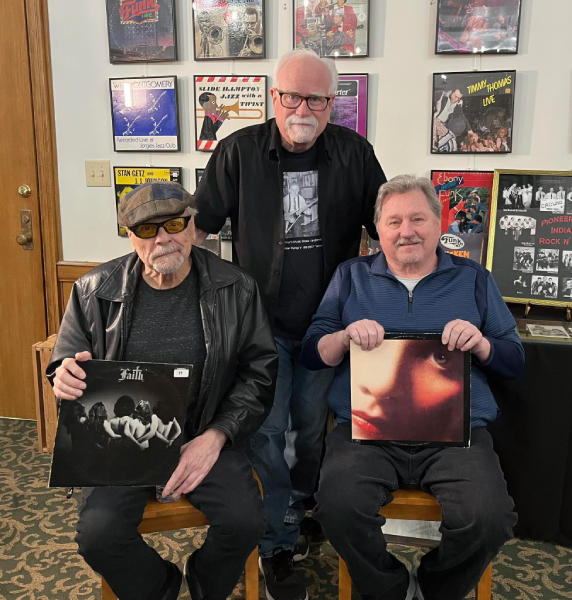
Left to right: Dave Barnes, Jeff Gardner, and Carl Storie at the Indiana Music History Project Museum on April 4, 2025. Gardner, a longtime friend of the band, musician, and audio engineer, conducted their oral-history interview that day. Barnes holds “Faith”, and Storie holds “Rock’n Romance”.
Preserving Indiana’s Music History
The Indiana Music History Project is made possible through the generous support of the Allen Whitehill Clowes Charitable Foundation. Their commitment to preserving Indiana’s rich musical heritage helps ensure these oral histories remain accessible for future generations.

Help Improve This Archive
Have additional information about this artist, story, or any of the photographs? If you can identify people, dates, locations, or have memories you’d like to share, we’d love to hear from you. Please use the button below and select “Submit Historical Information or Corrections” as the reason for your message.

