
Jeff Gardner Oral History

Jeff Gardner is a musician, producer, and educator whose career spans performing, live and studio engineering, music store ownership, venue management, studio design, and technical training. After playing in bands in northeast Ohio, he joined the Central Indiana music scene in 1971, building friendships and working relationships that have lasted for decades.
In his Indiana Music History Project oral history, recorded January 3, 2025, at the Indiana Music History Project Museum in Indianapolis, Gardner recalls the musicians of Anderson, Muncie, and New Castle, his years on the road, and his work behind the soundboard. His stories connect Indiana’s club and recording scenes with his continuing interest in producing artists and preserving recordings.
Interview Highlight
In this Interview Highlight, Jeff Gardner recalls moving to Anderson to help build a PA system and discovering the “Anderson, Muncie, New Castle triangle of talent.” He shares memories of Target, the Jubal Band, and Pedaler, tracing his performing years through the 1970s and into the 1980s. The highlight also follows his work recording Jerry Daniels and the Nate Williams Ink Spots in 1988, when he recalls capturing 26 songs in two days with the musicians performing together live in the studio.
Oral History Interview
In this Complete Interview, Gardner traces his path from early bands in northeast Ohio to more than five decades in Indiana music. He discusses the region’s original bands and busy club circuit, touring with the Jubal Band, performing with Pedaler, opening a Broad Ripple music store, and working at TRC as an engineer and producer. Stories from live shows and recording sessions reveal the different demands of the stage and studio. He also reflects on technical training, studio design, the changing recording industry, and his commitment to preserving music through the Indiana Music History Project.
Biography
Jeff Gardner’s musical life began in northeast Ohio, where he played in bands before joining the Central Indiana music scene in 1971. In his oral history, he remembers seeing the James Gang and being inspired by the Beatles’ appearance on The Ed Sullivan Show. By the mid-1960s, he and his brother were playing in a band, earning their first small paychecks at an American Legion engagement.
A shared interest in sound equipment brought Gardner to Anderson to help a friend build a really big PA system. There he met musicians whose friendships would endure for decades. As he connected with players from Muncie and New Castle, he came to describe the three communities as a “triangle of talent,” rich in singers, instrumentalists, and original music. The bands and musicians pictured in this gallery reflect that wider regional scene as well as Gardner’s own performing career.
Gardner’s early Indiana bands included Sparks and Target. He recalls Target traveling to Chicago for demo sessions in a home studio after finishing a Saturday-night engagement in Terre Haute. In 1973, Target expanded from a trio to a four-piece, developing original songs and arrangements. A downtown Indianapolis outdoor concert on a bill with Pure Funk and Exile became a memorable opportunity to perform that material for a large audience.
By the mid-1970s, Gardner was performing full time. He remembers working in a traveling lounge trio in 1975, followed by the Jubal Band from 1976 to 1978, touring primarily in the South. After returning to Indiana, he played with Anderson’s Pedaler at The Vogue, The Patio, and other Indianapolis clubs. His recollections describe a period when bands could work together five or six nights a week and make a living from regular club engagements.
Throughout his career, Gardner moved between playing music and working in audio. Around 1980, he and partners opened a music store in Broad Ripple, documented in the gallery’s photographs of The Pro Shoppe. During the 1980s, he worked at TRC as an engineer and producer and became involved in recording-studio design. His broader career also included venue management and technical training, roles he identifies in his own written biography.
Live sound demanded quick decisions and adaptability. Gardner recalls stepping in at a festival soundboard and mixing several unfamiliar acts while another engineer dealt with a problem onstage. He contrasts the compromises of live sound—shaped by the room, the equipment, and the moment—with the pursuit of precision in the studio. Both kinds of work drew on his experience as a musician and his understanding of what performers needed to hear.
A particularly memorable project brought Gardner together with Jerry Daniels and the Nate Williams Ink Spots. He recalls recording 26 songs in two days in 1988, setting up the musicians to perform together live in the studio. Hearing their stories and working with their arrangements connected him with an earlier era of music-making. Photographs of Daniels in the studio and the resulting Classic Ink Spots album document that project.
Education and studio design became other lasting parts of Gardner’s work. His photographs include teaching at expos, studio designs for Diehl Productions and Siegel Studio, and later performing and recording activities. These images show the range of a career that continued to move between musicianship, production, and the technical side of sound.
In the interview, Gardner reflects on how home recording, independent releases, and online audiences have changed musicians’ opportunities. He also considers his own choices, including the rewards and tradeoffs of moving between performing and engineering rather than concentrating on only one discipline.
After retiring from his technical-training day job, Gardner continued his work through Plus One Audio Services at Studio G, restoring tape recordings, producing new recordings, and providing live sound for his favorite bands. His archival work draws on decades of experience—and occasionally resembles a baking recipe.
Start with one sticky tape, place it in a dehydrator at about 130°F for 12 hours, and add a generous helping of patience.
Some older recording tapes—particularly certain formulations made during the 1970s and 1980s by Ampex, Scotch/3M, and Agfa—can develop “sticky-shed syndrome.” As the material binding the magnetic coating deteriorates, tapes can leave gummy residue on playback equipment and suffer damage to the recordings. Carefully controlled “baking” temporarily makes affected tapes playable so their contents can be transferred to digital. Treatment times vary depending on the tape.
Gardner also works with early paper-backed recording tapes, a format dating to the beginnings of commercial tape recording in the United States. He says the examples that reach his studio are often in rough condition, adding another challenge to the careful work of recovering the sounds they hold.
His hands-on repairs include securing tape that has come loose from its reel and splicing breaks before playback. Once the tapes are ready, he digitizes the recordings, saves the originals for the archives, remixes and remasters the material for later release. The work brings together a lifetime spent onstage, behind the soundboard, and in the studio. Through Plus One Audio Services and his work with the Indiana Music History Project, Gardner gives recordings another chance to be heard—preserving the music, voices, and stories that carry our shared history.
Image Gallery
Explore photographs from Jeff Gardner’s performing, recording, studio-design, and teaching work, alongside musicians from the regional scene he calls the “triangle of talent.” The gallery follows dated images chronologically after the opening portrait, with undated and archival images grouped by subject.
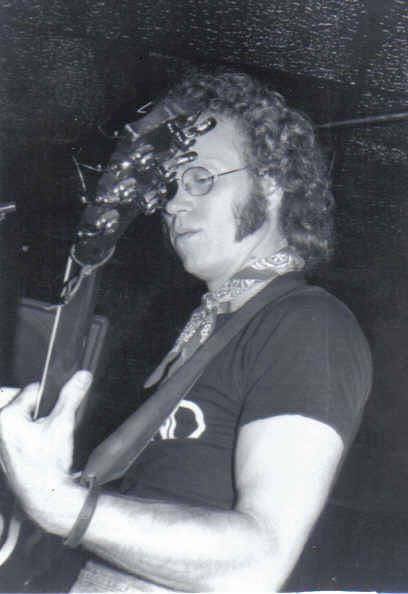
Jeff Gardner, circa 1977. After playing in bands in northeast Ohio, Gardner joined the Central Indiana music scene in 1971. His career has taken him from performing and live sound to studio engineering, production, music store ownership, studio design, and technical training. Today, he brings that experience to preserving Indiana’s music and stories through the Indiana Music History Project.
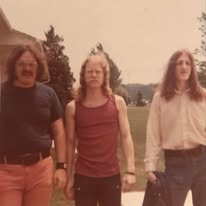
Sparks, 1971. Left to right: Mark Burton, Jeff Gardner, and Rick Ireland. The photograph dates to the year Gardner identifies in his written bio as his start in the Central Indiana music scene.
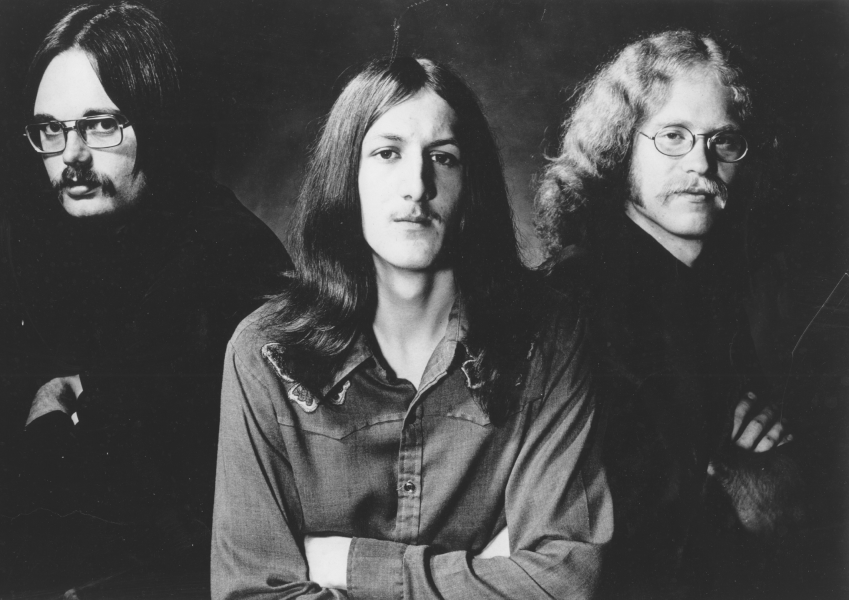
Sparks of Anderson, 1972. Left to right: Mark Burton, Rick Ireland, and Jeff Gardner. Part of the regional scene Gardner calls the “triangle of talent.”
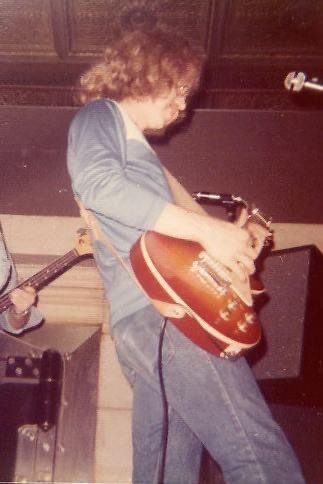
Jeff Gardner performing with Target, 1973. Gardner recalls the band expanding from a trio to a four-piece that year, writing and arranging original music, and playing a major outdoor concert in downtown Indianapolis on a bill with Pure Funk and Exile.
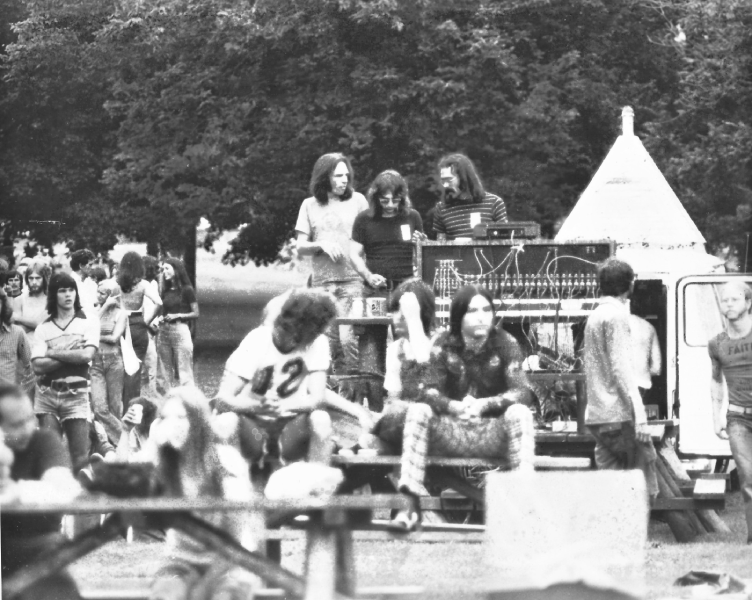
At the soundboard during the 1974 Raft Race, left to right: Mike Griffin, Dave Kitterman, and Dan Kasting. Jeff Gardner stands at far right wearing a Faith shirt. Kasting also shares his experiences in a separate Indiana Music History Project oral history interview.
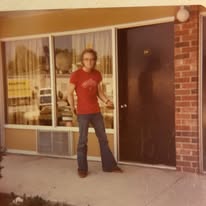
Jeff Gardner, circa 1976, around the beginning of his years with the Jubal Band. Gardner recalls touring primarily in the South with the group from 1976 to 1978, during a period when he was playing music full time.
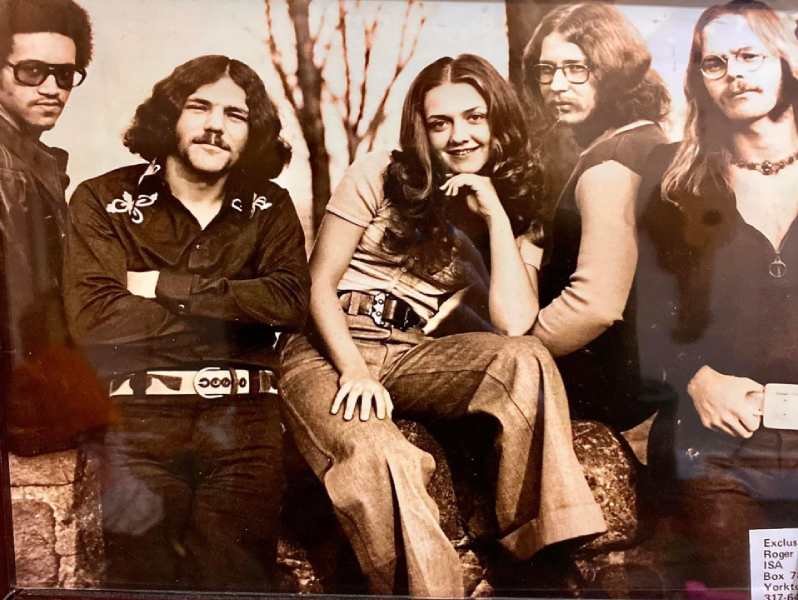
Bully of Anderson, part of the regional scene Jeff Gardner calls the “triangle of talent.” Left to right: Russell Taylor, Bob Downham, Ginger Seal, Terry True, and Chuck Brown.
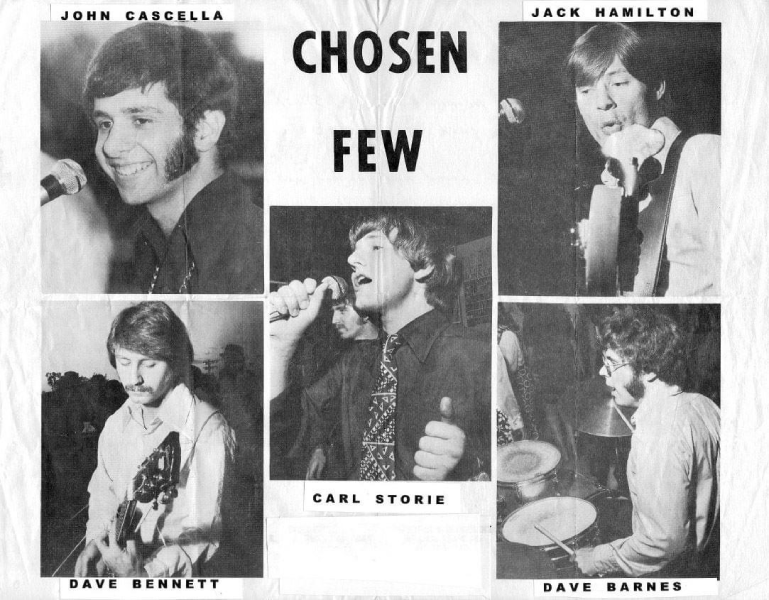
Chosen Few of Muncie, 1970, later known as the Faith Band—part of the regional scene Jeff Gardner calls the “triangle of talent.” Pictured: John Cascella, Jack Hamilton, Carl Storie, Dave Bennett, and Dave Barnes.
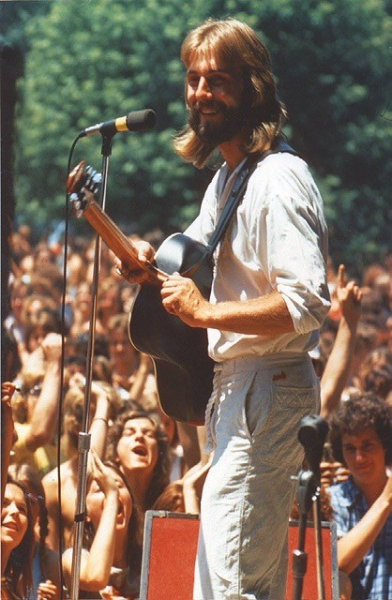
Muncie musician Michael Henderson performing at the first NAP Raft Race, 1974. Henderson represents the regional music scene Jeff Gardner celebrates in his interview as the “Anderson, Muncie, New Castle triangle of talent”—a community rich in musicians, singers, and original music.
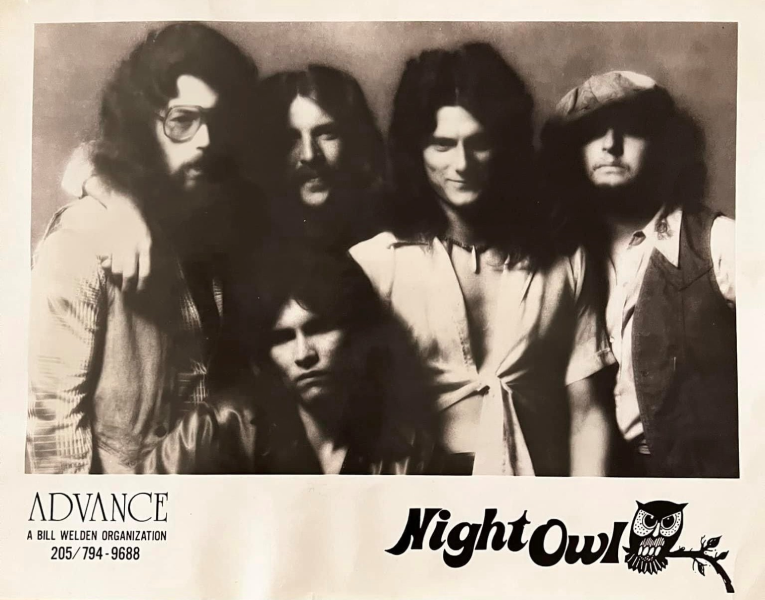
Night Owl of New Castle, representing another corner of the “Anderson, Muncie, New Castle triangle of talent” Jeff Gardner describes in his oral history interview.
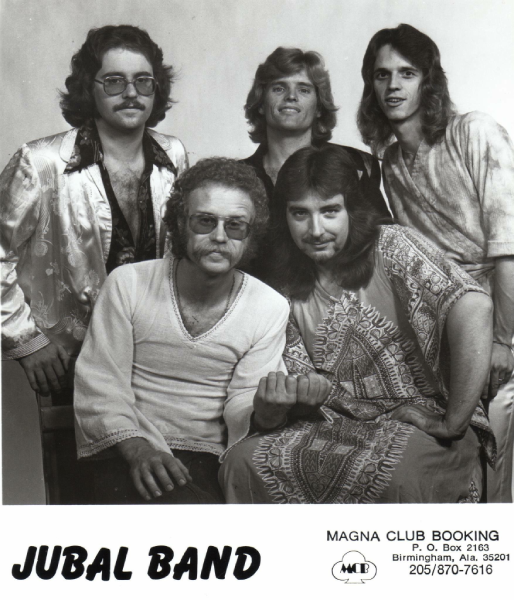
The Jubal Band, 1977. Back row: Bryan Zerfas, Dave Zerfas, and Steve Newbold. Front row: Jeff Gardner and Howard Phillips. Gardner recalls playing full time with the band from 1976 to 1978, touring primarily in the South.
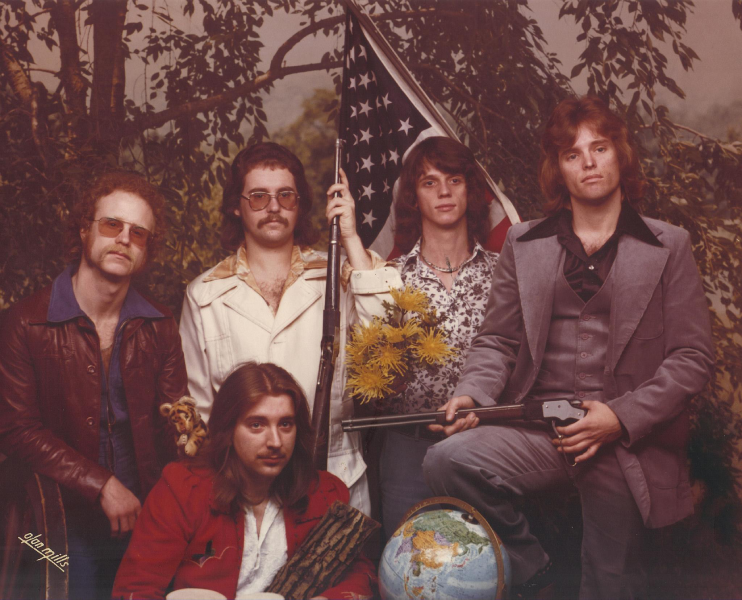
The Jubal Band in an Olan Mills portrait, 1977: Jeff Gardner, Bryan Zerfas, Dave Zerfas, Steve Newbold, and Howard Phillips. Gardner played full time with the group from 1976 to 1978, touring primarily in the South.
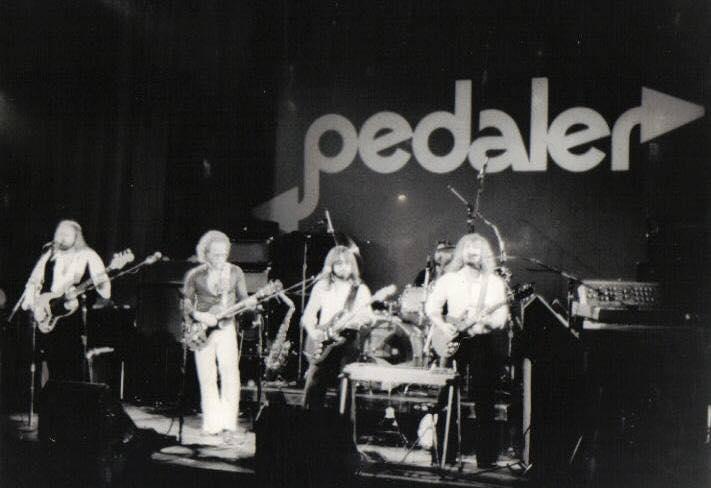
Pedaler performing at The Vogue, circa 1980. Jeff Gardner recalls playing full time with the Anderson band after his years with the Jubal Band, appearing at Indianapolis venues including The Vogue and The Patio.
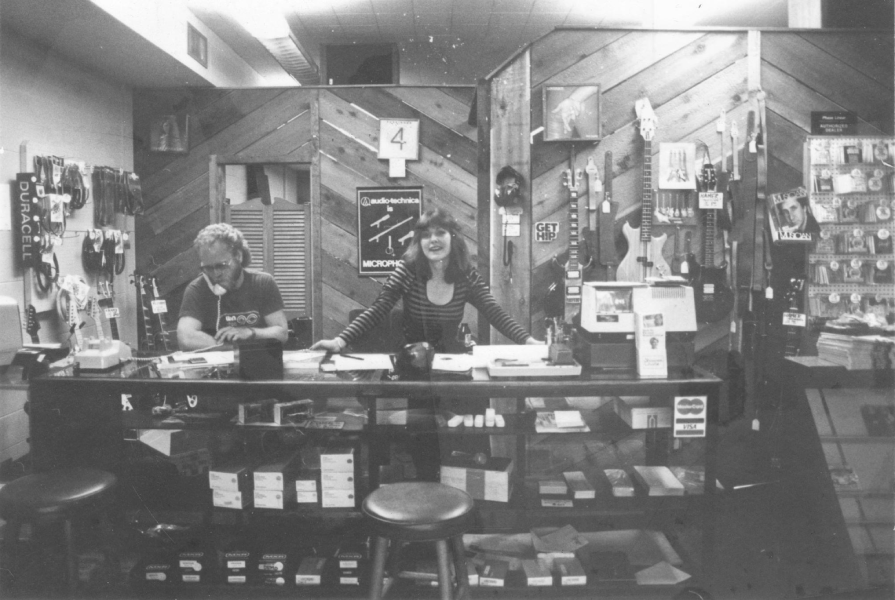
Jeff Gardner and Cathy VanWinkle of New Castle at The Pro Shoppe in Broad Ripple, 1981. Gardner opened the music store with partners around 1980. In The Spirtles’ oral history interview, Greg Ziesemer recalls renting sound equipment from Gardner’s shop before a Broad Ripple fire and returning it months after the shop burned.
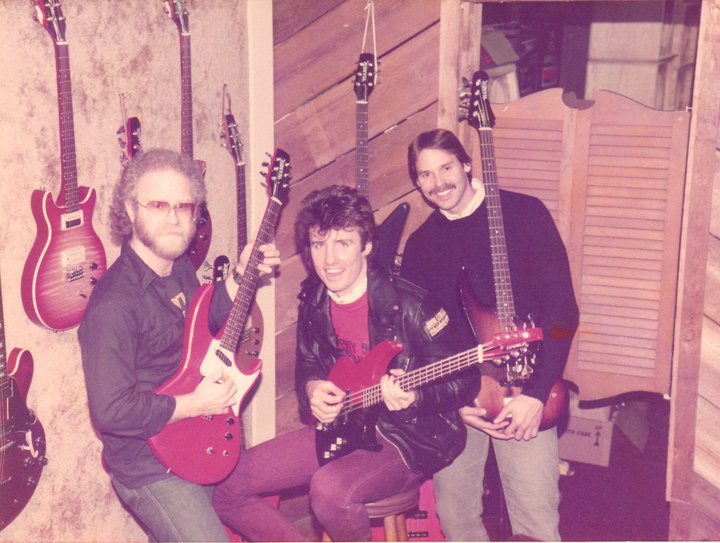
Jeff Gardner with bassist Toby Myers, known for his work with Roadmaster before spending approximately 15 years in John Mellencamp’s band. In his oral history interview, Gardner counts Myers among the fellow musicians and longtime friends he came to know through decades in Indiana’s music scene.
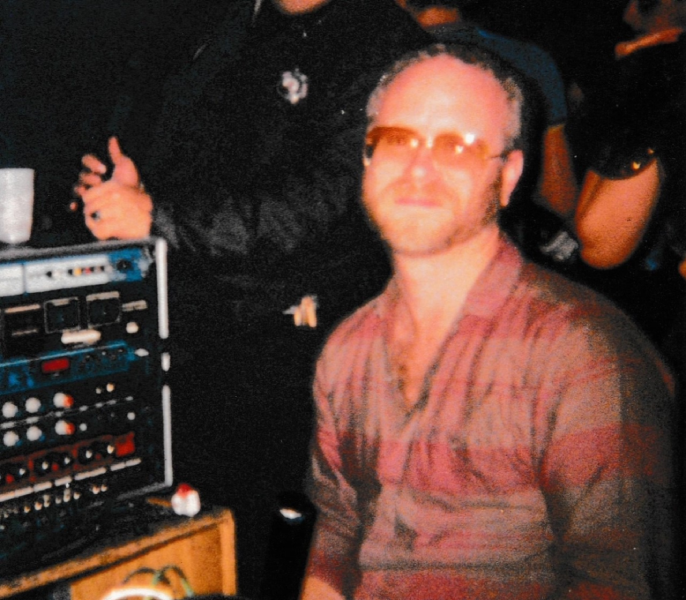
Jeff Gardner mixing live sound for Clarian at Enterprise, 1983. Throughout his career, Gardner moved between performing and audio engineering, working both onstage and behind the soundboard.
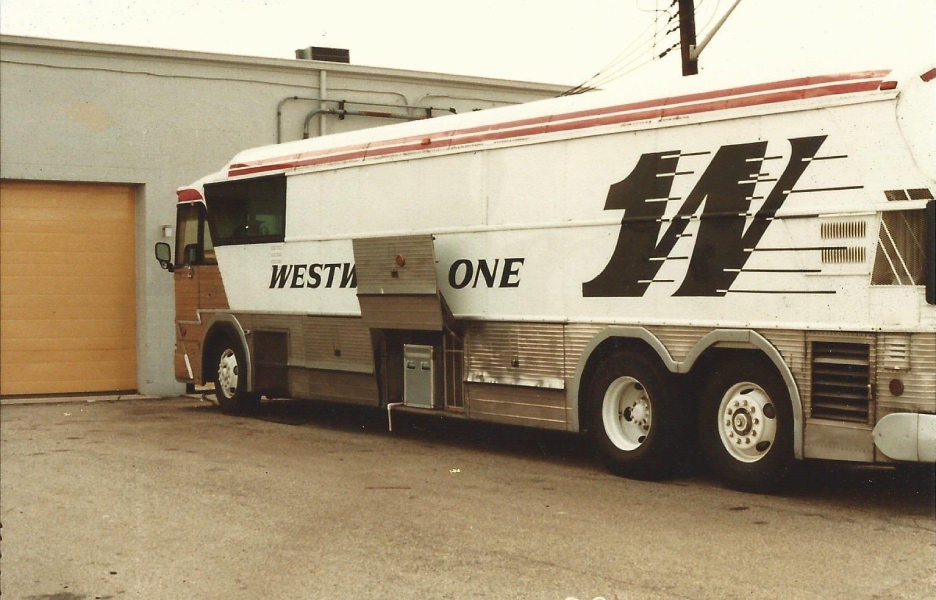
The Westwood One mobile recording studio parked behind TRC Studio, where Jeff Gardner worked as an engineer and producer during the 1980s. A companion photograph shows Gardner at the recording console inside.
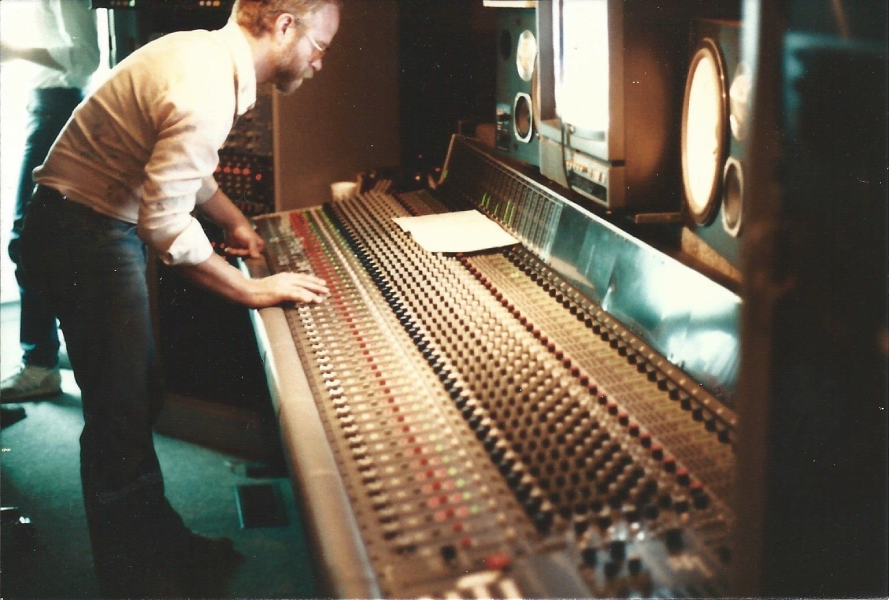
Jeff Gardner at the console of the Westwood One mobile recording studio, parked behind TRC Studio. Gardner worked as an engineer and producer at TRC throughout the 1980s, part of a career that moved between performing, live sound, and studio recording.
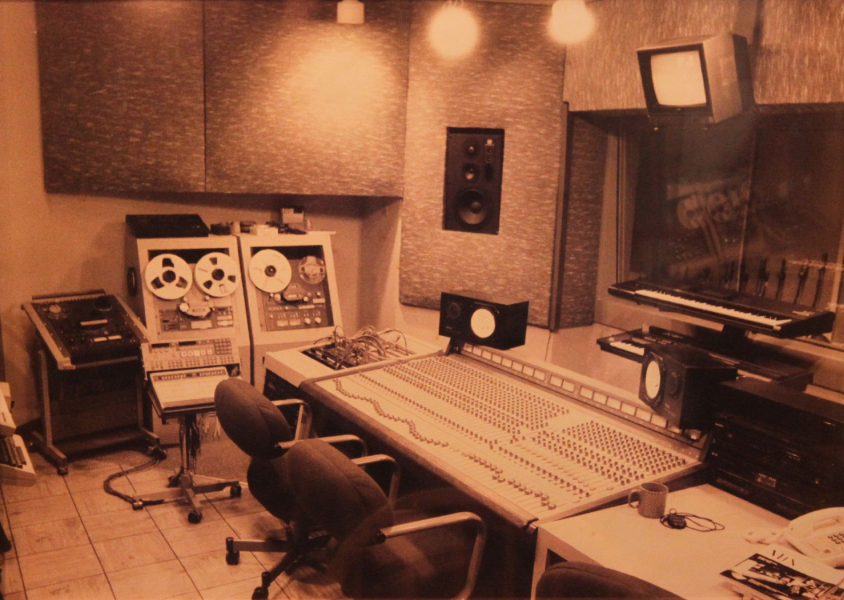
Diehl Productions, 1988, featuring studio design by Jeff Gardner. During the 1980s, Gardner expanded his work as a recording engineer and producer to include designing the spaces where music was recorded.
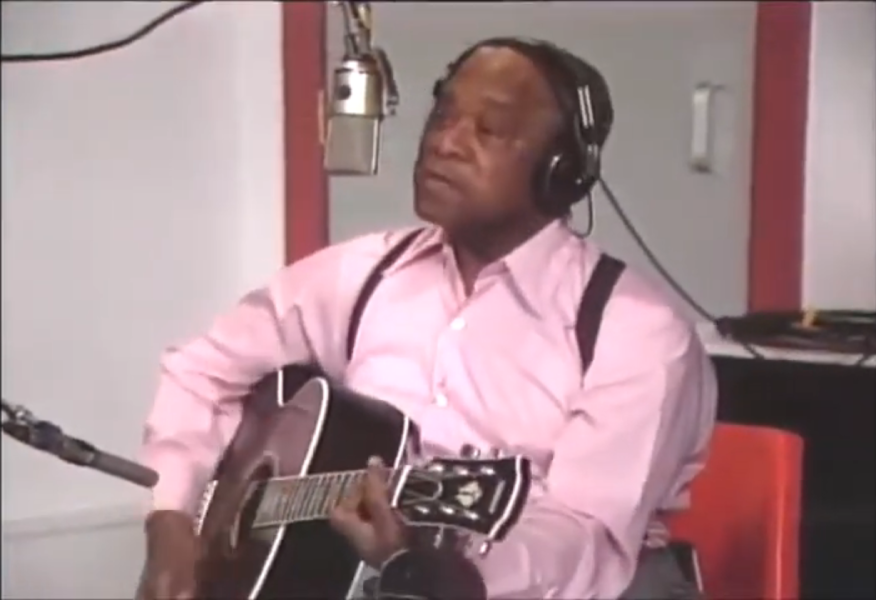
Jerry Daniels of the Ink Spots during a recording session engineered by Jeff Gardner. In his oral history interview, Gardner recalls the 1988 project, recording 26 songs in two days with the musicians performing together live in the studio.
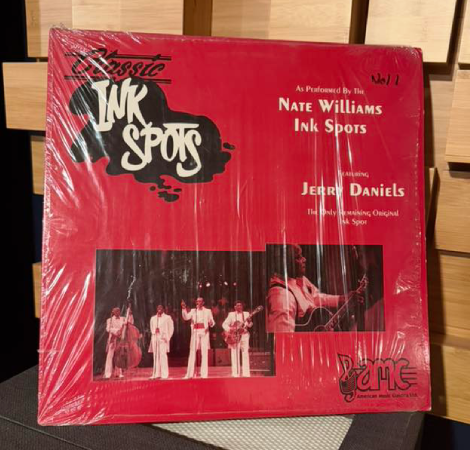
“Classic Ink Spots,” performed by the Nate Williams Ink Spots and featuring Jerry Daniels. Jeff Gardner recalls producing and engineering the 1988 recording project, capturing 26 songs in two days with the musicians performing together live in the studio.
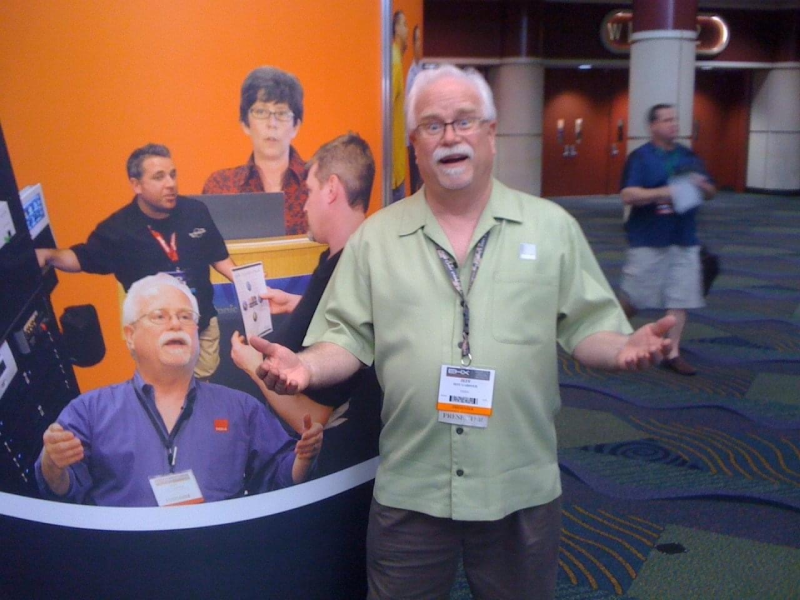
Jeff Gardner at EHX, posing beside a display featuring his own photograph. Gardner taught at expos for 15 years, bringing technical training and education into a career that also encompassed performing, audio engineering, production, and studio design.
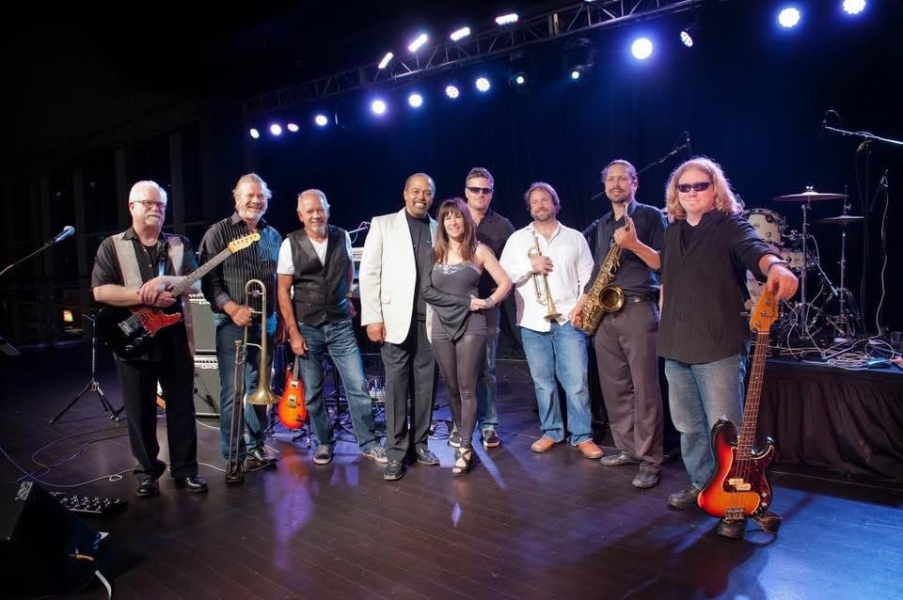
Souled Out Band at Hoosier Park. Left to right: Jeff Gardner, Will Frazier, LJ Mechem, Allen “Turk” Burke, Chris Stone, Ben Williams, Dave Wisler, Ed Renz, and Jeff Farber.
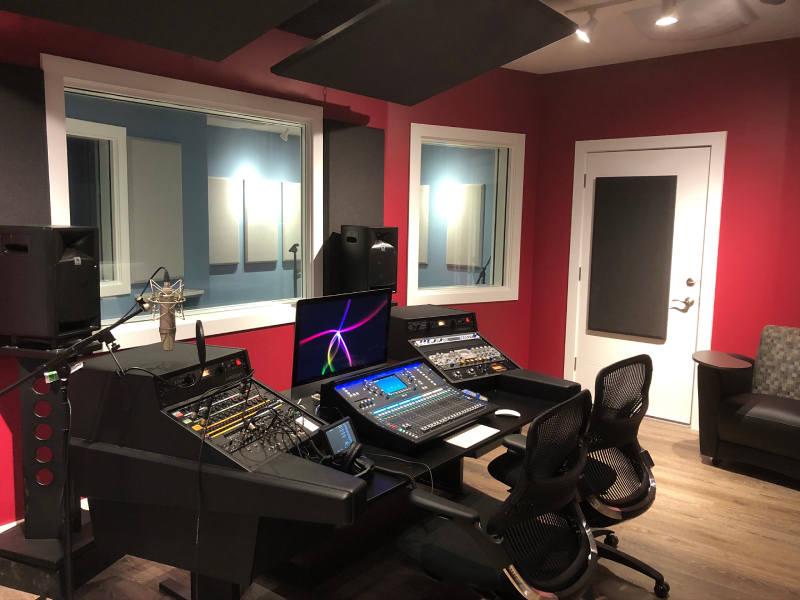
Siegel Studio, 2019, designed by Jeff Gardner. Studio design has been part of Gardner’s work since the 1980s, alongside his career in recording, production, and technical training.
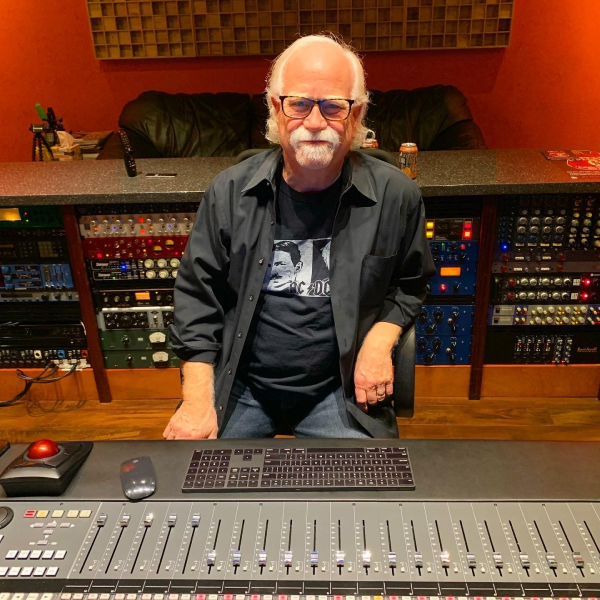
Jeff Gardner at the console of Pop Machine Studio. In his oral history interview, Gardner describes studio recording as a pursuit of precision, contrasting it with the compromises and quick adjustments required in live sound.
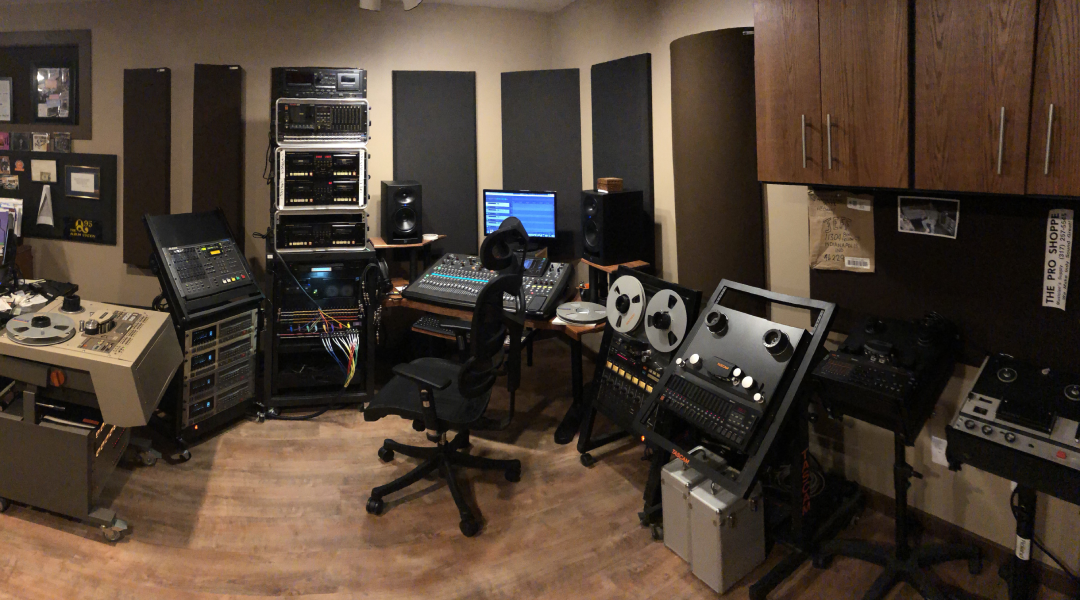
The tape transfer station at Studio G, Jeff Gardner’s current studio. Alongside his recording and production work, Gardner has spent years transferring and archiving Indiana music, helping preserve recordings for future listeners.
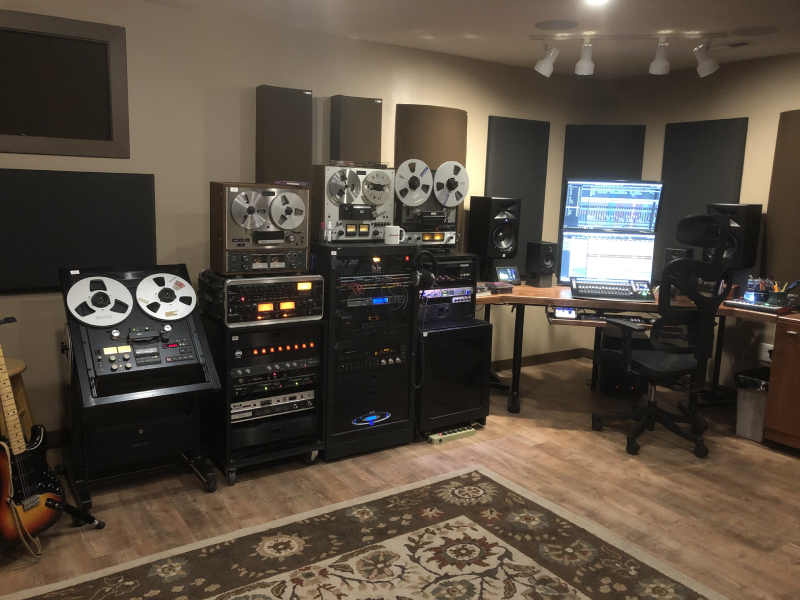
The mixing and mastering station at Studio G, Jeff Gardner’s current studio. Gardner continues his production and audio engineering work here, drawing on decades of experience recording artists and preserving Indiana music.
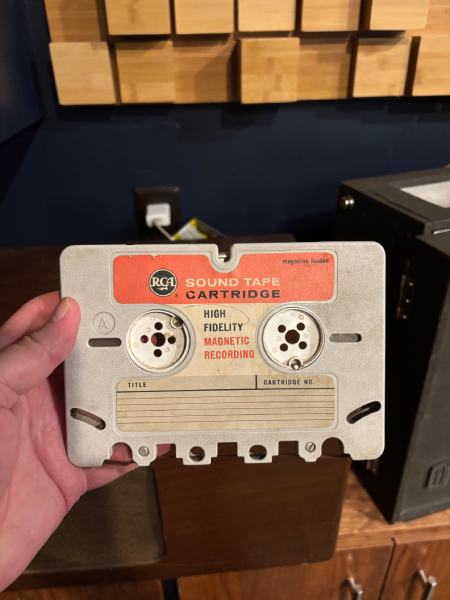
An RCA Sound Tape Cartridge at Jeff Gardner’s Studio G. Introduced in 1958, this large cartridge enclosed magnetic recording tape for convenient loading without manually threading the reels. It predates the smaller Philips compact cassette, introduced in 1963—the familiar cassette size used for decades in home tape recorders, boomboxes, Walkmans, and car stereos.
Preserving Indiana’s Music History
The Indiana Music History Project is made possible through the generous support of the Allen Whitehill Clowes Charitable Foundation. Their commitment to preserving Indiana’s rich musical heritage helps ensure these oral histories remain accessible for future generations.

Help Improve This Archive
Have additional information about this artist, story, or any of the photographs? If you can identify people, dates, locations, or have memories you’d like to share, we’d love to hear from you. Please use the button below and select “Submit Historical Information or Corrections” as the reason for your message.

