
Tom Roznowski Oral History

Tom Roznowski is a songwriter, storyteller, performer, writer, broadcaster, and documentary creator whose work explores the texture of time, place, memory, and everyday life. Born in Syracuse and raised in Albany, New York, Roznowski found his way to Indiana through a childhood friend attending Indiana University and eventually made Bloomington his home.
Across albums including A Well-Traveled Porch, Voice Beyond the Hill, and This Place In Time, Roznowski has developed a body of poetic, character-centered songwriting that has reached audiences in the United States and Europe. His wider creative work includes the collaborative musical project Wilderness Plots, the long-running radio and television project Hometown, the photograph-inspired short-film collection Memory Chain, and his WFIU radio series PorchLight.
With support from the Allen Whitehill Clowes Charitable Foundation, the Indiana Music History Project presents in-depth video interviews with musicians, producers, and other influential figures who have shaped Indiana’s musical landscape. In this oral history, Roznowski shares personal stories, creative milestones, and reflections on the people and places that have informed his music. This page includes an Interview Highlight, the Complete Interview, an expanded Biography, and an Image Gallery illustrating his life and work.
Interview Highlight
In this Interview Highlight, Tom Roznowski recalls recording “Stewed Cucumbers” for his album A Well-Traveled Porch. Producer Brant True brought legendary musician John Hartford into the session to play banjo on the song, creating a collaboration that became one of Roznowski’s most treasured recording memories.
Roznowski remembers Hartford approaching the session with generosity, humor, and an instinctive understanding of the song. He also recalls the performance as Hartford’s final recording. The story offers a moving glimpse of the human connections behind Roznowski’s music and the lasting significance that a single studio performance can acquire over time.
Complete Interview
In this Complete Interview, Tom Roznowski traces a creative life spanning songwriting, live performance, radio, writing, television, and documentary film. He recalls his childhood in upstate New York, the family members and teachers who first encouraged his musical and storytelling instincts, the circumstances that brought him to Indiana, and the development of a career rooted in close observation of people and place.
Roznowski discusses the creation of albums including A Well-Traveled Porch, Voice Beyond the Hill, and This Place In Time; working with musicians such as John Hartford and Carolyn Dutton; recording with producers Brant True and Paul Mahern; and finding an appreciative audience for his songs in Europe. He also reflects on the collaborative Wilderness Plots project, which transformed stories by Scott Russell Sanders into original songs.
The conversation extends beyond music to Roznowski’s Hometown radio and television work, his photograph-inspired Memory Chain films, the influence of longtime WFIU broadcaster Dick Bishop, and the development of PorchLight. Throughout the interview, Roznowski considers how memory, community, performance, and the passage of time have shaped both his creative work and his relationship with Bloomington and Indiana.
Biography
Tom Roznowski was born in Syracuse, New York, and grew up in Albany. The places, people, rituals, and family stories of his childhood became early foundations for a creative life that would eventually encompass songwriting, performance, radio, writing, and documentary film.
Roznowski attended parochial school from kindergarten through the 12th grade. Nuns at the school taught him piano and encouraged his writing, giving him early opportunities to develop both musical and verbal forms of expression. His Catholic upbringing also introduced him to performance in an unexpected way. As an altar boy serving the Latin Mass, he learned to memorize words, movements, cues, and sequences while participating in a formal ritual before a congregation. Looking back, Roznowski recognized the experience as a kind of early stage training.
His family provided another important source of inspiration. Roznowski remembers his grandfather as both a musician and a storyteller—someone capable of holding attention through music, personality, observation, and the careful telling of a story. That example helped show him that creative expression did not have to be separated into rigid categories. Music, language, memory, humor, and character could all become parts of the same performance.
Roznowski’s route to Indiana began through a childhood friend who was attending Indiana University. A visit introduced him to Bloomington, and the city eventually became the center of his adult life and creative career. Bloomington offered a community of musicians, writers, artists, broadcasters, and listeners whose influence can be heard throughout his later work.
By the late 1970s, Roznowski was participating in Bloomington’s songwriter community and performing original material. His development as a songwriter also took him to Nashville, where he pursued songwriting and publishing work and gained a closer understanding of the professional music business. Although Nashville exposed him to the structures of commercial songwriting, Roznowski’s own work remained closely tied to distinctive characters, remembered places, everyday speech, and the emotional weight of seemingly ordinary experiences.
Those qualities became central to A Well-Traveled Porch, Roznowski’s first album of original songs. Working with producer Brant True, he created a recording that introduced his writing to a broader audience and eventually reached the Top 25 on the Gavin Americana Chart.
The album includes “Stewed Cucumbers,” on which legendary musician John Hartford played banjo. Roznowski recalls that Hartford quickly understood what the song needed and contributed a performance that became one of Roznowski’s most treasured recording memories.
Roznowski again worked with Brant True on Voice Beyond the Hill. The album helped expand his audience beyond the United States, and “Hank’s There” reached the Top Ten of the European Country Chart. The response demonstrated that songs grounded in particular American people and places could still connect with listeners far removed from the settings that inspired them.
For This Place In Time, Roznowski recorded in Bloomington with musicians from the group he was performing with at the time, including violinist Carolyn Dutton. Produced by Paul Mahern, the album received substantial European radio play and earned a five-star review—the publication’s highest rating—from the British music magazine Maverick.
Roznowski also participated in Wilderness Plots, a 2007 collaborative project inspired by Scott Russell Sanders’ collection of stories about the settlement of the Ohio Valley. Roznowski joined Krista Detor, Tim Grimm, Carrie Newcomer, and Michael White in selecting characters and episodes from Sanders’ work and transforming them into original songs. The project brought together literature, regional history, music, and live storytelling in a form particularly suited to Roznowski’s creative interests.
His fascination with place and memory also produced Hometown, an extensive exploration of life in Terre Haute, Indiana, during the 1920s. The project began after Roznowski encountered a book of historical photographs and became curious about the lives surrounding the images. He visited Terre Haute, studied old newspapers and archival sources, and interviewed people who had lived in the city during the period.
That research grew into more than 450 radio episodes, an Emmy-nominated public television special, and the Indiana University Press book An American Hometown: Terre Haute, Indiana, 1927. Rather than treating history only as a sequence of prominent events, Roznowski reconstructed the rhythms of daily life through businesses, streets, entertainment, work, local personalities, news stories, and personal recollections.
Recovered historical photographs became the foundation for another multimedia project, Memory Chain. Roznowski wrote and narrated short films inspired by panoramic photographs from the early 20th century. The project uses visual evidence as a starting point for considering the individuals captured in a single moment, the communities to which they belonged, and the passage of time separating their lives from contemporary viewers.
Radio provided Roznowski with a natural home for his combination of music, spoken storytelling, reflection, and carefully chosen detail. An important influence was Dick Bishop, the longtime Bloomington broadcaster associated with WFIU programs including Afterglow and Standards by Starlight. Roznowski credits Bishop with teaching him much about both music and the art of becoming a radio personality.
That influence carried into PorchLight with Tom Roznowski, which began on WFIU in July 2018. The hour-long program brings together songs, stories, observations, and reflection. Its form allows Roznowski to move naturally between the roles that have defined his career: songwriter, performer, narrator, historian, and attentive observer of everyday experience.
Bloomington remains central to Roznowski’s life and artistic identity. He lives there with his wife, Trisha Bracken, near the graves of two Indiana artists whose work also became closely associated with place: songwriter Hoagy Carmichael and novelist Ross Lockridge Jr. The proximity carries an appropriate resonance for an artist who has spent much of his career considering how creative work preserves the character of a place after individual moments and lives have passed.
Across songs, recordings, broadcasts, books, films, and performances, Roznowski’s subjects remain remarkably consistent. He returns to community, memory, time, overlooked details, and the stories people use to understand where they have been. His work demonstrates how a life rooted in careful attention to everyday experience can become part of a much larger cultural record.
Image Gallery
This Image Gallery traces Tom Roznowski’s life and creative career through childhood photographs, performance images, album covers, concert posters, radio and television materials, and other artifacts. Together, the images document his journey from upstate New York to Bloomington and his work as a songwriter, storyteller, broadcaster, writer, and filmmaker.
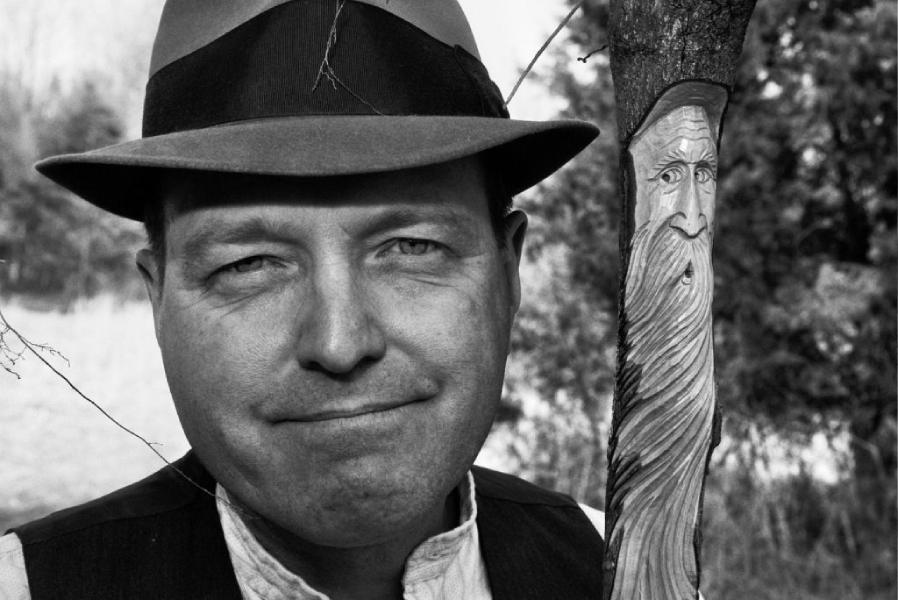
Tom Roznowski in a black-and-white portrait alongside a carved wooden figure. Roznowski’s work as a songwriter and storyteller often draws on character, place, memory, and the details of everyday life.
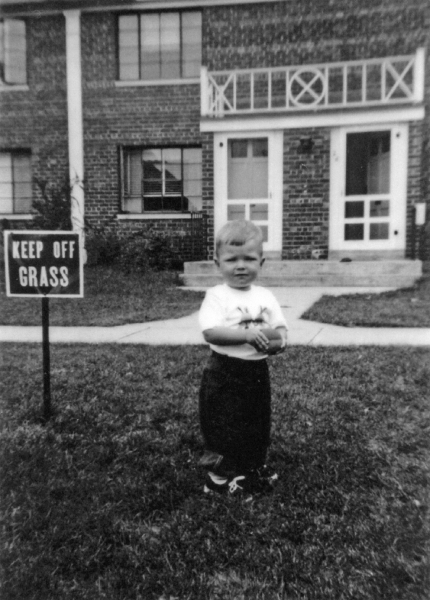
Young Tom Roznowski in Danker Village in upstate New York. The childhood photograph offers an early glimpse of the songwriter and storyteller whose later work would frequently explore memory, place, and the meaning found in everyday life.
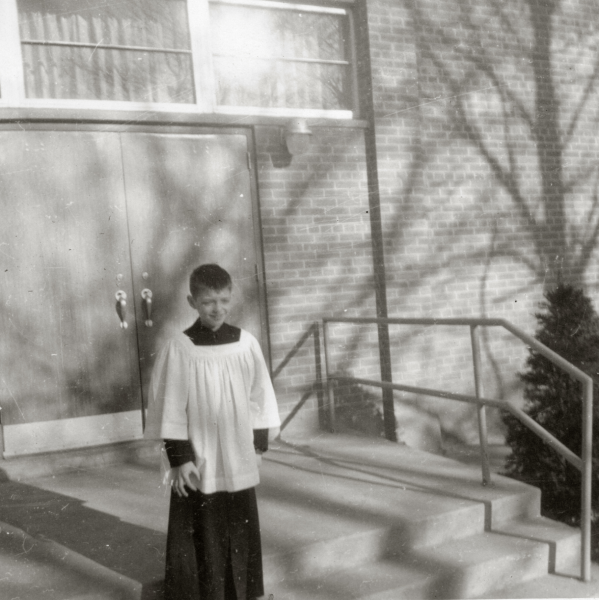
Young Tom Roznowski as an altar boy during his childhood in Albany, New York. Roznowski attended parochial school from kindergarten through high school and later recalled serving the Latin Mass as an early lesson in memorization, ritual, and performance.
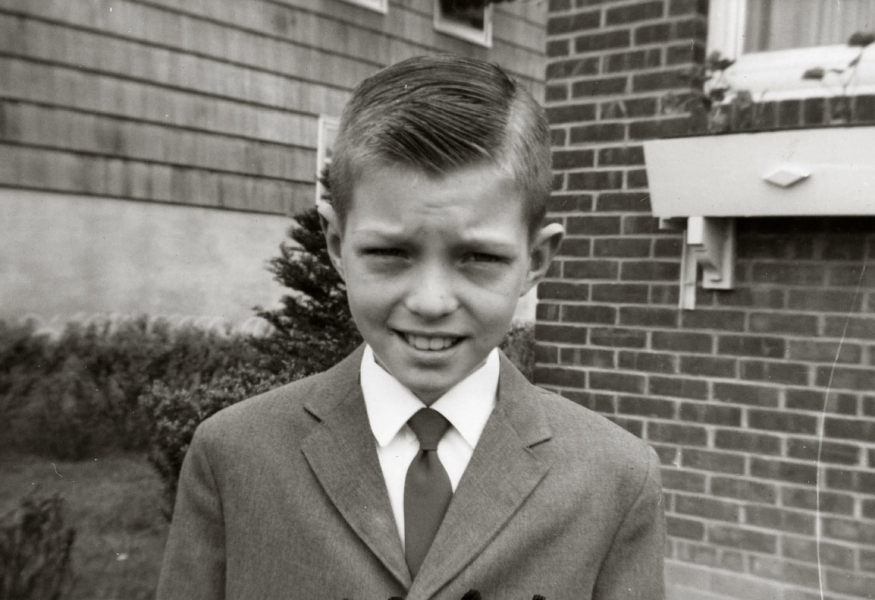
Tom Roznowski Young Young Tom Roznowski growing up in upstate New York, where he spent his childhood before eventually making Indiana his home. His experiences with people, place, and memory would later become recurring themes throughout his songwriting and storytelling.
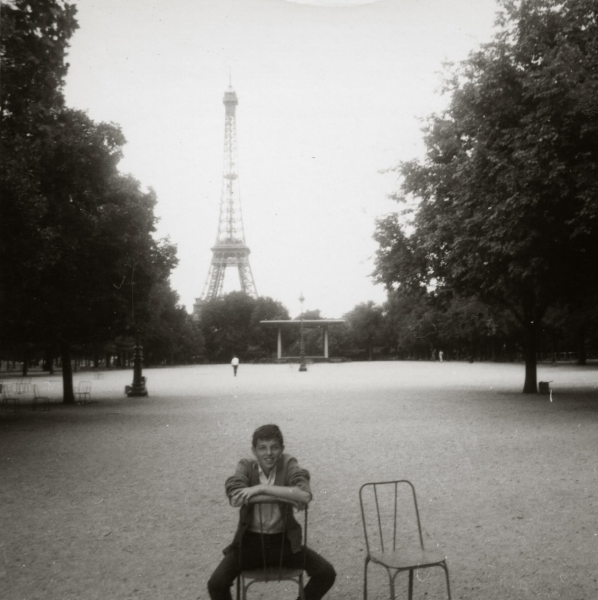
Young Tom Roznowski during a visit to Paris, seated with the Eiffel Tower in the distance. Long before making Indiana his home, Roznowski grew up in upstate New York and developed the interest in people, places, and memory that would later shape much of his creative work.
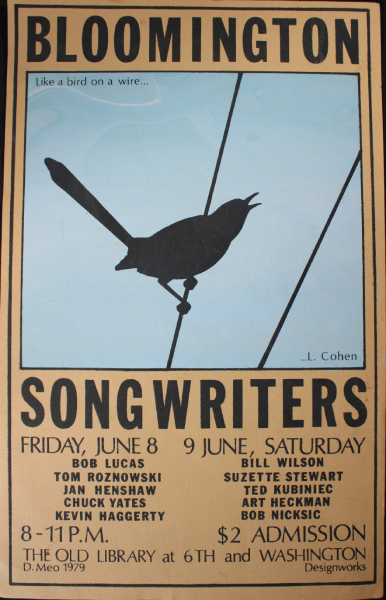
Bloomington Songwriters concert poster advertising Tom Roznowski with Bob Lucas, Jan Henshaw, Chuck Yates, Kevin Haggerty, Bill Wilson, Suzette Stewart, Ted Kubiniec, Art Heckman, and Bob Nickels at The Old Library in Bloomington, June 8–9, 1979. The poster documents Roznowski’s involvement in Bloomington’s songwriter community early in his Indiana music career.
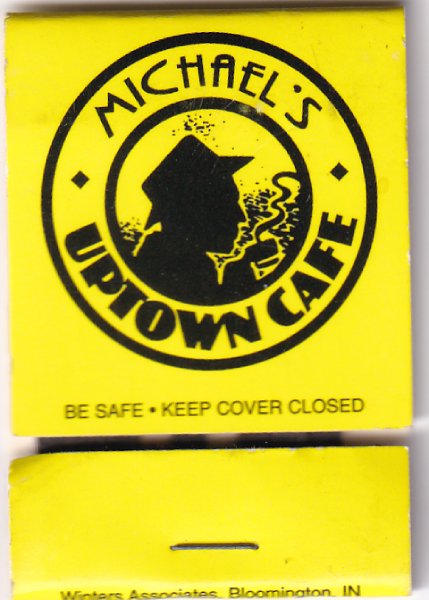
Michael’s Uptown Cafe matchbook featuring the Bloomington restaurant’s distinctive logo, with the figure in the design based on the likeness of Tom Roznowski. The artifact reflects Roznowski’s long connection to Bloomington and the local community that became an important part of his life and creative work.
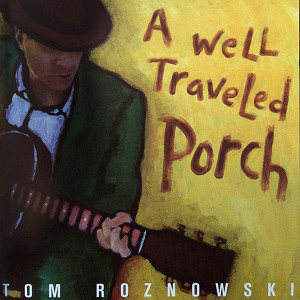
Cover of Tom Roznowski’s 1999 album A Well-Traveled Porch, his first album of original songs, which reached the Top 25 on the Gavin Americana Chart. The album includes “Stewed Cucumbers,” featuring legendary musician John Hartford on banjo.
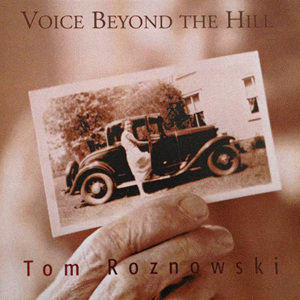
Cover of Tom Roznowski’s Voice Beyond the Hill, his follow-up to A Well-Traveled Porch. Roznowski again worked with producer Brant True on the album, which helped introduce his music to European audiences.
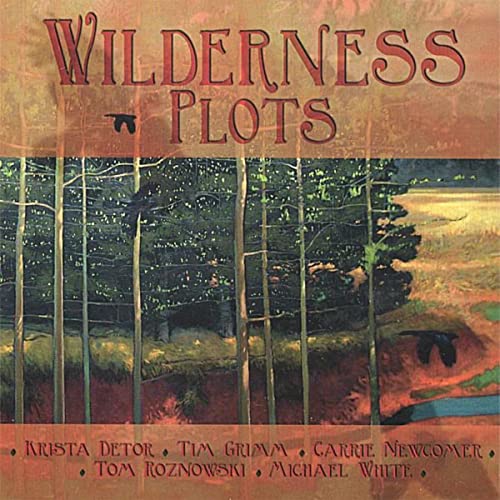
Cover of *Wilderness Plots*, the 2007 collaborative album by Tom Roznowski, Krista Detor, Tim Grimm, Carrie Newcomer, and Michael White. Inspired by Scott Russell Sanders’ stories about the settlement of the Ohio Valley, the project brought the five songwriters together to transform characters and stories from the book into original songs, with Roznowski contributing several songs to the album.
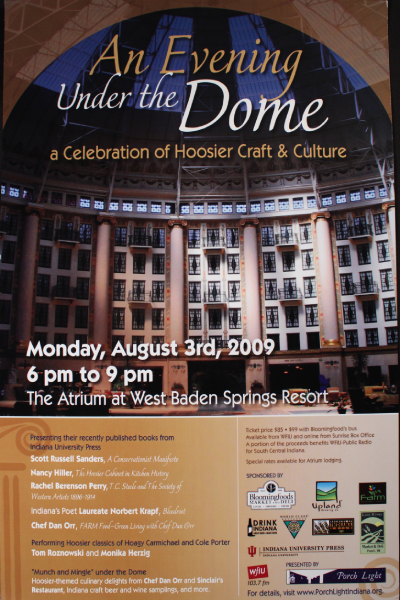
An Evening Under the Dome poster for a celebration of Hoosier craft and culture at the West Baden Springs Hotel, August 3, 2009. Tom Roznowski and Monika Herzig provided musical interludes featuring interpretations of Indiana songwriters Hoagy Carmichael and Cole Porter.

Tom Roznowski performing with pianist Monika Herzig beneath the historic dome of the West Baden Springs Hotel. The two presented interpretations of Hoagy Carmichael and Cole Porter songs as part of an evening celebrating Indiana arts, culture, and history.
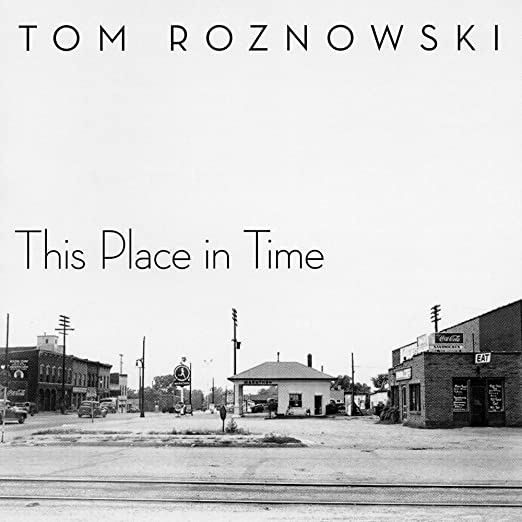
Cover of Tom Roznowski’s This Place in Time, recorded in Bloomington with musicians including Carolyn Dutton and produced by Paul Mahern. The album received significant European radio play and a five-star review from the British music magazine Maverick.

Poster for WTIU’s Our Town Terre Haute, a television program exploring the history of Indiana’s “Crossroads of America.” The project connects with Tom Roznowski’s extensive work documenting Terre Haute’s people, places, and history through his Hometown radio series and An American Hometown.
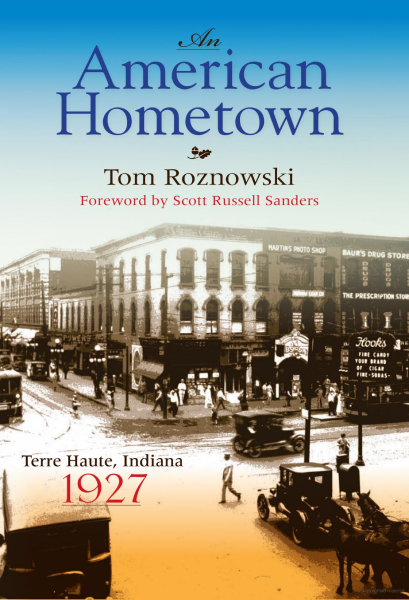
Cover of Tom Roznowski’s An American Hometown, which grew from his extensive research into Terre Haute during the 1920s and his long-running Hometown radio project. Roznowski used historic photographs, newspapers, archival research, and interviews to reconstruct everyday life in the city.
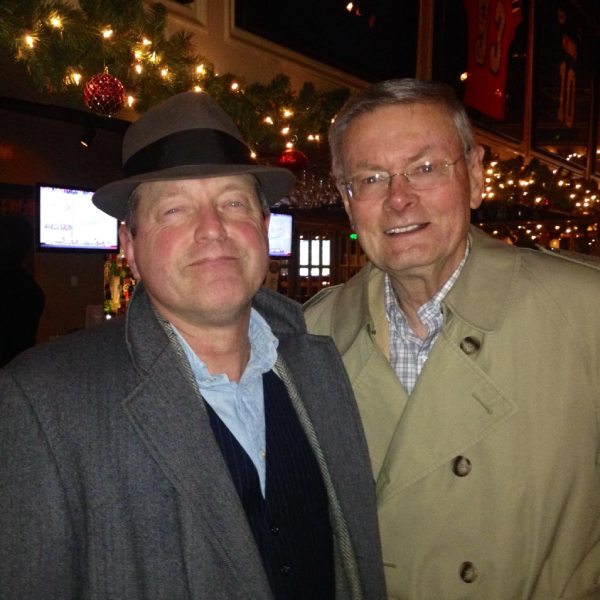
Tom Roznowski with longtime Bloomington radio host Dick Bishop at the Malibu Grill. Roznowski credits Bishop, the original host of WFIU’s Afterglow, as an important influence on his own approach to radio and says he learned much about being a radio personality from listening to and working with him.
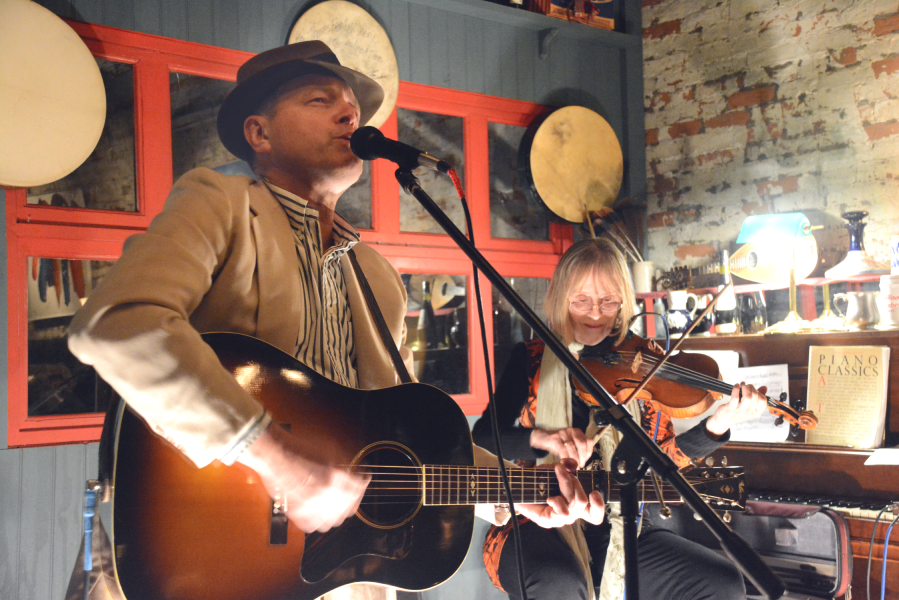
Tom Roznowski performing with violinist Carolyn Dutton. The image captures Roznowski’s live, story-centered approach to songwriting and performance, accompanied by one of Indiana’s longtime musical collaborators.
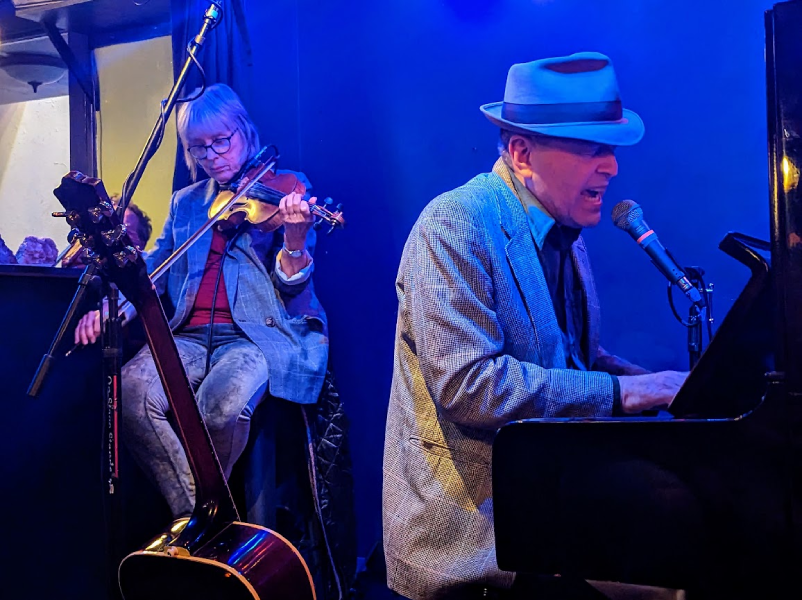
Tom Roznowski performing with violinist Carolyn Dutton at Bloomington’s Orbit Room. The intimate downtown venue hosted live music and other arts programming from 2018 until its closing at the end of July 2026, making this image a document of both Roznowski’s continuing local performances and a distinctive chapter in Bloomington’s music community.
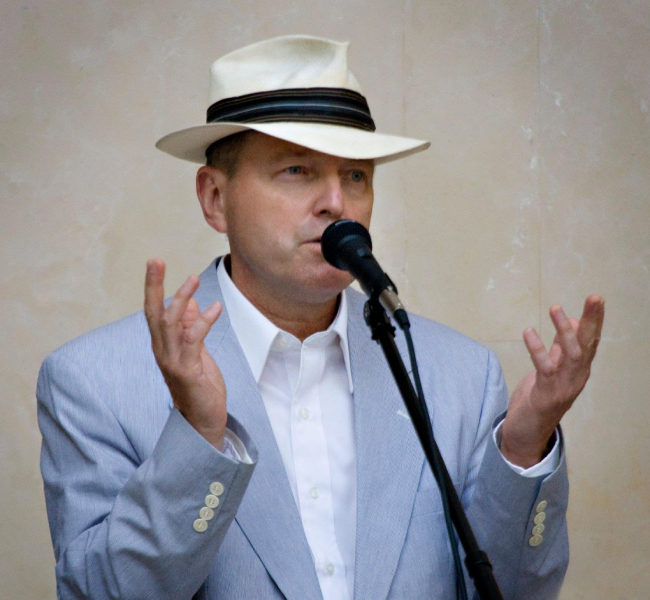
Tom Roznowski performing at the microphone, bringing his blend of songwriting and storytelling to a live audience. His performances combine original music with the observations, humor, and sense of place that characterize his work.
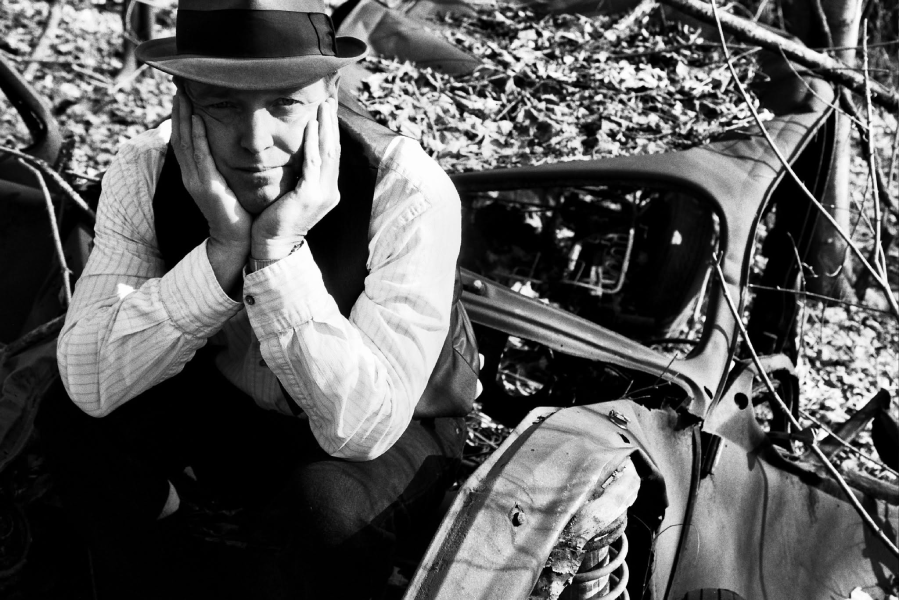
Tom Roznowski in a black-and-white portrait amid the remains of an old automobile. The image reflects the recurring themes of time, memory, place, and overlooked stories that run throughout Roznowski’s songwriting and storytelling.
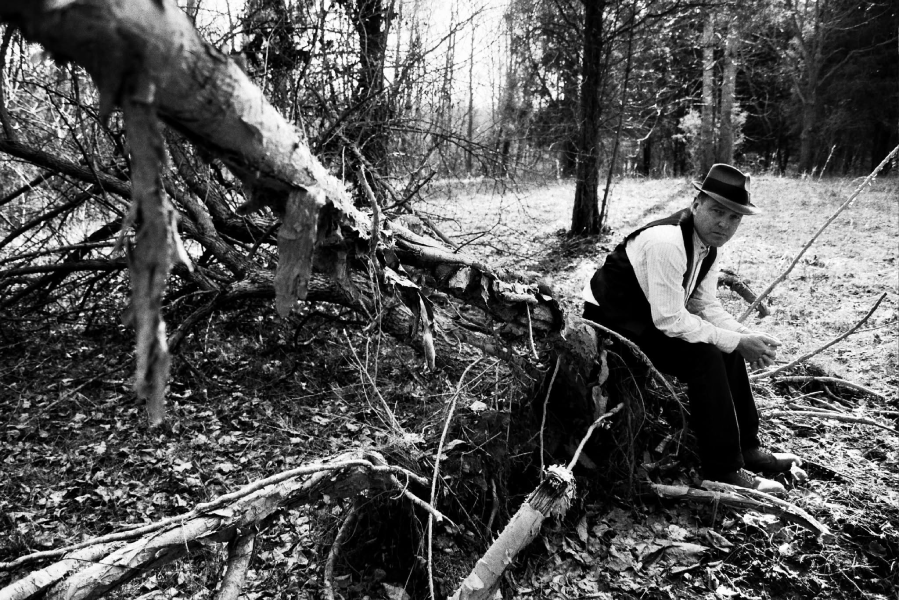
Tom Roznowski in a black-and-white portrait seated beside a fallen tree in the Indiana landscape. The setting reflects the themes of place, time, nature, and memory that recur throughout his songwriting and storytelling.
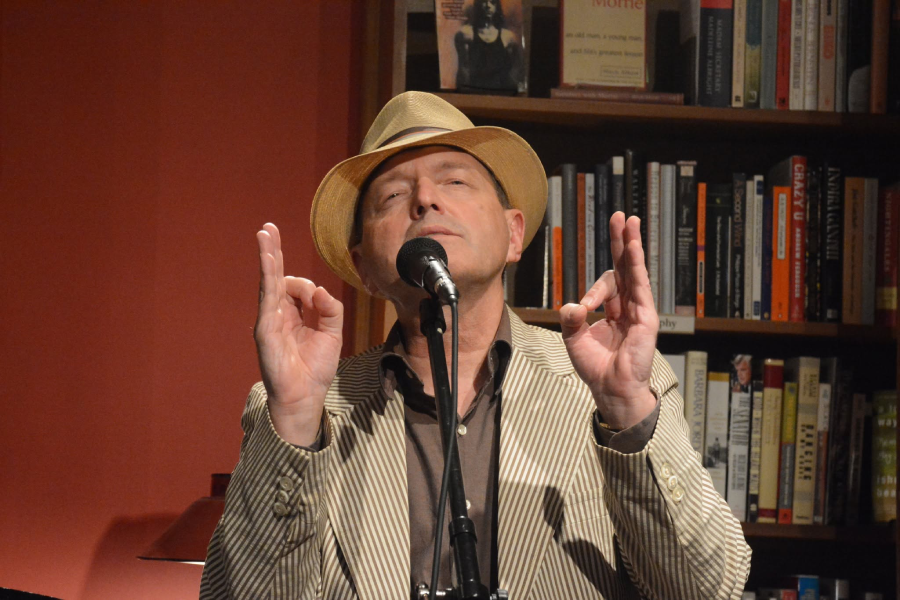
Tom Roznowski performing before an audience, using gesture and expression to bring a story to life.
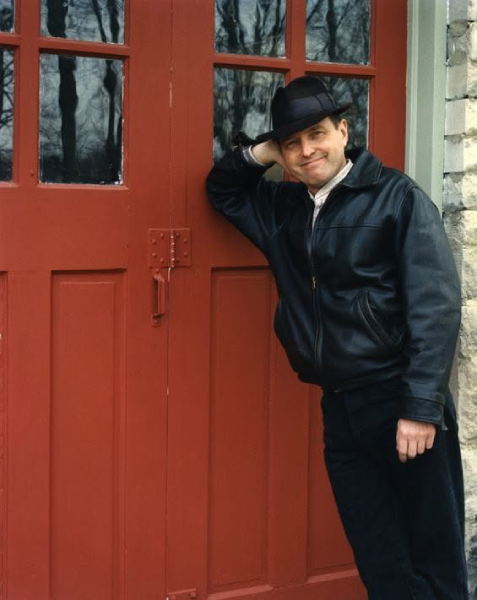
Tom Roznowski in a casual portrait outside a building. Roznowski has spent most of his adult life in Indiana, where the people, places, and everyday experiences of the Midwest have become central to his songwriting and storytelling.
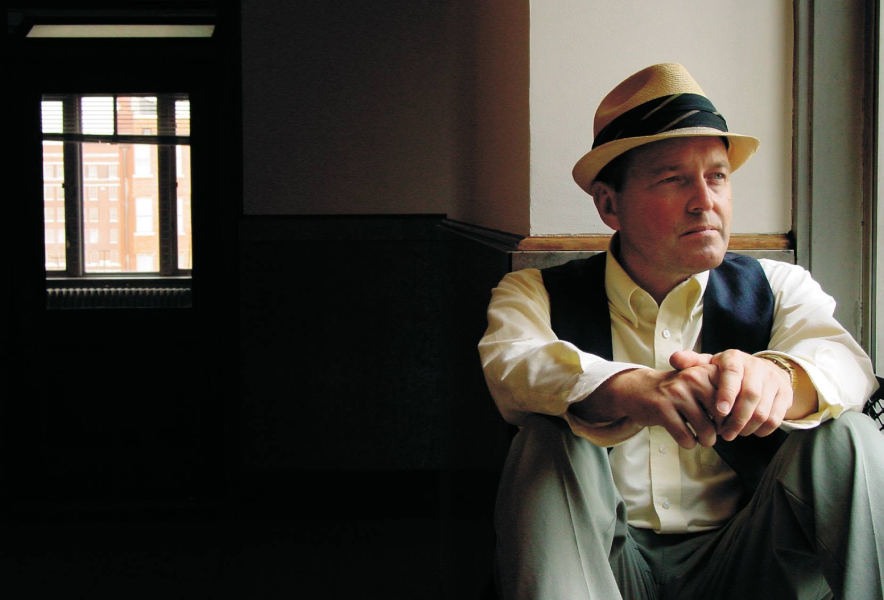
Tom Roznowski in a reflective portrait. His work as a songwriter, writer, broadcaster, and filmmaker is united by an interest in people, place, memory, and the stories found in everyday life.
Preserving Indiana’s Music History
The Indiana Music History Project is made possible through the generous support of the Allen Whitehill Clowes Charitable Foundation. Their commitment to preserving Indiana’s rich musical heritage helps ensure these oral histories remain accessible for future generations.

Help Improve This Archive
Have additional information about this artist, story, or any of the photographs? If you can identify people, dates, locations, or have memories you’d like to share, we’d love to hear from you. Please use the button below and select “Submit Historical Information or Corrections” as the reason for your message.

