Herb Miller Oral History
Herb Miller helped build Indianapolis’ soul and funk recording scene as a concert promoter, artist manager, producer, record-store owner, and founder of LAMP Records. His work connected local musicians with instruments, studio time, live performances, radio exposure, and record distribution. From the Vanguards’ “Somebody Please” to recordings by Ebony Rhythm Band, Amnesty, and the Diplomatics, his productions continue to introduce listeners to the city’s musical history.
In his Indiana Music History Project oral history, recorded August 29, 2025, at the Indiana Music History Project Museum in Indianapolis, Miller talks with Rick Wilkerson about developing young performers, building an independent record business, and balancing music with his career as a firefighter and investigator. He also reflects on the collectors and researchers who helped bring LAMP’s recordings back into circulation decades later.
Interview Highlight
In this Interview Highlight, Herb Miller recalls meeting the Highlighters, working with their parents, and helping the young musicians obtain instruments and organize their performances. He describes connecting them with the vocal trio Tri-Dells for a Chicago competition, then meeting the Vanguards through WTLC disc jockey Spider Harrison. His story follows the partnership with Howard Ladin behind L&M Productions, the origins of the LAMP name, and his discovery that “Somebody Please” was still reaching listeners around the world.
Oral History Interview
In this longer interview, Miller traces his path from community fundraising and concert promotion to artist management, LAMP Records, record stores, and distribution. He remembers the Highlighters, Vanguards, Ebony Rhythm Band, and Amnesty; recording at Les Ohmit’s studio; and his ambition to build an Indianapolis music business inspired by Motown. He also discusses firefighting and investigative work, his decision to leave the music business, and the later archival efforts of Eothen Alapatt and Kyle Long that reunited him with recordings and musicians from his past.
Biography
Herb Miller’s involvement in music began with a desire to support his community. After graduating from Tech High School, he helped organize social clubs whose activities brought people together. With his friend and fellow firefighter Ed Rogers, he formed the Defiants Club and served as its president. Miller recalls that the club directed its net event proceeds toward community causes, moving from dances and local entertainment to appearances by nationally known performers.
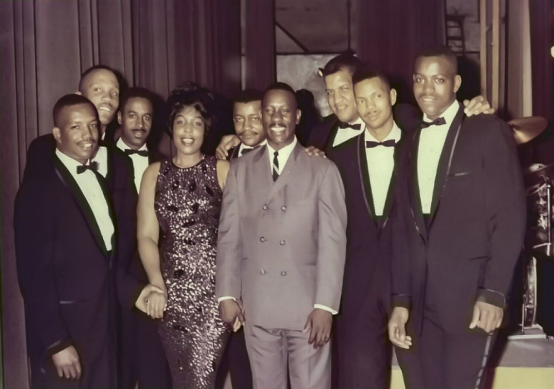
Those promotions included a Circle Theatre show featuring singer Gloria Lynne and guitarist Wes Montgomery. Miller’s memories of booking artists such as James Brown and the Temptations describe the experience he gained arranging performances and working with talent agencies. The same interest in presenting good shows led him to become more involved with Indianapolis musicians.
When Miller encountered the Highlighters performing near Attucks High School, he saw a young band that could benefit from equipment and organization. He met their parents, bought instruments, and emphasized uniforms and a polished presentation. He also brought them together with the Tri-Dells, a female vocal trio, for a Chicago competition where, he recalls, they finished second. His role extended beyond booking performances to helping the musicians prepare for them.
WTLC disc jockey Spider Harrison introduced Miller to the Vanguards. A business partnership with boxing promoter Howard Ladin led to L&M Productions, and Miller established LAMP Records, carrying the partners’ names and the word “Productions” into the label’s name. The Vanguards’ “Somebody Please” became an enduring part of that work. In his interview, Miller expresses surprise and pleasure that a record he helped create in Indianapolis continued to find listeners far beyond the city.
Miller wanted Indianapolis to offer artists the kind of support he saw in Motown’s organization. Ebony Rhythm Band became LAMP’s house band, providing instrumental backing for vocal groups. He worked with Les Ohmit at Ohmit Recording Studio and recalls paying for the band to spend time there developing its music. His approach combined financial support with access to musicians, recording facilities, and opportunities to perform.
LAMP’s releases document a range of Indianapolis talent, including the Vanguards, Ebony Rhythm Band, Amnesty, the P.H.D.’s, and the Diplomatics. Rodney Stepp, a member of the Diplomatics, shares another perspective on that era in his Indiana Music History Project oral history. The surviving records, photographs, and promotional materials preserve the work of performers whose careers intersected through Miller’s businesses.
Miller was also a record-store owner. Through Good Vibrations Records, he operated several Indianapolis shops that connected customers with the music he was producing and selling. He recalls opening a store across from Attucks High School, decorating it in the school’s colors, and offering students a discount. Retailing gave him direct contact with local listeners and another way to bring records into the community.
His business interests extended to wholesale distribution through Indy Record Distribution Company. Miller describes supplying retailers and building record displays stocked around WTLC’s selections. Running stores and a distribution business brought its own challenges, including break-ins, operating pressures, and price competition from larger distributors. His account shows how much work lay beyond the recording session: getting records into shops, reaching customers, and keeping those businesses going alongside his family and fire-department responsibilities.
The fire department was a major part of Miller’s life throughout these musical ventures. In his oral history, he recalls joining the Indianapolis Fire Department in September 1962 and later serving as a lieutenant and arson investigator. He was building a music business while maintaining a public-service career and raising a family. The demands of those responsibilities shaped his decisions about how far to expand LAMP and when to step away.
His fire-department work also intersected with his relationships in music. Miller recalls helping Vanguards lead singer James Davis join the department, and the two remained connected beyond their recording work. His account of their renewed friendship years later brings together the musical and firefighting chapters of his life. Photography was another connection: alongside photographing musical groups, Miller developed skills in forensic photography and investigation.
By the late 1970s, Miller had stepped away from the music business and was concentrating increasingly on investigative work. He recalls leaving the fire department in 1984 and building a private investigative business, Herb Miller and Associates. Drawing on his arson-investigation experience and forensic training, he worked on cases ranging from equipment fires to bridge collapses. For years, that career occupied his attention while the records he had produced continued to circulate among listeners and collectors.
Eothen Alapatt of Now-Again Records helped reconnect Miller with that musical past. Miller recalls being surprised by how much material researchers had located and how much interest remained in the label. Now-Again’s 2019 anthology, LAMP Records: It Glowed Like the Sun — The Story of Naptown’s Motown, 1969–1972, brought together recordings and historical research, with Alapatt credited as the compilation’s researcher and producer.
Listen to LAMP Records: It Glowed Like the Sun, Disc 1, on Bandcamp.
Another discovery brought Miller back to releasing music. WFYI’s Kyle Long found previously unreleased Vanguards recordings in songwriter Tony Black’s archive, shared by Black’s son Evan. The songs “Ghetto” and “Never Never” became a new LAMP release. In his liner notes, Long explains that Miller estimated the recordings dated from 1969–1970 at Ohmit Recording Studio. The release reunited Miller with music from the group’s classic lineup more than five decades later.
The project also returned to the community purpose behind Miller’s early promotions. The limited edition supported Friends of Belmont Beach in memory of Mike Treez. For Miller, the renewed interest in LAMP brought opportunities to revisit old friendships and hear the music again. His oral history preserves his account of the practical work behind those records: supporting musicians, paying for sessions, organizing performances, and finding ways for Indianapolis music to reach an audience.
Image Gallery
Explore photographs, concert advertisements, record labels, covers, and liner notes connected with Herb Miller’s work in Indianapolis music. These materials follow his concert promotions and work with the Highlighters, Vanguards, and other LAMP artists, alongside later releases that brought their recordings to new listeners.
Singer Gloria Lynne with Indianapolis’ Defiants Club at a Circle Theatre show featuring Lynne and Wes Montgomery. The newspaper identifies club members, from left: Herbert Miller, president; Eddie Rogers, secretary-treasurer; Floyd Tolliver; Joe Broyles; Donald Means; William Glenn; and Larry Terry. An unidentified comedian is also pictured beside Lynne. The scene documents Miller’s early concert-promotion work. Photograph credited to James Burres, Recorder, in the accompanying newspaper clipping.
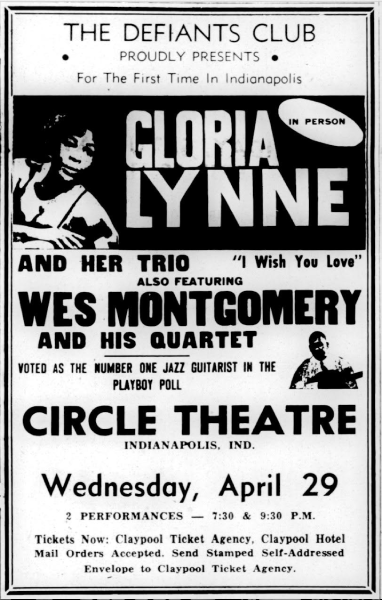
Defiants Club advertisement for Gloria Lynne and her trio, with Wes Montgomery and his quartet, at Indianapolis’ Circle Theatre on Wednesday, April 29. Promoted as Lynne’s first Indianapolis appearance, the two-show engagement reflects Herb Miller and the club’s work bringing major artists to local audiences.
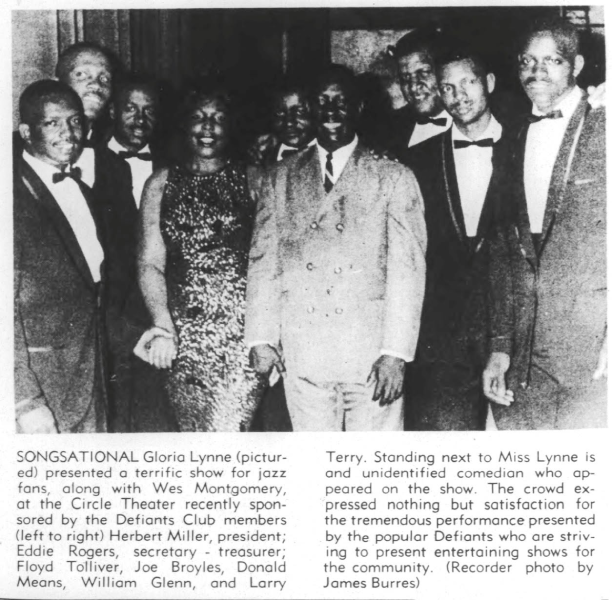
Newspaper coverage of the Defiants Club’s Circle Theatre show featuring Gloria Lynne and Wes Montgomery. The accompanying photograph includes Lynne, club president Herbert Miller, fellow club members, and an unidentified comedian, documenting Miller’s early work bringing nationally known entertainers to Indianapolis. Photograph by James Burres, Recorder.
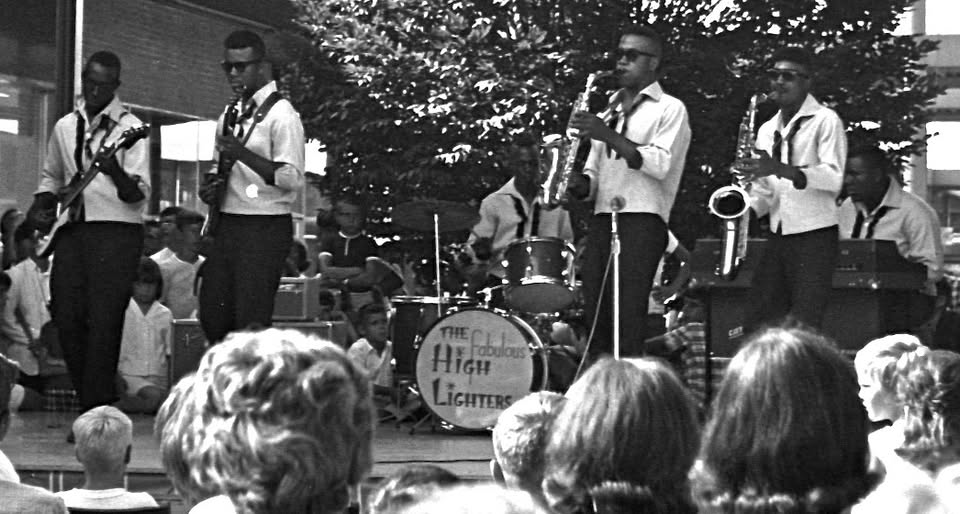
The Fabulous Highlighters performing at Eastgate Mall, circa the late 1960s. Among the first groups Herb Miller helped develop, the young musicians benefited from his support with instruments and organization. In his oral history, Miller recalls meeting their parents, purchasing equipment, and emphasizing a polished, uniform appearance.
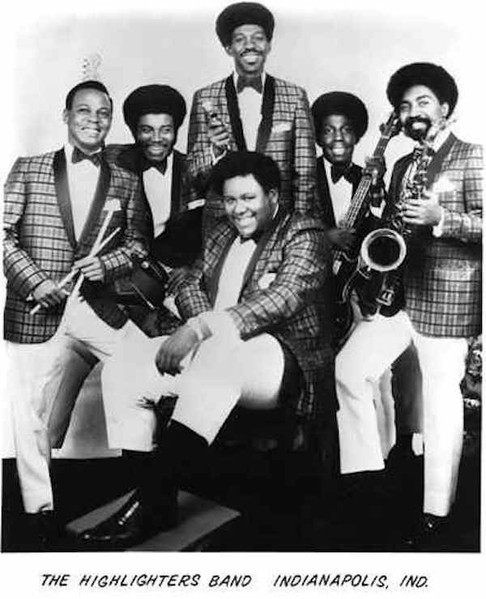
The Highlighters Band of Indianapolis in a posed group portrait. In his oral history, Herb Miller recalls pairing the group with the vocal trio the Tri-Dells for a music competition in Chicago, where they placed second. This was an early example of his efforts to create opportunities for local musicians.
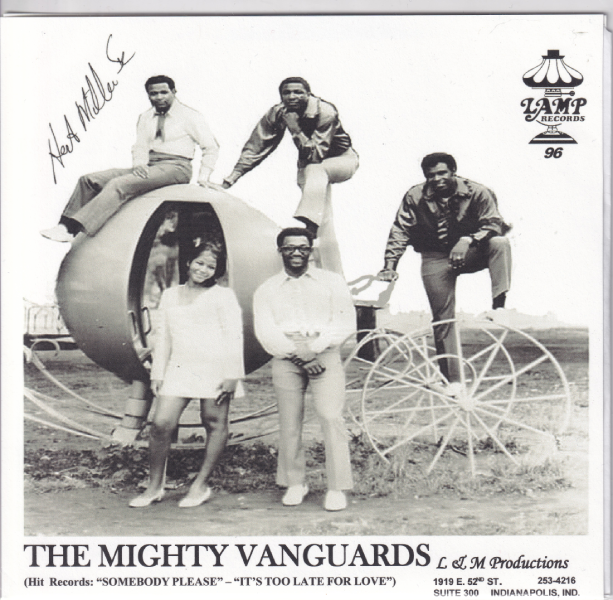
Mighty Vanguards promotional photograph autographed by Herb Miller Sr. The print bears L & M Productions and LAMP Records branding and highlights the group’s hits “Somebody Please” and “It’s Too Late for Love,” connecting the musicians with Miller’s work bringing Indianapolis soul to wider audiences.
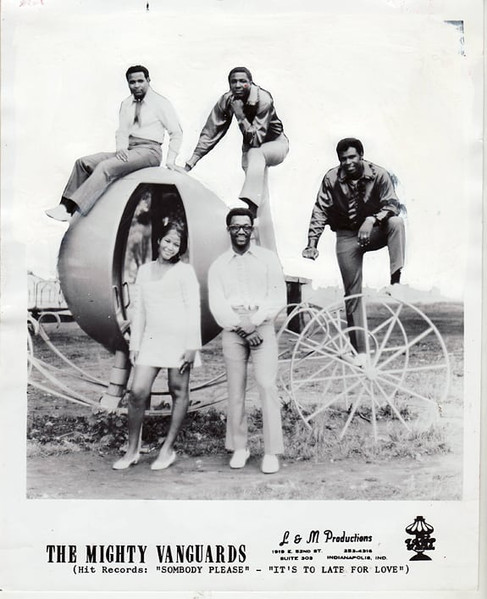
The Mighty Vanguards in a promotional photograph for L & M Productions, bearing the LAMP Records logo. The printed caption highlights “Somebody Please” and “It’s Too Late for Love,” two hits that helped bring the Indianapolis soul group and Herb Miller’s production work to national attention.
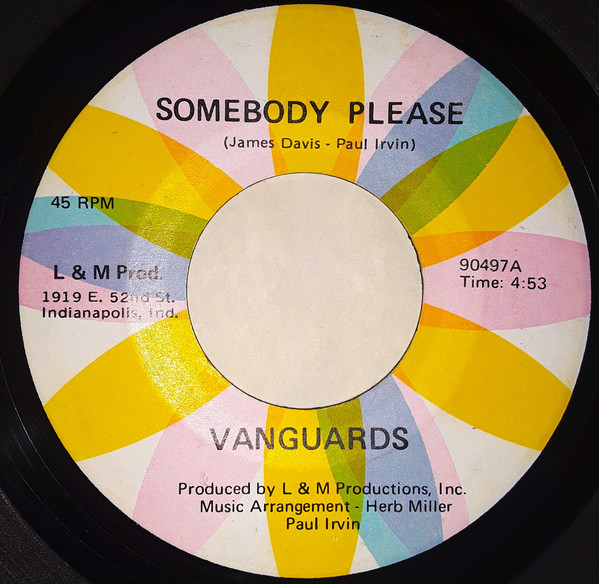
The Vanguards’ breakthrough single “Somebody Please” on L & M Productions’ Indianapolis label. Written by James Davis and Paul Irvin, the record credits L & M Productions with production and Herb Miller and Paul Irvin with the musical arrangement. The song brought the group national attention in 1969.
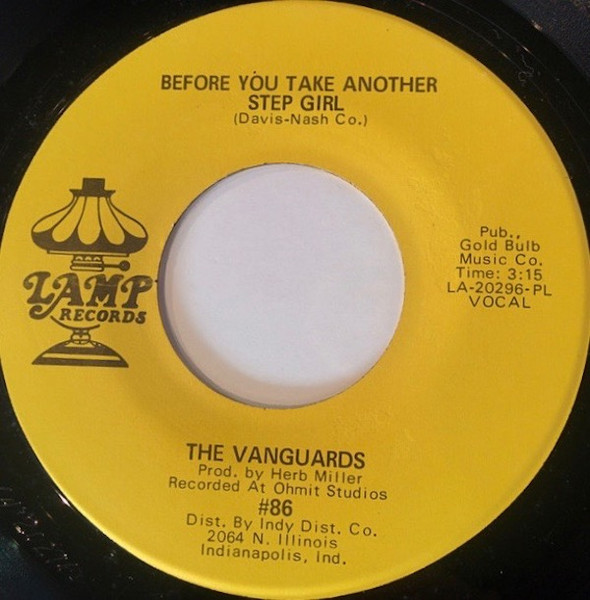
“Before You Take Another Step Girl” by the Vanguards, LAMP Records release #86. The label credits Herb Miller as producer and Ohmit Studios as the recording location, with publishing by Gold Bulb Music Co. and distribution through Indy Dist. Co. in Indianapolis.
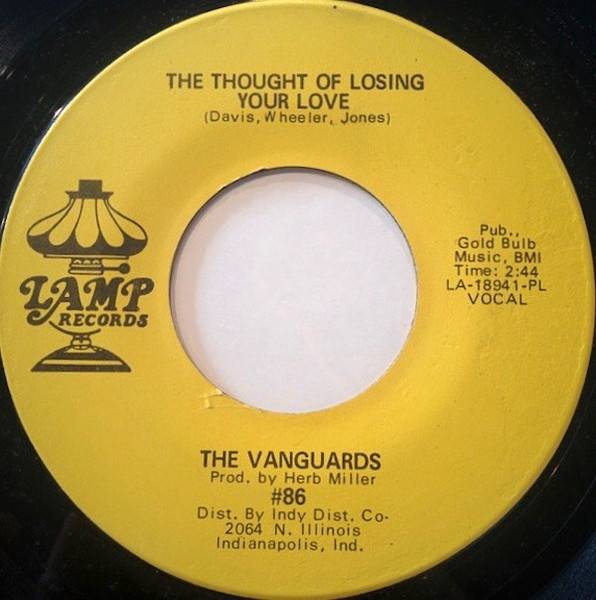
“The Thought of Losing Your Love” by the Vanguards, on LAMP Records release #86. The label credits Herb Miller as producer and lists Davis, Wheeler, and Jones as songwriters, with publishing through Gold Bulb Music and Indianapolis distribution by Indy Dist. Co.
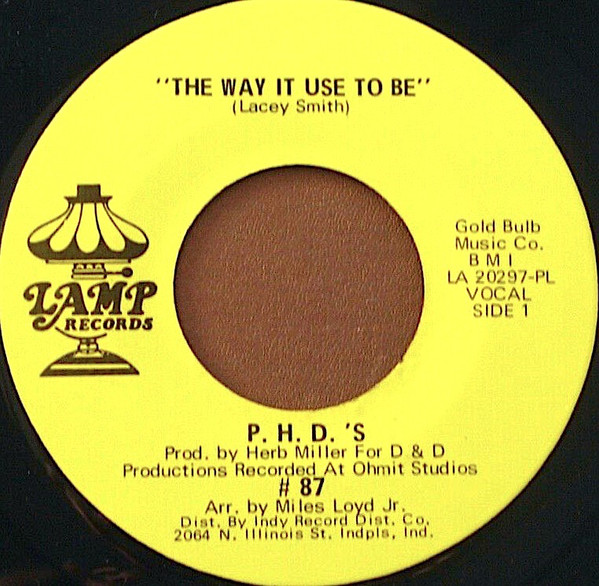
“The Way It Use To Be” by the P.H.D.’s, Side 1 of LAMP Records release #87, paired with “It Swells My Desire.” Written by Lacey Smith and recorded at Ohmit Studios, it credits Herb Miller as producer for D & D Productions and Miles Loyd Jr. as arranger.
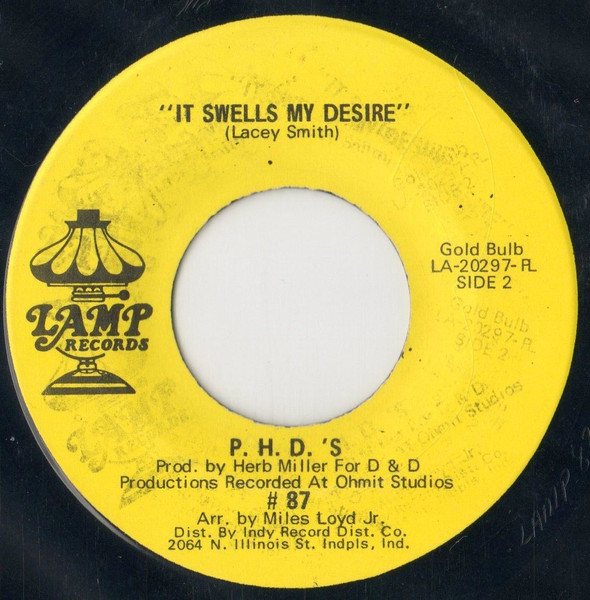
“It Swells My Desire” by the P.H.D.’s on LAMP Records, written by Lacey Smith. Recorded at Ohmit Studios, the single credits Herb Miller as producer for D & D Productions and Miles Loyd Jr. as arranger, documenting the collaborators behind this LAMP release.
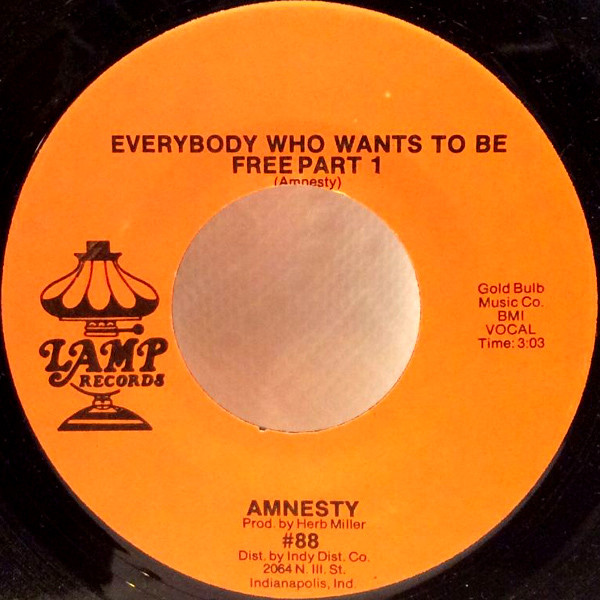
“Everybody Who Wants to Be Free Part 1” by Amnesty, LAMP Records release #88. The orange label credits the band with writing the song and Herb Miller with production, with publishing through Gold Bulb Music Co. and distribution by Indianapolis’ Indy Dist. Co.

Front cover of the 2002 Now-Again reissue of *Hum-Bug (Parts 1 & 2)*, originally recorded for Herb Miller’s LAMP Records. Bobby Gayhart is in front; behind him, from left, are Rodney Stepp, Richard Gamble, Jerry “Boing-Boing” Miller, and Rodney Vorhis. Photograph by Rudy Smith, circa 1965, at Indianapolis’ 40th Street Masonic Temple.
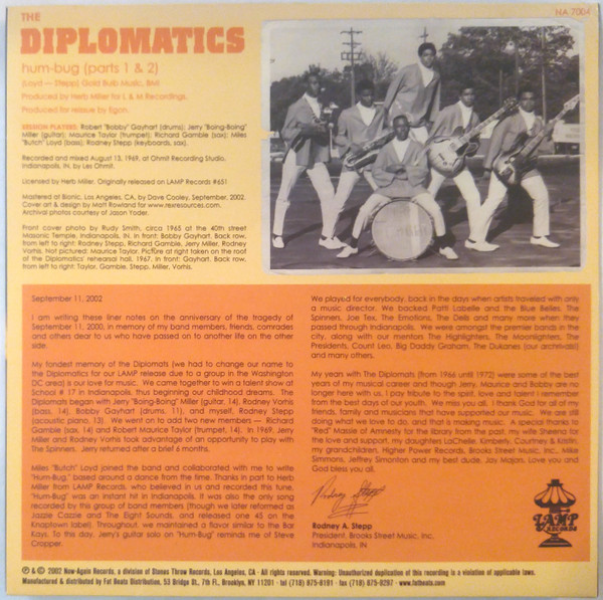
Back cover of the 2002 Now-Again reissue of *Hum-Bug (Parts 1 & 2)*, featuring Rodney Stepp’s account of the band’s beginnings and recording for Herb Miller’s LAMP Records. The 1967 rehearsal-hall rooftop photo shows Bobby Gayhart in front; behind him, from left, are Maurice Taylor, Richard Gamble, Rodney Stepp, Jerry “Boing-Boing” Miller, and Rodney Vorhis.
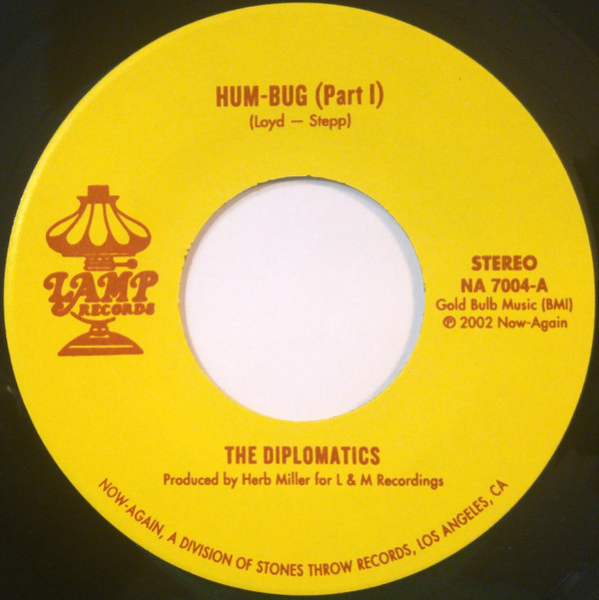
The Diplomatics’ “Hum-Bug (Part 1),” shown on the 2002 Now-Again reissue. Written by Miles “Butch” Loyd and band member [Rodney Stepp](https://indianafound.org/portfolio-item/rodney-stepp/), the recording was produced by Herb Miller for L & M Recordings and originally released on LAMP Records.
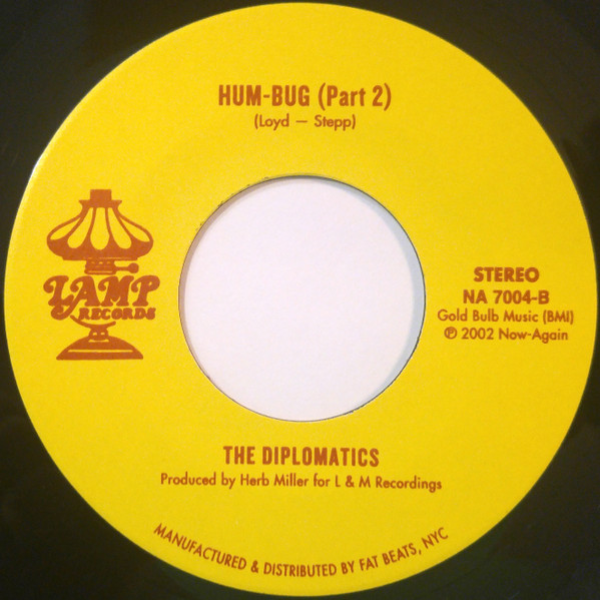
“Hum-Bug (Part 2)” by the Diplomatics, the B-side of the 2002 Now-Again reissue. Written by Miles “Butch” Loyd and Rodney Stepp and produced by Herb Miller for L & M Recordings, this label also credits Fat Beats in New York with manufacturing and distribution.
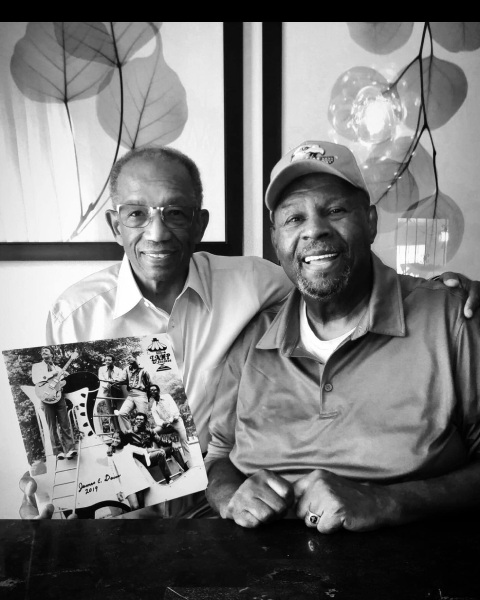
Herb Miller, founder of Indianapolis’ LAMP Records, with James Davis, founder and lead singer of the Vanguards. Miller produced the group’s enduring soul recording “Somebody Please.” Their connection extended beyond music: in his oral history, Miller recalls helping Davis join the fire department and renewing their friendship over breakfasts and lunches after Davis returned to Indianapolis.
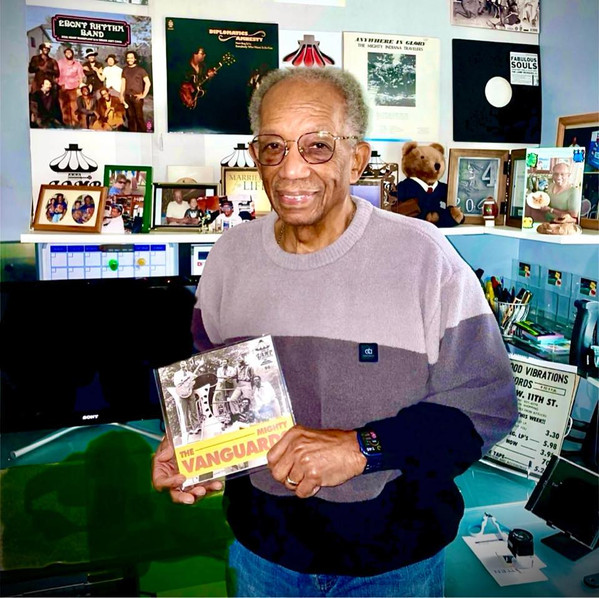
Herb Miller holding the cover of the Mighty Vanguards’ seven-inch release featuring “Ghetto” and “Never Never.” Produced by Miller at Les Ohmit Recording Studio, the tracks resurfaced decades later in songwriter Tony Black’s archive. In his oral history, Miller recalls the rediscovered material as the group’s final recording.
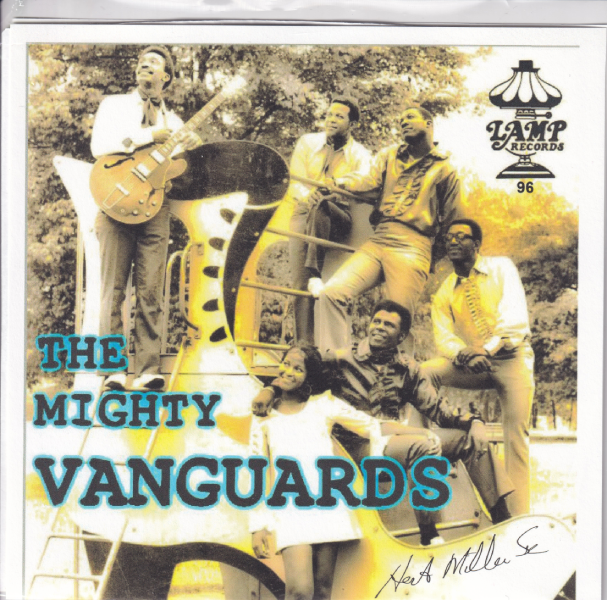
LAMP Records sleeve featuring the Mighty Vanguards, signed by label founder and producer Herb Miller Sr. Miller worked closely with the Indianapolis soul group, producing recordings such as “Somebody Please” and helping bring their music to audiences beyond Indiana.
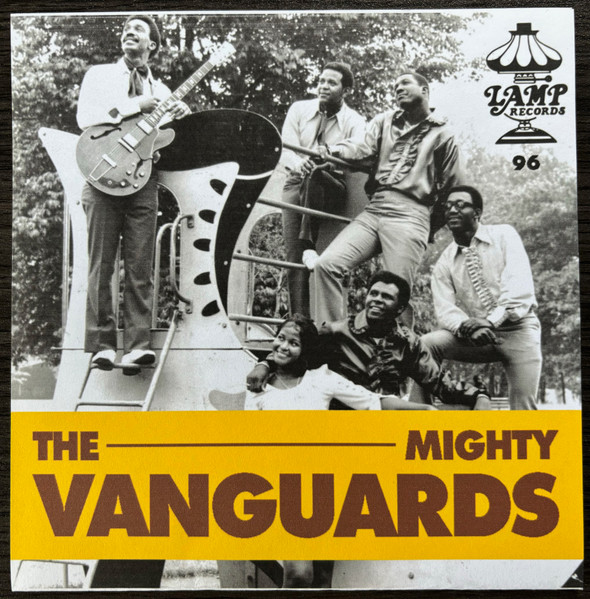
Record cover for the Mighty Vanguards’ seven-inch LAMP Records release, pairing “Ghetto” and “Never Never.” Produced by Herb Miller at Les Ohmit Recording Studio, the recordings were later rediscovered in songwriter Tony Black’s archive.
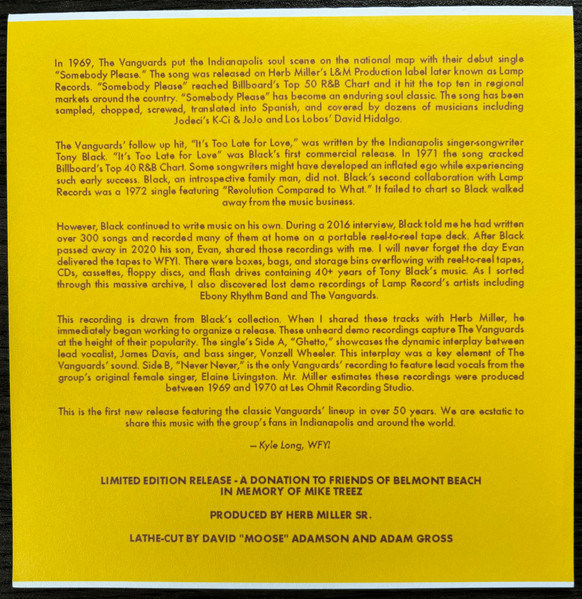
Liner notes by WFYI’s Kyle Long explain how recordings from songwriter Tony Black’s archive led to a new Mighty Vanguards release with Herb Miller. Recorded at Les Ohmit Recording Studio, “Ghetto” and “Never Never” preserve the group’s Indianapolis soul sound. The limited edition also included a donation to Friends of Belmont Beach in memory of Mike Treez.
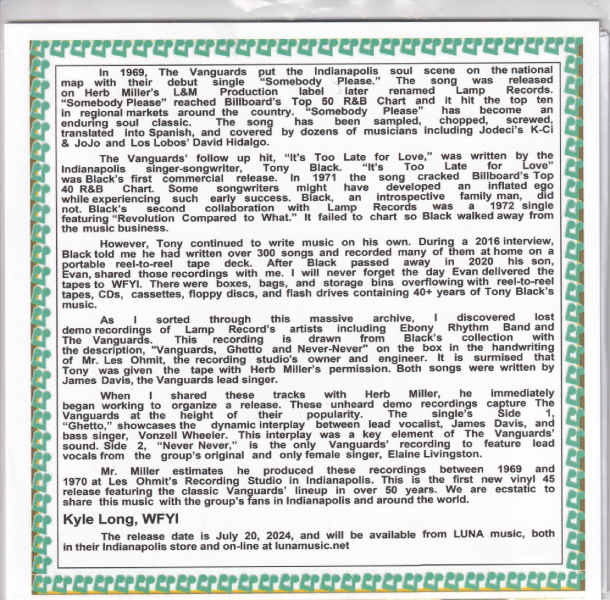
WFYI’s Kyle Long traces the rediscovery of the Vanguards’ “Ghetto” and “Never Never” in songwriter Tony Black’s archive. Herb Miller dates the recordings to 1969–1970 at Les Ohmit’s Indianapolis studio. This version of the liner notes announces a July 20, 2024 release, returning previously unheard performances to the group’s fans.
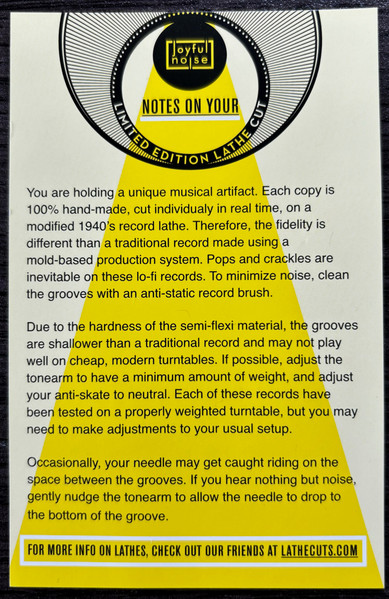
Joyful Noise’s production and care insert for a limited-edition lathe-cut record. It explains that each copy was cut individually in real time on a modified 1940s record lathe, rather than pressed from a mold, documenting the handmade process behind this edition.
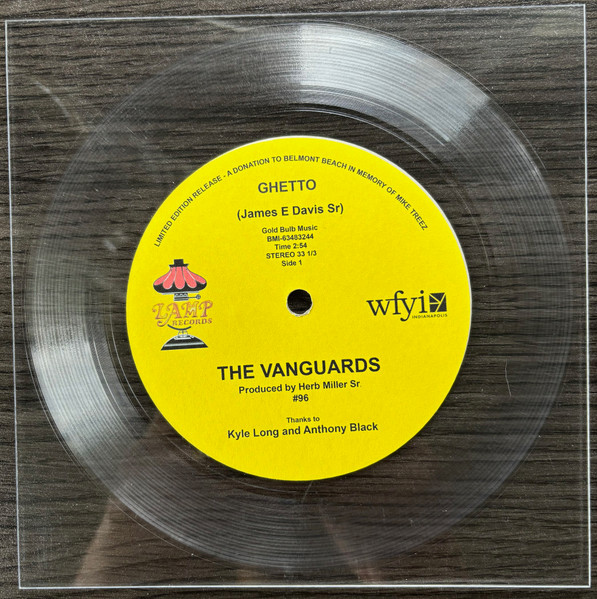
“Ghetto,” Side 1 of the Vanguards’ clear LAMP Records release #96. The label credits James E. Davis Sr. as songwriter and Herb Miller Sr. as producer, with thanks to Kyle Long and Anthony Black. This limited edition plays at 33⅓ rpm and carries a donation dedication to Belmont Beach in memory of Mike Treez.
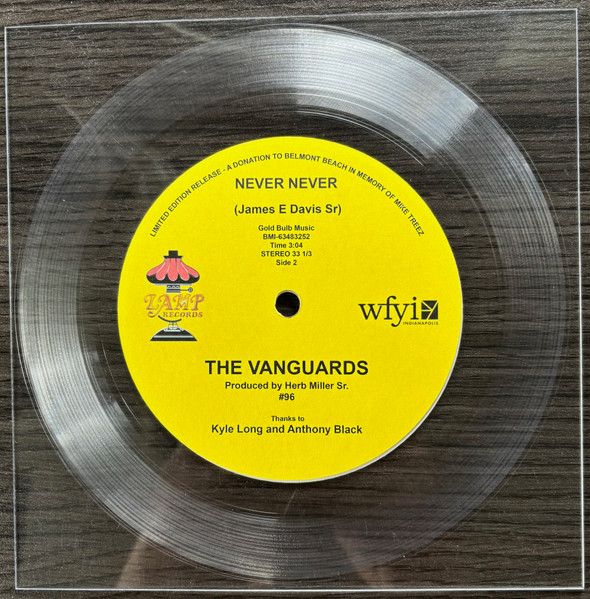
“Never Never,” Side 2 of the Vanguards’ clear LAMP Records release #96, written by James E. Davis Sr. and produced by Herb Miller Sr. Kyle Long’s liner notes identify it as the group’s only recording featuring lead vocals by Elaine Livingston.
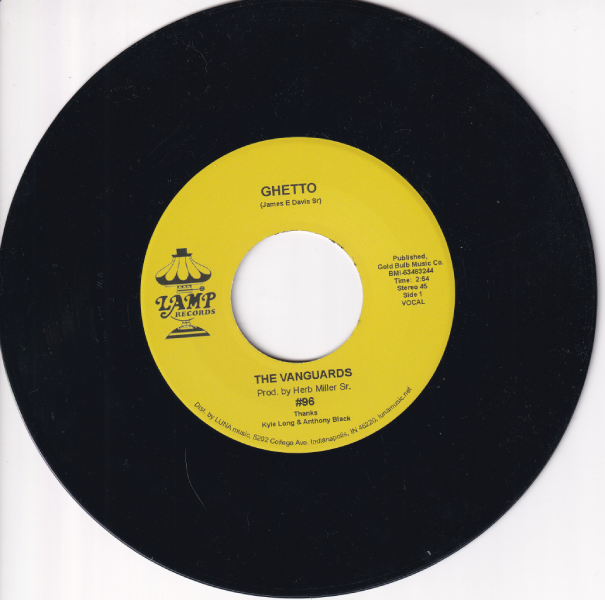
The Vanguards’ “Ghetto” on a black 45-rpm record, LAMP Records release #96. The label credits James E. Davis Sr. as songwriter and Herb Miller Sr. as producer, thanks Kyle Long and Anthony Black, and identifies Indianapolis record store LUNA music as the distributor.
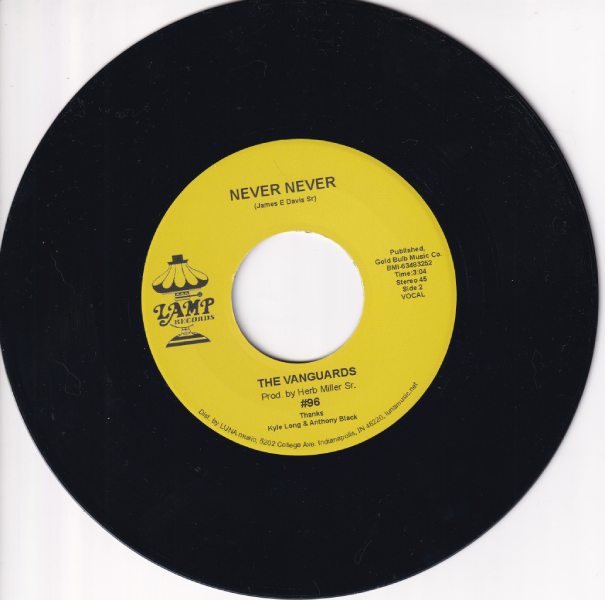
The Vanguards’ “Never Never” on a black 45-rpm record, Side 2 of LAMP Records release #96. Written by James E. Davis Sr. and produced by Herb Miller Sr., it features Elaine Livingston’s lead vocal. The label credits Indianapolis’ LUNA music with distribution and thanks Kyle Long and Anthony Black.
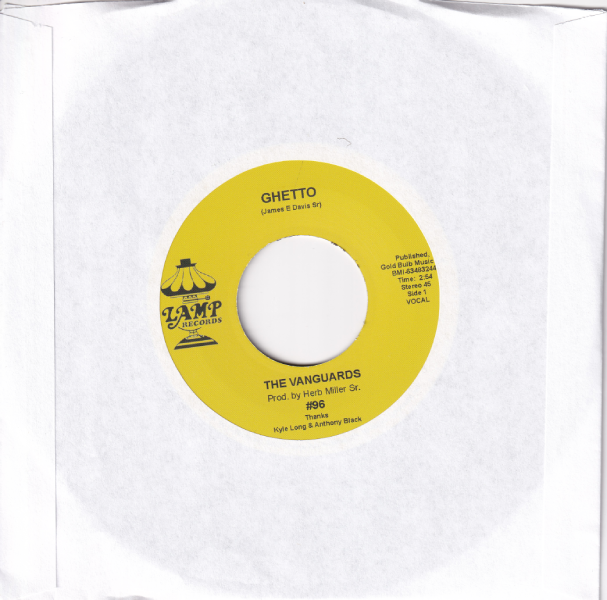
The Vanguards’ “Ghetto,” Side 1 of LAMP Records release #96, in its white paper sleeve. This version is labeled 45 rpm and credits James E. Davis Sr. as songwriter and Herb Miller Sr. as producer, with thanks to Kyle Long and Anthony Black.
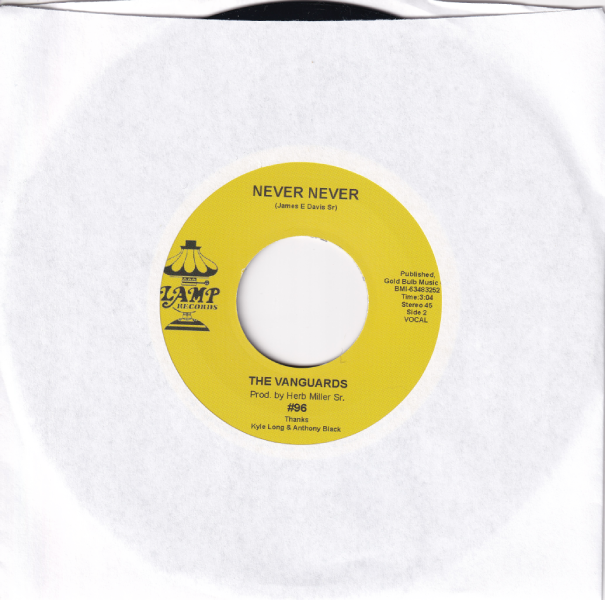
“Never Never,” Side 2 of the Vanguards’ 45-rpm LAMP Records release #96, in its white paper sleeve. Written by James E. Davis Sr. and produced by Herb Miller Sr., the recording features Elaine Livingston’s lead vocal, as documented in Kyle Long’s liner notes.
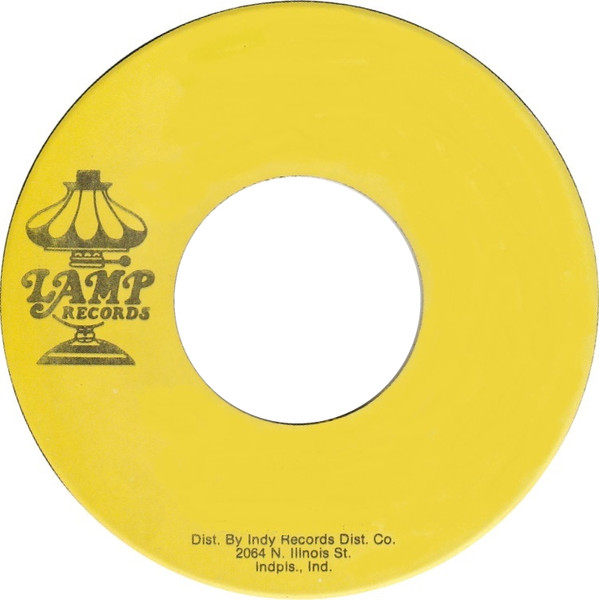
Yellow LAMP Records label bearing the company’s lamp logo and a distribution credit for Indy Records Dist. Co. at 2064 N. Illinois Street in Indianapolis. The printed credit documents the local distribution operation behind Herb Miller’s label.
LAMP Records’ red lamp logo on a white record label. Herb Miller’s Indianapolis label helped bring local soul and funk artists to wider audiences in the late 1960s and early 1970s.
LAMP Records’ lamp emblem printed in dark ink on an orange record label, another color variation of Herb Miller’s Indianapolis soul and funk label.
LAMP Records’ black lamp emblem on a pink record label, one of the color variations used by Herb Miller’s Indianapolis soul and funk label.
LAMP Records’ lamp emblem printed in dark ink on a red record label, another color variation used by Herb Miller’s Indianapolis soul and funk label.
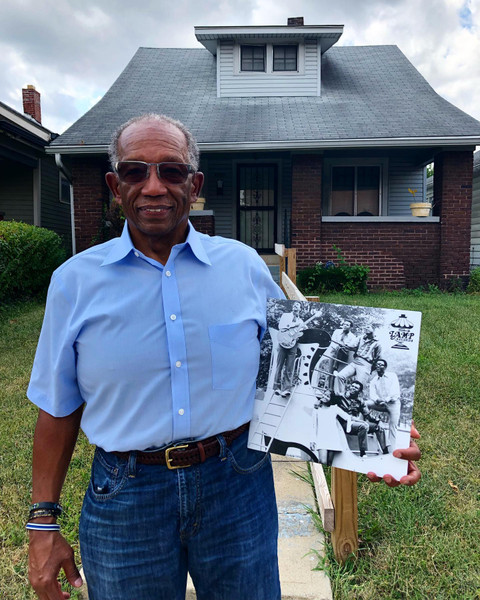
Herb Miller outside his home, holding a photograph of the Vanguards. Through L & M Productions and LAMP Records, he helped bring the Indianapolis soul group to wider audiences, producing recordings including “Somebody Please.”
Preserving Indiana’s Music History
The Indiana Music History Project is made possible through the generous support of the Allen Whitehill Clowes Charitable Foundation. Their commitment to preserving Indiana’s rich musical heritage helps ensure these oral histories remain accessible for future generations.

Help Improve This Archive
Have additional information about this artist, story, or any of the photographs? If you can identify people, dates, locations, or have memories you’d like to share, we’d love to hear from you. Please use the button below and select “Submit Historical Information or Corrections” as the reason for your message.